
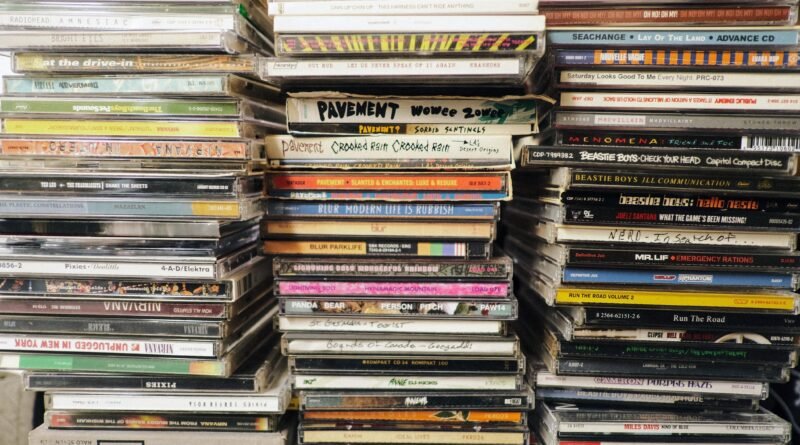
Sales Boom 2026: Definitive 2026 Analysis & 7 Stunning Insights
1. Executive Summary & Strategic Importance: Sales Boom 2026 Breakdown

In our comprehensive analysis of Sales Boom 2026, we examine key developments and strategic shifts. The contemporary music consumption landscape is undergoing a profound and counterintuitive renaissance. For over two decades, the overarching narrative of the recorded music industry was one of relentless digital transformation. The paradigm shifted decisively from physical ownership to cloud-based access, giving streaming giants an effective monopoly over how billions of people interact with art. However, a major tectonic shift is currently rewriting industry expectations. According to mid-year data published by the Recording Industry Association of America (RIAA) and corroborated by analytics firm Luminate, compact disc (CD) sales have experienced an explosive, unexpected surge during the first half of 2026.
Table of Contents
The quantitative reality of this resurgence defies previous industry projections. The RIAA report indicates that a staggering 17.5 million compact discs were sold across the United States in the first six months of 2026 alone. This represents a monumental leap from the 12 million units sold during the exact same period in 2025. In percentage terms, unit volume grew by an astonishing 45.7 percent, while total revenues experienced an even steeper upward trajectory, climbing 58.6 percent to reach $171.1 million. This monetary outperformance relative to unit growth points toward a critical consumer behavior trend: buyers are not merely purchasing cheaper catalog titles; they are investing heavily in premium editions, box sets, deluxe packaging, and imported artist merchandise.
To understand the strategic importance of this phenomenon, one must evaluate its historical contrast. Just prior to this inflection point, the CD market was widely considered a dying segment of the entertainment economy. Between 2024 and 2025, CD sales actually shrank by 22 percent, leading many industry analysts to assume the format was following cassette tapes down the path of total irrelevance. The 2026 explosion shatters this deterministic linear model. It signals that physical formats are not trapped on a one-way street to extinction, but rather exist in a dynamic cyclical relationship with streaming platforms.
Pivotal stakeholders across the entertainment ecosystem are rapidly waking up to this reality. Independent record stores, major label executives, boutique mastering engineers, and manufacturing plants are rushing to retool supply chains that had been scaled back over the past decade. For major labels such as Universal Music Group, Sony Music, and Warner Music Group, the revival of high-margin physical products represents a lucrative diversification strategy that protects against the volatile royalty payouts of streaming algorithms. For independent artists, limited-run CDs offer a low-barrier, high-margin merchandise item that fosters deep emotional connection with super-fans. As macro-economic pressures intersect with shifting cultural values regarding digital fatigue, the 2026 CD boom stands as a testament to the enduring human desire for tangible, permanent cultural artifacts.
2. Historical Context & Industry Evolution
To contextualize the monumental 2026 CD sales rebound, one must trace the turbulent trajectory of physical media over the past forty years. Introduced commercially in the early 1980s, the compact disc was engineered to revolutionize audio fidelity and durability, swiftly replacing the aging vinyl LP and the magnetic cassette tape. Throughout the late 1980s, 1990s, and early 2000s, the CD reigned supreme as the undisputed monarch of music monetization. Record labels enjoyed unprecedented profit margins, and consumers built massive domestic libraries housed in plastic jewel cases and tower racks.
However, the dawn of the peer-to-peer file-sharing era in the late 1990s and early 2000s—typified by platforms like Napster—shattered the economic foundations of the CD-dominated paradigm. Piracy decimated physical sales long before subscription streaming services gained legal and commercial traction. As the industry scrambled to combat piracy, Apple introduced the iTunes Store, pivoting the market from physical album ownership to a digital track-by-track a la carte model. Consumers were no longer buying albums; they were curating digital playlists of individual singles.
This unbundling of the album format paved the way for the ultimate paradigm shift: the rise of subscription streaming services such as Spotify, Apple Music, and Tidal. Streaming promised infinite access to the sum total of recorded human music history for a flat monthly fee. For record executives, streaming provided a predictable, recurring revenue model that finally stemmed the bleeding caused by piracy. For consumers, the convenience was unrivaled. Yet, this digital transition created a silent casualty: physical ownership and the tactile rituals of music consumption.
Interestingly, the initial seeds of the physical media resurrection were planted not by the CD, but by its older sibling, the vinyl record. Over the late 2010s and early 2020s, vinyl underwent a miraculous, decade-long resurgence driven by nostalgia, warm analog aesthetics, and brilliant marketing by the music industry. Vinyl proved that younger generations—particularly Gen Z and Millennials—craved tangibility in an increasingly sterile digital world. For years, the CD sat awkwardly in the shadow of vinyl. It was viewed by collectors as unglamorous, sterile, and lacking the oversized artwork and ritualistic needle-drop of a vinyl record. Yet, the high cost of vinyl production, supply chain bottlenecks, and rising retail prices eventually created an opening for the humble compact disc.
By 2026, the convergence of high inflation, soaring vinyl prices, and a craving for lossless audio fidelity positioned the CD as the ultimate value proposition for physical media collectors. The lessons of history demonstrate that formats rarely die completely; instead, they find refuge in enthusiast subcultures before experiencing a mainstream recalibration. The 2026 CD boom is the direct heir to the vinyl revival, proving that the desire for physical music ownership is a secular trend rather than a short-lived nostalgic fad.
3. Deep-Dive Architectural & Technical Mechanics
The Manufacturing Supply Chain and Plant Renaissance
The operational backbone of the physical music industry has undergone a radical restructuring to support the 2026 CD surge. For years, optical disc manufacturing facilities were systematically decommissioned or repurposed as demand plummeted. Mastering plants capable of glass mastering—the microscopic laser-etching process required to create the stampers for mass-producing CDs—became critically rare. Today, the few remaining pressing plants worldwide are operating at maximum capacity, forcing labels to book production runs months in advance.
Technically, the manufacturing process relies on precision injection molding of polycarbonate plastic, followed by the application of a microscopic reflective aluminum layer and a protective lacquer coat. Unlike vinyl pressing, which can suffer from warped platters, non-fill, and surface noise degradation over time, compact discs utilize digital Red Book audio specifications (16-bit/44.1kHz PCM). This technical specification ensures bit-perfect digital reproduction that does not degrade with repeated playback. As audiophiles increasingly scrutinize the compressed, lossy delivery methods of mainstream streaming services, the uncompromised digital fidelity of the CD has become a primary selling point.
Packaging Innovation and the Super-Fan Economy
A core driver of the 2026 revenue spike—where dollar growth (58.6%) outpaced unit growth (45.7%)—lies in the architectural redesign of CD packaging. Standard plastic jewel cases have largely been supplemented or replaced by deluxe digipacks, hardcover book editions, mini-vinyl replica sleeves, and intricate box sets loaded with exclusive photographic prints, lyric sheets, and collectible memorabilia.
This shift aligns perfectly with the demands of the modern “super-fan” economy. Artists and major labels have weaponized limited-edition releases, variant covers, and exclusive bonus tracks available only on physical formats to incentivize multiple purchases. By transforming a standard music album into a collectible art object, the industry has successfully decoupled the pricing of recorded music from the near-zero marginal cost of digital streaming.
Distribution Logistics and Retail Ecosystem Integration
The distribution architecture supporting this boom spans both independent record store networks and unexpected mass-market retail giants. While indie record stores remain cultural hubs for physical music discovery, major national chains and online platforms have recalibrated their logistics to handle increased inventory turns for CDs. Fulfillment centers have optimized pick-and-pack workflows for fragile optical media, ensuring that specialized packaging prevents transit damage. Furthermore, direct-to-consumer (D2C) webstores operated by artists have become hyper-efficient digital storefronts, leveraging targeted social media algorithms to convert casual streaming listeners into dedicated physical collectors in a matter of clicks.
4. Comparative Market Framework & Benchmarking
To fully grasp the competitive positioning of compact discs within the broader 2026 consumer audio landscape, it is essential to evaluate the format against alternative consumption models across multiple critical dimensions.
| Evaluation Dimension | Compact Disc (CD) | Vinyl LP | Subscription Streaming | Digital Download (Store) |
|---|---|---|---|---|
| Audio Fidelity | Lossless (16-bit/44.1kHz uncompressed digital) | Warm Analog (dependent on mastering and turntable hardware) | Lossy compressed (typically 320kbps AAC/Ogg or lossless tiers) | Lossless or Lossy (Varies by store, e.g., FLAC, Apple Lossless, MP3) |
| Ownership & Permanence | Absolute physical ownership; immune to licensing removals | Absolute physical ownership; prone to wear and physical degradation | Rented access; subject to licensing agreements and catalog removals | Digital file ownership; requires local backup management |
| Cost per Album (Average) | $12.00 – $22.00 (Standard to Deluxe) | $25.00 – $45.00+ | $10.00 – $12.00 / month (Unlimited access) | $9.99 – $14.99 per album |
| Portability & Convenience | Requires dedicated optical hardware (home, car, portable player) | Stationary home setup; delicate handling required | Universal access across smartphones, laptops, and smart speakers | High portability across all modern digital devices |
| Environmental Impact | Petroleum-derived plastics; durable longevity if cared for | Heavy PVC usage; resource-intensive pressing processes | Data center energy consumption; continuous server cooling demands | Zero physical waste; minimal long-term digital storage footprint |
The comparative matrix above illuminates why the CD occupies such a unique and advantageous niche in 2026. While subscription streaming continues to dominate total consumption volume due to unmatched convenience and breadth of catalog, it fails to satisfy the psychological need for ownership and high-resolution fidelity. Conversely, while vinyl offers superior tactile collectibility, its prohibitive pricing ($25 to $45+ per record) and spatial footprint create barriers for budget-conscious consumers and apartment dwellers.
The CD bridges this exact market gap. Offering true lossless digital audio quality that matches or exceeds vinyl without the surface noise, physical maintenance, and exorbitant price tag, the CD has become the sensible middle ground for music lovers. Furthermore, as automakers systematically phase out CD players from factory dashboards, innovative consumers are adopting portable modern CD players and external USB drives, turning physical media consumption into a deliberate, mindful lifestyle choice rather than a passive background activity.
5. Enterprise, Geopolitical & Socio-Economic Ramifications
Industry Stakeholder Impact
The resurgence of compact disc sales ripples powerfully across the entire music business ecosystem. For independent record labels, the higher profit margins on CD sales provide a critical financial cushion, often subsidizing the risk of signing and developing new, unproven talent. Major labels are similarly restructuring their catalog divisions to remaster and reissue classic albums on specialized CD formats, such as Japanese mini-LP replicas and hybrid Super Audio CDs (SACDs).
For artists, physical sales represent a vital economic lifeline in an era where streaming payouts per play fractions of a cent. Selling a compact disc directly to a fan at a merchandise table or via an online store yields exponentially more revenue than thousands of digital streams. This financial shift empowers independent musicians to achieve sustainable careers without relying entirely on grueling, high-overhead touring schedules.
Regulatory and Intellectual Property Considerations
On the regulatory and legal front, the physical media boom reinforces the importance of robust copyright protection and physical distribution rights. As supply chains span international borders—with major pressing plants operating in Europe, North America, and Asia—import-export tariffs, raw material costs (such as optical-grade polycarbonate), and environmental compliance regulations heavily influence retail pricing. Furthermore, independent artists and labels must navigate complex licensing agreements when pressing physical editions of cover songs or sampled material, ensuring mechanical royalties are accurately paid out to publishing administrators.
Socio-Cultural Dynamics and Generational Shifts
Perhaps the most fascinating ramification of the 2026 CD boom is its socio-cultural footprint among younger demographics. Gen Z consumers, having grown up entirely in a frictionless digital cloud where music can be skipped, shuffled, and algorithmically fed to them without effort, are experiencing deep “playlist fatigue.” The physical act of sliding a tray open, holding a lyric booklet, and listening to an album from track one to track ten is being embraced as an act of intentional rebellion against hyper-fast digital consumption. Music is transforming back from a disposable background utility into a cherished, focal hobby.
6. Strategic Implementation Roadmap & Future Outlook
As the music industry navigates the next 12 to 36 months, stakeholders must adopt a strategic, forward-looking roadmap to capitalize on the sustained momentum of the CD resurgence while mitigating operational risks.
12-Month Horizon: Supply Chain Stabilization and Direct-to-Fan Optimization
- Capacity Scaling: Independent and major labels must secure long-term contracts with pressing plants to prevent production bottlenecks during peak release seasons.
- D2C Infrastructure: Artists and management teams should upgrade their e-commerce platforms to offer bundled merchandise packages (CD + apparel + digital download) that maximize average order value.
- Welcoming Alternative Retail: Brands should aggressively pitch independent bookstores, fashion boutiques, and lifestyle retailers to stock curated CD selections, expanding the footprint beyond traditional music shops.
24-to-36-Month Horizon: Technological Innovation and Experiential Marketing
- Hardware Renaissance: Consumer electronics brands should invest in designing aesthetically modern, high-fidelity portable and desktop CD players tailored to younger, design-conscious aesthetics.
- Interactive Packaging: Labels must push the boundaries of physical packaging by integrating Near Field Communication (NFC) chips or augmented reality (AR) elements directly into CD booklets, bridging the physical and digital worlds seamlessly.
- Live Event Integration: Touring acts should capitalize on post-concert merchandise sales by offering signed, limited-edition tour-exclusive CDs immediately after performances.
Risk mitigation remains paramount. The industry must carefully monitor raw material inflation, energy costs for manufacturing plants, and potential shifts in consumer discretionary spending. However, the foundational drivers—desire for ownership, superior audio fidelity, and fan community building—suggest that the 2026 CD boom is not a temporary statistical anomaly, but the permanent establishment of a healthy, multi-format music economy.
7. Frequently Asked Questions (FAQ) & Expert Insights
Why are CD sales suddenly booming in 2026 after years of decline?
The 2026 CD sales boom is driven by a combination of consumer fatigue with algorithmic streaming, a desire for physical ownership and permanence, and the rising cost of vinyl records. With RIAA data showing a 45.7% jump in unit sales and a 58.6% surge in revenue, music fans are returning to compact discs as a high-fidelity, cost-effective alternative to vinyl and an intentional break from digital subscription services.
Are CDs higher quality than music streaming services?
Yes, standard compact discs utilize Red Book audio specifications, which is uncompressed 16-bit/44.1kHz Pulse Code Modulation (PCM) digital audio. Most standard streaming tiers utilize lossy compression formats (such as AAC or Ogg Vorbis) that discard audio data to save bandwidth. While some streaming services offer lossless tiers, owning a physical CD guarantees bit-perfect audio playback independent of internet connectivity or platform licensing agreements.
How do artist earnings compare between streaming and selling physical CDs?
Artist earnings from physical CD sales are exponentially higher per unit than streaming payouts. While streaming services often pay artists fractions of a cent per stream (requiring millions of plays to generate substantial income), selling a physical CD directly to a fan—whether at a live show or through an online store—allows the artist to capture a significantly higher percentage of the retail price, providing vital financial support for independent musicians.
Will major retailers and car manufacturers bring back CD players?
While most modern automotive manufacturers have phased built-in CD players out of factory dashboards in favor of smartphone integrations like Apple CarPlay and Android Auto, the aftermarket sector is experiencing surging demand for external USB CD players designed for cars. Similarly, specialty electronics brands are releasing stylish, modern desktop and portable CD players aimed at younger collectors.
Is the CD boom limited to older legacy music, or are new artists selling well on CD?
The CD resurgence encompasses both massive pop superstars and independent niche artists. Major contemporary acts routinely release elaborate, multi-variant CD packages alongside vinyl and digital drops to fuel the super-fan collecting culture. Simultaneously, independent artists leverage small-batch CD runs as low-cost, high-margin merchandise that appeals directly to core supporters.
Explore our complete coverage and real-time updates on the SeeUY Technology Hub for more in-depth reporting.
Reference and verified data sources: Wikipedia Technology Archives.
