
what’s difference between: Powerful Stunning 2026
In our comprehensive analysis of what's difference between, we examine key market indicators, regulatory shifts, and emerging trends that industry leaders must monitor closely in 2026.
what's difference between: What's Difference Between: 1. Executive Summary & Strategic Importance
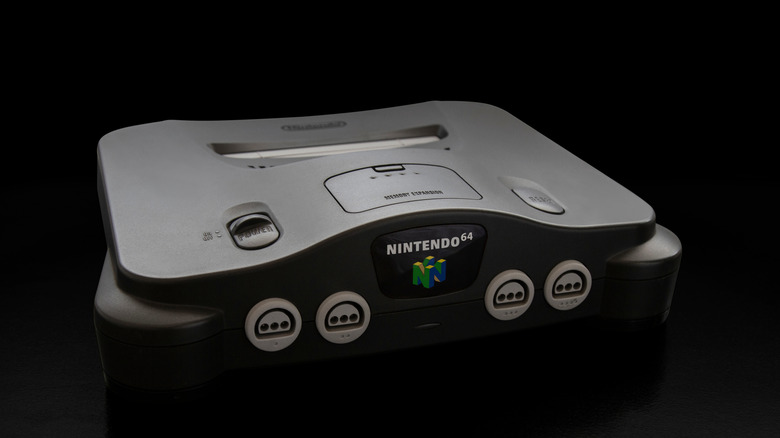
The transition from the 16-bit era to the 32-bit and 64-bit generations in the mid-1990s represents one of the most volatile and transformative periods in video game history. Amidst this technological upheaval, Nintendo positioned the Nintendo 64 (N64) as a powerhouse capable of true 3D polygon rendering, relying on cartridges rather than the burgeoning CD-ROM format championed by Sony’s PlayStation and the Sega Saturn. However, recognizing the inherent storage limitations of cartridges—which maxed out at a meager 64 megabytes—Nintendo conceived an ambitious, modular peripheral known as the N64DD (Nintendo 64 Disk Drive). While the standard Nintendo 64 became a global cultural icon, the N64DD remains one of the industry’s most fascinating and infamous commercial failures, restricted exclusively to the Japanese market and fading into obscurity shortly after its late-1999 launch.
Understanding the divergence between the standard Nintendo 64 console and the N64DD requires a rigorous examination of hardware engineering, corporate strategy, software delivery paradigms, and the economics of consumer electronics at the turn of the millennium. The standard N64 was a closed, cartridge-based console engineered for rapid load times, robust durability, and anti-piracy security, albeit at the expense of storage capacity and high manufacturing costs. Conversely, the N64DD was designed as an expansive, network-enabled, magnetic disk-based peripheral that sought to bridge the gap between console gaming and personal computer functionality. It introduced rewritable storage, high-capacity media, real-time clock capabilities, and an online ecosystem via Randnet, well before online console gaming became standard industry practice.
This comprehensive analysis will deconstruct the fundamental differences between these two systems, tracing their historical trajectories, technical blueprints, market impacts, and long-term legacies. By evaluating the structural mechanics of both the base console and its elusive add-on, industry analysts, retro gaming historians, and hardware enthusiasts can gain a profound appreciation for the risks of premature innovation. As the gaming industry continues to grapple with cloud infrastructure, proprietary storage formats, and digital-versus-physical distribution models, the lessons of the Nintendo 64 and the N64DD remain remarkably relevant to modern hardware design and strategic product positioning.
2. Historical Context & Industry Evolution
To fully comprehend the operational and conceptual gap between the Nintendo 64 and the N64DD, one must contextualize the state of the interactive entertainment market in the mid-1990s. When Nintendo launched the Nintendo 64 in 1996, the industry was in the throes of a format war. Sony’s PlayStation had aggressively capitalized on the cheap, mass-production capabilities of CD-ROM technology, which offered up to 650 megabytes of storage per disc at a fraction of the manufacturing cost of ROM cartridges. While Sony and Sega embraced optical media for its expansive audio-visual fidelity—allowing for full-motion video (FMV), pre-rendered cinematic sequences, and sweeping orchestrated soundtracks—Nintendo steadfastly defended its cartridge-based architecture.
Nintendo’s decision was rooted in several strategic pillars: zero load times, superior durability for younger demographics, and ironclad anti-piracy measures enabled by proprietary ROM chips. However, company leadership, spearheaded by visionary designer Shigeru Miyamoto and late president Hiroshi Yamauchi, acutely understood that cartridges lacked the space required for sprawling role-playing games, complex data streaming, and user-generated content. To solve this dilemma without abandoning the core N64 hardware, Nintendo conceptualized the “Project Reality” add-on, which eventually materialized as the 64 Disk Drive. First announced at Shoshinkai in 1995, the N64DD was envisioned as a revolutionary medium that would combine the massive storage of magnetic disks with the raw computational speed of the N64 console.
Unfortunately, the N64DD suffered from a protracted development cycle that spanned nearly half a decade. Originally slated for a 1996 release to coincide with the console’s debut, the peripheral was repeatedly delayed due to engineering hurdles, shifting storage standards, and the rapid descent of magnetic disk technology in the face of falling CD-R and DVD prices. By the time the N64DD finally launched via a mail-order subscription service called Randnet in December 1999, the broader gaming landscape had fundamentally shifted. The PlayStation was an entrenched market leader, the PlayStation 2 was already on the horizon, and developers had largely mastered working within the constraints of standard N64 cartridges. Consequently, the N64DD arrived not as a triumphant evolution of home entertainment, but as an expensive, obsolete relic before its lifecycle had even truly begun.
3. Deep-Dive Architectural & Technical Mechanics
The technical divergence between the standard Nintendo 64 and the N64DD is a masterclass in hardware interfacing, memory management, and peripheral integration. While the base console operated as a standalone, self-contained unit, the N64DD fundamentally transformed the machine into a multi-tiered computing platform by utilizing a proprietary bottom-expansion slot.
The Base Nintendo 64 Architecture
At its core, the standard Nintendo 64 was built around a 64-bit RISC architecture CPU developed by Silicon Graphics Inc. (SGI), running at 93.75 MHz and paired with a custom co-processor known as the Reality Coprocessor (RCP). The system’s most notable bottleneck was its Rambus DRAM (RDRAM) memory subsystem, which provided a 4.5 MB capacity (expandable to 9.5 MB via the Expansion Pak) with a narrow 9-bit bus width. Software was distributed exclusively via mask ROM cartridges, ranging from 4 MB to 64 MB. These cartridges featured direct memory mapping, allowing the CPU to execute code directly from the ROM without the need for intermediate RAM loading buffers. This architecture eliminated traditional loading screens but severely restricted asset streaming, forcing developers to compress textures and reuse assets aggressively.
The N64DD Hardware and Storage Mechanics
The N64DD intervened in this closed loop by attaching to the underside of the console, connecting directly to the N64’s serial port expansion bus. Mechanically, the N64DD was a marvel of miniaturized magnetic storage. It utilized proprietary magnetic disks developed in partnership with Mitsumi, offering a storage capacity of 64 megabytes per disk—matching the largest possible N64 cartridge size, but at a fraction of the production cost. Crucially, these disks were rewritable, introducing dynamic data persistence to the N64 ecosystem for the first time without requiring external memory cards like the Controller Pak.
Operational Workflows and System Integration
The operational workflow of the N64DD required a symbiotic relationship with the host console. To utilize the disk drive, users had to insert a specialized “development cartridge” into the top slot of the N64. This cartridge contained core system BIOS, bootstrap code, and additional RAM that worked in tandem with the N64DD hardware. When powered on, the system would boot from the disk, allowing for real-time asset streaming, dynamic world-building, and expansive user saves. Furthermore, the N64DD integrated a hardware real-time clock (RTC), enabling time-based events in games—a feature that standard cartridges required expensive, individual battery-backed RAM chips to achieve. Combined with the Randnet modem attachment, the N64DD supported internet connectivity, email services, web browsing, and online multiplayer, making it a remarkably forward-thinking device trapped inside mid-90s mechanical constraints.
4. Comparative Market Framework & Benchmarking
To crystallize the differences between the standard Nintendo 64 and the N64DD, the following matrix contrasts the two systems across five critical operational and economic dimensions:
| Feature / Dimension | Standard Nintendo 64 (Base Console) | N64DD (Disk Drive Peripheral) |
|---|---|---|
| Primary Storage Medium | Mask ROM Cartridges (4 MB to 64 MB) | Proprietary Magnetic Disks (64 MB rewritable) |
| Release Timing & Availability | Global release (1996–1997) | Japan-only release via Randnet subscription (1999) |
| Data Persistence | Requires Controller Pak or cartridge battery backup | Native rewritable magnetic disk storage |
| Connectivity & Networking | Offline multiplayer via four controller ports | Built-in modem slot for Randnet online service |
| Commercial Success | Massive global hit (~32.93 million units sold) | Commercial failure (~15,000 units sold) |
The comparative data underscores the profound divergence in execution and market reception. While the standard N64 was engineered for mass-market accessibility, straightforward plug-and-play operation, and evergreen software sales, the N64DD functioned as an over-engineered, niche computing accessory. The reliance on magnetic disk technology in 1999—a time when optical CD-ROMs and emerging DVD formats offered superior durability, higher capacities, and significantly lower manufacturing overhead—rendered the N64DD commercially unviable. Moreover, restricting the peripheral to a Japanese mail-order subscription model severely hamstrung its distribution, preventing it from ever achieving the economies of scale necessary to attract third-party software publishers.
5. Enterprise, Geopolitical & Socio-Economic Ramifications
The failure of the N64DD and the strategic limitations of the standard N64 cartridge system reverberated far beyond corporate balance sheets, profoundly impacting third-party developer relations, international trade dynamics, and the broader socio-economic trajectory of Nintendo as an enterprise.
Impact on Third-Party Developer Relations
During the 16-bit Super Nintendo era, Nintendo maintained near-monopolistic control over third-party software publishers through strict licensing agreements and proprietary cartridge manufacturing. However, the decision to stick with cartridges for the N64—and the protracted, ultimately botched rollout of the N64DD—alienated crucial enterprise partners. Most notably, Square (now Square Enix), long a pillar of Nintendo’s platform dominance, defected to Sony’s PlayStation, taking the blockbuster Final Fantasy VII with them. Square and other major publishers found the storage limitations of N64 cartridges restrictive and viewed Nintendo’s hardware strategy as increasingly antiquated. The N64DD was intended to woo these developers back by offering magnetic disk storage, but its delayed release and dismal install base meant that major third-party support never materialized.
Geopolitical and Regional Market Fragmentation
The decision to restrict the N64DD exclusively to the Japanese market highlights a fascinating chapter in international product localization and regional hardware strategy. Nintendo calculated that Western markets, deeply enamored with fast-paced 3D action games and increasingly comfortable with CD-ROM media, would reject an expensive, bulky magnetic disk peripheral. Consequently, American and European consumers were spared the financial burden of the failed add-on, insulating Nintendo of America from catastrophic losses. However, this regional fragmentation meant that ambitious software projects originally designed for the N64DD—such as The Legend of Zelda: Ocarina of Time expansion (Ura Zelda), Mario Artist, and EarthBound 64—had to be radically re-engineered, canceled, or ported to standard cartridges in truncated forms.
6. Strategic Implementation Roadmap & Future Outlook
Analyzing the trajectory of the Nintendo 64 and the N64DD provides modern hardware manufacturers and software architects with invaluable frameworks regarding product evolution, timing, and ecosystem management. Reflecting on this historical case study reveals several core strategic takeaways for navigating complex technology transitions.
- Avoid Hardware Fragmentation: Splitting a hardware ecosystem between a base console and an essential, late-arriving peripheral creates consumer confusion and divides developer resources. Product roadmaps must ensure cohesive architectural standards from day one.
- Align with Industry Storage Standards: Resisting macro-level shifts in consumer technology—such as Nintendo’s stubborn adherence to cartridges over optical media—can alienate enterprise partners and limit software scalability.
- Prioritize Global Scalability: Restricting innovative features or experimental peripherals to isolated regional markets limits feedback loops, economies of scale, and long-term brand equity.
- Future-Proof Connectivity: While the N64DD was remarkably prescient in anticipating online gaming and digital distribution via Randnet, executing advanced networking infrastructure without mature broadband availability doomed the service to economic failure.
Looking toward the future of interactive entertainment, the legacy of the N64DD serves as a cautionary tale against premature innovation. As modern platforms grapple with cloud gaming, proprietary SSD architectures, and hybrid console designs, industry leaders must balance visionary engineering with pragmatic market readiness to ensure sustainable commercial success.
7. Frequently Asked Questions (FAQ) & Expert Insights
1. What was the main technical difference between an N64 cartridge and an N64DD disk?
Standard N64 cartridges used mask ROM chips ranging from 4 MB to 64 MB, offering instant load times and read-only permanence. The N64DD used proprietary magnetic disks that stored up to 64 MB of data, but crucially, these disks were fully rewritable, allowing for dynamic game saves, user-generated content, and real-time data writing without needing external memory cards.
2. Why was the N64DD never released outside of Japan?
By the time the N64DD launched in Japan in late 1999, the standard Nintendo 64 was nearing the end of its commercial lifespan, and the peripheral had suffered years of crippling development delays. Nintendo of America recognized that the Western market had overwhelmingly embraced CD-ROM technology via the PlayStation, making an expensive, magnetic disk add-on commercially unviable abroad.
3. Did any N64DD games get released on standard cartridges instead?
Yes. Due to the failure and cancellation of the N64DD, several projects originally intended for the disk drive were repurposed for standard cartridges. The most famous example is The Legend of Zelda: Majora’s Mask, which utilized the N64 Expansion Pak to achieve what was originally envisioned for the disk drive. Similarly, elements of the planned Ura Zelda expansion were eventually released years later on the Nintendo GameCube.
4. What was Randnet and how did it relate to the N64DD?
Randnet was an online subscription service operated by Recruit and Nintendo in Japan. Users who subscribed received an N64DD unit bundled with a 56k modem cartridge. Randnet allowed players to play multiplayer games online, check email, browse a specialized web portal, download audio and video content, and share user-created artwork from programs like Mario Artist.
5. How many units of the N64DD were actually sold?
The N64DD is one of the rarest video game items in history, with total lifetime sales estimated at a mere 15,000 units. Because it was distributed exclusively through a mail-order subscription service in Japan and had a very short operational lifespan before Randnet shut down in 2001, surviving hardware and software units are exceptionally scarce and highly sought after by collectors.
Discover more in-depth coverage in our Technology editorial hub.
For primary data verification and historical benchmarks, consult official releases on Reuters Global News.
