
Inside the 3 2 Billion AI Data Center Corporate Webs Safety Risks and Infrastructure Realities
Inside Billion Data: 1. Executive Summary & Strategic Importance
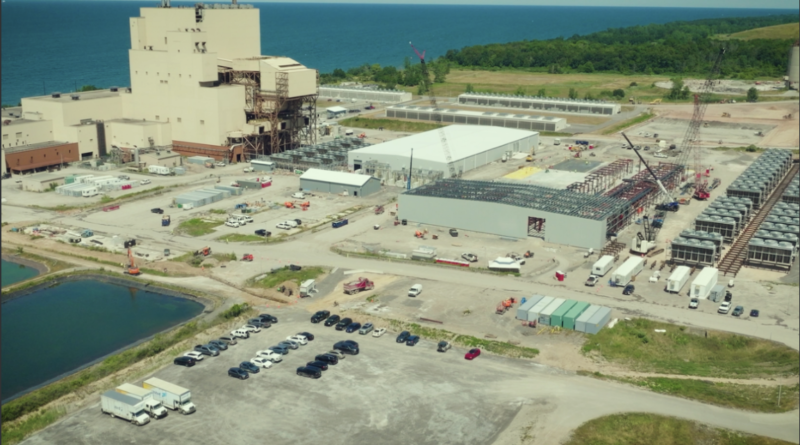
The convergence of artificial intelligence, high-performance computing (HPC), and massive real estate development has created an unprecedented gold rush. As frontier model builders like Anthropic, OpenAI, and Google demand exaflop-scale computing power, the physical infrastructure supporting these workloads is expanding at a staggering pace. At the epicenter of this industrial evolution is a $3.2 billion campus situated on the shores of Lake Ontario in Somerset, New York: the Lake Mariner data center. Formerly a coal-burning power plant, this sprawling site represents the physical manifestation of the modern energy-compute nexus. However, a localized emergency—a fire in an unfinished building within the complex—has abruptly thrust this multi-billion-dollar megaproject into the public spotlight, revealing deep structural vulnerabilities in regulatory oversight, emergency preparedness, and corporate transparency.
The incident at Lake Mariner was not merely a localized industrial mishap; it served as a stress test for the entire ecosystem governing modern AI infrastructure development. When local firefighters from the Barker Fire Department arrived at the scene, they encountered a chaotic scenario defined by absent fire suppression systems, non-functional alarms, dry fire hydrants, and a complete absence of accessible hazard disclosures. Chief Steve Matisz described his crew going into the building “kind of blind,” forced to combat heavy black smoke originating from unidentified chemical agents. The subsequent explanation—that the mandated safety data sheets had allegedly been consumed by the very fire they were meant to contextualize—underscores a profound friction point between rapid technological deployment and local emergency readiness.
Beneath the surface of this operational hazard lies an intensely complex corporate web that mirrors the broader financialization of the AI boom. The Lake Mariner campus is characterized by a tangled matrix of ownership, leases, financial backing, and technological dependency. A publicly traded firm, TeraWulf, owns and operates the data center infrastructure on land it leases from a private entity owned by its own chief executive officer. Meanwhile, Fluidstack, a UK-based infrastructure and cloud specialist, is slated to manage the operational workload of the center. Adding further institutional weight to the venture, tech giant Google holds financial warrants for a potential 14 percent equity stake in TeraWulf while acting as the primary lease guarantor for Fluidstack. Finally, frontier AI research laboratories such as Anthropic stand as the ultimate consumers, requiring the raw computational output of thousands of specialized accelerators housed within the facility.
This executive analysis unpacks the multi-faceted implications of the Lake Mariner development. By examining the historical transition from fossil-fuel generation to silicon-based compute clusters, detailing the technical and corporate architecture, comparing alternative infrastructure paradigms, and outlining strategic pathways for risk mitigation, this report provides a definitive blueprint for understanding the structural realities of the modern AI data center boom. The events in Somerset, New York, are a warning sign for municipalities, investors, and regulators worldwide: as AI infrastructure scales toward trillions of dollars in capital expenditure, the physical risks and corporate complexities must be managed with equal rigor.
2. Historical Context & Industry Evolution
To fully grasp the magnitude and complexity of the Lake Mariner project, one must trace the historical trajectory of the site itself and the broader industrial shift that has redefined rural and semi-industrial communities across North America. The Lake Mariner campus sits upon the footprint of a decommissioned coal-fired power plant located on the southern shore of Lake Ontario. For decades, this site functioned as a traditional anchor of the regional energy economy, burning fossil fuels to generate electricity for the grid while employing local workers and defining the municipal tax base. However, as global energy markets shifted, environmental regulations tightened, and economic pressures mounted, the coal plant was shuttered, leaving behind a massive industrial brownfield with a critical asset: heavy-duty grid interconnection capacity.
The first wave of post-coal repurposing at Lake Mariner focused on cryptocurrency mining, specifically Bitcoin. Low-cost, reliable electricity access made former energy sites prime real estate for proof-of-work computing, which values uninterrupted power over almost every other logistical factor. TeraWulf emerged during this era, positioning itself as a clean-energy-focused bitcoin miner that utilized nuclear and hydroelectric assets to power its mining rigs. Yet, as the economics of cryptocurrency fluctuated and the global demand curve experienced an unprecedented tectonic shift toward generative artificial intelligence, companies like TeraWulf recognized a generational pivot opportunity. The same high-capacity electrical substations, cooling-friendly proximity to large bodies of water, and vast acreage that once served coal and bitcoin could be re-engineered to house high-density AI server clusters.
This transition reflects a broader macro-evolution in industrial real estate and compute economics. Over the past decade, the data center industry has evolved through distinct paradigms:
- Paradigm 1: Enterprise Server Rooms (Pre-2010s). Characterized by localized on-premise server racks managed internally by corporate IT departments, with modest power densities and traditional HVAC cooling.
- Paradigm 2: Hyperscale Cloud Expansion (2010–2020). Driven by Amazon Web Services, Microsoft Azure, and Google Cloud, leading to the construction of massive, standardized warehouse facilities optimized for virtualized cloud computing, typically averaging 5 to 10 kilowatts per rack.
- Paradigm 3: The AI & Accelerated Compute Era (2020–Present). Characterized by hyper-dense GPU clusters (such as NVIDIA H100 and B200 architectures) requiring power densities exceeding 40 to 100 kilowatts per rack, demanding entirely new paradigms in liquid cooling, electrical distribution, and raw energy sourcing.
The catalytic driver of the current paradigm is the exponential scaling laws of large language models. As parameter counts surged from millions to hundreds of billions and trillions, the computational intensity required for model training and inference outstripped the capacity of legacy data centers. Metropolitan data center hubs—such as Northern Virginia (Data Center Alley), Silicon Valley, and Dublin—faced severe power constraints, grid congestion, and land scarcity. Consequently, developers began looking outward to rural and semi-industrial brownfields like Somerset, New York, where abandoned energy infrastructure offered a fast track to multi-hundred-megawatt capacity.
However, this historical pivot from coal to crypto to AI brought structural friction. Traditional municipal entities, local emergency services, and county planning boards were accustomed to dealing with conventional industrial sites or standard commercial real estate. They were rarely equipped to evaluate the nuanced thermodynamic, chemical, and structural hazards associated with multi-billion-dollar accelerated compute facilities. The fire at Lake Mariner highlighted the dangerous lag between hyper-fast technological evolution and the slow, incremental development of local municipal oversight frameworks. Understanding this historical context is essential for diagnosing why a state-of-the-art $3.2 billion facility could experience such fundamental basic safety failures during its construction phase.
3. Deep-Dive Architectural & Technical Mechanics
Architectural Topology and Corporate Engineering
The architectural blueprint of the Lake Mariner data center is a study in multi-layered complexity, bridging financial engineering, physical construction, and computational design. At the corporate and structural level, the facility operates via a highly specialized division of labor and risk mitigation. TeraWulf acts as the foundational landlord and physical infrastructure operator. However, the land itself is leased from a separate entity owned by TeraWulf’s own CEO, introducing a governance structure that demands rigorous scrutiny from institutional investors and regulatory bodies. This arrangement segregates real estate assets from operational entities, a common maneuver in corporate finance designed to optimize tax efficiency and capital allocation.
Operational control of the data center’s computational workloads is assigned to Fluidstack, a UK-based orchestration and cloud infrastructure specialist. Fluidstack acts as the intermediary layer, managing the deployment, networking, and orchestration of the physical hardware. To underwrite this massive capital expenditure, tech conglomerate Google entered the fray, securing financial warrants that grant it the right to acquire up to a 14 percent equity stake in TeraWulf, while simultaneously serving as the primary financial guarantor for Fluidstack’s lease commitments. At the apex of this demand hierarchy is Anthropic, one of the world’s leading frontier AI developers, which requires the raw compute cycles generated within the facility to train and operate its constitutional AI models.
Power Distribution, Thermal Dynamics, and Hardware Density
Technically, a facility of this scale operates under extreme operational constraints. Unlike standard cloud data centers, which prioritize CPU-based virtualization and balanced input/output workloads, an AI-focused facility like Lake Mariner is optimized for parallelized matrix multiplication driven by advanced Graphics Processing Units (GPUs) or specialized Tensor Processing Units (TPUs). Each server chassis packed with these accelerators draws immense electrical current, pushing power densities per rack to unprecedented levels.
- Substation Integration: The site leverages high-voltage grid interconnects originally built for the adjacent coal plant, stepping down massive voltage loads to feed dedicated transformer yards.
- Electrical Busways: Overhead and under-floor busway systems distribute multi-megawatt power blocks with minimal resistance, utilizing redundant paths to prevent catastrophic single-point failures.
- Thermal Management: Given the massive heat rejection requirements of high-density AI chips, traditional air cooling is frequently insufficient. Facilities of this caliber increasingly rely on direct-to-chip liquid cooling loops or advanced immersion cooling systems, utilizing specialized dielectric fluids.
The presence of these complex chemical coolants and high-voltage electrical corridors directly illuminates the severity of the fire incident reported at the Somerset construction site. When safety documentation vanishes, emergency responders are left entirely unequipped to determine whether water can be safely applied to a burning electrical enclosure or if specialized Class D or gaseous suppression agents are required to neutralize chemical-based thermal runaways.
Operational Workflows and Emergency Vulnerabilities
The operational workflow of constructing and commissioning an AI data center involves a rapid sequencing of contractor handoffs, electrical testing, and equipment staging. During the fit-out phase, thousands of temporary workers, specialized electrical contractors, and system integrators operate simultaneously within unfinished structures. In the case of Lake Mariner, the premature ignition of materials in an uncompleted building revealed critical gaps in baseline safety commissioning. Standard protocol mandates that life-safety systems—including smoke evacuation, pre-action sprinkler systems, emergency lighting, and fire alarm control panels—must be fully operational or subject to strict temporary compensatory measures before high-value equipment or hazardous materials are introduced.
The reported absence of working alarms, non-functional suppression systems, and dry hydrants points to a systemic failure in project management oversight during the construction-to-operations handoff. In high-stakes infrastructure builds, the pressure to meet aggressive deployment timelines demanded by tech giants and AI labs can inadvertently incentivize the de-prioritization of foundational safety infrastructure. When regulatory enforcement agencies lack the specialized technical training to audit complex AI data center builds proactively, safety compliance often devolves into an administrative exercise of paperwork generation—paperwork that, as demonstrated at Lake Mariner, can all too easily disappear when disaster strikes.
4. Comparative Market Framework & Benchmarking
To evaluate the positioning and structural uniqueness of the Lake Mariner AI data center, it is instructive to benchmark it against other prominent models of AI infrastructure deployment. The table below contrasts four distinct dimensions of large-scale AI compute development across four benchmarked models.
| Metric / Dimension | Lake Mariner (Somerset, NY) | Northern Virginia Hyperscale Hubs | Dedicated Big-Tech Campus (e.g., Microsoft/OpenAI) | Sovereign / European Cloud Facilities |
|---|---|---|---|---|
| Primary Energy Source | Nuclear, Hydro, Grid Interconnect (Brownfield) | Regional PJM Grid (Mixed Fossil/Renewable) | Dedicated SMR / Direct Power Purchase Agreements | Renewable Heavy (Hydro, Wind, Geothermal) |
| Corporate Governance | Complex web (TeraWulf / CEO-owned land / Fluidstack / Google / Anthropic) | Direct Hyperscale Ownership or Long-Term Triple-Net Leases | Fully Integrated Corporate Balance Sheet Financing | Public-Private Partnership / National Consortiums |
| Cooling Technology | Advanced Air & Transitioning to Liquid Coolants | Mixed Air, Evaporative, and Closed-Loop Chillers | Proprietary Direct-to-Chip Liquid Cooling Systems | Strict Eco-Compliant Heat Reuse & Closed-Loop Systems |
| Regulatory Oversight | Rural Municipal Board & Local Fire Districts | County-Level Zoning & Strict State Environmental Codes | Federal, State, and Multi-Jurisdictional Compliance | Rigorous EU Environmental & Data Sovereignty Laws |
The comparative matrix reveals the distinct vulnerabilities and strategic positioning of the Lake Mariner model. While Northern Virginia hubs benefit from mature, highly sophisticated regional emergency services and standardized municipal zoning laws, rural brownfield conversions like Lake Mariner operate in a regulatory gray area. Local volunteer fire departments, such as the Barker Fire Department, are often structurally and financially unequipped to manage the unique chemical and electrical hazards of a multi-billion-dollar AI facility.
Furthermore, the corporate governance model of Lake Mariner—featuring layered leasing arrangements, insider land ownership, financial warrants by hyperscalers, and end-user computing contracts with labs like Anthropic—introduces a diffusion of accountability. In a traditional enterprise data center, lines of responsibility for physical safety and code compliance are clear-cut. In the hyper-financialized AI infrastructure market, the separation between the physical landlord (TeraWulf), the infrastructure operator (Fluidstack), the financial backer (Google), and the compute consumer (Anthropic) creates a labyrinthine corporate structure where liability can easily be obscured during crisis investigations.
From an energy and environmental perspective, Lake Mariner’s utilization of former industrial brownfield land represents a positive step in reducing greenfield disruption, but the transition from cryptocurrency mining to high-density AI compute demands an exponential leap in thermal management sophistication. As the industry standard pivots decisively toward aggressive liquid cooling technologies, facilities that fail to retrofit their safety and mechanical infrastructures accordingly will face severe regulatory headwinds, increased insurance premiums, and heightened operational risks.
5. Enterprise, Geopolitical & Socio-Economic Ramifications
Granular Impact on Local Industries and Municipalities
The arrival of a $3.2 billion AI data center in a rural or semi-industrial municipality like Somerset, New York, creates a profound duality of economic impact. On one hand, local officials and economic development agencies naturally celebrate the massive capital injection, anticipated tax revenue increases, and the promise of high-tech employment opportunities. For a community that lost its primary tax base when the legacy coal plant was decommissioned, Lake Mariner represents a financial lifeline. However, the socio-economic reality is far more nuanced. As demonstrated by the recent fire incident, the operational footprint of an AI data center does not necessarily translate into proportional capacity for local municipal support services.
Rural fire departments and local emergency management agencies operate largely on volunteer participation and modest municipal budgets derived from property taxes. When an industrial facility valued in the billions—housing millions of dollars in sensitive electronic equipment, high-voltage electrical distribution systems, and potentially hazardous chemical coolants—is dropped into a rural township, the strain on local infrastructure is immediate. If safety compliance, hazard disclosure documents, and active suppression systems are mismanaged during the construction phase, the human and financial risk is borne almost entirely by local first responders who lack specialized industrial firefighting training.
Regulatory Bodies and National Security Implications
On a macro-geopolitical level, facilities like Lake Mariner are foundational nodes in the global race for artificial intelligence supremacy. The compute clusters housed within these walls are the intellectual engines driving national security capabilities, economic competitiveness, and technological hegemony. Consequently, the security, resilience, and operational integrity of these data centers are matters of critical national interest.
Moreover, the involvement of tech giants like Google and frontier labs like Anthropic underscores the growing entanglement between private corporate capital and sovereign technological capacity. When private corporations finance and operate critical national compute infrastructure on former industrial sites, questions of public accountability, emergency transparency, and corporate governance become central to public policy debates.
6. Strategic Implementation Roadmap & Future Outlook
As the AI infrastructure market matures over the next 12 to 36 months, developers, operators, and municipal authorities must adopt a rigorous strategic implementation roadmap to prevent catastrophic safety failures and ensure sustainable integration. The lessons learned from the Lake Mariner fire demand a complete overhaul of how mega-scale data center projects are planned, constructed, and audited.
12-Month Horizon: Immediate Remediation and Safety Standardization
In the short term, stakeholders across the Lake Mariner ecosystem—and similar builds nationwide—must prioritize comprehensive safety audits and emergency integration protocols.
- Mandatory Safety Audits: Independent third-party engineering firms must conduct exhaustive reviews of all fire suppression, alarm, and water supply systems across unfinished and operational structures.
- Digital Hazard Management: Transitioning away from vulnerable paper safety data sheets to secure, cloud-backed, and locally accessible digital emergency response repositories that local fire departments can access via encrypted mobile terminals.
- First Responder Cross-Training: Operators must fund and execute comprehensive training programs for local volunteer fire departments, familiarizing them with high-voltage electrical hazards, battery energy storage systems (BESS), and chemical coolants.
### 24-Month Horizon: Architectural Evolution and Grid Integration
Over a two-year horizon, the focus must shift toward structural and energy resilience.
- Advanced Cooling Integration: Standardizing closed-loop liquid cooling architectures with built-in leak detection and automated containment systems to minimize thermal runaway risks.
- Grid Modernization Partnerships: Collaborating closely with regional transmission organizations to ensure that massive power draws are balanced with dedicated local renewable or nuclear generation assets, shielding local ratepayers from price spikes.
### 36-Month Horizon: Governance Reform and Long-Term Sustainability
Looking toward a three-year outlook, structural governance and regulatory frameworks must evolve.
- Standardized Corporate Accountability: Establishing transparent legal frameworks that clarify liability and safety responsibilities across multi-tiered corporate structures (landlords, operators, financial guarantors, and compute tenants).
- State-Level Oversight Boards: Creating specialized state-level industrial compute oversight committees to assist rural municipalities in evaluating, permitting, and auditing multi-billion-dollar data center developments.
7. Frequently Asked Questions (FAQ) & Expert Insights
1. What caused the fire at the Lake Mariner data center in Somerset, New York?
The fire occurred in an unfinished building within the $3.2 billion campus. While official investigations into the exact ignition source are ongoing, the incident gained widespread attention because local firefighters reported a total lack of working alarms, non-functional fire suppression systems, and dry hydrants. Compounding the danger, mandated safety data sheets were allegedly destroyed in the fire, leaving emergency responders without critical hazard information.
2. Who owns and operates the Lake Mariner data center?
The facility features a complex corporate structure. TeraWulf owns and operates the data center infrastructure on land it leases from a private company owned by its own chief executive officer. Fluidstack, a UK-based infrastructure company, manages the operational workloads. Meanwhile, Google holds financial warrants for a potential 14 percent equity stake in TeraWulf and guarantees Fluidstack’s lease payments, while Anthropic utilizes the compute capacity.
3. Why are AI data centers facing increased scrutiny regarding emergency safety?
AI data centers are vastly different from traditional commercial buildings or legacy cloud facilities. They house thousands of high-density accelerated computing units, require massive electrical loads, and frequently utilize complex chemical coolants and high-voltage distribution systems. When these facilities are constructed in rural areas supported by volunteer fire departments, any lapse in life-safety systems or hazard documentation poses severe risks to human life and property.
4. How do tech giants like Google and Anthropic fit into the Lake Mariner ecosystem?
Google acts as a crucial financial backer and lease guarantor, securing financial warrants to protect its investment while ensuring the operational viability of infrastructure providers like Fluidstack. Anthropic represents the end-user compute consumer, utilizing the massive processing power generated at the facility to train and operate advanced large language models.
5. What steps are being recommended to prevent similar safety failures in future AI infrastructure projects?
Industry experts and safety advocates recommend mandatory independent safety audits during construction phases, the implementation of digital cloud-backed emergency response documentation rather than vulnerable paper records, dedicated funding for local first responder training, and standardized state-level oversight to support rural municipalities in auditing complex industrial builds.
6. How does transitioning a former coal plant into an AI data center impact local communities?
Repurposing brownfield sites leverages existing electrical grid interconnections and revitalizes local tax bases, but it also strains local municipal infrastructure. Without proactive investment in emergency services, zoning reform, and transparent corporate governance, rural communities can find themselves bearing disproportionate safety and logistical risks for multi-billion-dollar technological developments.
Discover more in-depth coverage in our Technology editorial hub.
For primary data verification and historical benchmarks, consult official releases on Reuters Global News.
