
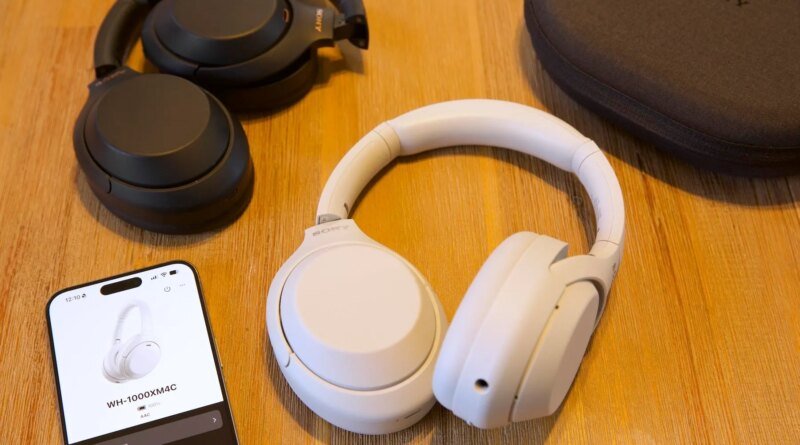
Sony Revives Legendary Xm4 Headphones After Six Years
Sony Revives Legendary: 1. Executive Summary & Strategic Importance
In the fiercely competitive landscape of consumer personal audio, few product lineages command the legendary status and widespread cultural reverence of Sony’s WH-1000X series. Six years after the original WH-1000XM4 headphones debuted in the tumultuous autumn of 2020—rapidly seizing the crown as the definitive industry standard for over-ear active noise cancellation (ANC)—Sony has orchestrated a fascinating and calculated maneuver. Rather than leaving the XM4 legacy exclusively to the secondary market or forcing purists into newer design philosophies, Sony has resurrected the iconic platform in the form of the newly minted WH-1000XM4C.
This strategic pivot is far more than a simple inventory replenishment or a nostalgic marketing play. It represents a profound acknowledgment of shifting consumer ergonomics, manufacturing realities, and the persistent demand for a specific design factor that modern audio engineering nearly abandoned: the collapsible, folding hinge. When Sony released the WH-1000XM5 in 2022, the company fundamentally altered its industrial design language. The XM5 traded the compact, folding architecture of its predecessor for a sleeker, fixed-hinge profile that maximized structural rigidity at the direct expense of portable convenience. For millions of frequent flyers, enterprise commuters, and audiophiles who prioritized a chassis capable of folding into a rigid, pocket-friendly carrying case, the XM5 was a step backward in functional utility.
By reintroducing the architecture of the XM4 via the XM4C—complete with subtle modernizations, refreshed colorways including a sophisticated lavender option, and optimized supply-chain integration—Sony is effectively addressing a glaring market gap of its own making. Stakeholders across the consumer electronics ecosystem are closely monitoring this rollout. Competitors like Bose, Sennheiser, and Apple are evaluating how consumer loyalty to an aging acoustic platform will influence purchasing decisions against newer flagships. For enterprise analysts, the XM4C serves as a masterclass in product lifecycle management, demonstrating how a legacy hardware ecosystem can be revitalized without the astronomical research and development costs of a ground-up acoustic redesign. Ultimately, the XM4C reinforces Sony’s market dominance by offering a masterclass in giving the consumer base precisely what they have aggressively demanded for years: legendary acoustics paired with unmatched structural portability.
2. Historical Context & Industry Evolution
To fully comprehend the strategic weight of the WH-1000XM4C, one must trace the ferocious acoustic arms race that defined the portable audio market throughout the mid-2010s and early 2020s. For nearly a decade, Sony and Bose locked horns in a zero-sum game of technological leapfrog. Bose had long commanded the enterprise travel market with its iconic QuietComfort series, establishing an ironclad monopoly on business class cabins and open-plan offices. However, Sony’s aggressive entry into the high-end ANC sector disrupted this duopoly entirely, culminating in the 2018 release of the WH-1000XM3 and, subsequently, the triumphant launch of the WH-1000XM4 in August 2020.
The catalytic drivers behind the XM4’s meteoric rise were manifold. Arriving precisely when remote work, global virtualization, and home office setups were surging due to macro-level health events, the XM4 delivered an uncompromising triumvirate: class-leading noise cancellation powered by Sony’s proprietary HD Noise Cancelling Processor QN1, exceptional sound signature tuning via Digital Sound Enhancement Engine (DSEE Extreme) upscaling, and multi-point Bluetooth connectivity that allowed seamless transitions between laptops and smartphones. It quickly dominated tech review roundups, earning a reputation as the undisputed benchmark against which all subsequent over-ear headphones were measured.
However, the industry landscape evolved rapidly in the subsequent years. As supply chain volatility peaked and manufacturing costs fluctuated, brands began experimenting with minimalist, non-folding architectures to reduce mechanical failure points in the headband hinges. Sony’s transition to the XM5 in 2022 embodied this philosophical shift. The XM5 was lighter, featured a redesigned soft-fit leather, and boasted an updated multi-microphone ANC array. Yet, it alienated a vocal segment of the user base who heavily utilized the XM4’s ability to fold into a compact hard-shell case. Travelers lamented that the XM5’s bulky, non-collapsible carrying case devoured precious space in backpacks and carry-on luggage. This friction point created a unique historical anomaly: as original XM4 units began to dwindle in inventory and eventually phase out, secondary markets saw inflated prices for pristine or refurbished pairs. Sony’s decision to revisit the XM4 platform six years later is a direct market correction to this historical miscalculation, proving that ergonomic utility and proven acoustic engineering can hold their ground against relentless, trend-driven redesigns.
3. Deep-Dive Architectural & Technical Mechanics
An examination of the WH-1000XM4C reveals a fascinating synthesis of proven legacy hardware and quiet, iterative refinement. While the exterior silhouette remains faithful to the 2020 blueprint, the internal components and operational workflows reflect modern supply chain optimization and subtle firmware-level enhancements.
Acoustic Drivers and Sound Reproduction
At the heart of the XM4C lie the same proprietary 40mm dynamic drivers utilizing liquid crystal polymer (LCP) diaphragms found in the original XM4. These drivers are engineered for high rigidity and minimal internal loss, allowing them to deliver a rich, balanced sound profile capable of reproducing heavy bass frequencies without muddying the mid-range or distorting high frequencies. Supported by Sony’s LDAC codec—capable of transmitting approximately three times more data than conventional Bluetooth audio—the XM4C supports high-resolution audio streaming up to 96kHz/24-bit over compatible Android and high-end audio sources. The integration of DSEE Extreme leverages Edge-AI (Artificial Intelligence) developed in conjunction with Sony Music Entertainment to dynamically upscale compressed digital music files in real-time, restoring high-range sound lost during compression.
Active Noise Cancellation (ANC) and Dual Noise Sensor Technology
The noise-cancellation pipeline of the XM4C is anchored by the tried-and-true HD Noise Cancelling Processor QN1 working in tandem with an advanced Bluetooth audio system-on-chip. Dual microphones on each earcup—one feed-forward and one feedback—capture ambient noise across a broad frequency spectrum, ranging from low-frequency airplane engine rumbles to mid-frequency human chatter. The QN1 chip executes real-time noise-canceling processing at an extraordinary sampling rate, dynamically adjusting to acoustic environments and atmospheric pressure changes (making it exceptionally effective during commercial air travel). Furthermore, Personal Noise Canceling Optimizer and Atmospheric Pressure Optimizing features allow the headphones to calibrate performance specifically to the user’s hair texture, glasses, head geometry, and altitude.
Ergonomics, Mechanical Engineering, and Form Factor
The defining technical characteristic of the XM4C is its mechanical folding architecture. Unlike the fixed headband slider and swivel earcups of the XM5, the XM4C utilizes robust multi-axis folding hinges machined from reinforced composite materials. This allows the earcups to rotate inward and fold upward into the headband arch, reducing the overall volumetric footprint of the headphones by nearly 40 percent when stowed. The headband itself incorporates a balanced weight distribution system with synthetic leather padding that evenly disperses clamping force across the cranium, mitigating fatigue during extended listening sessions. Touch controls embedded on the right earcup provide intuitive capacitive gestures for playback control, volume adjustment, and call management, supplemented by physical buttons for power and custom ambient sound mode toggles.
4. Comparative Market Framework & Benchmarking
To evaluate where the WH-1000XM4C stands in the contemporary audio ecosystem, it is essential to benchmark its performance, design philosophy, and feature set against its direct sibling (the WH-1000XM5) and its fiercest market rivals (the Bose QuietComfort Ultra and Apple AirPods Max).
| Feature / Specification | Sony WH-1000XM4C | Sony WH-1000XM5 | Bose QC Ultra Headphones | Apple AirPods Max |
|---|---|---|---|---|
| Form Factor & Portability | Collapsible / Folds into compact hard case | Non-folding / Swivel earcups only (Bulky case) | Collapsible / Folds into compact zippered case | Non-folding / Flat-lying earcups (Smart Case) |
| Processor & ANC Tech | QN1 Chip + Dual Noise Sensor | Integrated Processor V1 + QN1 (8 mics) | Custom Noise Cancellation Array (Custom DSP) | Apple H1 Chip per earcup (9 mics total) |
| Hi-Res Audio Codecs | LDAC, AAC, SBC | LDAC, AAC, SBC | aptX Adaptive, AAC, SBC | AAC, SBC (Apple Ecosystem Optimized) |
| Battery Life (ANC On) | Approx. 30 Hours | Approx. 30 Hours | Approx. 24 Hours (22h Immersive Audio) | Approx. 20 Hours |
| Multi-Point Connectivity | Yes (Simultaneous 2-device pairing) | Yes (Simultaneous 2-device pairing) | Yes (Simultaneous 2-device pairing) | Yes (Apple Ecosystem Auto-Switching) |
The comparative matrix illuminates the strategic positioning of the XM4C. While the newer XM5 introduces an updated aesthetic and an expanded microphone array for slightly improved voice pickup in noisy environments, it loses the crucial folding mechanism that makes the XM4 series an ideal travel companion. The Bose QuietComfort Ultra matches the collapsible convenience of the Sony units and offers stellar comfort, but often commands a higher premium and utilizes proprietary spatial audio implementations that lack the universal codec flexibility of Sony’s LDAC architecture. Meanwhile, Apple’s AirPods Max remain an exquisite, heavy aluminum masterpiece deeply tethered to the Apple ecosystem, but their exorbitant price point and flawed, minimalist “Smart Case” leave significant room in the market for utilitarian champions like the XM4C.
Ultimately, the XM4C bridges a dangerous vulnerability for Sony. By reviving a trusted design that consumer testing proved was nearly flawless in everyday execution, Sony provides an alternative for buyers who actively reject the non-folding, bulky trends of current flagship designs. It proves that technological progress in audio does not always require rendering previous generations obsolete; sometimes, perfecting and preserving a proven ergonomic triumph is the most disruptive market move a manufacturer can make.
5. Enterprise, Geopolitical & Socio-Economic Ramifications
The release of a legacy hardware refresh like the WH-1000XM4C reverberates far beyond consumer audio enthusiast forums, touching upon global supply chain dynamics, enterprise procurement strategies, and evolving consumer sustainability mindsets.
Supply Chain Resilience and Manufacturing Lifecycle Economics
In an era characterized by geopolitical instability, semiconductor shortages, and escalating research and development overheads, consumer electronics manufacturers are increasingly examining the economic viability of continuous model iteration. Designing an entirely new acoustic platform requires millions of dollars in tooling, mold creation, acoustical chamber testing, and compliance certification. By returning to the mature tooling and manufacturing blueprints of the XM4, Sony can optimize production efficiency, leverage pre-existing supplier contracts for raw materials and drivers, and achieve higher profit margins while passing cost savings down to the end consumer.
This approach mirrors strategies seen in the automotive and computing industries—where tried-and-true platforms are kept in production alongside next-generation flagships to capture different tiers of the market. For Sony, the XM4C represents a low-risk, high-reward venture that maximizes the return on investment of R&D expenditure originally sunk into the platform back in 2020.
Enterprise Procurement and the Remote Work Ecosystem
The enterprise sector represents one of the most lucrative verticals for premium noise-canceling headphones. Corporate procurement departments and IT hardware managers purchase thousands of units annually to provision remote executives, traveling consultants, and open-office personnel. For corporate buyers, reliability, battery longevity, multi-point connectivity, and ease of storage are paramount.
The XM4C fits this enterprise profile with surgical precision. Corporate workers frequently shuttle between home offices, client sites, and international flights. The collapsible architecture of the XM4C allows it to slide effortlessly into crowded briefcases without requiring specialized, oversized carrying compartments. Furthermore, its proven track record of durability minimizes corporate IT support tickets related to hinge failures or firmware instability, making it a safe, standardized deployment choice for enterprise fleet management.
6. Strategic Implementation Roadmap & Future Outlook
As Sony deploys the WH-1000XM4C into global distribution channels, the product’s trajectory over the next 12 to 36 months will serve as an intriguing case study in modern product lifecycle management. Understanding the critical milestones and risk mitigation strategies illuminates how Sony plans to extract maximum value from this legacy revival.
12-to-36-Month Strategic Milestones
- Phase 1: Market Introduction & Inventory Stabilization (Months 1–6): Establish retail dominance across major consumer electronics outlets and online marketplaces. Capitalize on pent-up demand from users seeking original XM4-tier performance, supported by targeted digital campaigns highlighting the new colorways, such as the lavender option.
- Phase 2: Enterprise B2B Push (Months 6–18): Target corporate procurement channels and travel-heavy enterprise accounts with bundled bulk-purchasing incentives, positioning the XM4C as the ultimate remote-work and business-travel audio tool.
- Phase 3: Firmware Optimization & Ecosystem Synergy (Months 18–30): Roll out periodic firmware updates via the Sony Headphones Connect app to maintain modern Bluetooth stability, optimize battery degradation algorithms, and ensure seamless pairing compatibility with emerging smartphone and computing architectures.
- Phase 4: Lifecycle Evaluation & Synergy Assessment (Months 30–36): Analyze sales velocity, consumer retention metrics, and cannibalization rates relative to the XM5 and hypothetical future flagships to determine whether the “classic revival” model should be applied to other legacy audio product categories.
Risk mitigation remains central to this roadmap. The primary risk facing the XM4C is internal brand cannibalization—specifically, that consumers seeking premium Sony over-ear headphones may opt for the slightly cheaper XM4C over the higher-priced XM5. Sony must carefully differentiate the marketing narratives: positioning the XM5 as the cutting-edge aesthetic choice for stationary or desk-bound users, while framing the XM4C as the ultimate, travel-optimized ergonomic champion.
7. Frequently Asked Questions (FAQ) & Expert Insights
What is the primary difference between the original Sony WH-1000XM4 and the new WH-1000XM4C?
The WH-1000XM4C maintains the exact same acoustic architecture, driver technology, noise-canceling capabilities, and iconic folding mechanical design as the original 2020 WH-1000XM4. The primary updates lie in refreshed aesthetic packaging, minor manufacturing component optimizations to align with modern environmental standards, and the introduction of new colorways, most notably a sophisticated lavender option.
Why did Sony bring back the XM4 design after moving to the XM5 in 2022?
Sony’s transition to the WH-1000XM5 in 2022 introduced a sleek, modern aesthetic but abandoned the collapsible, folding hinge design in favor of a fixed structure. This alienated a substantial segment of frequent travelers and commuters who relied on the XM4’s ability to fold into a compact hard-shell case. The XM4C was brought back to directly satisfy this persistent market demand for unmatched structural portability combined with legendary acoustic performance.
How does the noise cancellation of the XM4C compare to modern flagships like the XM5 or Bose QC Ultra?
Despite being based on a six-year-old hardware platform, the HD Noise Cancelling Processor QN1 and dual noise sensor array in the XM4C remain remarkably competitive. While newer models like the XM5 feature an expanded microphone count for slightly superior voice pickup during phone calls, the XM4C’s attenuation of ambient low-frequency rumbles (such as airplane engines and train tracks) performs virtually on par with contemporary flagships costing significantly more.
Does the XM4C support high-resolution audio and multi-point Bluetooth connectivity?
Yes. The XM4C fully supports Sony’s proprietary LDAC high-resolution audio codec, enabling wireless streaming rates up to 96kHz/24-bit when paired with compatible source devices. Furthermore, it retains robust multi-point Bluetooth connectivity, allowing users to pair the headphones to two separate devices simultaneously—such as a laptop for video conferencing and a smartphone for incoming calls—with seamless audio source switching.
Is the carrying case for the XM4C smaller than the case provided with the XM5?
Significantly so. Because the XM4C features multi-axis folding hinges, the earcups fold inward toward the headband, allowing the headphones to pack down into a compact, hard-shell zippered carrying case that easily slips into backpacks, briefcases, and carry-on luggage. In contrast, the XM5 requires a much bulkier, non-collapsible carrying case that occupies substantially more space.
Who is the ideal target consumer for the WH-1000XM4C?
The XM4C is engineered specifically for frequent travelers, enterprise remote workers, commuters, and audio enthusiasts who prioritize maximum portability, proven acoustic fidelity, and comfortable over-ear ergonomics without wanting to compromise on luggage space or pay inflated prices for modern flagships whose design choices they dislike.
Discover more in-depth coverage in our Technology editorial hub.
For primary data verification and historical benchmarks, consult official releases on Reuters Global News.
