
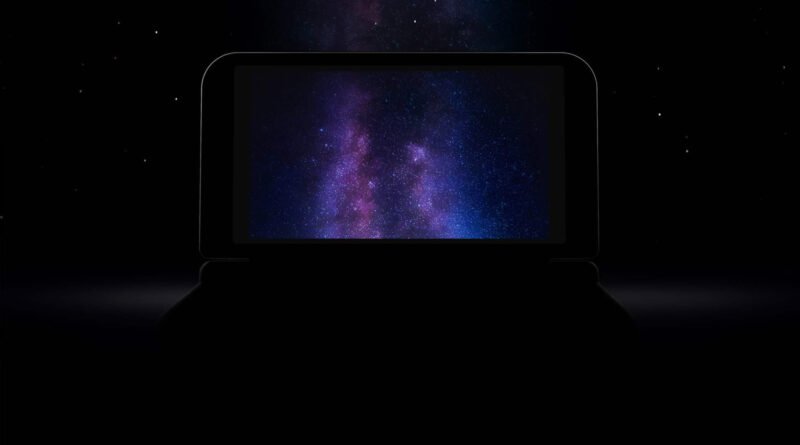
Retroid Dual Screen Handheld Teased a New Era for Nintendo Ds Emulation and Retro Gaming
Retroid Dual Screen: 1. Executive Summary & Strategic Importance
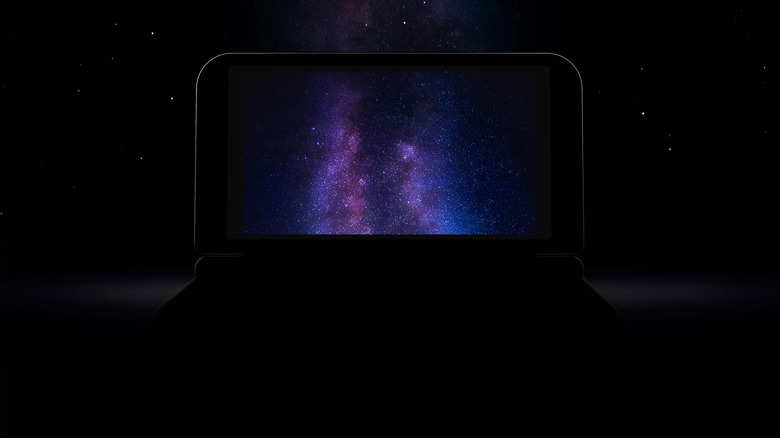
The retro gaming landscape is undergoing a profound structural shift, catalyzed by hardware manufacturers looking beyond traditional single-screen form factors. Recently, Retroid—a dominant force in the emulation and budget-friendly handheld ecosystem—teased an upcoming dual-screen device explicitly aimed at enthusiasts of classic dual-screen portables, most notably the iconic Nintendo DS and Nintendo 3DS libraries. While concrete specifications, pricing tiers, and official release dates remain tightly under wraps, the mere acknowledgment of this hardware development signals a major turning point for the community. For years, playing Nintendo DS games on modern emulation handhelds meant dealing with awkward side-by-side screen splitting, compressed scaling, or clumsy touch-to-analog mappings on single-panel displays. The introduction of a dedicated, clamshell or dual-display layout by a trusted manufacturer like Retroid promises to bridge the long-standing ergonomic and functional gap that has plagued retro enthusiasts.
Pivotal stakeholders in this unfolding narrative include not only Retroid as the primary hardware architect, but also the broader open-source emulation community, custom firmware developers, and an eager consumer base of retro gaming purists. Macro implications extend well beyond casual hobbyists; this move could validate the commercial viability of form-factor-specific emulation devices in a market otherwise saturated with generic vertical and horizontal candy-bar consoles. As companies race to capture market share in high-performance retro gaming, hardware diversification becomes the primary differentiator. Retroid’s strategic pivot toward dual screens addresses a long-neglected niche: native, uncompromised emulation of touch-driven, dual-display software libraries without requiring users to resort to expensive, aging original hardware or cumbersome dual-device setups.
Furthermore, this development forces competing manufacturers to re-evaluate their product pipelines. If Retroid successfully executes an affordable, ergonomically sound, and software-compatible dual-screen system, competitors like Anbernic, PowKiddy, and Ayaneo will likely accelerate their own competing prototypes. The strategic importance thus lies in setting a new industry benchmark. By solving the complex engineering challenges associated with dual-panel thermal management, hinge durability, and software multi-window handling on Android or Linux operating systems, Retroid is positioning itself at the absolute forefront of specialized handheld hardware design. This deep dive will systematically unpack the historical trajectory, technical underpinnings, comparative market positioning, and future outlook of this anticipated gaming device.
2. Historical Context & Industry Evolution
To fully appreciate the significance of Retroid’s recent teaser, one must examine the evolutionary trajectory of retro handheld gaming over the past decade. The modern retro handheld boom owes its existence to the convergence of smartphone-grade system-on-chip (SoC) affordability and the maturation of open-source emulation software like RetroArch, PPSSPP, and various dedicated standalone emulators. Initially, the market was dominated by low-cost, low-power devices capable of handling up to 8-bit and 16-bit systems. However, as silicon manufacturing costs plummeted and processing efficiency increased, manufacturers quickly scaled up their capabilities, pushing into PlayStation 1, PSP, N64, Dreamcast, and eventually GameCube and PlayStation 2 emulation.
Despite these monumental leaps in raw processing power, software libraries featuring dual screens presented a persistent architectural bottleneck. When Nintendo released the Nintendo DS in 2004, followed by the 3DS in 2011, their success was deeply intertwined with their unique dual-display hardware philosophy. Emulating these systems on standard single-screen Android or Linux handhelds always required heavy compromises. Developers engineered various display modes—such as switching between screens with a hotkey, shrinking both screens onto a single horizontal or vertical panel, or utilizing -in- overlays. While functional, these workarounds severely degraded the user experience, often making text illegible, touch inputs imprecise, and gameplay frustratingly disjointed.
Previous paradigms in retro handheld design heavily favored uniformity. Companies maximized profit margins by sourcing standardized single-screen panels originally manufactured for smartphones or small tablets. Designing a custom dual-screen chassis meant dealing with complex ribbon cable routing, increased power consumption, custom software driver development, and higher structural failure rates, particularly around mechanical hinges. Consequently, consumers relied on original hardware, aging mobile phones paired with bulky physical controllers, or high-end x86 PC handhelds running dual monitors. Retroid’s entry into the dual-screen space represents a catalytic shift away from one-size-fits-all hardware toward purpose-built emulation devices tailored to specific generational libraries, marking a mature phase in the industry’s evolution.
3. Deep-Dive Architectural & Technical Mechanics
Hardware Layout, Hinge Engineering, and Display Panels
Designing a dual-screen handheld introduces unique mechanical and electrical engineering challenges. Unlike standard single-screen clamshells (such as the Retroid Pocket Flip or Game Boy Advance SP style devices), a true dual-screen system requires routing high-speed display data signals and touch-controller interfaces across a central hinge mechanism twice. Retroid’s engineering team must select robust, fatigue-resistant hinge designs capable of enduring thousands of open-and-close cycles without degrading the internal ribbon cables. Furthermore, the selection of display panels is critical. To maintain historical accuracy and optimal scaling for Nintendo DS and 3DS software, the panels must offer appropriate aspect ratios, high pixel density to prevent scaling artifacts, and responsive capacitive touch capabilities on at least the lower screen.
Processing Power, Thermal Management, and Emulation Performance
Emulating the Nintendo DS requires relatively modest processing power, but emulating the Nintendo 3DS—especially at higher resolutions (upscaling 2x or 3x)—demands significant CPU and GPU muscle. To ensure seamless performance across both systems, Retroid will likely need to integrate a modern, mid-to-high-tier ARM-based SoC, such as a capable Unisoc, MediaTek, or Qualcomm Snapdragon chipset. Dual screens also generate localized heat concentrations. Efficient passive thermal dissipation becomes paramount to prevent thermal throttling during extended gaming sessions, all within a compact chassis that must remain comfortable to hold over long periods.
Software Integration, OS Architecture, and Multi-Display Management
Hardware is only half the battle; the software ecosystem must be meticulously optimized to support dual displays natively. Whether Retroid opts for a customized Android build or a Linux-based environment (such as Rocknix or JelOS variants), the operating system must correctly handle multi-display output, screen orientation locking, and custom overlay mapping. Emulators like DraStic (for DS) and Citra or its successors (for 3DS) rely heavily on precise touch-to-screen coordinate mapping. Retroid’s software engineers must provide seamless integration layers that allow users to effortlessly swap screen focal points, adjust layouts on the fly, and map physical hardware buttons to secondary touch functions without requiring tedious manual calibration.
4. Comparative Market Framework & Benchmarking
To understand where Retroid’s upcoming dual-screen device fits into the broader ecosystem, it is essential to evaluate it against alternative methodologies currently employed by retro gaming enthusiasts.
| Emulation Approach | Hardware Ergonomics | DS/3DS Emulation Accuracy | Portability & Form Factor | Estimated Cost / Value |
|---|---|---|---|---|
| Original Nintendo 3DS / DS Hardware | Exceptional (Native layout) | Flawless (100% native compatibility) | High (Pocketable clamshell) | Low to Moderate (Used market dependent) |
| Single-Screen Android Handheld (e.g., Retroid Pocket 4 Pro) | Good (Standard layout) | Fair (Compromised screen layouts) | High (Compact candy-bar) | Moderate ($150 – $200) |
| Smartphone + Telescopic Controller (e.g., Gamesir X2) | Variable (Top-heavy balance) | Good (High-res screens) | Low (Bulky when combined) | High (Depends on phone used) |
| Upcoming Retroid Dual-Screen Handheld | Optimized (Purpose-built dual panels) | High to Excellent (Dedicated physical mapping) | Moderate to High (Clamshell protection) | Competitive ($180 – $250 anticipated) |
The comparative matrix highlights the distinct trade-offs inherent in each approach. While original hardware remains undefeated in software compatibility, aging batteries, degrading resistive or early capacitive touchscreens, and a lack of modern conveniences (such as fast USB-C charging, high-speed Wi-Fi, and expandable storage) limit its long-term viability. Conversely, single-screen Android handhelds offer tremendous versatility across dozens of retro platforms but inherently stumble when confronted with software designed from the ground up for two simultaneous viewpoints. Retroid’s forthcoming device directly targets the white space in this matrix, offering the ergonomic and visual authenticity of original hardware combined with the performance headroom, connectivity, and modern display quality of contemporary silicon.
5. Enterprise, Geopolitical & Socio-Economic Ramifications
Supply Chain Dynamics and Component Sourcing
The manufacturing ecosystem for retro handhelds relies heavily on complex Asian supply chains, predominantly centered in Shenzhen, China. Sourcing specialized, non-standard dual-screen panel combinations introduces unique supply chain vulnerabilities. Unlike standard smartphone screens, which benefit from massive economies of scale, dual-screen handheld components may experience production bottlenecks or higher component costs. Retroid’s ability to successfully deliver this device at a consumer-friendly price point will depend heavily on its supplier relationships and projected production scale.
Intellectual Property, Emulation Ethics, and Legal Landscapes
The retro gaming hardware market operates in a nuanced legal gray area. While manufacturing and selling emulation hardware is entirely legal (as the hardware does not inherently contain copyrighted BIOS files or game ROMs), the marketing and cultural association with proprietary libraries—specifically Nintendo’s iconic intellectual property—place these devices under intense scrutiny. Although Nintendo frequently targets ROM distribution websites and high-profile hardware vendors, open-source emulation hardware developers continue to operate within established legal boundaries by emphasizing homebrew, personal backups, and generic computing capabilities.
Consumer Culture and Retro Preservation Movements
Beyond commercial implications, the socio-economic impact of devices like the Retroid dual-screen handheld touches upon digital preservation. As original physical cartridges and consoles degrade, and as digital storefronts like the Nintendo 3DS eShop face permanent closure, enthusiast hardware plays a vital role in keeping retro software accessible. By making dual-screen gaming comfortable, accessible, and visually faithful, Retroid is actively contributing to the preservation of interactive media history, ensuring that future generations can experience classic touch-driven software without paying exorbitant collector-market prices for deteriorating vintage hardware.
6. Strategic Implementation Roadmap & Future Outlook
As the retro gaming community looks toward the next 12 to 36 months, several critical milestones will dictate the success and long-term viability of Retroid’s dual-screen initiative.
- Phase 1: Prototype Refinement and Closed Beta Testing (Months 1–6): Finalizing chassis ergonomics, hinge durability stress tests, and initial kernel-level multi-display driver optimization. Initial leaks and developer previews will set community expectations.
- Phase 2: Official Announcement and Specification Reveal (Months 6–9): Public unveiling of exact SoC specifications, battery capacity, screen dimensions, pricing, and launch colorways. Pre-order campaigns will test market demand.
- Phase 3: Mass Production and Global Distribution (Months 9–15): Scaling manufacturing output, addressing early firmware bugs through over-the-air (OTA) updates, and establishing robust logistics channels for international shipping.
- Phase 4: Ecosystem Maturation and Custom Firmware Support (Months 15–36): Engagement with third-party developers to bring specialized custom operating systems, enhanced standalone emulators, and optimized performance profiles to the hardware.
Risk mitigation will be a central theme for Retroid during this rollout. Mechanical failure of the hinge mechanism represents the single greatest threat to consumer satisfaction and brand reputation in clamshell devices. By investing in reinforced metal-alloy hinges and rigorous quality control protocols, Retroid can safeguard its market position. Looking further ahead, the successful commercialization of this dual-screen handheld could permanently alter the product roadmaps of competing brands, cementing dual-display form factors as a permanent, mainstream category within the broader retro gaming hardware ecosystem.
7. Frequently Asked Questions (FAQ) & Expert Insights
What systems will the Retroid dual-screen handheld be able to emulate?
Based on typical Retroid hardware tiers and the presence of dual screens, the device is expected to effortlessly handle Nintendo DS and Nintendo 3DS emulation. Depending on the chosen processor, it may also provide robust performance for older single-screen systems like Game Boy Advance, PlayStation 1, PSP, N64, and potentially select GameCube and PS2 titles that do not strictly require dual displays.
Will it feature a clamshell design or a fixed dual-screen layout?
While Retroid’s exact physical design has not been fully detailed in early teasers, industry analysts strongly anticipate a clamshell (folding) form factor reminiscent of the Nintendo DS or Nintendo 3DS. A clamshell design protects both screens during transport and maintains optimal ergonomic angles for dual-screen viewing and touch interaction.
What operating system will power the device?
Retroid predominantly utilizes Android for its handheld lineup due to its mature emulation ecosystem, robust driver support, and compatibility with apps like RetroArch, DraStic, and Citra forks. However, the possibility of community-driven Linux firmware support cannot be ruled out given the strong demand for lightweight, streamlined OS environments among purists.
How will touch inputs and screen switching be handled?
The lower screen is expected to feature full capacitive touch support, essential for Nintendo DS and 3DS titles that rely heavily on stylus or finger input. Software overlays and dedicated hardware hotkeys will allow users to seamlessly switch focal points, view both screens simultaneously, or enlarge one screen while minimizing the other.
How does this compare to playing on an original Nintendo 3DS?
While an original 3DS offers native hardware compatibility, it is limited by aging batteries, lower-resolution resistive touchscreens, and a lack of modern performance enhancements like high-resolution upscaling, fast-forwarding, save states, and modern wireless connectivity. Retroid’s device aims to provide a modernized, high-performance interpretation of the dual-screen experience.
When is the release date and what will the pricing be?
Retroid has only released initial teasers, meaning official release dates and pricing structures have not been finalized. However, based on historical pricing strategies for the brand, consumers can reasonably anticipate a competitive price point falling roughly between $180 and $250 USD.
Discover more in-depth coverage in our Technology editorial hub.
For primary data verification and historical benchmarks, consult official releases on Reuters Global News.
