
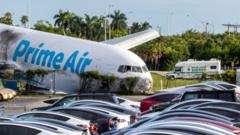
Miami Cargo Plane Crash: Investigators Probe Runway Overrun
A fatal runway overrun involving an Amazon-contracted cargo aircraft at Miami International Airport (MIA) has sent shockwaves through the global logistics and aviation sectors. The incident, which resulted in five fatalities and five injuries, has triggered an immediate, high-stakes investigation by federal authorities. As rescue crews and investigators secure the scene, the aviation community is turning its attention to the complex web of factors that can cause a heavy transport category aircraft to overshoot a runway during landing. This tragedy highlights the critical operational pressures of modern e-commerce supply chains and raises urgent questions about wet-lease cargo safety, runway surface conditions, and meteorological challenges at one of the busiest international gateways in the United States.
1. Executive Summary & Strategic Importance
The runway excursion at Miami International Airport represents a critical juncture for the air cargo industry. The aircraft, operating on behalf of Amazon Prime Air, failed to decelerate within the available landing distance of the runway, breaching the airport perimeter and resulting in severe structural damage, five fatalities, and five injuries. The immediate stakeholders involved are diverse and highly influential: Amazon, which relies on a distributed network of third-party air carriers to maintain its rapid delivery promises; the contract carrier operating the flight; the Federal Aviation Administration (FAA); and the National Transportation Safety Board (NTSB), which has assumed lead investigative authority.
From a macro perspective, this accident disrupts the delicate balance of the global supply chain, particularly the high-velocity e-commerce logistics corridor connecting North America with Latin American markets through Miami. MIA is the primary hub for international freight in the United States, and any prolonged disruption to its runway operations ripples through global distribution networks. Furthermore, the incident places a sharp regulatory spotlight on the safety oversight of outsourced cargo operations. As e-commerce giants increasingly rely on ACMI (Aircraft, Crew, Maintenance, and Insurance) wet-lease agreements, regulators are forced to examine whether the intense operational tempos and tight turnaround times inherent in these contracts introduce systemic risks to flight safety.
2. Historical Background & Contextual Evolution
To understand the significance of the Miami cargo plane crash, one must examine the historical evolution of runway excursions and the rapid transformation of the air cargo sector over the past decade. Historically, runway overruns—classified as a subset of runway excursions—have remained one of the most persistent safety challenges in commercial aviation. According to data from the Flight Safety Foundation, runway excursions account for nearly 30% of all commercial aviation accidents, making them the single most common accident category.
The rise of rapid-delivery e-commerce has fundamentally altered the operational profile of air cargo. Traditionally, air freight operated on predictable, hub-and-spoke schedules with generous buffer times. The “Amazon Effect” changed this paradigm, demanding near-instantaneous shipping turnarounds. To meet this demand, retail giants constructed vast, proprietary air logistics networks. Rather than operating these fleets directly, they contracted established cargo airlines under wet-lease agreements. This operational model has faced scrutiny in the past, most notably following the 2019 crash of Atlas Air Flight 3591—an Amazon Prime Air flight—in Trinity Bay, Texas, which highlighted issues related to pilot training, spatial disorientation, and hiring practices within the cargo sector.
Additionally, Miami International Airport has a long history of managing heavy, wide-body cargo operations under challenging tropical weather conditions. The airport’s runways are subjected to intense convective weather, heavy downpours, and rapid wind shifts, particularly during the summer and autumn months. Over decades, the FAA and airport authorities have implemented various safety measures, such as Engineered Material Arresting Systems (EMAS) and high-friction runway treatments, to mitigate overrun risks. However, the physical limitations of stopping a heavy aircraft on a contaminated runway during adverse weather remain a constant operational challenge.
3. In-Depth Technical & Policy Breakdown
Investigating a runway overrun requires a meticulous, multi-disciplinary approach that analyzes aerodynamic forces, mechanical systems, meteorological data, human factors, and regulatory policies. The NTSB’s investigation will focus on several critical vectors to reconstruct the final moments of the flight and determine the probable cause of the accident.
Aerodynamic and Mechanical Deceleration Systems
Stopping a heavy cargo aircraft after touchdown relies on three primary, redundant systems: wheel brakes, spoilers (speed brakes), and engine thrust reversers. The physics of deceleration dictate that the kinetic energy of the landing aircraft must be dissipated entirely before the end of the runway. The formula for kinetic energy, E_k = 0.5 * m * v^2, demonstrates that velocity (v) has a quadratic relationship with energy; thus, even a slight increase in touchdown speed dramatically increases the energy that the braking systems must absorb.
- Autobrake and Anti-Skid Systems: Modern transport aircraft utilize sophisticated autobrake systems that apply a pre-selected rate of deceleration immediately upon touchdown. These work in tandem with anti-skid systems, which prevent wheel lockup and maximize tire-to-ground friction, similar to ABS in passenger vehicles. Investigators will analyze the flight data recorder (FDR) to determine if the autobrake system was armed, how it performed, and whether any mechanical failures occurred within the hydraulic braking circuits.
- Ground Spoilers: Upon touchdown, aerodynamic spoilers on the upper surface of the wings deploy automatically. Their primary function is not to create drag, but to “dump” lift. By destroying the lift generated by the wings, the aircraft’s full weight is transferred to the landing gear, maximizing the effectiveness of the wheel brakes. A failure or delayed deployment of ground spoilers severely compromises braking efficiency.
- Thrust Reversers: Engine thrust reversers redirect the engine’s exhaust forward, providing aerodynamic deceleration. While certification standards do not typically factor thrust reversers into required landing distances on dry runways, they are critical on wet or contaminated surfaces. Investigators will examine the physical wreckage and FDR data to verify if the thrust reversers deployed symmetrically and promptly.
Meteorological Conditions and Runway Friction
Miami’s tropical climate frequently introduces heavy rain, which can lead to runway contamination. When water accumulates on a runway surface, it poses a severe risk of hydroplaning. Hydroplaning occurs when a layer of water builds up between the aircraft tires and the runway surface, leading to a complete loss of traction and rendering braking and steering systems ineffective.
There are three primary types of hydroplaning that investigators will consider:
- Dynamic Hydroplaning: Occurs when high speeds force a wedge of water under the tires, lifting them off the runway surface. This is highly dependent on tire pressure and touchdown speed.
- Viscous Hydroplaning: Occurs on smooth runway surfaces or areas with heavy rubber deposits (often found in touchdown zones). A very thin film of water can prevent the tire from making contact with the pavement.
- Reverted Rubber Hydroplaning: Occurs during a prolonged skid. The friction generates intense heat, melting the tire rubber and trapping steam underneath, which acts as a lubricant.
The NTSB will analyze the runway’s micro-texture, macro-texture, and the presence of rubber deposits at the time of the accident. They will also review the airport’s runway friction testing logs and the specific Runway Condition Codes (RCC) reported to the flight crew prior to landing.
Operational Pressures and Crew Fatigue
The air cargo industry operates on demanding schedules, with a significant portion of flights occurring during the “window of circadian low” (typically between 02:00 and 06:00). Crew fatigue is a well-documented hazard in cargo operations. While passenger airlines are subject to strict flight time limitations and rest requirements under FAA Part 121, cargo operators historically operated under slightly different regulatory interpretations regarding duty rest periods, though safety standards have increasingly aligned.
The investigation will reconstruct the flight crew’s 72-hour history to evaluate sleep patterns, duty cycles, and potential fatigue. Additionally, investigators will look into the operational culture of the carrier. Were there implicit or explicit pressures to land in marginal weather conditions to avoid costly diversions and maintain tight e-commerce delivery windows? The cockpit voice recorder (CVR) will be vital in analyzing the crew’s decision-making process, CRM (Crew Resource Management), and adherence to stabilized approach criteria.
4. Comparative Industry Framework
To contextualize the Miami runway overrun within the broader landscape of aviation safety, it is useful to compare this incident with other notable runway excursions and cargo accidents. This comparative framework highlights systemic vulnerabilities and the efficacy of various safety interventions.
| Dimension | Miami Cargo Overrun (Current Incident) | Atlas Air Flight 3591 (2019) | Southwest Airlines Flight 1248 (2005) | FedEx Express Flight 1478 (2002) |
|---|---|---|---|---|
| Aircraft Type | Wide-body Cargo Jet (Amazon Network) | Boeing 767-300ER (Cargo) | Boeing 737-700 (Passenger) | Boeing 727-200 (Cargo) |
| Primary Vector under Investigation | Runway deceleration, hydroplaning, weather, mechanical failure | Pilot spatial disorientation, training deficiencies, systemic hiring gaps | Snow-covered runway, delayed thrust reverser deployment, lack of EMAS | Pilot fatigue, unstabilized visual approach, controlled flight into terrain/obstacle |
| Environmental Conditions | Wet runway, convective tropical weather, potential wind shear | Convective weather, heavy clouds, turbulence | Heavy snow, contaminated runway, tailwind component | Clear night, low visibility due to local terrain/lighting anomalies |
| Key Safety Outcomes & Mandates | Pending investigation; potential focus on cargo wet-lease oversight | Enhanced FAA pilot records database, improved training on spatial disorientation | Widespread installation of EMAS beds at commercial airports | Stricter enforcement of stabilized approach criteria and fatigue management |
The comparative analysis reveals a clear pattern: while mechanical failures can and do occur, the vast majority of runway excursions and landing accidents are multi-causal. They typically involve a combination of challenging environmental conditions, operational pressures, and human decision-making under stress. The Southwest Flight 1248 accident, for example, was a watershed moment that accelerated the installation of Engineered Material Arresting Systems (EMAS) across the United States. EMAS consists of high-energy-absorbing concrete blocks placed at the end of runways to safely decelerate aircraft that overrun. The presence, absence, or performance of EMAS or equivalent runway safety areas (RSA) at Miami International Airport will be a major focal point of the current investigation.
5. Socio-Economic, Enterprise & Global Ramifications
The consequences of the Miami cargo plane crash extend far beyond the immediate tragedy of the loss of life and physical destruction. The incident carries profound socio-economic, enterprise, and regulatory implications that will reshape the air logistics landscape.
Enterprise Risk and Brand Reputation for E-Commerce Giants
For Amazon, the crash represents a significant enterprise risk. While Amazon does not directly operate the aircraft—relying instead on contracted Part 121 air carriers—the public associates the “Prime Air” brand directly with the retail giant. Reputational damage from fatal accidents can influence consumer sentiment, particularly if investigations reveal systemic safety gaps or intense operational pressures within Amazon’s logistics network. This incident will likely force Amazon to conduct a rigorous, top-down audit of its contract carriers’ safety cultures, training programs, and operational parameters, potentially leading to stricter safety requirements that exceed minimum FAA mandates.
Supply Chain Disruption and Economic Impact on Miami
Miami International Airport is the economic engine of South Florida, handling over 2.5 million tons of cargo annually and serving as the primary transshipment point between Latin America and the United States. The closure of a major runway for forensic investigation and wreckage removal causes immediate, severe bottlenecks. Cargo flights must be diverted, delayed, or canceled, leading to a backlog of perishable goods, pharmaceuticals, and high-value electronics. The financial impact on freight forwarders, customs brokers, and ground logistics providers is measured in millions of dollars per day, underscoring the vulnerability of concentrated logistics hubs to single-point failures.
Insurance and Liability Realignment
The aviation insurance market, already hardening due to global geopolitical tensions and rising repair costs, will face substantial claims resulting from this accident. Hull losses for modern wide-body cargo aircraft, combined with liability payouts for the loss of life and injuries, will run into tens of millions of dollars. Consequently, insurance underwriters are expected to increase premiums for wet-lease cargo operators, particularly those operating older, converted passenger airframes. Underwriters may also demand more stringent risk-mitigation protocols, such as mandatory installation of advanced safety technologies and enhanced crew training programs.
6. Strategic Outlook & What Comes Next
As the NTSB, FAA, and aircraft manufacturers begin their painstaking work, the aviation industry must prepare for a series of regulatory and technological shifts. The investigation will unfold over several phases, with a preliminary report expected within 30 days, followed by a comprehensive final report and safety recommendations in 12 to 18 months.
Several key milestones and industry developments are anticipated in the wake of this tragedy:
- Scrutiny on Converted Cargo Airframes: Many e-commerce cargo planes are older passenger aircraft converted to freighters (known as Passenger-to-Freighter, or P2F, conversions). Regulators may increase oversight of the structural integrity, weight and balance calculations, and maintenance schedules of these converted fleets, ensuring that their deceleration and braking systems are fully optimized for cargo configurations.
- Acceleration of Runway Safety Technologies: The industry will likely see accelerated adoption of Runway Overrun Awareness and Alerting Systems (ROAAS). ROAAS is an avionics software solution that continuously calculates the required landing distance in real-time during the approach and landing phases. If the system detects that the aircraft cannot safely stop within the remaining runway length, it provides visual and aural warnings to the flight crew, prompting an immediate go-around or maximum braking application.
- Enhanced Wet-Lease Regulatory Oversight: The FAA may face pressure from lawmakers to increase its direct oversight of ACMI contracts. This could involve standardizing safety management systems (SMS) across all contract carriers and establishing clear regulatory boundaries to prevent commercial pressures from compromising operational safety margins.
Ultimately, the Miami cargo plane crash serves as a somber reminder that safety must remain the absolute priority in an increasingly fast-paced global economy. The lessons learned from this tragedy will undoubtedly shape the future of air cargo operations, driving technological innovation and regulatory reforms to ensure that the skies remain safe for all.
7. Frequently Asked Questions (FAQ)
What is a runway overrun, and why does it occur?
A runway overrun, or runway excursion, occurs when an aircraft is unable to stop before reaching the end of the runway during landing or a rejected takeoff. It is typically caused by a combination of factors, including high touchdown speed, delayed deployment of deceleration systems (brakes, spoilers, thrust reversers), wet or icy runway surfaces that reduce friction, tailwinds, or mechanical failures.
Who is responsible for the safety of Amazon Prime Air flights?
While the aircraft carry Amazon branding, the operational safety, maintenance, and flight crew management are the direct responsibility of the contracted air carriers operating under FAA Part 121 certificates. These carriers (such as Atlas Air, ATSG, or Sun Country) must comply with all FAA safety regulations, though Amazon maintains its own partner safety standards and oversight protocols.
How do investigators determine the cause of a runway overrun?
Investigators from the NTSB and FAA analyze multiple data sources, including the Flight Data Recorder (FDR), Cockpit Voice Recorder (CVR), runway physical evidence (tire marks, wreckage distribution), meteorological data, airport runway condition reports, maintenance records, and the flight crew’s training and duty history. This comprehensive approach allows them to reconstruct the exact sequence of events leading to the accident.
What is EMAS, and did it play a role in this incident?
Engineered Material Arresting System (EMAS) consists of a bed of lightweight, crushable concrete blocks installed at the end of a runway. If an aircraft overruns, the tires sink into the material, safely and rapidly decelerating the plane. The NTSB investigation will evaluate whether the runway involved was equipped with EMAS, how the system performed, or if its presence could have mitigated the severity of the overrun.
How does wet weather affect an aircraft’s ability to stop?
Wet weather introduces water contamination on the runway, which can lead to hydroplaning. When hydroplaning occurs, the tires lose physical contact with the pavement, drastically reducing braking friction and steering control. Heavy rain can also reduce visibility and create sudden wind shifts (wind shear) that complicate the landing approach and touchdown.
What are the potential long-term impacts of this crash on the air cargo industry?
The crash is expected to lead to tighter regulatory oversight of wet-lease cargo operations, increased insurance premiums for cargo carriers, and accelerated adoption of safety technologies like Runway Overrun Awareness and Alerting Systems (ROAAS). It may also prompt e-commerce companies to re-evaluate their logistics networks to build in greater safety margins and operational redundancy.
Discover more in-depth coverage in our Breaking News editorial hub.
Latest Analytical Follow-up: For continuous developments on this subject, read our full investigation on Tanzania Mourns Hafidh Ameir Hassan, Husband of President Samia.
Latest Analytical Follow-up: For continuous developments on this subject, read our full investigation on Anak Krakatau Eruption Strands 340,000 Amid Airport Closures.

Pingback: Tanzania Mourns Hafidh Ameir Hassan, Husband Of President Samia
Pingback: Anak Krakatau Eruption Strands 340,000 Amid Airport Closures