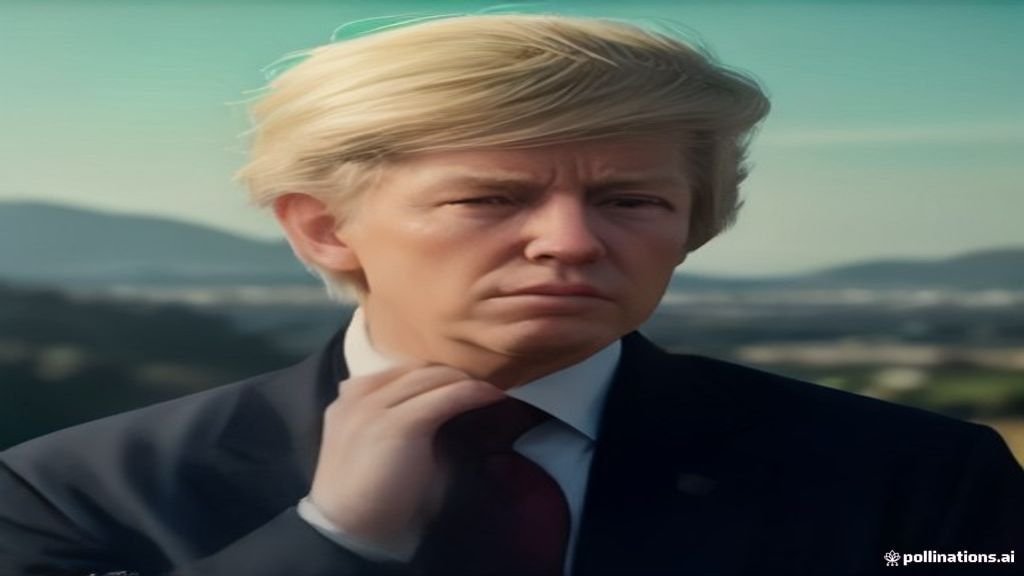
Trump United Ireland Comments Target Atlantic Voters
When another world leader meets US President Donald Trump, the only certainty about what might happen is the utter uncertainty about what might happen. This volatility materialized in full force during the opening day of the president’s high-profile visit to the Emerald Isle, where Trump united Ireland comments unexpectedly dominated international news cycles. As shockwaves rippled through Dublin, London, and Washington, political strategists immediately began dissecting the underlying motives behind a declaration that caught diplomats completely off guard.
Donald Trump's unexpected remarks expressing support for a united Ireland during his visit sent shockwaves across political landscapes, sparking intense debate over whether the statement signaled a genuine shift in US foreign policy or a targeted electoral appeal directed at crucial Irish-American swing voters ahead of the upcoming US midterm elections.
- Key Insight 1: President Donald Trump's remarks on a united Ireland dominated global headlines during his two-day official visit to Ireland.
- Key Insight 2: Former officials and diplomats stressed that the comments do not represent a formal shift in US foreign policy or bipartisan support for the Good Friday Agreement.
- Key Insight 3: The timing and repetition of the rhetoric strongly suggest an intent to galvanize Irish-American swing voters ahead of critical US midterm elections.
- Key Insight 4: Irish political leaders remain cautious, hoping bilateral focus stays centered on diplomatic stability rather than border polls.
/
1:05
1. Executive Summary & Strategic Importance
The geopolitical ramifications of a visiting American president casually endorsing the concept of a unified Ireland are profound. While free-flowing press conferences often produce spontaneous commentary, the deliberate repetition of these sentiments during a keynote speech at the US Ambassador’s residence suggests a calculated communicative strategy. Stakeholders ranging from the UK government to Irish coalition parties and US congressional leaders were left scrambling to interpret whether the remarks signaled a dangerous drift in transatlantic diplomacy or a sophisticated domestic electoral play.
To understand the true weight of this event, one must examine the intersection of international diplomacy and domestic American politics. With the upcoming midterm elections casting a long shadow over Capitol Hill, the Republican Party faces severe electoral pressure. Mobilizing specific voting blocs across the Atlantic has long been a staple of modern campaigning, raising critical questions about who the primary target audience actually was: the business leaders seated in Dublin or millions of voters tuning in across American time zones.
2. Historical Background & Contextual Evolution
American presidential involvement in Irish affairs is a well-trodden path, stretching from John F. Kennedy’s historic visit to Bill Clinton’s pivotal intervention in the Northern Ireland peace process. Historically, US leadership has maintained a delicate, strictly neutral balancing act to safeguard the integrity of the 1998 Good Friday Agreement. This foundational pact relies on absolute international consensus, recognizing that any outside interference in sovereignty matters can destabilize fragile local power-sharing arrangements.
For decades, administrations from both parties have championed peace and stability, deliberately avoiding premature endorsements of border polls or unification timelines. When President Clinton engaged deeply with the peace process in the 1990s, he did so through structured diplomatic mediation backed by extensive bipartisan consensus. Trump’s deviation from this script marks a sharp contrast, bypassing decades of careful diplomatic hedging in favor of unfiltered rhetorical engagement.
3. In-Depth Technical & Policy Breakdown
Dissecting the mechanics of presidential speechmaking requires analyzing what insiders refer to as ‘the weave’—a discursive style where the speaker bounces seamlessly between disparate domestic and foreign policy topics.
The Mechanics of ‘The Weave’
During his address to Irish and Irish-American business leaders, a speech billed as a concise twenty-minute economic briefing stretched to twice its length. The commentary veered wildly from trade partnerships and defense production to domestic grievances regarding border enforcement and military operations in Iran. Within this sprawling monologue, returning abruptly to the topic of a unified Ireland served as a powerful rhetorical anchor.
Transatlantic Reactions and Diplomatic Containment
Immediate damage control from key political figures highlighted the gulf between executive rhetoric and institutional policy. Former Republican Congressman Mick Mulvaney, who served as Trump’s special envoy to Northern Ireland, cautioned international observers against over-interpreting the commentary. Echoing this sentiment, Democratic Congressman Brendan Boyle reaffirmed that robust, bipartisan support for the Good Friday Agreement remains absolute and unshakeable within the US Congress.
4. Comparative Industry Framework
Evaluating how different administrations approach Anglo-Irish relations reveals distinct strategic philosophies. The following comparative matrix illustrates the evolution of presidential diplomacy regarding Northern Ireland and domestic voter engagement.
| Presidential Administration | Primary Diplomatic Focus | Stance on Border/Unification | Target Voting Bloc |
|---|---|---|---|
| Bill Clinton (1993–2001) | Active peace process mediation | Neutral facilitation of Good Friday Agreement | Irish-American Democrats & Independents |
| Joe Biden (2021–2025) | Protection of post-Brexit stability | Strict preservation of open border | Traditional trade & diaspora networks |
| Donald Trump (Current Term) | Bilateral economic leverage & trade | Unfiltered speculation on eventual unification | Irish-American swing & conservative voters |
SEEUY INTELLIGENCE
Trump United Ireland Comments – Analytical Overview
Bill Clinton (1993–2001)
Active peace process mediation
Joe Biden (2021–2025)
Protection of post-Brexit stability
Donald Trump (Current Term)
Bilateral economic leverage & trade
Analytical Takeaway: While past administrations treated the Northern Ireland peace architecture with meticulous diplomatic caution, contemporary political strategies increasingly leverage identity politics and diaspora sentiment to mobilize domestic electoral bases during crunch legislative cycles.
5. Socio-Economic, Enterprise & Global Ramifications
The broader implications of unexpected geopolitical commentary extend deep into international markets and trade relationships. Business leaders gathered in Dublin rely on regulatory predictability, frictionless trade across the Irish land border, and strong transatlantic accords. Sudden rhetorical shifts threaten to inject unnecessary volatility into corporate planning.
According to reports from Reuters, international investors closely monitor political stability across the British Isles to assess long-term capital deployment risks. When high-ranking officials introduce speculative viewpoints on sensitive sovereignty issues without institutional backing, it complicates risk management models for multinational corporations operating within the European Union and the United Kingdom. Furthermore, shifts in public sentiment can influence economic policy, as detailed in various global economic assessments published by institutions like the World Bank.
6. Strategic Outlook & What Comes Next
As the political dust settles from the presidential visit, attention pivots rapidly toward the looming November midterm elections. The pressure on Republican incumbents to retain congressional majorities has reached a fever pitch, making every demographic segment vital. Irish Americans, representing roughly one-tenth of the US population, are no longer a predictable, homogeneous voting bloc; instead, they encompass diverse political viewpoints spread across competitive swing districts.
Political leaders in Ireland and Great Britain are understandably hoping that subsequent diplomatic engagements return to predictable protocols, shifting public debate back to local governance and economic growth rather than speculative border polls. However, the precedent has been set: international stages are increasingly utilized as platforms for domestic electoral positioning.
7. Frequently Asked Questions (FAQ)
Did Trump’s comments represent a change in US foreign policy?
No. Former officials, including former special envoy Mick Mulvaney, and congressional leaders have confirmed that US commitment to the Good Friday Agreement remains steadfast and bipartisan, meaning the remarks do not indicate a formal policy shift.
Why did President Trump talk about a united Ireland?
While delivered during a free-flowing press conference and repeated during an address to business leaders, political analysts suggest the messaging may have been specifically calibrated to resonate with Irish-American voters in the United States ahead of crucial midterm elections.
How did Irish officials react to the statements?
Irish political leadership and the Taoiseach emphasized the need for clarity while underscoring that any future constitutional changes must adhere strictly to the mechanisms outlined within the Good Friday Agreement.
What is the historical significance of the Good Friday Agreement?
The 1998 Good Friday Agreement brought an end to decades of conflict in Northern Ireland known as the Troubles, establishing a framework for power-sharing governance backed strongly by historical US diplomatic engagement.
How do Irish-American voters influence US elections?
Millions of US citizens claim Irish heritage, forming a substantial demographic that historically includes significant swing and independent voters capable of shifting electoral outcomes in tight congressional races.
<button type="button" onclick="this.parentElement.innerHTML='✓ Thank you, we will refine our analysis!‘” style=”background:#ffffff; border:1px solid #cbd5e1; border-radius:6px; padding:4px 12px; font-size:12px; cursor:pointer; color:#334155;”>👎 No
Latest Analytical Follow-up: For continuous developments on this subject, read our full investigation on Kursk Missing Civilians: Families Demand Answers from Moscow.