
Content Creators Drop the Ball: The Clash Between Influencer Culture and Professional Sports
1. Executive Summary & Strategic Importance

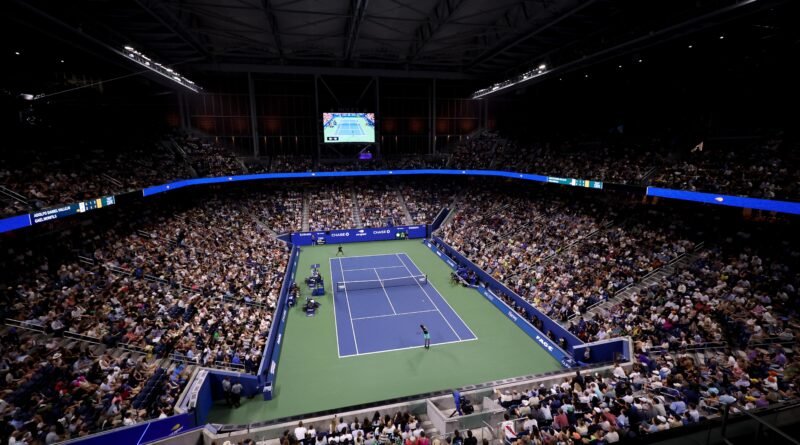
The convergence of modern entertainment, social media monetization, and elite professional athletics has created an increasingly volatile arena where traditional sporting etiquette collides directly with the unyielding demands of digital content creation. A striking manifestation of this cultural and operational friction occurred during the recent US Open at the USTA Billie Jean King National Tennis Center. During a highly competitive match between Naomi Osaka and Anastasia Zakharova, a contingent of social media influencers—equipped with ring lights, external microphones, and professional-grade camera setups—wreaked havoc from a luxury suite. Their disruptive behavior, characterized by constant chatter, erratic movement, and a disregard for baseline play protocols, became so egregious that the chair umpire was forced to formally pause the match. The official had to repeatedly instruct the delegation to quiet down and cease their intrusive behaviors. Elsewhere across the expansive grounds of the tennis center, similar scenes played out: content creators aggressively solicited tournament staffers to capture full-flash photographs of them while high-stakes, professional matches were actively unfolding a mere few dozen yards away.
This high-profile disruption is not merely an isolated anecdote of influencer entitlement; it serves as a glaring symptom of a much larger, systemic strategic pivot across the global sports and entertainment landscape. Driven by the imperative to capture younger, digitally native demographics who consume sports via short-form video feeds rather than linear broadcasts, tournament organizers have rushed to court online creators. In a revealing indicator of this strategic shift, United States Tennis Association (USTA) media operations director Jeanmarie Daly disclosed that the organization was ‘almost doubling’ the deployment of accredited content creators at the event. This dual mandate—maximizing viral digital reach while preserving the sanctity, focus, and competitive integrity of elite sport—has triggered a monumental operational crisis. Stakeholders ranging from athletes and tournament directors to traditional sports journalists and broadcasting networks find themselves locked in an escalating debate regarding boundaries, attention economies, and the commodification of the athletic spectacle.
The macro implications of this dynamic ripple far beyond the borders of Flushing Meadows. As professional sports leagues search desperately for ways to arrest declining television ratings among Gen Z and Millennial audiences, the integration of influencers has become an institutional priority. However, when the pursuit of digital engagement compromises the physical performance of elite athletes—who invest years of grueling training into their craft, only to be distracted by ring lights and flash photography—the foundational integrity of the sport is called into question. This article provides a deeply exhaustive, multi-dimensional analysis of the ‘content creators drop the ball’ phenomenon. We will trace the historical trajectory of sports media, dissect the technical and architectural mechanics of modern stadium credentialing, benchmark alternative fan engagement strategies, evaluate the socio-economic ramifications, and present a rigorous 12-to-36-month strategic implementation roadmap designed to harmonize digital media integration with athletic excellence.
2. Historical Context & Industry Evolution
To fully comprehend the current friction between content creators and professional sports, one must trace the evolutionary trajectory of sports media consumption over the past three decades. For the greater part of the 20th century, the relationship between sports organizations and media outlets was defined by a clear, vertical hierarchy. Traditional print journalists, radio broadcasters, and television networks held exclusive monopolies on access, acting as the primary gatekeepers of athletic narratives. Fans consumed sports through passive mediums: reading morning box scores, listening to radio broadcasts, or gathering around living room televisions for marquee events. During this era, stadium architecture and credentialing policies were engineered to support this traditional press corps. Press boxes were isolated, silent, and strictly regulated. Athletes operated within a structured media zone where flash photography and spontaneous interruptions were forbidden, ensuring that the competitive arena remained pristine and undisturbed.
The dawn of the internet era in the late 1990s and early 2000s initiated the first wave of disruption. Blogs, independent forums, and early digital sports publications began to challenge the supremacy of legacy media houses. However, these digital entrants largely mimicked the conventions of traditional journalism, respecting the structural boundaries of the sporting venue. The true paradigm shift occurred with the advent of Web 2.0, the proliferation of smartphones equipped with high-definition cameras, and the explosive growth of social media platforms like YouTube, Instagram, and TikTok. Suddenly, the monopoly on content production was shattered. Every single spectator transformed into a potential broadcaster, and a new class of digital entrepreneurs—the content creator—emerged, weaponizing personal brand identity, real-time algorithmic curation, and high-frequency engagement to build massive, highly loyal digital followings.
Recognizing the erosion of traditional linear television viewership, sports leagues initially viewed this democratization of media with skepticism, followed rapidly by strategic capitulation. Organizations realized that younger demographics were no longer tuning into three-hour broadcasts; instead, they were consuming two-minute highlight clips, behind-the-scenes vlogs, and meme-ified athletic moments. This realization acted as a catalytic driver for a radical pivot in sports marketing strategies. Leagues began courting social media influencers, offering them VIP access, luxury suites, and specialized media credentials that bypassed the stringent vetting processes required of traditional journalists. The USTA’s decision to double its creator contingent at the US Open is a direct byproduct of this historical evolution. Yet, this rapid transition occurred without the establishment of parallel operational guardrails. By treating social media creators like traditional journalists without enforcing traditional ethical and operational standards, sports organizations inadvertently imported the chaos of the attention economy directly into the sanctuary of the athletic field.
3. Deep-Dive Architectural & Technical Mechanics
The operational mechanisms that govern how media and creators access modern sporting events require rigorous architectural scrutiny. When an organization like the USTA grants access to hundreds of digital creators, they are activating a complex logistical framework that intersects physical security, venue zoning, digital rights management, and behavioral compliance protocols.
Credentialing Infrastructure and Tiered Access Models
At the foundation of this architecture is the credentialing hierarchy. Historically, credentials were binary: working press or spectator. In the modern era, sports venues utilize a multi-tiered wristband and badge system synchronized with RFID scanning technology. Content creators often receive hybrid credentials that grant them access to restricted zones—such as player lounges, practice courts, and luxury suites—that are traditionally off-limits to general ticketholders. However, unlike accredited journalists who are bound by strict professional codes of conduct and tethered to editorial desks, creators operate as independent micro-enterprises whose primary Key Performance Indicator (KPI) is viewer retention and algorithmic virality. This structural misalignment means that standard venue rules regarding flash photography, audio recording boundaries, and spatial positioning are frequently viewed by creators as bureaucratic obstacles rather than mandatory safety protocols.
The Physics of Distraction: Lighting, Audio, and Athlete Focus
From a technical standpoint, the deployment of consumer-grade content creation tools inside high-performance arenas introduces severe physical variables. Elite tennis, for instance, requires extraordinary visual tracking and auditory perception. Players listen intently to the acoustic pop of the ball leaving the opponent’s racket to gauge spin, velocity, and trajectory. The introduction of external ring lights, auxiliary LED panels, and constant smartphone camera flashes within the peripheral vision of players fundamentally disrupts these sensory calculations. When an influencer in a luxury suite utilizes a ring light or demands a full-flash shoot during live play, they are injecting unpredictable lux (luminous flux) spikes into a controlled sporting environment. Furthermore, the acoustic disruption caused by creators vlogging, conducting live streams, or speaking loudly into external microphones interferes with the absolute silence required during baseline service rotations, directly impacting competitive fairness.
Digital Rights Management and Monetization Workflows
Beyond the physical mechanics, the technical architecture of content creation involves complex digital rights management (DRM) and intellectual property (IP) frameworks. Traditional broadcasters pay astronomical fees for exclusive rights to transmit live sporting events. When unaccredited or loosely credentialed creators broadcast live video feeds or upload extensive match footage to platforms like TikTok and YouTube Shorts, they operate in a legal gray area that frequently infringes upon these multi-million-dollar broadcast agreements. Sports organizations must navigate the delicate balance of leveraging creators for organic top-of-funnel marketing while protecting their core revenue streams derived from official broadcast partners. The failure of current venue management systems to dynamically monitor, restrict, and monetize creator output in real time represents a significant structural vulnerability in modern sports administration.
4. Comparative Market Framework & Benchmarking
To evaluate how different sports leagues and major tournament organizers are managing the integration of digital content creators versus traditional media, we must examine a comparative market framework. The following table contrasts key dimensions across four major sports entertainment ecosystems.
| Evaluation Dimension | Grand Slam Tennis (USTA / Wimbledon) | Formula 1 (Motorsports) | National Basketball Association (NBA) | English Premier League (Football) |
|---|---|---|---|---|
| Creator Access Level | High volume, rapid expansion (specialized VIP/suite credentials) | Extremely high, integrated into paddock walkabouts and team garages | Moderate-High, dedicated creator nights and courtside positioning | Strictly controlled, heavily restricted to official club media partners |
| Behavioral Enforcement | Reactive and inconsistent (relying on umpires and ad-hoc security) | Proactive guidelines with designated media zones and chaperone oversight | Structured guidelines with designated digital creator lounges | Zero-tolerance for unauthorized in-game recording in technical areas |
| Primary Engagement Goal | Capturing Gen Z lifestyle, fashion, and cultural crossover appeal | Global brand glamorization, lifestyle integration, and personality marketing | Player fashion convergence, pop-culture crossover, and viral highlights | Preserving match broadcast integrity while utilizing curated club channels |
| IP & Broadcast Protection | Rigid enforcement of live-streaming bans; lenient on short-form vlogs | Aggressive geofencing, centralized content syndication, and approved toolkits | Partnership with platforms like TikTok for official in-game clip distribution | Strict copyright strikes, draconian anti-piracy monitoring in stadia |
| Athlete Satisfaction Index | Declining (frequent complaints regarding visual and acoustic interruptions) | Mixed (some friction during pre-race grid walks, accepted as industry norm) | Generally high (players embrace the cultural synergy and personal brand lift) | Very high (players operate protected from direct creator interference) |
The comparative analysis reveals stark strategic divergences in how premier sporting entities handle the creator economy. Formula 1 stands out as the pioneer in fully embracing influencer culture, integrating creators directly into the paddock and garage architecture. However, F1’s success is built upon a highly structured chaperone system and specialized media zones that prevent creators from interfering with driver concentration during critical moments. Conversely, Grand Slam tennis tournaments like the US Open have aggressively scaled creator numbers without establishing an equivalent operational infrastructure, leading directly to the disruptions witnessed during the Osaka-Zakharova match. The NBA successfully balances creator integration by channeling digital energy into pre-game and post-game corridors, safeguarding the on-court action. Meanwhile, the English Premier League maintains the most conservative posture, prioritizing broadcast exclusivity and strict IP containment.
For organizations looking to optimize their digital strategies without compromising athletic integrity, the benchmark is clear: raw volume of creators must be subordinated to rigorous operational design. Merely doubling the number of influencers without increasing the density of oversight, spatial restrictions, and behavioral education guarantees operational friction. Future-proof sports management requires adopting Formula 1’s proactive chaperoning model combined with the NBA’s clear zone demarcation, ensuring that the boundaries between digital entertainment and athletic competition remain absolute and unambiguous.
5. Enterprise, Geopolitical & Socio-Economic Ramifications
The friction between content creators and elite sports is not merely an operational inconvenience; it reflects profound socio-economic and geopolitical shifts in how value, attention, and authority are distributed in the 21st century.
The Democratization of Attention and the Crisis of Expertise
At a socio-economic level, the rise of the content creator represents a direct challenge to institutional authority. Traditional sports journalism operated on a foundation of verified expertise, access-based earned trust, and analytical depth. Creators, conversely, operate on hyper-subjective authenticity, emotional immediacy, and parasocial connection with their audiences. When tournament directors prioritize influencers over traditional journalists—allocating premier luxury suite access to creators who may not even know the fundamental rules of tennis while marginalizing beat writers who have covered the sport for decades—it signals a dangerous devaluing of specialized expertise. This shift mirrors broader cultural trends where entertainment supersedes analysis, and viral reach outweighs analytical rigor. For enterprises within the sports ecosystem, this threatens to hollow out the foundational journalism that builds long-term institutional history and credibility.
Geopolitical Branding and the Sports Tourism Economy
On a macro-economic level, global sporting events like the US Open, Wimbledon, and Formula 1 Grands Prix are critical drivers of national and municipal soft power, tourism revenue, and international branding. Host cities invest hundreds of millions of dollars in infrastructure to attract global visitors and broadcast attention. In this economic calculus, content creators are viewed by municipal tourism boards and commercial sponsors as invaluable assets capable of instantly projecting the host city’s vibrancy across millions of global screens. However, when these same creators disrupt the very athletic competition that underpins the event’s prestige, a severe economic paradox emerges. If the tournament degrades into a chaotic social media carnival, elite athletes may begin to voice vocal discontent, premier sponsors may question the brand safety of their investments, and the long-term equity of the tournament as a pinnacle of sporting excellence could be severely eroded.
The Consumer Experience Divide
Finally, the socio-economic ramification impacts the paying consumer sitting in the stadium seats. Spectators who purchase high-priced tickets expect an environment conducive to watching elite competition. When rows of influencers are standing up, waving ring lights, recording videos, and creating continuous ambient noise, the stadium experience for surrounding ticket-holders is degraded. This creates a widening chasm between the physical spectator experience and the digital broadcast narrative, alienating traditional fans who feel that their financial investment and love for the sport are being subordinated to the erratic whims of social media clout-chasers.
6. Strategic Implementation Roadmap & Future Outlook
To resolve the escalating tensions between digital content creation and professional athletic performance, sports organizations must transition from reactive crisis management to proactive, institutionalized architectural governance. Below is a strategic implementation roadmap spanning a 12-to-36-month horizon, designed for sports federations, tournament directors, and venue operators.
- Phase 1: Immediate Operational Audit and Policy Codification (Months 1–6)
- Implement a mandatory ‘Creator Code of Conduct’ tied directly to credential agreements, explicitly prohibiting flash photography, auxiliary lighting rigs, and audio recording within 50 feet of active play areas during matches.
- Deploy digital signage and designated ‘Creator Zones’ within concourses, media rooms, and hospitality suites, clearly demarcating where filming is permitted versus where strict silence and spatial decorum are required.
- Establish a specialized venue oversight committee comprising security personnel, athlete representatives, and media operations directors to handle infractions swiftly and decisively.
- Phase 2: Technological Integration and Infrastructure Redesign (Months 6–18)
- Deploy smart-venue geo-fencing and dynamic access-control technologies that restrict creator credential scanning near sensitive athletic zones (e.g., baseline seating, player tunnels, practice courts).
- Partner with major social media platforms to implement automated, real-time geoblocking for live-streaming from unauthorized stadium locations, protecting official broadcast rights holders.
- Design dedicated ‘Digital Creator Studios’ within venue architecture equipped with professional lighting, branded backdrops, and delayed audio feeds, allowing creators to produce high-quality content without entering the competitive bowl.
- Phase 3: Ecosystem Harmonization and Cultural Alignment (Months 18–36)
- Institutionalize a comprehensive creator-education onboarding program that trains influencers on the technical demands, etiquette, and emotional gravity of elite athletic competition before credentials are issued.
- Develop collaborative content models where top-tier creators are paired with traditional journalists and athletes to co-create authorized, respectful, and deeply engaging storytelling formats.
- Establish an annual industry roundtable bringing together athletes, league executives, broadcasters, and content creators to evaluate emerging media trends and continuously refine venue governance frameworks.
7. Frequently Asked Questions (FAQ) & Expert Insights
Why did content creators cause a match delay at the US Open?
During the match between Naomi Osaka and Anastasia Zakharova, a group of influencers situated in a luxury suite were using disruptive equipment—including ring lights and constant mobile recording setups—while exhibiting a disregard for baseline play etiquette. Their continuous chatter and visual distractions prompted the chair umpire to pause the match and formally instruct them to quiet down, highlighting the growing friction between influencer culture and athletic focus.
Are sports tournaments increasing the number of content creators they invite?
Yes. Organizations are actively trying to capture younger, digitally native demographics who consume sports primarily through short-form video and social media. For instance, USTA media operations director Jeanmarie Daly confirmed that the US Open nearly doubled its contingent of accredited content creators to boost digital reach and viral engagement across platforms like TikTok and Instagram.
How do content creators disrupt professional athletes?
Elite sports require extreme physical coordination, visual tracking, and acoustic concentration. The introduction of consumer lighting tools like ring lights, sudden flashes of camera light in the peripheral vision of players, and unexpected acoustic noise interferes with athletes’ ability to focus, track balls, and execute high-pressure competitive maneuvers.
What is the difference between accredited journalists and content creators at sports events?
Accredited journalists operate under strict professional codes of ethics, work within designated press boxes, and focus on objective reporting and analysis. Content creators often operate as independent commercial brands prioritizing engagement metrics, virality, and personal entertainment, which frequently leads them to disregard traditional spatial and behavioral boundaries within sporting venues.
How can sports organizations balance social media marketing with athletic integrity?
Sports organizations must implement proactive governance models, including clear behavioral codes of conduct, designated creator zones away from active competition areas, technological geo-fencing, and mandatory onboarding for influencers. By providing creators with dedicated studio spaces and structured access rather than unmonitored baseline proximity, tournaments can achieve viral reach without compromising athletic fairness.
What are the legal and broadcast implications of unmonitored content creation in stadiums?
Unmonitored live-streaming and extensive video posting by unaccredited creators infringe upon multi-million-dollar broadcast rights agreements held by official television partners. Sports organizations face significant legal and financial risks if they fail to enforce digital rights management and protect their exclusive broadcasting contracts within venue boundaries.
