
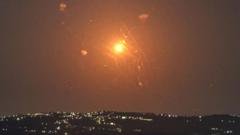
Oil Prices Hit $100 Amid Escalating US-Iran Conflict
The global energy landscape shifted dramatically on Wednesday as global benchmark oil prices hit $100 a barrel for the first time since July. This rapid surge followed targeted United States military strikes against five Iranian oil tankers, an action executed in direct reprisal for Tehran targeting an American warship. The sudden escalation has shattered months of relative maritime stability, sending shockwaves through financial markets and raising the specter of a prolonged energy crisis.
Global oil prices hit $100 a barrel on Wednesday following targeted US military strikes on five Iranian oil tankers. This action, a reprisal for Iranian attacks on a US warship, triggered retaliatory ballistic missile strikes from Tehran toward Jordan and a series of disruptive drone attacks on Saudi Arabian energy infrastructure by Houthi rebels.<\/p>
- Geopolitical Trigger: US retaliatory strikes on five Iranian tankers, including the sinking of the M/T Riesco, pushed Brent crude past the critical $100 per barrel threshold.
- Chokepoint Vulnerability: The Strait of Hormuz remains highly volatile as Iran claims attacks on two US vessels, eight oil tankers, and ten non-compliant commercial ships.
- Regional Escalation: Jordan intercepted 18 out of 20 Iranian ballistic missiles, while Yemen-based Houthi rebels struck Saudi energy facilities, injuring 73 people.
- Economic Impact: The sudden price surge threatens to reignite global inflationary pressures, complicating central bank monetary policies worldwide.
1. Executive Summary & Strategic Importance
The crossing of the $100-a-barrel threshold represents more than just a psychological milestone for commodity traders; it is a direct reflection of heightened systemic risk across global supply chains. On Wednesday, Brent crude—the international benchmark—peaked at $100.19 a barrel. Although prices experienced a minor technical retracement to $99.90, the underlying market fundamentals remain highly sensitive to any further military escalations in the Middle East.
The immediate catalyst for this price spike was a highly coordinated US military operation targeting five Iranian oil tankers. According to US Central Command (Centcom), four of these vessels were operating in the Gulf of Oman and were directly linked to the Islamic Revolutionary Guards Corps (IRGC) shadow financial network. The fifth vessel was targeted near Kharg Island, the crown jewel of Iran’s energy export infrastructure. In response, Tehran launched a barrage of ballistic missiles toward a US military installation in Jordan and declared that it had targeted two US naval vessels and eight commercial oil tankers attempting to navigate the Strait of Hormuz.
This rapid sequence of tit-for-tat military strikes has drawn in multiple regional actors. Jordan’s air defense systems were forced into active combat, intercepting 18 of 20 Iranian missiles. Simultaneously, Yemen’s Iran-backed Houthi rebels launched a devastating drone and missile assault on Saudi Arabian energy facilities, injuring 73 people and forcing a temporary suspension of operations. The convergence of these security threats has introduced a severe geopolitical premium into global energy pricing, threatening to disrupt the fragile post-inflationary recovery of Western economies.
2. Historical Background & Contextual Evolution
To understand the gravity of the current escalation, one must examine the breakdown of diplomatic channels over the past year. The last time Brent crude traded at these heights was in late July, a period marked by the collapse of a fragile, backchannel ceasefire agreement between Washington and Tehran. That diplomatic framework had temporarily capped Iran’s uranium enrichment activities and curtailed attacks on US assets in exchange for a tacit easing of enforcement on Iranian oil exports.
The collapse of that agreement paved the way for a return to open hostility. The current cycle of violence escalated dramatically following joint US and Israeli military operations targeting Iranian military assets on February 28. Over the subsequent six months, both nations engaged in a low-intensity, undeclared war characterized by cyberattacks, covert sabotage, and proxy skirmishes. However, the transition from covert operations to overt, state-on-state maritime warfare represents a dangerous new phase in the conflict.
Historically, the United States has avoided direct kinetic strikes on commercial oil tankers, preferring instead to rely on economic sanctions, asset freezes, and diplomatic isolation. By directly targeting and sinking Iranian-flagged or linked vessels—such as the M/T Riesco, which sank in the Gulf of Oman—the US has established a new doctrine of active deterrence. This shift signals to Tehran that attacks on US naval assets will be met with the direct destruction of Iran’s primary economic lifeline: its oil export capacity.
3. In-Depth Technical & Policy Breakdown
The Anatomy of the Tanker Strikes and the Shadow Network
The US Department of the Treasury and Centcom defended the strikes by identifying the targeted vessels as key nodes in a multi-billion-dollar “shadow network.” This fleet of aging, under-insured tankers operates under flags of convenience, utilizing deceptive maritime practices such as turning off Automatic Identification System (AIS) transponders, falsifying cargo manifests, and conducting ship-to-ship transfers in deep waters to bypass Western sanctions.
The sinking of the M/T Riesco, captured in video footage released by Centcom, underscores the precision and lethality of the US response. By targeting a vessel near Kharg Island, the US struck at the heart of Iran’s oil logistics. Kharg Island, located in the northeastern Persian Gulf, handles approximately 90% of Iran’s crude oil exports. The island is connected to the Iranian mainland via an extensive network of under-sea pipelines, making its surrounding waters a highly concentrated bottleneck for Iranian state revenue.
Tactical Air Defense and the Jordan Missile Interceptions
Tehran’s military response was swift but largely neutralized by regional air defense networks. The Islamic Republic launched 20 ballistic missiles aimed at a US military installation in Jordan. According to an official spokesperson for the Jordanian Armed Forces, the country’s air defense systems successfully intercepted 18 of the incoming missiles. The remaining two projectiles landed in unpopulated desert areas, resulting in no casualties or structural damage.
This high interception rate highlights the integration of regional air defense architectures, likely supported by US-provided Patriot missile batteries and Aegis-equipped naval vessels stationed in the Red Sea and Persian Gulf. Despite the tactical failure of the missile strike, the political message from Tehran was clear: US allies in the region will face direct military consequences if they continue to facilitate American military operations.
The Strait of Hormuz Shipping Crisis and Maritime Chokepoints
Following the tanker strikes, Iran’s Revolutionary Guards announced a aggressive campaign to enforce a de facto blockade of the Strait of Hormuz. The IRGC claimed to have attacked two US naval vessels, eight commercial oil tankers, and ten “non-compliant vessels” attempting to transit the strait. This has triggered a severe Strait of Hormuz shipping crisis, forcing global maritime insurance syndicates to drastically increase war-risk premiums for vessels operating in the Persian Gulf.
Compounding the maritime tension was an incident involving an uncrewed US underwater drone. While Iran’s navy claimed to have “seized” a hostile spy submarine, US Navy Captain Tim Hawkins, a spokesperson for Centcom, clarified that the device was an older, malfunctioning underwater survey drone. According to Hawkins, the drone carried no classified sonar, radar, or data-collection equipment and had malfunctioned more than 24 hours prior to its recovery by Iranian forces. Nevertheless, the incident was quickly weaponized by Tehran’s state media to project technological parity and control over regional waters.
Houthi Drone Strikes on Saudi Energy Infrastructure
Simultaneously, Yemen’s Houthi rebels executed a coordinated drone and missile strike targeting Saudi Arabian energy facilities. The attack, which injured 73 civilians, caused major fires at multiple oil installations. The Saudi Ministry of Energy confirmed a temporary suspension of operations at the affected facilities to assess structural damage and prevent further combustion. This attack demonstrates the highly coordinated nature of Iran’s regional proxy network, showing an ability to strike multiple energy nodes across the Arabian Peninsula simultaneously.
4. Comparative Industry Framework
To contextualize the current market disruption, it is useful to compare this event with previous major energy shocks over the past decade. The table below outlines how the current crisis compares to other historical supply disruptions in terms of price impact, geographic focus, and market mitigation strategies.
| Crisis Event | Peak Brent Price | Primary Chokepoint / Region | Global Supply Impact | Market Mitigation Mechanism |
|---|---|---|---|---|
| 2019 Abqaiq Attack | $69.00 / bbl | Saudi Arabia (Abqaiq & Khurais) | 5.7 million bpd (temporary) | Saudi spare capacity & SPR release |
| 2022 Ukraine Invasion | $139.00 / bbl | Black Sea / Druzhba Pipeline | ~2.0 million bpd (displaced) | Global trade route realignment |
| 2024 US-Iran Conflict | $100.19 / bbl | Strait of Hormuz / Gulf of Oman | Potential for 18-20 million bpd disruption | Strategic Reserves & military escorts |
The comparative data reveals that while the 2022 invasion of Ukraine caused a higher absolute price spike due to the systemic removal of Russian crude from Western markets, the current 2024 conflict carries a far higher catastrophic risk profile. A complete closure of the Strait of Hormuz would disrupt nearly a fifth of the world’s daily petroleum consumption, a volume that cannot be easily mitigated by strategic reserves or alternative trade routes.
5. Socio-Economic, Enterprise & Global Ramifications
The sudden reality of three-digit oil prices has immediate and far-reaching consequences for the global economy. For multinational corporations and logistics enterprises, the global energy market disruption translates directly into higher operational expenditures. Jet fuel, diesel, and marine bunker fuel prices have all surged in tandem with Brent crude, forcing shipping lines and commercial airlines to reintroduce fuel surcharges.
Furthermore, this escalation injects a substantial Middle East geopolitical risk premium into global financial markets. Investment banks and commodity strategists must now price in the probability of a wider regional war. This risk premium is not limited to oil; it extends to liquefied natural gas (LNG), insurance, and global maritime freight rates. If commercial vessels are forced to avoid the Persian Gulf and the Red Sea entirely, routing cargo around the Cape of Good Hope will add weeks to transit times, severely disrupting just-in-time manufacturing supply chains in Europe and North America.
From a macroeconomic perspective, $100 oil threatens to complicate the policy trajectory of major central banks, including the US Federal Reserve and the European Central Bank. Just as inflation appeared to be returning to target levels, rising energy costs threaten to trigger secondary price increases across consumer goods and services. This could force central banks to maintain higher interest rates for longer, dampening global economic growth prospects for the coming fiscal year.
6. Strategic Outlook & What Comes Next
The immediate trajectory of global energy markets depends heavily on the military posture of the United States and Iran over the coming days. US Secretary of State Marco Rubio signaled an uncompromising stance, stating that the dynamic is “pretty straightforward”—any attempt by Iran to target US naval assets will result in the immediate destruction of their commercial tanker fleet. This rhetoric suggests that the United States is prepared to systematically dismantle Iran’s maritime export capabilities if Tehran does not de-escalate.
In formulating a realistic Brent crude price forecast, energy analysts are modeling three primary scenarios for the final quarter of the year:
- Scenario A: Controlled Attrition (60% Probability): Tit-for-tat strikes continue at sea, but remain confined to non-state proxies and shadow-fleet tankers. Brent crude stabilizes between $95 and $105 per barrel as risk premiums remain elevated but physical supply is largely maintained through alternative routes.
- Scenario B: Escalation to Infrastructure (30% Probability): Direct military strikes target land-based energy infrastructure, such as Iran’s Kharg Island terminal or Saudi processing plants. In this scenario, Brent crude is projected to surge past $120 per barrel as physical supply shortages become a reality.
- Scenario C: De-escalation & Escorted Transit (10% Probability): International diplomatic intervention leads to a pause in hostilities, accompanied by the implementation of multinational naval escorts for commercial shipping in the Strait of Hormuz. Prices would likely retreat to the mid-$80s.
Market participants must closely monitor several key indicators over the next 72 hours. These include the deployment of additional US carrier strike groups to the region, official statements from OPEC+ regarding the utilization of spare production capacity, and the volume of commercial traffic successfully transiting the Strait of Hormuz. Until a credible deterrent or diplomatic off-ramp is established, the global energy market will remain on a war footing, with $100 oil serving as the new baseline for global economic planning.
7. Frequently Asked Questions (FAQ)
How high could oil prices go if the Strait of Hormuz is closed?
If the Strait of Hormuz is fully closed or severely blocked, energy analysts estimate that Brent crude prices could rapidly surge to between $130 and $150 per barrel. Because approximately 20 million barrels of oil pass through the strait daily, there is no immediate global alternative capable of replacing this volume, which would trigger extreme physical shortages worldwide.
What is the US military’s strategy regarding Iranian oil tankers?
The US military strategy, as outlined by Centcom and senior officials, is one of active deterrence. By targeting tankers that are part of the IRGC’s “shadow network,” the US aims to cut off the financial pipeline that funds Iranian proxy groups and military operations, while sending a clear message that attacks on US warships will carry direct, severe economic consequences.
Are commercial shipping companies avoiding the region?
Yes, many commercial shipping companies and tanker operators have begun rerouting vessels or pausing transits through the Strait of Hormuz and the Gulf of Oman. Those continuing to operate in the region are facing exponentially higher war-risk insurance premiums, which are ultimately passed on to consumers in the form of higher freight costs.
How has Saudi Arabia responded to the Houthi attacks?
Saudi Arabia has condemned the attacks on its civilian and energy infrastructure, confirming that the strikes caused fires and forced a temporary halt in operations at certain facilities. While the Saudi military has intercepted numerous drones, the kingdom is working closely with international allies to bolster its air defense capabilities and secure its vital energy installations.
Will the US release oil from its Strategic Petroleum Reserve (SPR)?
While the US administration has not yet announced an official release from the Strategic Petroleum Reserve (SPR) in response to this specific crisis, it remains a primary policy tool. If oil prices remain sustained above $100 a barrel and begin to heavily impact domestic gasoline prices, a coordinated release with international partners is highly likely to help stabilize global markets.
Latest Analytical Follow-up: For continuous developments on this subject, read our full investigation on US Canadian Import Ban: Trade War Escalates Over Tariffs.
Latest Analytical Follow-up: For continuous developments on this subject, read our full investigation on Oil Prices Hit 100 Dollars as US-Iran Conflict Escalates.
