
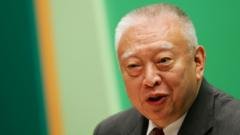
Tung Chee-hwa Legacy: First Hong Kong Leader Dies at 89
The passing of Tung Chee-hwa at the age of 89 marks the symbolic end of an era for Hong Kong’s complex transition from a British crown colony to a Special Administrative Region (SAR) of the People’s Republic of China. As the city’s first post-colonial leader, Tung’s life and political career mirrored the turbulent, historic shifts of a metropolis caught between two empires, leaving behind a complicated blueprint for governance that continues to shape the region’s geopolitical reality.
The Tung Chee-hwa legacy represents the foundational era of post-colonial Hong Kong governance under the 'One Country, Two Systems' framework. Serving as the first Chief Executive from 1997 to 2005, his tenure navigated the Asian Financial Crisis, public health crises, and early national security debates, shaping the city's modern political trajectory.<\/p>
- Foundational Governance: Tung Chee-hwa was handpicked by Beijing to lead Hong Kong during the historic 1997 handover, establishing the initial administrative framework for 'One Country, Two Systems'.
- Economic and Health Crises: His tenure was defined by immediate external shocks, including the 1997 Asian Financial Crisis, the H5N1 bird flu outbreak, and the devastating 2003 SARS epidemic.
- The Article 23 Catalyst: The administration's failed attempt to pass national security legislation in 2003 mobilized over half a million protesters, ultimately leading to his resignation in 2005.
- Enduring Geopolitical Impact: Tung's post-political career as a state leader and backchannel diplomat cemented his role as a pivotal bridge between Beijing, Hong Kong, and the United States.
1. Executive Summary & Strategic Importance
The Tung Chee-hwa legacy is defined by the monumental task of operationalizing the “One Country, Two Systems” framework under intense global scrutiny. His death on Tuesday night, surrounded by family, closes a vital chapter in the history of post-colonial Hong Kong governance. His administration set the institutional precedents, both successful and highly controversial, that laid the groundwork for the city’s current administrative state. Key stakeholders, from Beijing’s leadership to local pro-democracy factions, continue to view his tenure as the crucible in which modern Hong Kong was forged.
Tung’s transition from a shipping magnate to the political leader of one of the world’s premier financial hubs was a unique historical experiment. His appointment was designed to project stability and continuity to global markets, yet his administration was immediately beset by unprecedented macroeconomic and public health crises. The strategic importance of his leadership lies in how these crises forced Beijing to recalibrate its hands-off approach to Hong Kong, setting in motion a gradual centralization of authority that culminated in the political landscape seen today.
2. Historical Background & Contextual Evolution
Born in Shanghai in 1937, Tung Chee-hwa was the eldest son of shipping magnate Tung Chao-yung, founder of the Orient Overseas Container Line (OOCL). His early life reflected the globalized nature of the Chinese diaspora; he graduated with a mechanical engineering degree from Liverpool University in the United Kingdom before spending nearly a decade working for General Electric in the United States. In 1969, he returned to Hong Kong to join the family business, eventually taking the reins in 1979.
The defining catalyst of Tung’s political career occurred in the mid-1980s. A severe global shipping slump pushed OOCL to the brink of bankruptcy. In a move that would forever bind his fortunes to the mainland, Chinese state-run banks orchestrated a $120 million bailout of the conglomerate. This intervention cemented Tung’s reputation as a trusted loyalist in the eyes of the Chinese Communist Party (CCP).
In 1992, the last British Governor, Chris Patten, appointed Tung to his Executive Council, attempting to bridge the gap between the colonial administration and Beijing-friendly business elites. However, as the historic 1997 Hong Kong handover approached, Beijing made its preference clear. In January 1996, during a reception at the Great Hall of the People, Chinese President Jiang Zemin famously walked across a crowded room to shake Tung’s hand—a highly calculated gesture that signaled to the world that Tung was Beijing’s handpicked choice to lead the post-colonial administration.
3. In-Depth Technical & Policy Breakdown: Assessing the Tung Chee-hwa Legacy
To understand the structural impact of Tung’s administration, one must analyze the specific policy decisions and systemic crises that occurred between July 1, 1997, and his resignation in March 2005.
Navigating the Asian Financial Crisis Hong Kong Response
Just hours after the handover ceremonies concluded, the Asian Financial Crisis Hong Kong onset began. Highly leveraged currency speculators targeted the Hong Kong Dollar (HKD) peg to the US dollar. Tung’s financial team, led by Financial Secretary Donald Tsang and Hong Kong Monetary Authority Chief Joseph Yam, took the unprecedented and controversial step of intervening directly in the stock market.
The government utilized over $15 billion of its foreign exchange reserves to purchase blue-chip equities, successfully squeezing short-sellers and defending the currency peg. While this intervention preserved financial stability, the domestic economic fallout was severe. Property values plummeted by over 50%, plunging thousands of middle-class homeowners into negative equity and severely damaging public confidence in Tung’s economic stewardship.
Public Health Crises: Bird Flu and the 2003 SARS Epidemic
Tung’s administrative capacity was repeatedly tested by novel biological threats. In late 1997, Hong Kong recorded the world’s first human cases of the H5N1 avian influenza virus. The administration responded with a drastic, city-wide cull of 1.5 million poultry, which successfully halted the outbreak but exposed coordination gaps within municipal departments.
A far more devastating challenge arrived in March 2003 with the outbreak of Severe Acute Respiratory Syndrome (SARS). The highly contagious coronavirus spread rapidly through housing estates and hospitals, ultimately claiming 299 lives in Hong Kong. The crisis exposed severe deficiencies in cross-border epidemiological communication with mainland authorities, who had initially concealed the outbreak in Guangdong province. The public backlash over the government’s perceived slow response and lack of transparency severely damaged the administration’s credibility.
The Article 23 National Security Law Controversy
The defining political crisis of the Tung era occurred during his second term. Under Article 23 of the Hong Kong Basic Law, the SAR was constitutionally mandated to enact local laws prohibiting treason, secession, sedition, and subversion against the Central People’s Government. In late 2002, Tung’s administration introduced a draft bill to fulfill this requirement.
The proposed Article 23 national security law ignited widespread fears that Hong Kong’s cherished civil liberties, freedom of speech, and journalistic independence would be dismantled. On July 1, 2003, an estimated 500,000 citizens took to the streets in a peaceful protest. The massive mobilization, combined with the defection of key pro-business legislators from the government coalition, forced Tung to indefinitely shelve the legislation. This political defeat marked the beginning of the end for his administration, culminating in his resignation in March 2005.
4. Comparative Industry Framework
The evolution of post-colonial Hong Kong governance can be understood by comparing the administrative focus, key challenges, and policy outcomes of its successive Chief Executives.
| Chief Executive | Tenure | Primary Economic Strategy | Defining Crisis | Beijing Integration Level | Public Approval Trend |
|---|---|---|---|---|---|
| Tung Chee-hwa | 1997–2005 | Defending currency peg, high-tech diversification (Cyberport) | Asian Financial Crisis, SARS, 2003 Article 23 Protests | Moderate (Initial ‘One Country, Two Systems’ boundary testing) | Steep decline leading to resignation |
| Donald Tsang | 2005–2012 | Consolidating financial services, infrastructure expansion | 2008 Global Financial Crisis, constitutional reform debates | Moderate-Low (Maintained traditional civil service autonomy) | High initial popularity, declining late-term |
| Leung Chun-ying | 2012–2017 | Addressing housing supply, integration with Pearl River Delta | 2014 Umbrella Movement (Occupy Central) | High (Active alignment with Beijing’s national security stance) | Polarized and consistently low |
| Carrie Lam | 2017–2022 | Greater Bay Area integration, innovation initiatives | 2019 Anti-Extradition Bill Protests, COVID-19 Pandemic | Very High (Implementation of the 2020 National Security Law) | Historic lows during civil unrest |
| John Lee | 2022–Present | Economic recovery, talent attraction, national security consolidation | Post-pandemic restructuring, geopolitical decoupling | Absolute (Complete integration with national development strategies) | Stable within a restructured political system |
Analytical Takeaway: The comparative framework illustrates a clear trajectory in post-colonial Hong Kong governance. While early leaders like Tung Chee-hwa attempted to balance local public sentiment with Beijing’s expectations, subsequent administrations have increasingly prioritized national integration and security over local political consensus, reflecting a structural shift from autonomy to direct alignment.
5. Socio-Economic, Enterprise & Global Ramifications
The socio-economic policies of the Tung era left a lasting imprint on Hong Kong’s domestic landscape. In an attempt to resolve the city’s chronic housing shortage, Tung introduced the ambitious “85,000 flats” annual housing target. However, the policy coincided with the property market crash of the Asian Financial Crisis, exacerbating the economic pain of middle-class property owners who saw their primary assets devalued. The subsequent suspension of the housing program created a long-term supply deficit that continues to fuel Hong Kong’s housing affordability crisis today.
On the global stage, Tung’s business background allowed him to act as an effective ambassador for Hong Kong’s financial markets. He championed major infrastructure projects, including the construction of Hong Kong Disneyland and the Cyberport high-tech business park, aiming to transition the city into a knowledge-based economy. Despite these efforts, the structural reliance on real estate and financial services remained unchanged.
Furthermore, the failure of his administration to pass the Article 23 national security legislation in 2003 created a long-term legislative vacuum. For nearly two decades, Beijing viewed this gap as a critical vulnerability in national defense. This unresolved issue eventually led to the direct imposition of the National Security Law by Beijing in 2020, a move that fundamentally altered the city’s legal autonomy and drew widespread international condemnation, illustrating how the unresolved challenges of the Tung era continue to reverberate globally.
6. Strategic Outlook & What Comes Next
The passing of Tung Chee-hwa symbolizes the closing of the transitional phase of “One Country, Two Systems.” The political model he helped establish—characterized by a powerful executive, a highly influential business elite, and a vibrant civil society—has been fundamentally restructured. Today, Hong Kong operates under a “patriots-only” governance framework, where political opposition has been largely neutralized and national security is the paramount policy priority.
In his post-political life, Tung served as a Vice Chairman of the Chinese People’s Political Consultative Conference (CPPCC), a prestigious state-level advisory body, and founded the China-United States Exchange Foundation (CUSEF). Through these roles, he functioned as a key backchannel diplomat, leveraging his extensive network of American business and political contacts to advocate for stable US-China relations. His departure deprives Beijing of one of its most experienced and respected international interlocutors at a time of heightened geopolitical tension.
As Hong Kong navigates its role within the Greater Bay Area and faces ongoing economic competition from regional rivals like Singapore, the lessons of the Tung administration remain highly relevant. The delicate balance between maintaining global market confidence and satisfying Beijing’s security imperatives—a balance that Tung struggled to maintain—remains the central challenge for Hong Kong’s current and future leaders.
7. Frequently Asked Questions (FAQ)
This section addresses the most common search queries regarding the life, career, and historical impact of Tung Chee-hwa.
What was the primary cause of Tung Chee-hwa’s death?
According to official statements and local media reports, Tung Chee-hwa passed away peacefully on Tuesday night surrounded by his family. While specific medical details were not disclosed, he had been in declining health for several years and underwent heart surgery in late 2021, after which he withdrew entirely from public life.
How did the shipping industry shape Tung’s political career?
Tung’s background as the head of Orient Overseas Container Line (OOCL) provided him with deep connections to global business and political elites. Crucially, a Beijing-backed financial bailout of his family’s shipping empire in the mid-1980s established a foundation of trust with the Chinese leadership, making him their preferred candidate to lead Hong Kong after the 1997 handover.
What was the ‘85,000 flats’ policy and why did it fail?
The ‘85,000 flats’ policy was an ambitious housing initiative introduced by Tung in 1997, aiming to build 85,000 public and private housing units annually to make homeownership affordable. The policy failed because its launch coincided with the Asian Financial Crisis, causing property prices to crash. The administration quietly abandoned the target to prevent further collapse of the real estate market, which later contributed to long-term housing shortages.
How did the 2003 SARS outbreak affect his administration?
The SARS outbreak in 2003, which resulted in 299 deaths in Hong Kong, severely damaged public trust in Tung’s administration. The government was criticized for its slow initial response, poor coordination, and perceived deference to mainland authorities who had delayed reporting the virus. The crisis galvanized public dissatisfaction, setting the stage for the massive political protests later that year.
What is the legacy of the 2003 Article 23 protests?
The 2003 protests against the Article 23 national security bill were a watershed moment in Hong Kong’s history, demonstrating the public’s capacity for mass mobilization to defend civil liberties. The successful shelving of the bill showed the limits of the government’s power at the time, but the failure to pass the law ultimately led to Beijing’s direct intervention in 2020 with the imposition of the National Security Law.
Latest Analytical Follow-up: For continuous developments on this subject, read our full investigation on South Park South America: Satire Confronts Corporate Mergers.
