
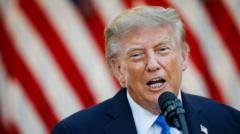
US Iran Conflict: Trump Links War End to Midterm Elections
As the United States approaches a highly polarized electoral cycle, the geopolitical theater in the Middle East has become inextricably linked with domestic political outcomes. The ongoing confrontation has entered a volatile phase where military strategy, global energy security, and electoral calculations converge into a single, high-stakes narrative.
The US Iran conflict is a major geopolitical military engagement that has significantly disrupted global energy markets. President Donald Trump has stated that the conflict will not conclude until after the November midterm elections, linking the timeline of military operations directly to US domestic political shifts and oil price stabilization.<\/p>
- Political Timeline: President Trump has explicitly linked the resolution of the military conflict to the outcome of the November midterm elections, suggesting Iran is holding out to influence the political balance in Washington.
- Energy Market Shock: Global oil prices breached the $100-per-barrel threshold for the first time since July, driven by intensifying military engagements and attacks on regional energy infrastructure.
- Maritime Escalation: The conflict has entered a dangerous phase of direct maritime warfare, featuring US strikes on Iranian-linked tankers and retaliatory Iranian attacks on US Navy destroyers in the Strait of Hormuz.
- Domestic Economic Pressure: Rising fuel and diesel costs are driving inflation across the United States, creating significant political pressure on the administration from both voters and congressional allies.
1. Executive Summary & Strategic Importance
The ongoing US Iran conflict has reached a critical juncture, with President Donald Trump explicitly tying the resolution of the military campaign to the upcoming November midterm elections. Speaking to reporters on Wednesday as he departed for the Republican Party’s first-ever midterm election convention in Texas, Trump asserted that the war would end “immediately” after the votes are cast. This declaration highlights a complex intersection of military strategy, global energy economics, and domestic electoral survival.
The president’s remarks come at a time when his administration is grappling with declining poll numbers, mounting criticism from within his own party, and a sharp spike in global oil prices, which breached the $100-per-barrel threshold for the first time since July. By framing the conflict’s timeline around the November 3 midterms, the administration has signaled to both international allies and adversaries that the domestic political calendar is a primary driver of US foreign policy execution. This strategic linkage has profound implications for global markets, as multinational corporations and energy traders must now factor electoral probabilities into their risk assessment models.
2. Historical Background of the US Iran Conflict
To understand the current state of the US Iran conflict, one must examine the rapid escalation that followed the expiration of a critical bilateral agreement. The conflict, now entering its seventh month, was initially projected by the White House to last only a few weeks. This miscalculation has drawn comparisons to historical foreign policy overreaches, as the initial rapid-strike strategy evolved into a grinding war of attrition. A temporary 60-day ceasefire, which had provided a brief respite for global shipping lanes and regional stability, formally expired last month without a renewal agreement.
The collapse of these diplomatic channels triggered an immediate resumption of hostilities, characterized by a rapid escalation in both conventional and asymmetric military engagements. The roots of this confrontation lie in long-standing disputes over regional hegemony, maritime transit rights, and Tehran’s nuclear ambitions. The failure to secure a permanent diplomatic framework during the ceasefire window left a vacuum that both sides quickly filled with offensive operations, culminating in the current high-stakes standoff that threatens to destabilize the broader Middle East.
3. In-Depth Technical & Policy Breakdown
The operational mechanics of this conflict are defined by a dangerous mix of naval warfare, proxy strikes, and economic sabotage across multiple fronts.
Strait of Hormuz Shipping Attacks and Maritime Security
The primary tactical arena has shifted to the vital maritime corridors of the Persian Gulf. Recently, the US military executed targeted strikes against five oil tanker ships identified as having direct ties to Iran. Tehran responded swiftly, launching retaliatory strikes against two US Navy destroyers and eight commercial oil tankers transiting the Strait of Hormuz. According to Iranian state media, these retaliatory actions inflicted heavy damage on the vessels, highlighting the vulnerability of international shipping in the region. This cycle of Strait of Hormuz shipping attacks has effectively compromised the primary transit route for a significant portion of the world’s petroleum, forcing maritime logistics firms to reroute vessels or pay exorbitant war-risk insurance premiums.
The Mechanics of Oil Pricing and Global Energy Market Disruption
The direct consequence of these naval engagements is a severe global energy market disruption. On Wednesday, Brent crude and West Texas Intermediate (WTI) benchmarks surged past $100 per barrel, a level not seen since July. This price spike is not merely speculative; it reflects the physical disruption of supply lines and the destruction of energy infrastructure. Just days prior to the naval clashes, Iran-linked Houthi rebels in Yemen launched a coordinated wave of drone and missile attacks targeting state-owned oil facilities in Saudi Arabia, igniting major fires and temporarily knocking out processing capacity. The compounding effect of these strikes has created a supply-side shock that is rapidly transmitting through global supply chains.
Domestic Political Pressures and Midterm Election Oil Prices
For the Trump administration, the economic fallout of the war has translated into a severe domestic political liability. The surge in crude oil has driven US diesel and gasoline prices to historic highs, directly inflating the cost of consumer goods and groceries. This inflationary pressure has caused a steep decline in the president’s approval ratings, prompting intense pushback from within the Republican Party. During his address at the Texas convention, Trump acknowledged this internal dissent, noting that even devout supporters have approached him expressing regret over the initiation of the war due to its impact on fuel costs. The administration’s strategy now hinges on convincing the electorate that these high midterm election oil prices are a temporary burden that will resolve once the political leverage of the election passes.
4. Comparative Industry Framework
To evaluate the strategic trajectory of this confrontation, we can analyze the operational phases of the conflict across key geopolitical and economic dimensions.
| Conflict Phase | Oil Price Impact (USD/Barrel) | Maritime Security Level | Domestic Political Leverage | Diplomatic Viability |
|---|---|---|---|---|
| Months 1-4 (Initial Engagement) | $75 – $85 | Moderate Risk | High (Rally ‘Round the Flag) | Low (Pre-conditions unmet) |
| Months 5-6 (Ceasefire Period) | $70 – $78 | Stable / Monitored | Moderate (Declining support) | Moderate (Active talks) |
| Month 7+ (Post-Ceasefire Escalation) | $100+ | Critical / High Threat | Low (Severe inflation pressure) | Negligible (Retaliatory phase) |
| Post-Election Projection | $70 – $80 (Projected) | Stabilizing | Realigned (Post-midterms) | Moderate (Potential reset) |
This comparative framework illustrates how the conflict has transitioned from a localized military engagement into a highly politicized economic crisis. The post-ceasefire escalation phase represents the highest level of systemic risk, as both military actions and energy prices have peaked simultaneously. The projected post-election phase relies heavily on the assumption that a stabilized domestic political landscape in the US will allow for a reassessment of military objectives and a potential return to the negotiating table, though this outcome remains highly contingent on the preservation of key maritime corridors.
5. Socio-Economic, Enterprise & Global Ramifications
The ramifications of the escalating US-Iran confrontation extend far beyond the immediate military theater, impacting global financial systems, corporate supply chains, and consumer behavior. The surge in energy costs has acted as a regressive tax on consumers worldwide, with the price of US diesel reaching an all-time high. Because diesel is the primary fuel for commercial trucking, rail, and agricultural machinery, this spike is poised to trigger a secondary wave of inflation across the retail, food, and manufacturing sectors.
Financial analysts warn that persistent energy inflation could force central banks, including the Federal Reserve, to maintain higher interest rates for a longer period to combat supply-side price pressures, potentially dampening global economic growth. According to data compiled by Bloomberg, the volatility index for energy commodities has reached its highest level in years, complicating risk management for multinational corporations and energy traders alike.
Furthermore, the disruption of maritime trade routes in the Middle East has forced global shipping conglomerates to seek alternative, longer routes around the Cape of Good Hope, adding days to transit times and increasing carbon emissions. This logistical bottleneck has been compounded by the targeted attacks on energy infrastructure, raising concerns among members of the World Bank regarding the long-term fiscal stability of developing nations that rely heavily on imported fuel. The intersection of military conflict and economic vulnerability has created a fragile global environment where localized tactical decisions in the Persian Gulf have immediate, tangible consequences for households in Chicago, London, and Tokyo.
6. Strategic Outlook & What Comes Next
As the November 3 midterm elections approach, the strategic outlook for the US-Iran confrontation remains highly volatile and dependent on domestic political outcomes. President Trump’s assertion that Iran is intentionally prolonging the conflict to influence the election reflects a deeply polarized political narrative. According to this view, Tehran is holding out in the hope that a shift in congressional control will usher in a more conciliatory legislative body, allowing Iran to negotiate from a position of strength or resume its nuclear development program without facing crippling sanctions.
However, this political calculation carries immense risks. If the conflict continues to escalate through October, the economic strain of $100-plus oil prices could further erode the ruling party’s electoral prospects, potentially delivering the very congressional shift the administration fears. Conversely, a decisive military action or a sudden diplomatic breakthrough could alter the electoral dynamic. The primary milestone to watch in the coming weeks will be the security status of the Strait of Hormuz; any further successful strikes on US naval assets or international tankers could force a more direct and devastating US military response, rendering any post-election stabilization plans obsolete. Ultimately, the coming weeks will test whether foreign policy can be successfully managed through the lens of domestic electoral cycles, or if the unpredictable dynamics of a Middle East military escalation will escape the control of its political architects.
7. Frequently Asked Questions (FAQ)
Latest Analytical Follow-up: For continuous developments on this subject, read our full investigation on Trump Midterm Dividend Promise: The $1.3T Economic Gambit.
