
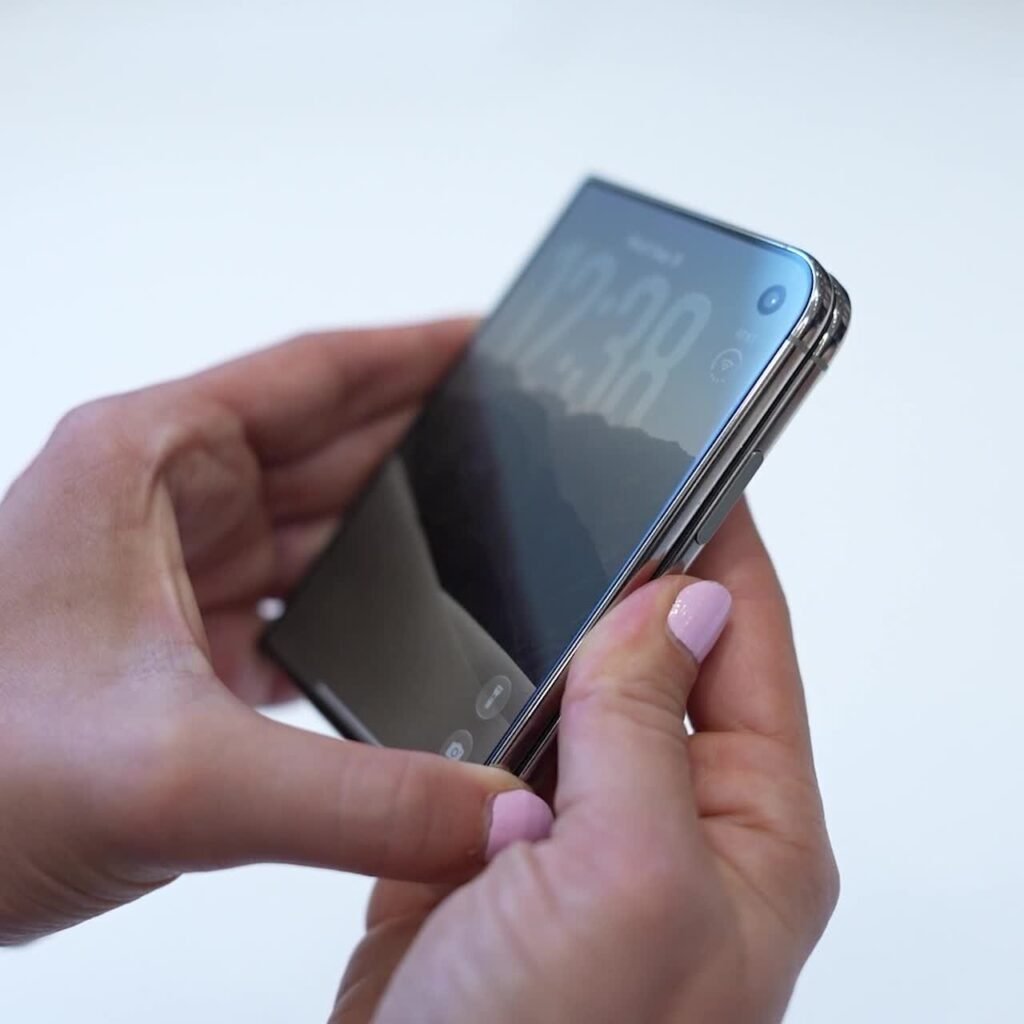
How Foldable Glass Technology Powers Next-Gen Displays
The global smartphone market is undergoing a profound structural shift, driven by the rapid maturation of foldable glass technology which allows rigid materials to bend seamlessly without fracturing. For years, the consumer electronics industry sought a holy grail: a material that combines the scratch resistance and optical clarity of glass with the flexibility of plastic. Today, this engineering marvel is no longer a prototype concept but a commercial reality powering premium dual-screen and folding devices. This transition represents a massive collaboration between glass manufacturers, display panel makers, and device OEMs. By manipulating glass at the microscopic level, scientists have bypassed the inherent brittleness of silicon dioxide, paving the way for a new era of form factors. The strategic importance of this technology cannot be overstated; it is the primary differentiator in the ultra-premium smartphone segment, driving average selling prices upward and revitalizing a saturated hardware market.
Foldable glass technology enables smartphone displays to bend without breaking by utilizing Ultra-Thin Glass (UTG) measuring under 100 micrometers. This glass undergoes chemical tempering via ion-exchange processes and is paired with multi-layered polymer coatings and specialized hinges to distribute mechanical stress and prevent catastrophic structural failure.
- Material Innovation: Ultra-Thin Glass (UTG) is engineered down to 30-50 micrometers, allowing it to bend like plastic while retaining the scratch resistance and optical clarity of traditional glass.
- Chemical Strengthening: An intensive potassium-sodium ion-exchange process creates a deep compressive stress layer, preventing micro-cracks from propagating into structural fractures.
- Hinge Integration: Advanced teardrop hinge designs minimize the bending radius and distribute physical strain across a wider surface area, significantly reducing crease visibility.
- Supply Chain Concentration: The production of high-grade foldable glass is highly consolidated among a few key players, creating strategic bottlenecks and driving premium device pricing.
1. Executive Summary & Strategic Importance
The transition from rigid slate-style smartphones to flexible form factors represents one of the most significant design disruptions in modern consumer electronics. At the center of this revolution is the development of ultra-thin, flexible glass substrates that can withstand hundreds of thousands of fold cycles without structural failure. This article explores the underlying materials science, chemical engineering, and mechanical systems that make this possible.
For major hardware manufacturers, mastering this technology is not merely an aesthetic pursuit; it is a critical competitive moat. As global smartphone replacement cycles lengthen, OEMs are leveraging foldable devices to capture high-margin, premium consumer segments. The success of these devices hinges entirely on user trust in their durability. A single highly publicized screen failure can damage a brand’s reputation for years. Consequently, billions of dollars are being funneled into materials science R&D to perfect the delicate balance between flexibility, scratch resistance, and impact tolerance.
2. Historical Background & Contextual Evolution
To appreciate the current state of flexible displays, one must look back at the early, turbulent days of foldable devices. The first commercially available folding smartphones, released around 2019, relied heavily on Colorless Polyimide (CPI) films. CPI is a high-performance plastic that offers exceptional thermal stability and flexibility. However, from a consumer perspective, CPI displays suffered from several glaring drawbacks: they scratched easily under normal fingernail pressure, exhibited a highly visible and tactile crease, and lacked the premium, smooth feel of traditional glass.
The industry quickly realized that plastic-only covers were a stopgap solution. The transition to Ultra-Thin Glass (UTG) marked a pivotal milestone in flexible display durability. UTG was developed to deliver the scratch resistance and optical purity of glass while matching the bendability of plastics. Achieving this required a complete reimagining of the glass manufacturing process. Traditional glass-making techniques, such as float glass production, could not reliably produce glass thin enough to bend without immediate catastrophic failure. Manufacturers had to develop specialized down-draw and overflow fusion processes to pull glass sheets to thicknesses measured in microns, rather than millimeters.
3. In-Depth Technical & Policy Breakdown
The ability of glass to bend without breaking seems to defy common sense, but it is entirely governed by the laws of physics and materials science. By examining the structural mechanics of these displays, we can understand how engineers have achieved the seemingly impossible.
The Physics of Ultra-Thin Glass (UTG)
The fundamental principle behind flexible glass is simple: as glass becomes thinner, its flexibility increases exponentially. The bending stiffness of a material is proportional to the cube of its thickness ($t^3$). When traditional smartphone cover glass (typically 0.5mm to 0.7mm thick) is bent, the outer surface experiences extreme tensile stress, while the inner surface experiences compressive stress. Because glass is highly vulnerable to tension, it fractures almost instantly.
By reducing the thickness of the glass substrate to between 30 and 50 micrometers (roughly the thickness of a human hair), the tensile stress generated during a bend is reduced to a fraction of what it would be in standard glass. This ultra-thin profile allows the glass to achieve a bending radius of under 2 millimeters without reaching its theoretical fracture limit. This breakthrough in ultra-thin glass engineering has transformed our understanding of brittle materials.
Chemical Tempering and Ion-Exchange Processes
Raw ultra-thin glass is still highly fragile and susceptible to micro-fissures introduced during the cutting and shaping processes. To make it resilient enough for daily consumer use, the glass must undergo an intensive chemical tempering process known as ion-exchange.
During this process, the UTG sheet is submerged in a high-temperature bath of molten potassium salt (typically around 400°C). At this temperature, smaller sodium ions within the glass structure migrate out, and larger potassium ions from the salt bath take their place. Because these potassium ions occupy more physical space, they crowd the surface layer of the glass, creating a state of high compressive stress. This compressive layer acts as a protective shield; before any applied bending force can create destructive tensile stress on the surface, it must first overcome this built-in compression. This chemical reinforcement is crucial for maintaining long-term structural integrity over years of folding and unfolding.
The Evolution of Foldable Glass Technology
The integration of UTG into modern display stacks requires a sophisticated multi-layered architecture. UTG cannot function in isolation; it is highly sensitive to localized impacts, such as a dropped object or a sharp pen pressure. To mitigate this vulnerability, manufacturers laminate the UTG layer with a highly elastic polymer top coat, often made of polyethylene terephthalate (PET) or custom optical clear adhesives (OCA).
This polymer layer serves two primary purposes: it acts as a shatter-proof barrier that holds the glass together in the event of a high-impact fracture, and it distributes localized forces across a wider area, preventing the underlying glass from puncturing. However, this hybrid approach introduces a engineering compromise: the plastic top layer is still susceptible to minor scratches, meaning that while the screen is structurally durable, it may still show superficial wear over time.
Folding Screen Mechanics and Hinge Integration
The durability of a foldable screen is intimately linked to the design of the mechanical hinge supporting it. Early hinges forced the display into a tight, V-shaped fold, which concentrated immense stress on a very narrow strip of the glass. This resulted in a highly pronounced crease and accelerated material fatigue.
Modern devices utilize highly complex folding screen mechanics, most notably the “teardrop” or “waterdrop” hinge design. When the device is closed, this hinge allows a portion of the display to slip gently into the body of the phone, forming a teardrop shape with a much wider, gentler bending radius. By distributing the bend over a larger surface area, the hinge minimizes both the physical stress on the UTG and the visual prominence of the crease when the device is opened flat. The engineering of these hinges involves hundreds of micro-gears and high-strength alloys, representing a masterpiece of mechanical design.
4. Comparative Industry Framework
To understand the competitive landscape of flexible display materials, we must compare the primary technologies currently utilized or in development across the industry.
| Dimension | Colorless Polyimide (CPI) | Standard Ultra-Thin Glass (UTG) | Next-Gen Composite UTG |
|---|---|---|---|
| Material Composition | Flexible Plastic Polymer | Chemically Tempered Glass | Glass-Ceramic / Polymer Hybrid |
| Thickness Range | 50 – 80 Micrometers | 30 – 50 Micrometers | 25 – 40 Micrometers |
| Scratch Resistance (Mohs) | 2 – 3 (Low) | 5 – 6 (Moderate-High) | 6 – 7 (High) |
| Crease Visibility | High (Pronounced) | Medium (Moderate) | Low (Minimal) |
| Bending Radius Limit | < 1.5 mm | ~ 2.0 mm | < 1.0 mm |
| Relative Production Cost | Low | High | Very High |
SEEUY INTELLIGENCE
Foldable Glass Technology – Analytical Overview
Material Composition
Flexible Plastic Polymer
Thickness Range
50 – 80 Micrometers
Scratch Resistance (Mohs)
2 – 3 (Low)
Crease Visibility
High (Pronounced)
Bending Radius Limit
< 1.5 mm
The comparative data highlights the clear evolutionary path of the industry. While CPI remains a viable option for budget-oriented flexible devices due to its low production cost, premium flagships have almost universally transitioned to UTG and its emerging composite variants. The primary engineering challenge remains the trade-off between production yield and material performance. As manufacturing processes mature, the cost delta between these materials is expected to shrink, democratizing access to high-durability foldable screens.
5. Socio-Economic, Enterprise & Global Ramifications
The rise of foldable glass technology has sent shockwaves through the global electronics supply chain. The production of high-grade UTG is highly consolidated, with a select few companies possessing the intellectual property and manufacturing capabilities required to produce it. Companies like Schott (Germany) and Corning (USA) dominate the raw glass supply, while display giants like Samsung Display and BOE handle the complex lamination and panel integration processes.
According to financial reports tracked by Bloomberg, the market for foldable smartphones is projected to grow at a double-digit compound annual growth rate (CAGR) over the next decade, outperforming the flat-screen smartphone segment. This growth is driving massive capital investments in specialized manufacturing facilities in South Korea, China, and Vietnam. However, this high concentration of supply chain nodes creates vulnerabilities; any disruption in raw material supply or manufacturing yields can cause severe bottlenecks for global smartphone brands.
From an enterprise perspective, foldable devices are carving out a niche as high-productivity tools. The ability to unfold a pocket-sized device into a mini-tablet changes how mobile professionals interact with data, spreadsheets, and multi-tasking interfaces. However, the high cost of acquisition and repair remains a barrier to widespread corporate deployment. Furthermore, the environmental impact of these complex devices is a growing concern. Foldable phones are inherently more difficult to repair and recycle than traditional smartphones, prompting calls from environmental groups and regulators for more modular and sustainable designs.
6. Strategic Outlook & What Comes Next
As we look to the future, the development of foldable displays is far from complete. The next frontier in materials science of foldables involves the commercialization of rollable, slidable, and even tri-fold displays. These advanced form factors will require glass substrates that are not only thinner but also possess self-healing properties to mitigate surface wear.
We are already seeing prototypes of devices that can expand their screen real estate by unrolling a flexible display from within a compact housing. This requires a glass substrate that can handle continuous, dynamic bending without taking a permanent set or creasing. Additionally, researchers are exploring glass-ceramic hybrids that offer the impact resistance of ceramics with the optical transparency of glass, potentially eliminating the need for protective plastic top layers entirely.
The ultimate goal is to achieve parity in durability and cost with traditional flat-screen glass. Once this threshold is crossed, flexible displays will likely expand beyond smartphones and tablets into automotive interiors, smart home appliances, and wearable technology, fundamentally changing our daily interaction with digital interfaces.
7. Frequently Asked Questions (FAQ)
This section addresses the most common queries regarding the engineering, durability, and performance of modern foldable glass displays.
How does foldable glass differ from the glass on a standard smartphone?
Standard smartphone glass is designed to be rigid and thick (usually 0.5mm to 0.7mm) to maximize structural rigidity and drop protection. Foldable glass, or Ultra-Thin Glass (UTG), is engineered to be incredibly thin (30 to 50 micrometers), allowing it to bend elastically. It also undergoes specialized chemical tempering to handle the unique stresses of repeated folding.
Is the crease on a foldable screen permanent?
The crease is a physical consequence of bending a multi-layered material. While modern hinge designs and advanced UTG have significantly reduced its depth and visibility, a slight indentation remains inevitable with current technology. Over time, as the materials experience mechanical fatigue, the crease may become slightly more noticeable, though it does not affect the display’s functionality.
Can foldable glass withstand cold weather?
Extreme cold can affect the physical properties of both the glass and the adhesive layers used in foldable displays. At very low temperatures, polymers can become brittle, increasing the risk of cracking during folding. Manufacturers conduct extensive thermal testing to ensure modern UTG displays remain operational in sub-zero temperatures, but users are generally advised to handle their devices with extra care in extreme cold.
Why are foldable smartphones so expensive?
The high cost is driven by the complex manufacturing processes of UTG, the low yield rates of flexible OLED panels compared to rigid ones, and the intricate mechanical engineering required for the hinges. Additionally, the R&D costs associated with these pioneering technologies are amortized over a smaller volume of units, resulting in a premium retail price.
Will Apple release a foldable device using this technology?
While Apple has filed numerous patents related to foldable displays and hinge mechanisms, the company is notoriously conservative regarding product durability. Industry analysts suggest that Apple will only enter the foldable market once foldable glass technology reaches a level of maturity where the crease is virtually imperceptible and the long-term durability matches that of their current rigid devices.
