
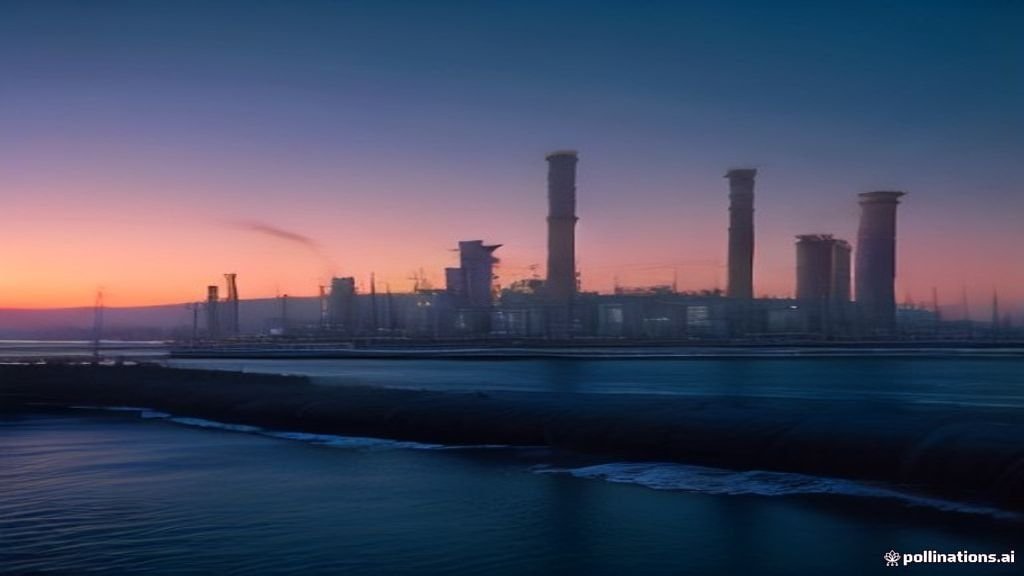
Dangote Refinery IPO Launches Africa’s Biggest Share Sale
Nigerian billionaire Aliko Dangote has officially launched the Dangote refinery IPO, marking the single largest share sale in African corporate history and opening ownership of a premier energy asset to the general public. Offering a roughly 3% stake in the multi-billion-dollar refining behemoth, this strategic financial maneuver seeks to raise up to $2.1 billion (£1.6 billion). By democratizing equity access, the offering invites everyday citizens to acquire a direct financial interest in an industrial complex that has fundamentally altered the economic landscape of West Africa. With immense national pride and widespread retail participation, this monumental financial event bridges the gap between elite corporate expansion and grassroots economic empowerment.
The Dangote refinery IPO is Africa's largest-ever share sale, offering a 3% equity stake in the $19 billion Lekki facility to the general public. Aimed at raising up to $2.1 billion, the historic offering allows retail and institutional investors to purchase shares starting at just $4, expanding domestic ownership in a plant that supplies over 70% of Nigeria's energy.<\/p>
- Massive Capital Ingress: The initial public offering aims to raise up to $2.1 billion, representing roughly 3% of the world-class oil refinery.
- Accessibility for Retail Investors: With a minimum purchase requirement of just 10 shares costing approximately $4, ordinary citizens can directly participate.
- Energy Self-Sufficiency: The Lekki-based facility currently supplies more than 70% of Nigeria's refined petroleum products, fundamentally shifting the regional supply chain.
- Expansion Catalyst: Proceeds from the historic share sale are specifically targeted at doubling the plant's operational capacity and expanding infrastructure.
/
1:34
1. Executive Summary & Strategic Importance
The commencement of the Dangote refinery IPO represents a watershed moment for capital markets across the African continent. For decades, major industrial infrastructure projects remained strictly within the purview of elite conglomerates, sovereign wealth funds, or international institutional investors. By throwing open the doors to retail buyers—allowing individuals to purchase shares with a minimum threshold of just 10 shares valued at roughly $4—Aliko Dangote has signaled a new era of inclusive capitalism. This historic share sale is designed not only to raise vital expansion capital but also to anchor the refinery’s long-term operational security within the fabric of domestic society. Market analysts, economists, and everyday citizens are monitoring the rollout closely, recognizing that the success of this offering could establish a new benchmark for corporate capitalization across emerging markets.
Stakeholders across the board, from first-time retail investors like Isah Salisu withdrawing personal savings to seasoned institutional portfolio managers, view the offering as a bellwether for Nigerian enterprise. The refinery itself is no ordinary industrial asset; it is a geopolitical and economic shield for a nation that has historically exported crude oil only to re-import expensive refined petroleum products. By capturing the entire downstream value chain domestically, the facility insulates the Nigerian economy from global currency shocks and foreign exchange volatility. The strategic decision to distribute equity directly to the public fosters an unprecedented level of civic buy-in, transforming passive energy consumers into active corporate stakeholders.
2. Historical Background & Contextual Evolution
The journey toward this landmark share sale spans over a decade of monumental engineering challenges, financial structuring, and bold entrepreneurial vision. First announced in 2013 with an initial projected cost of roughly $19 billion, the physical realization of the Aliko Dangote oil refinery faced severe headwinds. Construction did not officially break ground until 2017, and the timeline suffered subsequent disruptions brought on by global supply chain gridlocks and the COVID-19 pandemic. Located within the sprawling Lekki Free Zone near Lagos, the project required unprecedented civil engineering feats, including massive land reclamation efforts that moved over 65 million cubic metres of sand to stabilize the swampy terrain.
Aliko Dangote, whose fortune was forged in cement and sugar production through Dangote Cement—Africa’s largest cement producer—poured his personal reputation and financial weight into the venture. Nigeria, despite ranking as Africa’s largest oil producer, spent decades grappling with a paradox: possessing abundant crude reserves while lacking domestic refining capacity. Consequently, the country imported virtually all of its gasoline, diesel, and aviation fuel. The completion of the refinery in 2024 shattered this paradigm. With a staggering processing capacity of 650,000 barrels per day, the facility instantly claimed its place as one of the largest and most sophisticated single-train refineries in the world, immediately seizing control of over 70% of the domestic energy supply market.
3. In-Depth Technical & Policy Breakdown
Unpacking the mechanics of the Dangote refinery IPO requires a granular examination of both its financial architecture and its operational engineering. The offering is structured to transition the privately held industrial titan into a publicly traded powerhouse, utilizing market liquidity to fund the next phase of corporate growth. The proceeds generated from the share sale are earmarked specifically for capital expenditures designed to double the refinery’s processing capacity and optimize auxiliary petrochemical manufacturing units.
Operational Scale and Refining Prowess
Technically, the Lekki facility operates at a scale that dwarfs regional competitors. Utilizing advanced cracking units, hydrotreaters, and continuous catalytic regeneration technology, the refinery produces Euro V-compliant gasoline, diesel, kerosene, and aviation fuel that meet stringent international environmental standards. This technical superiority not only satisfies domestic demand but positions Nigeria as a major refined product exporter across the broader Economic Community of West African States (ECOWAS) region. The integration of cutting-edge automation ensures optimal efficiency, minimizing carbon intensity and maximizing product yield from heavy crude grades.
Regulatory Safeguards and Market Warnings
Despite the overwhelming public excitement, financial regulators and economic experts have instituted rigorous guidelines to protect unsophisticated retail buyers. Dr. Abdulrazak Ibrahim Fagge, a respected economy and business expert, issued critical cautionary advisories highlighting the inherent volatility of equity markets. While public enthusiasm has driven millions to mobilize personal savings—exemplified by retail participants diverting funds from traditional bank deposits into the offering—market analysts emphasize that share prices can experience downward corrections. Experts strongly advise first-time investors to allocate only discretionary capital—funds that will not be required for immediate living expenses over a three-to-five-year horizon—and to exercise extreme vigilance against fraudulent third-party operators attempting to exploit the IPO frenzy.
4. Comparative Industry Framework
To fully contextualize the magnitude of this offering, it is vital to evaluate the Lekki facility against global refining benchmarks and regional economic drivers. The table below outlines critical dimensions comparing the Dangote refinery with traditional global refining hubs and alternative African industrial investments.
| Critical Dimension | Dangote Refinery (Nigeria) | Traditional European Refineries | Typical African Regional Plants |
|---|---|---|---|
| Processing Capacity | 650,000 barrels per day | 150,000 – 300,000 bpd (Aging infrastructure) | 20,000 – 60,000 bpd |
| Primary Market Focus | Domestic self-sufficiency & ECOWAS export | Mature domestic and transatlantic export | Fragmented local distribution |
| Ownership Structure | Transitioning via public IPO (Retail & Institutional) | Consolidated multinational energy conglomerates | State-owned or private monopoly |
| Technological Standard | State-of-the-art Euro V compliance | Mixed (Retrofitted older units) | Basic distillation units |
SEEUY INTELLIGENCE
Dangote Refinery IPO – Analytical Overview
Processing Capacity
650,000 barrels per day
Primary Market Focus
Domestic self-sufficiency & ECOWAS export
Ownership Structure
Transitioning via public IPO (Retail & Institutional)
Technological Standard
State-of-the-art Euro V compliance
The comparative matrix underscores the unique disruptive posture of the Dangote facility. Unlike aging European refineries struggling with high maintenance overheads and strict carbon taxes, the Nigerian plant benefits from modern economies of scale and direct proximity to rich African crude fields. This structural advantage protects profit margins and ensures long-term operational viability, providing a solid fundamental backing for retail investors participating in the current share allocation.
5. Socio-Economic, Enterprise & Global Ramifications
The ripple effects of this historic share sale extend far beyond balance sheets and stock tickers, touching the very core of social mobility and economic sovereignty in West Africa. For decades, ordinary citizens watched vast natural wealth leave their shores, only to return as expensive imported commodities that fueled inflation and drained foreign exchange reserves. By securing a dominant foothold in Nigeria energy consumption patterns, the refinery has begun to stabilize local fuel prices and preserve foreign currency reserves that were previously squandered on petroleum importation.
Globally, international energy monitors and trade organizations, including the World Bank, have noted how domestic refining capacity reshapes international trade flows. Major trading hubs in Europe and Asia, which historically profited from shipping refined fuels to West Africa, are currently forced to recalibrate their export strategies as Nigerian self-sufficiency solidifies. Domestically, the democratization of corporate ownership through accessible share pricing acts as a powerful wealth-generation vehicle. It cultivates an investing culture among populations previously excluded from capital markets, fostering grassroots financial literacy and long-term economic resilience.
6. Strategic Outlook & What Comes Next
As the one-month window for the share offering progresses, market participants are looking ahead to the post-listing phase and the execution of the refinery’s ambitious growth roadmap. The immediate priority following the close of the IPO will be the official listing of the shares on designated stock exchanges, where market forces will establish the ongoing valuation of the equity stake. Management faces the dual challenge of maintaining operational excellence at world-class capacities while efficiently deploying the newly raised capital to double output.
Long-term success will depend heavily on sustained crude oil supply agreements, favorable regulatory frameworks, and stable macroeconomic conditions within Nigeria. Mitigating foreign exchange risks and safeguarding against supply chain bottlenecks will remain central to the company’s executive strategy. Furthermore, as the plant expands its petrochemical output, it is poised to catalyze downstream manufacturing industries—such as plastics, pharmaceuticals, and agricultural fertilizers—transforming Nigeria from a raw commodity exporter into a diversified industrial powerhouse.
7. Frequently Asked Questions (FAQ)
-
What is the minimum investment required for the Dangote refinery IPO?
The minimum purchase requirement is set at 10 shares, costing approximately $4, making it accessible to retail investors and ordinary citizens across Nigeria.
-
What percentage of the refinery is being offered to the public?
The initial public offering offers roughly a 3% stake in the massive oil refinery to both the general public and institutional buyers.
-
How much capital is the Dangote refinery IPO expected to raise?
The share sale is expected to raise as much as $2.1 billion (£1.6 billion), which will be utilized to help double the refinery’s operational capacity.
-
Where is the Dangote oil refinery located?
The refinery is situated in the Lekki Free Zone near Lagos, Nigeria, occupying a massive reclaimed land site spanning thousands of hectares.
-
What are the primary risks associated with investing in this IPO?
Financial experts warn that share prices can fluctuate post-listing, meaning short-term investors could experience losses if they need liquidity within the first few years.
<button type="button" onclick="this.parentElement.innerHTML='✓ Thank you, we will refine our analysis!‘” style=”background:#ffffff; border:1px solid #cbd5e1; border-radius:6px; padding:4px 12px; font-size:12px; cursor:pointer; color:#334155;”>👎 No
Latest Analytical Follow-up: For continuous developments on this subject, read our full investigation on South Africa Gender-Based Violence: Ramaphosa Vows Justice.
