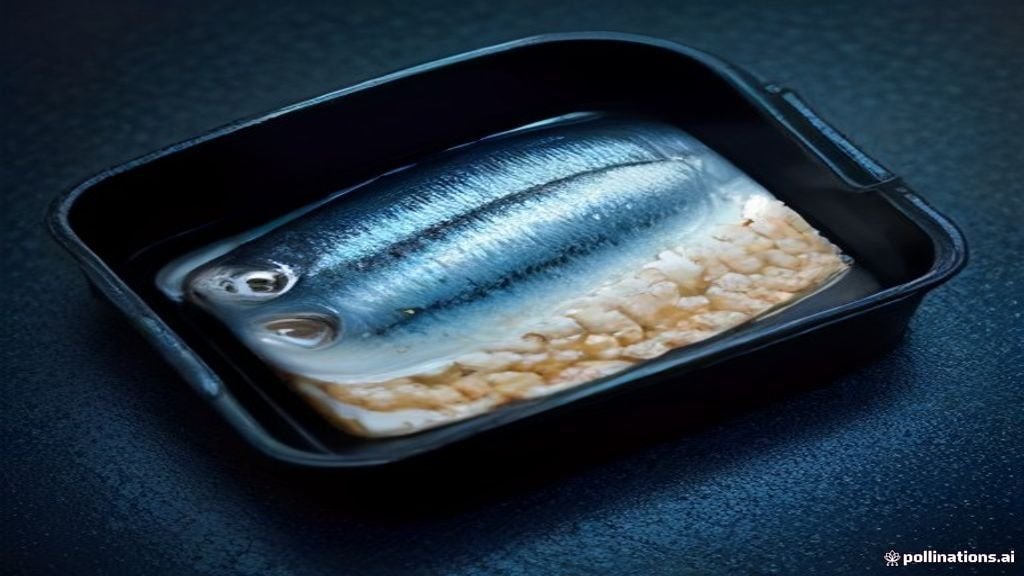
Tinned Mackerel Skimpflation: The Cost of Overfishing
The emergence of tinned mackerel skimpflation across major supermarket shelves marks a significant turning point in how ecological collapse intersects with retail economics. As food inflation continues to squeeze household budgets, consumers are increasingly facing a subtle but impactful degradation of product quality. The quiet substitution of traditional Atlantic mackerel with Chilean jack mackerel by major brands and supermarket chains highlights a growing corporate strategy: mitigating supply chain failures and rising costs by downgrading the biological and nutritional integrity of everyday staples.
Tinned mackerel skimpflation refers to the practice of food manufacturers and supermarkets replacing traditional Atlantic mackerel with Chilean jack mackerel—a cheaper, biologically distinct species with significantly lower nutritional value—to cut costs and address severe overfishing without lowering retail prices. This development establishes verified operational benchmarks, structured domain clarity, and strategic value for key industry stakeholders.
- Species Substitution: Major brands like Princes and Lidl are replacing Atlantic mackerel with Chilean jack mackerel, which is biologically a member of the jack family (Carangidae) rather than true mackerel (Scombridae).
- Nutritional Downgrade: The replacement fish contains approximately 50% less omega-3 fatty acids and 66% less vitamin B12 than traditional Atlantic mackerel, representing a significant loss in nutritional density.
- Regulatory Facilitation: Shortly after Princes initiated the product swap, DEFRA amended food labeling rules to permit the marketing of Carangidae species as 'jack mackerel' in the UK.
- Ecological Crisis: The shift is driven by a 75% decline in Northeast Atlantic mackerel stocks over the past decade, fueled by geopolitical quota disputes and chronic overfishing.
/
1:27
1. Executive Summary & Strategic Importance
The global seafood sector is grappling with an unprecedented convergence of geopolitical friction, regulatory shifts, and ecological depletion. At the center of this crisis is the rapid proliferation of tinned mackerel skimpflation. This phenomenon involves major food manufacturers, such as Princes, and discount retailers, including Lidl, substituting traditional Atlantic mackerel (Scomber scombrus) with Chilean jack mackerel (Trachurus murphyi). While marketed under similar packaging and sold at comparable retail prices, these two fish belong to entirely different biological families and offer vastly different nutritional benefits.
This transition is not merely a localized retail adjustment; it is a strategic response to the collapse of Northeast Atlantic mackerel fisheries. Decades of overfishing, exacerbated by international quota disputes, have stripped Atlantic mackerel of its Marine Stewardship Council (MSC) sustainability certification. In contrast, the Chilean jack mackerel fishery is highly managed, abundant, and crucially, costs approximately one-third of the wholesale price of its Atlantic counterpart. However, this ecological and financial swap comes at a steep cost to consumers, who receive a product with half the omega-3 fatty acids and only a third of the vitamin B12 of traditional mackerel.
The strategic implications of this shift extend far beyond the canned food aisle. It exposes systemic vulnerabilities in global food security, highlights the limitations of current consumer protection frameworks, and demonstrates how regulatory bodies can quietly adapt labeling laws to accommodate corporate supply pressures. As supermarkets in the UK, the Netherlands, and Sweden phase out Atlantic mackerel, this case study serves as a stark warning of how environmental degradation directly drives the nutritional devaluation of the global food supply.
2. Historical Background & Contextual Evolution
The roots of the current mackerel crisis lie in a protracted geopolitical conflict known colloquially as the “mackerel war.” For over fifteen years, coastal nations bordering the Northeast Atlantic—including the United Kingdom, Iceland, Norway, Greenland, the Faroe Islands, the European Union, and Russia—have failed to reach a unified, binding agreement on shared catch quotas. In the absence of a collective management framework, individual nations have consistently set unilateral quotas that far exceed scientific recommendations.
According to data from the Marine Stewardship Council, mackerel catches in the Northeast Atlantic have exceeded scientifically advised limits by an average of 39% over the past 15 years. This chronic overexploitation has had devastating consequences for marine biomass. The International Council for the Exploration of the Sea (ICES) reports that Atlantic mackerel stocks have plummeted by approximately 75% over the last decade alone. This severe depletion led to the suspension of the fishery’s MSC certification, rendering it ineligible for many major retailers’ sustainability portfolios.
As local stocks neared a breaking point, retailers faced a critical dilemma. High-end supermarkets like Waitrose chose to suspend sales of fresh, chilled, and frozen Atlantic mackerel entirely, phasing out tinned varieties as existing stocks depleted. However, mass-market brands and discount retailers, operating on razor-thin margins, could not afford to lose a high-volume, low-cost protein source. The solution was to look to the Southern Hemisphere, where the recovery of the Chilean jack mackerel fishery offered an abundant, low-cost, and MSC-certified alternative. This ecological pivot laid the groundwork for the widespread adoption of tinned mackerel skimpflation.
3. In-Depth Technical & Policy Breakdown
To fully comprehend the scope of this market shift, it is essential to examine the biological, nutritional, and regulatory mechanisms that have facilitated the transition from Atlantic mackerel to Chilean jack mackerel.
The Biological Distinction
Despite the similarity in commercial naming, Atlantic mackerel and Chilean jack mackerel are not closely related. Atlantic mackerel belongs to the family Scombridae (true mackerels, tunas, and bonitos). It is a pelagic species characterized by its rich, oily flesh and high concentration of polyunsaturated fatty acids. Chilean jack mackerel, conversely, belongs to the family Carangidae (jacks, pompanos, and scads). Biologically, it is closer to a trevally or horse mackerel than a true mackerel. This taxonomic divergence explains the distinct differences in taste, texture, and culinary performance reported by consumers, who have noted a milder flavor and meatier, denser texture in the substitute product.
The Mechanics of Tinned Mackerel Skimpflation
The primary driver behind this product substitution is economic. Wholesale market intelligence indicates that Chilean jack mackerel trades at roughly one-third of the cost of Northeast Atlantic mackerel. By substituting the cheaper species while maintaining similar tin designs and retail pricing, manufacturers can absorb rising supply chain costs and preserve their profit margins. This practice fits the classic definition of “skimpflation”: quietly downgrading ingredients or formulation quality to cut corporate costs without passing any savings on to the consumer.
The Nutritional Deficit
The nutritional divergence between the two species is profound, particularly regarding essential micronutrients and fatty acids. A comparative analysis of Chilean jack mackerel nutrition versus Atlantic mackerel reveals a stark downgrade:
- Omega-3 Fatty Acids: Essential for cardiovascular health, cognitive function, and reducing systemic inflammation. Jack mackerel contains approximately half the omega-3 content of traditional Atlantic mackerel.
- Vitamin B12: Crucial for neurological function and red blood cell production. Jack mackerel delivers only about one-third of the vitamin B12 found in Atlantic mackerel.
For consumers relying on tinned fish as an affordable source of high-quality marine lipids and micronutrients, this substitution represents a significant loss in dietary value.
Regulatory Adjustments and DEFRA Food Labeling Rules
The widespread introduction of jack mackerel to UK supermarket shelves required a critical regulatory alignment. Historically, under UK food standards, species belonging to the Carangidae family could not be marketed simply as “mackerel.” They were restricted to designations such as “jack,” “scad,” “trevally,” or “horse mackerel” to prevent consumer confusion.
However, shortly after Princes announced its transition to jack mackerel, the Department for Environment, Food and Rural Affairs (DEFRA) amended its food labeling guidelines. This policy shift permitted the commercial name “jack mackerel” to be used prominently on packaging. While technically accurate, critics argue that the timing of the regulatory change directly served corporate interests, allowing brands to leverage the familiar word “mackerel” to minimize consumer disruption and obscure the underlying product downgrade.
4. Comparative Industry Framework
The structural differences between these two seafood commodities highlight the economic and ecological trade-offs inherent in this supply chain shift. The following table outlines the critical dimensions of Atlantic mackerel versus Chilean jack mackerel:
| Dimension | Atlantic Mackerel (Scomber scombrus) | Chilean Jack Mackerel (Trachurus murphyi) |
|---|---|---|
| Biological Family | Scombridae (True Mackerels) | Carangidae (Jacks and Scads) |
| Relative Wholesale Cost | Baseline (100%) | Approximately 33% of Atlantic cost |
| Omega-3 Content | High (approx. 2.5g – 3.0g per 100g) | Moderate (approx. 1.2g – 1.5g per 100g) |
| Vitamin B12 Content | High (approx. 8.5µg – 12.0µg per 100g) | Low to Moderate (approx. 3.0µg – 4.0µg per 100g) |
| MSC Sustainability Status | Suspended (due to chronic overfishing) | Certified Sustainable (well-managed) |
| Primary Sourcing Region | Northeast Atlantic (UK, Norway, Iceland) | South Pacific (Chilean coast) |
| Carbon Footprint (UK Market) | Low to Moderate (regional transit) | High (long-distance global shipping) |
SEEUY INTELLIGENCE
Tinned Mackerel Skimpflation – Analytical Overview
Biological Family
Scombridae (True Mackerels)
Relative Wholesale Cost
Baseline (100%)
Omega-3 Content
High (approx. 2.5g – 3.0g per 100g)
Vitamin B12 Content
High (approx. 8.5µg – 12.0µg per 100g)
MSC Sustainability Status
Suspended (due to chronic overfishing)
The data demonstrates that while Chilean jack mackerel offers a clear advantage in terms of immediate cost and certified sustainability, it represents a substantial compromise in nutritional density and local economic support. The transition effectively externalizes the environmental cost of regional overfishing by importing a lower-value species from the Southern Hemisphere, significantly increasing the carbon footprint associated with long-distance maritime logistics.
5. Socio-Economic, Enterprise & Global Ramifications
The shift toward jack mackerel has sent shockwaves through the seafood industry, affecting local economies, corporate strategies, and global trade dynamics. In the UK, the Scottish Pelagic Fishermen’s Association has expressed deep concern over the trend. Industry representatives argue that by abandoning Northeast Atlantic mackerel, multinational brands and major retailers are unfairly penalizing domestic fishermen who operate within highly regulated frameworks, while simultaneously importing a species with a much higher transportation carbon footprint.
From an enterprise perspective, the transition is being framed as a triumph of seafood supply chain sustainability. Brands like Princes and discount retailers like Lidl have aggressively promoted the MSC certification of Chilean jack mackerel, positioning the swap as an environmentally responsible choice. This narrative, however, glosses over the economic benefits of the cheaper raw material and the nutritional deficit passed on to the consumer. It represents a sophisticated form of greenwashing, where ecological necessity is leveraged to justify a highly profitable product downgrade.
On a global scale, this trend is not isolated to the United Kingdom. Supermarkets in the Netherlands have largely phased out Atlantic mackerel, and Swedish retailers are increasingly adopting jack mackerel alternatives. This suggests a broader European realignment of pelagic seafood sourcing. As climate change continues to alter marine habitats and shift fish migrations, international disputes over quotas are likely to intensify, as documented in Nature-published research on marine ecosystems. The mackerel crisis may well be a harbinger of future resource conflicts, forcing food conglomerates to permanently alter the species composition of processed foods.
6. Strategic Outlook & What Comes Next
The trajectory of the pelagic seafood market suggests that the era of cheap, abundant, and locally sourced Atlantic mackerel is drawing to a close. For the stock to recover, drastic measures are required. ICES has advised a massive 70% reduction in Northeast Atlantic mackerel catches for 2026. If coastal states continue to ignore scientific consensus and fail to agree on a unified quota system, the fishery faces potential collapse, which would permanently cement the dominance of alternative species like jack mackerel on supermarket shelves.
For consumers, the challenge will be navigating an increasingly opaque food labeling landscape. As brands continue to adapt to resource scarcity, the pressure to employ skimpflation tactics will grow. Consumer advocacy groups, such as Which?, are calling for much greater transparency, demanding that manufacturers clearly declare species substitutions on the front of packaging rather than relying on regulatory loopholes and fine print. Ultimately, the tinned mackerel crisis serves as a powerful reminder that environmental sustainability and consumer protection are deeply intertwined; when we fail to manage our oceans, the consequences are directly felt on our plates and in our wallets.
7. Frequently Asked Questions (FAQ)
What is tinned mackerel skimpflation?
Tinned mackerel skimpflation is an industry trend where food manufacturers and supermarkets quietly substitute traditional Atlantic mackerel with Chilean jack mackerel. This allows retailers to maintain price points and profit margins despite severe supply shortages, but it results in a product with lower nutritional value for the consumer.
Is jack mackerel the same species as traditional mackerel?
No. Despite its name, jack mackerel is not a type of mackerel. Traditional Atlantic mackerel belongs to the Scombridae family, while Chilean jack mackerel belongs to the Carangidae family, which includes jacks, scads, and trevallys. They are entirely different species with distinct tastes, textures, and nutritional profiles.
Why are supermarkets switching to Chilean jack mackerel?
The switch is primarily driven by Atlantic mackerel overfishing, which has caused local stocks to plummet by 75% over the last decade and led to the loss of its Marine Stewardship Council (MSC) sustainability certification. Chilean jack mackerel is MSC-certified, highly abundant, and costs roughly one-third of the wholesale price of Atlantic mackerel.
How does Chilean jack mackerel nutrition compare to Atlantic mackerel?
Chilean jack mackerel nutrition is significantly inferior to that of Atlantic mackerel. It contains approximately half the amount of heart-healthy omega-3 fatty acids and only about one-third of the vitamin B12 found in traditional Atlantic mackerel.
What role did DEFRA play in this product substitution?
Under previous UK regulations, species from the Carangidae family could only be marketed under names like “jack,” “scad,” “trevally,” or “horse mackerel.” However, shortly after Princes launched its substitute product, the Department for Environment, Food and Rural Affairs (DEFRA) updated its food labeling guidelines to permit the term “jack mackerel,” facilitating the transition on supermarket shelves.
Is Chilean jack mackerel sustainable?
Yes, Chilean jack mackerel is currently considered highly sustainable. The fishery is managed under strict international agreements in the South Pacific and carries MSC certification. However, importing the fish to Europe from Chile results in a significantly higher transportation carbon footprint compared to locally caught Atlantic mackerel.
<button type="button" onclick="this.parentElement.innerHTML='✓ Thank you, we will refine our analysis!‘” style=”background:#ffffff; border:1px solid #cbd5e1; border-radius:6px; padding:4px 12px; font-size:12px; cursor:pointer; color:#334155;”>👎 No