
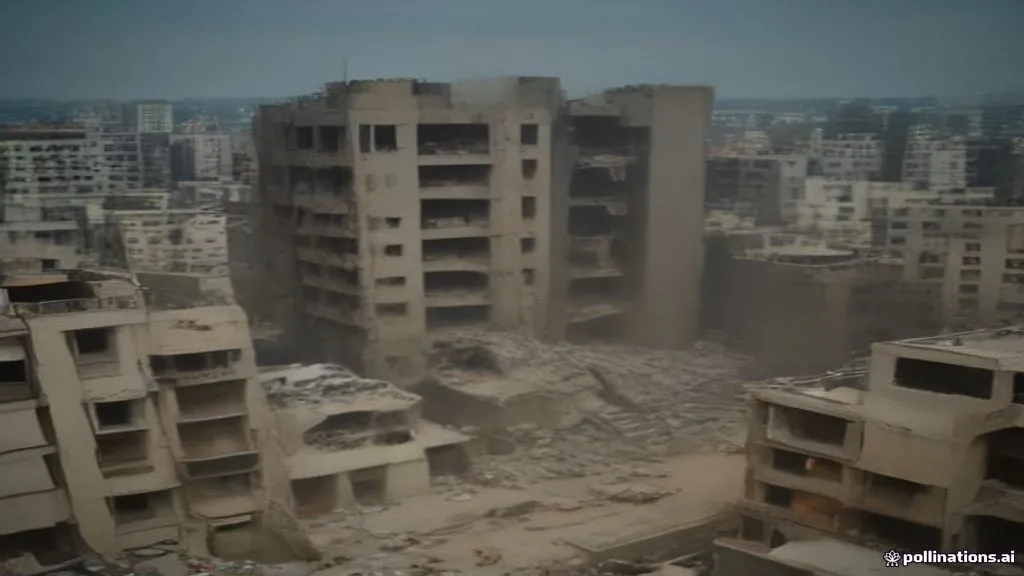
Gaza building collapse kills 21 as rescue efforts stall
The dust had barely settled over the ruins of Tal al-Hawa when the true cost of administrative neglect and infrastructural devastation became chillingly clear. At least 21 people, including eight children, were killed overnight when a compromised six-storey residential block gave way, burying families who had sought nothing more than four walls and a roof against the elements. This Gaza building collapse is not merely an isolated structural failure; it is a grim symptom of a broader, systemic humanitarian breakdown that has left millions of non-combatants exposed to daily, avoidable dangers.
A Gaza building collapse in the Tal al-Hawa area of Gaza City resulted in the deaths of 21 people, including eight children. The six-storey structure, left tilting dangerously by a prior Israeli strike, had been inhabited by displaced families facing severe housing shortages amidst ongoing regional conflict.<\/p>
- Tragic Toll: At least 21 individuals, featuring eight children, lost their lives when a severely compromised six-storey residential block gave way overnight in Gaza City.
- Desperate Choices: Displaced families occupied the visibly tilting structure because severe shortages of tents and functional housing left them with no viable alternatives.
- Rescue Hurdles: First responders were initially forced to dig through rubble with bare hands due to a critical lack of functional heavy machinery and fuel.
- Wider Risk: United Nations officials warn that roughly 400 other war-damaged structures across the enclave face imminent collapse ahead of winter.
A Tilting Death Trap Ignored Out of Desperation
Witnesses on the ground paint a devastating picture of calculated risk. The building had stood as a scarred, precarious landmark in Gaza City for over a year, leaning heavily to one side after being struck during the early months of the war. To anyone walking past, the structural integrity was visibly compromised. Yet, for roughly 10 displaced families who could not secure a tent or find any other patch of earth to pitch one, the tilting ruin was a last resort.
As Sherif, whose sister perished in the collapse, painfully noted, the victims were fully aware of the peril. ‘They couldn’t find a tent or somewhere to live,’ he recounted. ‘This was the last place they could turn to, despite the danger. They were aware that it would likely end in tragedy. A lack of resources drove them towards certain death.’ Everyday life beneath the fractured concrete meant listening to the steady, ominous clatter of falling stones. Day by day, the structure eroded, but the human tide demanding shelter left occupants with nowhere else to go.
In the dead of night, the inevitable occurred. Umm Mohammed Bakrun, living in a makeshift encampment nearby, recalled the terrifying suddenness of the event. ‘It felt like an earthquake,’ she said. ‘There was a loud sound and I couldn’t stand up. Stones rained down on us and when I looked outside I saw a lot of dust. Within minutes, there were screams everywhere.’ Within seconds, a decade of memories and human lives vanished into a mound of grey debris.
When Bare Hands Meet Tons of Concrete
The immediate aftermath exposed the crippled state of local emergency infrastructure. First responders from the Hamas-run Civil Defence agency arrived quickly, but they arrived virtually empty-handed. Deprived of fuel, operational excavators, and heavy lifting gear due to ongoing import restrictions and a severe blockade, rescuers were initially forced to claw through the dense concrete with their bare hands.
“The situation… is tragic because we don’t have the equipment and machinery that is needed. Our colleagues here don’t have engine oil and spare parts to continue to work with all the equipment that is still in Gaza.” — Alessandro Mrakic, Head of UNDP Gaza Office
International teams from the United Nations and Egypt eventually joined the agonizingly slow recovery operation. By Wednesday afternoon, rescue teams officially concluded operations after pulling 45 injured survivors from the wreckage and recovering the bodies of the dead. The sheer mechanical deficit turned what should have been a rapid extraction into a grueling test of human endurance, one where time was measured in the fading breaths of trapped children.
The Broader Scale of Housing Insecurity
Human rights monitors and international agencies point out that this disaster is far from unique. According to figures compiled by international bodies like the United Nations Development Programme, roughly 80% of all structures in the Gaza Strip have been either destroyed or heavily damaged since the conflict ignited in October 2023. Out of a population where 90%—more than 1.9 million individuals—have been forcibly displaced multiple times, approximately 1.2 million people are now crammed into tents, makeshift plastic sheeting, or semi-collapsed ruins.
| Metric Category | Current Estimate / Status | Source Attribution |
|---|---|---|
| Total Displaced Population | 1.9 million+ (90% of total) | United Nations |
| Population in Tents/Shelters | 1.2 million people | Humanitarian Agencies |
| Structurally Compromised Buildings | ~400 structures at imminent risk | UNDP Gaza Office |
| Casualties in Tal al-Hawa Collapse | 21 dead (including 8 children) | Rescuers and Medics |
SEEUY INTELLIGENCE
Gaza Building Collapse – Analytical Overview
Total Displaced Population
1.9 million+ (90% of total)
Population in Tents/Shelters
1.2 million people
Structurally Compromised Buildings
~400 structures at imminent risk
Casualties in Tal al-Hawa Collapse
21 dead (including 8 children)
Industry insiders and humanitarian coordinators emphasize that the impending winter season threatens to turn these temporary sites into acute health hazards. Ramiz Alakbarov, the UN’s humanitarian relief coordinator, expressed profound devastation following the reports from Gaza City. He urgently appealed to Israeli authorities to clear the immediate delivery of heavy machinery required for demolition and rescue, alongside basic non-food provisions like winterized tents and heavy tarpaulins.
However, geopolitical frictions remain thick. Israeli security officials maintain that strict border controls and limitations on heavy equipment are vital to prevent dual-use materials from falling into the hands of Palestinian armed groups for military reinforcement. Consequently, everyday civil engineering assets—such as specialized cranes, structural support beams, and basic engine oils—remain tightly restricted, leaving civilian populations exposed to structural failures.
A Tickling Clock Before Winter Arrives
As humanitarian organizations take stock of the catastrophe, the immediate horizon looks grim. Experts tracking structural integrity across the strip warn that the Tal al-Hawa disaster is merely a precursor. With roughly 400 other war-damaged buildings teetering precariously on foundations weakened by blasts, soil erosion, and fire damage, the threat of subsequent collapses grows exponentially with every passing week.
Heavy winter rains and high winds are projected to place unprecedented stress on these cracked facades. Without immediate international diplomatic breakthroughs to allow organized engineering assessments, controlled demolitions, or the distribution of durable shelter materials, families will continue to gamble with their lives, choosing the immediate, known hazard of a leaning wall over the slow exposure of the open streets.
The tragedy in Gaza City stands as a stark reminder that the war’s lethality extends far beyond active combat zones. It lingers in the concrete dust, the hollowed-out foundations, and the desperate calculus of families who find themselves with nowhere left to run.
<button type="button" onclick="this.parentElement.innerHTML='✓ Thank you, we will refine our analysis!‘” style=”background:#ffffff; border:1px solid #cbd5e1; border-radius:6px; padding:4px 12px; font-size:12px; cursor:pointer; color:#334155;”>👎 No
