
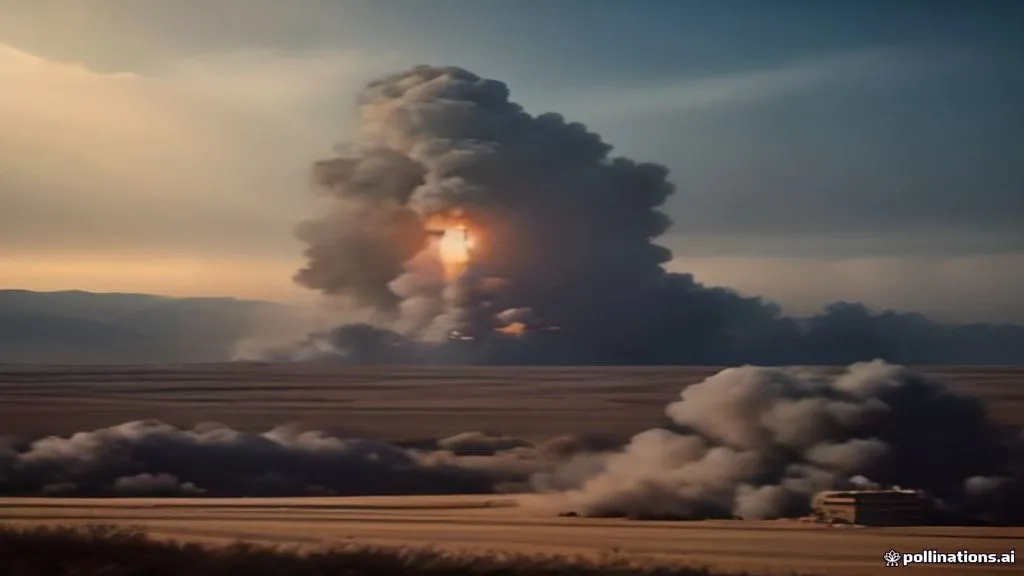
Leaked Photos Expose Extent of Iranian Strikes on US Bases
For months, official press briefings presented a picture of calculated resilience. Pentagon spokespeople routinely emphasized intercepted salvos and robust air defenses across the Gulf. But behind closed doors—and inside active theater operations—a vastly different narrative was unfolding. Newly surfaced photographs provided by active-duty service members expose the stark reality of Iranian strikes on US bases, revealing charred facilities, twisted structural steel, and destroyed high-value reconnaissance platforms scattered across key installations in Saudi Arabia and Kuwait.
Unclassified watchdog reports and leaked military photographs reveal extensive damage from Iranian strikes on US bases throughout the Middle East. Impacted installations include Prince Sultan Air Force Base in Saudi Arabia and Camp Buehring in Kuwait, resulting in destroyed radar aircraft, flattened living quarters, and billions of dollars in military equipment losses.<\/p>
- Severe Operational Damage: Photographic evidence reveals catastrophic structural damage, including a $500 million Boeing E-3 Sentry radar aircraft severed in half in Saudi Arabia.
- Billions in Material Losses: Pentagon inspector general and Congressional Budget Office reports confirm over $3.7 billion in military equipment losses, including key air defense hardware and refueling tankers.
- Public Communication Gap: Active-duty personnel allege that the true extent of base destruction has been systematically withheld from the American public.
- Escalating Political Fallout: Capitol Hill is seeing mounting bipartisan pressure, marked by repeated House votes to curb military operations and calls for cabinet-level accountability.
The images, first obtained by news outlets via frontline personnel, paint a troubling picture of base security vulnerabilities. Rather than minor superficial impacts, the visual evidence documents whole-scale facility destruction. Service members stationed in the region describe an operational environment far more perilous than official statements have admitted.
blockquote>”This is major damage to our bases that hasn’t been communicated to the American public,” one active-duty service member noted in communications accompanying the photographic release. “We’re standing there with our eyes closed getting punched in the face.”
The release of these photographs coincides with damning findings from the Department of Defense’s own Inspector General. Together, they unveil an unprecedented level of material loss and operational strain across Central Command’s area of responsibility.
The Shattered AWACS: A Half-Billion-Dollar Blindspot
Among the most alarming visuals in the leaked collection is an undated photo from Prince Sultan Air Force Base, situated roughly 62 miles southeast of the Saudi capital, Riyadh. The photograph captures the catastrophic destruction of a Boeing E-3 Sentry Airborne Warning and Control System (AWACS) aircraft. The massive jet, easily identifiable by its distinctive rotating radar dome, sits severed completely in half on the tarmac. Its tail section lies crumpled into a mangled heap of aluminum and wiring.
The E-3 Sentry is not an easily replaceable asset. Serving as the primary airborne battle management platform for the military, each airframe carries an estimated price tag of $500 million. Crucially, as noted by a recent Reuters analysis citing Congressional Budget Office data, the E-3 is no longer in active production. Replacing lost airframes requires accelerating procurement of its modern successor, the E-7 Wedgetail—a transition that cannot happen overnight.
Why the Loss of airborne radar matters:
- Early Warning Gap: AWACS platforms provide long-range detection of incoming cruise missiles, low-altitude drones, and enemy aircraft well before ground-based radars acquire them.
- Command and Control Degradation: These aircraft act as airborne air traffic control centers, directing friendly tactical fighters during complex defensive battles.
- Escalating Replacement Costs: With production lines long closed, repairing severe battle damage is impossible, forcing total write-offs and budget reallocations.
Visual verification analysis previously linked similar imagery of the damaged radar plane to an attack in March, during which at least 12 American service members were wounded. Yet, the full extent of airframe destruction was shielded from public scrutiny until now.
Wreckage Across the Gulf: Camp Buehring and Camp Arifjan
The damage is far from isolated to high-altitude airfields in Saudi Arabia. Visuals originating from Camp Buehring, a staging facility in northwestern Kuwait, depict a scene of widespread destruction. Crumpled living trailers lie flattened beneath collapsed support beams. Smoke billows from the shredded remains of large tactical tent structures, signaling direct hits on key logistical hubs.
Further south at Camp Arifjan, a vital logistics and support base in Kuwait, photos depict severe structural damage to a four-story operational building. Exterior walls are blown out, exposing internal framing, while nearby satellite communications hardware—critical for maintaining secure link networks across the theater—shows deep fragmentation scars.
The sheer footprint of the damage points to saturation tactics employed by opposing missile and drone units. By launching multi-layered swarms consisting of low-cost loitering munitions alongside ballistic missiles, attacking forces succeeded in overwhelming localized point-defense systems like Phalanx CIWS and Patriot batteries.
The Staggering Accounting: Pentagon Watchdog Confirms Massive Losses
If the photos provided a shock, the official numbers released in a concurrent report by the Pentagon Inspector General provided the mathematical validation. The watchdog report explicitly confirms that Iranian strikes have damaged or destroyed hundreds of buildings and structures across a wide swath of sovereign nations hosting American forces: Kuwait, Bahrain, Qatar, the UAE, Saudi Arabia, Iraq, Oman, and Jordan.
Financial metrics detailed by both the Inspector General and the Congressional Budget Office (CBO) outline a staggering toll on American military readiness:
| Metric / Asset Category | Documented Impact & Cost | Strategic Implication |
|---|---|---|
| Total War Expenditures | $33.4 Billion (through June 29) | Severe drawdown of emergency operational funds. |
| Overall Equipment Losses | $3.7 Billion total ($1.9B battle loss) | Unprecedented hardware attrition in modern Gulf ops. |
| Key Aircraft Destroyed | 1 AWACS ($500M), 5 Refueling Tankers | Immediate reduction in long-range strike support. |
| Specialized Systems | THAAD components, heavy radars, UAVs | Potential gaps in regional ballistic missile defense networks. |
SEEUY INTELLIGENCE
Iranian Strikes On US Bases – Analytical Overview
Total War Expenditures
$33.4 Billion (through June 29)
Overall Equipment Losses
$3.7 Billion total ($1.9B battle loss)
Key Aircraft Destroyed
1 AWACS ($500M), 5 Refueling Tankers
Specialized Systems
THAAD components, heavy radars, UAVs
The document reveals that dozens of aircraft were rendered inoperable or completely destroyed on the ground during the opening months of the conflict. This includes at least five heavy refueling aircraft—the literal lifeblood of long-range tactical air combat—which were caught completely unprotected on Saudi airfields.
Missing Data and CBO Budgetary Uncertainty
Remarkably, the true fiscal and operational damage may be even higher than published figures suggest. The Congressional Budget Office acknowledged that its assessment suffered from baseline uncertainty because the Department of Defense routinely failed to respond to direct requests for detailed damage inventories. Consequently, non-partisan analysts were forced to piece together loss estimates using fragmented government logistics databases and open-source intelligence.
This lack of transparency has drawn sharp criticism from military analysts and defense accountants alike.
“When oversight bodies are forced to estimate battle damage through public databases because the Pentagon won’t answer internal inquiries, it signals a systemic communication breakdown,” remarked one senior defense policy researcher. “It obscures the real cost of forward positioning from both Congress and taxpayers.”
Political Pressure and Impeachment Motions on Capitol Hill
The exposure of widespread Middle East military losses has ignited a political firestorm in Washington. The stark contradiction between official assertions of containment and raw field photos showing destroyed bases has severely eroded congressional patience.
On Capitol Hill, opposition to the continued execution of military operations reached a dramatic flashpoint. The US House of Representatives voted for the third time to pass a War Powers measure aimed at forcing an end to unauthorized military action in Iran. Notably, the measure passed with substantial bipartisan support, as several break-away Republicans joined Democrats ahead of the upcoming midterm elections.
Key Political Escalations:
- Impeachment Initiatives: Outgoing lawmakers filed formal articles seeking the impeachment of Defense Secretary Pete Hegseth, citing non-disclosure of critical base destruction and mismanagement of force protection resources.
- Stockpile Concerns: Congressional committees express growing alarm over depleted precision-guided munitions and surface-to-air interceptor stockpiles, warning that prolonged defense engagements leave forces vulnerable elsewhere globally.
- Executive Pushback: The White House remains defiant, asserting that defense leadership is executing duties admirably while actively launching internal crackdowns to identify and prosecute military personnel leaking photos and casualty data to media outlets.
An Uncertain Path Forward for Gulf Deployments
The visual evidence from Camp Buehring, Prince Sultan Air Force Base, and Camp Arifjan fundamentally alters the debate surrounding the US posture in the Middle East. For decades, Gulf installations were viewed as safe launchpads for force projection—heavily fortified sanctuaries well beyond the reach of adversary firepower.
That operational assumption has been shattered. As Iranian strikes prove capable of piercing integrated air defense umbrellas and inflicting catastrophic structural damage on essential command hubs, defense planners face an uncomfortable reality. Without structural changes to base defense architecture, rapid dispersion strategy, and honest accounting with the American public, forward-deployed troops remain critically exposed on the frontlines of an escalating theater war.
<button type="button" onclick="this.parentElement.innerHTML='✓ Thank you, we will refine our analysis!‘” style=”background:#ffffff; border:1px solid #cbd5e1; border-radius:6px; padding:4px 12px; font-size:12px; cursor:pointer; color:#334155;”>👎 No
Latest Analytical Follow-up: For continuous developments on this subject, read our full investigation on US scholar jailed in China focus of Trump-Xi meeting appeal.
Latest Analytical Follow-up: For continuous developments on this subject, read our full investigation on Canada EU Associate Membership: Breaking Down the Proposal.
Latest Analytical Follow-up: For continuous developments on this subject, read our full investigation on UN Says US Committed War Crimes in Iran Strikes.
Latest Analytical Follow-up: For continuous developments on this subject, read our full investigation on US Grants Visas for UNGA as Iran Conflict Enters Seventh Month.
