
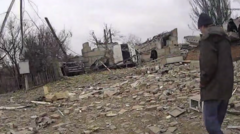
Ukraine Bodycam Video Captures Deadly Double-Tap Bombing
The screen flickers. Dust hangs thick in the air, blurring the lens of a camera strapped to a law enforcement officer’s chest. This is not a movie set. This is the stark reality of the Ukraine bodycam video released by national police, capturing the brutal mechanics of modern warfare in the Zaporizhzhia region.
A recently released Ukraine bodycam video captures the terrifying moments between two Russian glide bomb strikes in the village of Kamyshuvakha. The coordinated double-tap bombing targeted a local aid distribution center and an underground shelter, leaving a heavy death toll and ongoing search operations.<\/p>
- Bodycam Evidence: Footage from a fallen police officer records the exact warning and seconds leading up to the direct hit on a deep underground shelter.
- Devastating Impact: Nine massive glide bombs, some weighing up to 3,000kg, targeted civilians gathering for humanitarian aid in Kamyshuvakha.
- Diplomatic Backdrop: The attack unfolds alongside high-stakes geopolitical maneuvers, including upcoming trilateral talks in Abu Dhabi.
For nearly three years, the world has absorbed statistics, casualty counts, and satellite imagery from a distance. Yet, raw, unfiltered first-person footage cuts through the abstract nature of large-scale conflict. It forces an intimate confrontation with horror. In the southern village of Kamyshuvakha, a community gathered around a local school to collect vital humanitarian aid. They never imagined the sky was about to fall twice.
Inside the Seconds Before the Second Strike
The sequence of events documented in the footage highlights a terrifying tactical signature. First comes the initial explosion. Then, the frantic scramble for survival. In the newly published recording, stunned residents stare blankly at shattered masonry and twisted metal.
Suddenly, a voice crackles over a two-way radio. A military official barks an urgent warning: more glide bombs are inbound.
“Quickly, to the shelter!” an officer yells, guiding panicked locals toward a subterranean bunker sitting at least two floors underground. They descend into the gloom, seeking safety. Seconds later, a deafening shockwave hits. The camera feed instantly cuts to black.
That second blast was part of a lethal Russian double-tap bombing strategy. Military analysts frequently condemn this tactic. It specifically targets first responders, emergency workers, and survivors rushing to aid the wounded after an initial blast.
“First, they hit people who came to receive humanitarian aid, and then rescuers and police officers who arrived at the scene.” — President Volodymyr Zelensky
According to updates shared by Ukrainian leadership, up to nine massive glide bombs—some tipping the scales at an astonishing 3,000 kilograms—flattened the area. Search and rescue operations have stretched past the seventy-two-hour mark. More than thirty individuals may still be buried beneath tons of pulverized concrete and steel.
The Anatomy of Glide Bomb Devastation
Military experts tracking the southern front emphasize that the deployment of heavy glide munitions has fundamentally altered the defensive calculus. Unlike traditional artillery, these modified Soviet-era bombs are fitted with wings and guidance kits, allowing warplanes to launch them from dozens of kilometers away, safely out of reach of many short-range air defense systems.
The sheer concussive force leaves little room for error. Where a bustling community hub stood just days ago, reporters and emergency services from organizations like the State Emergency Service of Ukraine (DSNS) have documented massive, apocalyptic craters.
Look at the operational scale of recent strikes compared to historical patterns:
| Metric | Initial Strike Phase | Secondary ‘Double-Tap’ Phase |
|---|---|---|
| Target Focus | Aid distribution points & civilians | Rescuers, police, and underground shelters |
| Primary Weaponry | Heavy glide bombs (up to 3,000kg) | Precision-guided follow-up munitions |
| Casualty Risk | Immediate civilian fatalities | High mortality among emergency personnel |
Independent verification efforts, including analysis by open-source investigators, have cross-referenced the geographical markers in the police bodycam feed with emergency broadcast footage. There is no doubt about the location. The destruction is absolute.
Diplomacy Beneath the Smoke
Even as rescue teams claw through the rubble in Kamyshuvakha, high-stakes diplomacy moves in parallel tracks. While visiting Spain, President Zelensky revealed he recently held an intensive, ninety-minute discussion with peace envoys representing US leadership ahead of upcoming trilateral negotiations scheduled in Abu Dhabi.
Furthermore, Ukrainian delegations have engaged in deep-dive strategic talks in Brussels. Representatives from the European Union, the United Kingdom, France, Germany, NATO, and the World Bank are drafting frameworks for post-war reconstruction and robust security guarantees.
Yet, skepticism runs deep. Moscow has steadily ramped up its aerial campaign, capitalizing on depleted Western-supplied interceptor stockpiles in Kyiv. Analysts caution that breakthroughs during the upcoming UAE summits remain a long shot while the skies above villages like Kamyshuvakha continue to rain heavy munitions.
Ultimately, the release of the bodycam footage serves a stark purpose. It acts as an undeniable historical record. It ensures that the final moments of those who sought only basic provisions are not quietly erased by the relentless rhythm of an unyielding war.
<button type="button" onclick="this.parentElement.innerHTML='✓ Thank you, we will refine our analysis!‘” style=”background:#ffffff; border:1px solid #cbd5e1; border-radius:6px; padding:4px 12px; font-size:12px; cursor:pointer; color:#334155;”>👎 No
