
Iran Offers US Deal to Reopen Strait of Hormuz
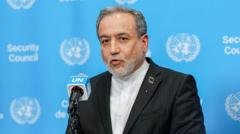
NEW YORK — In a sudden diplomatic maneuver delivered on the sidelines of the UN General Assembly, Iranian Foreign Minister Abbas Araghchi announced that Tehran has delivered a formal proposal through Qatari mediators to reopen Strait of Hormuz within seven days. The proposal hinges entirely on whether Washington honors commitments previously hammered out in a volatile June agreement. The announcement comes amidst extreme volatility across global energy exchanges, mounting domestic pressure on the White House, and a dangerous widening of hostilities across the Arabian Peninsula.
Iran has proposed a deal to the United States to reopen Strait of Hormuz within seven days, contingent on Washington adhering to terms outlined in the June memorandum of understanding. The offer demands an end to the U.S. naval blockade and sanctions relief in exchange for restored commercial shipping access.<\/p>
- Seven-Day Timeline: Foreign Minister Abbas Araghchi claims maritime flow can return to normal within a week if the U.S. satisfies existing MOU commitments.
- Leverage vs. Escalation: Washington maintains it controls the waterway and feels no pressure to rush, despite volatile energy markets and looming U.S. Congressional elections.
- Dual Chokepoint Crisis: Simultaneous Houthi advances near the Bab al-Mandab Strait threaten to compound global oil supply risks even if Hormuz reopens.
The Seven-Day Proposal: What Tehran Demands
Tehran’s sudden olive branch is far from an act of concession; it is a calculated challenge thrown directly into the Oval Office. Speaking to reporters in New York, Araghchi made it abundantly clear that the blueprint for ending the maritime standoff does not require negotiating new terms. Everything necessary, he insisted, is already codified in the 14-point June memorandum of understanding signed before hostilities reignited earlier this summer.
“If the necessary conditions are met, the strait can be reopened, a normal maritime passage restored within seven days,” Araghchi stated firmly. “The choice now rests with the United States.”
That choice carries colossal geopolitical stakes. The June MOU outlined an intricate sequence of reciprocal actions: Iran would guarantee safe passage for commercial tankers, abandon efforts to acquire nuclear weaponry, and enter bilateral maritime talks with Oman. In return, the United States agreed to terminate its punishing naval blockade of Iranian commercial ports, grant comprehensive sanctions relief, and enforce a complete cessation of military strikes across all active operational fronts.
“I can tell you if there is seriousness in the US side to come to a deal and reopen the Strait of Hormuz, everything is now prepared. Peace cannot be built through threats of annihilation.” — Abbas Araghchi, Iranian Foreign Minister
The original deal collapsed almost immediately after signing when localized skirmishes escalated into direct missile exchanges, naval engagements, and sustained airstrikes. Since then, the vital narrow waterway linking Gulf crude producers to global consumers has operated as a high-risk warzone. Iranian forces have targeted tankers navigating without explicit authorization, while U.S. naval assets have struck Iranian coastal missile sites and maintained a crushing embargo on Iranian domestic trade.
| Key Operational Metric | Pre-Conflict Baseline | Active War Realities | Proposed MOU Stabilization |
|---|---|---|---|
| Strait Transit Volumes | 130–140 commercial vessels / day | 9–18 vessels / day (Kpler tracking) | Full restoration within 7 days |
| Global Energy Flow | ~20% of world oil & LNG supply | Severe bottleneck & price spikes | Immediate normalization of maritime supply chains |
| U.S. Naval Operations | Standard patrol & monitoring | Active blockade & targeting campaigns | Complete cessation of hostilities & blockade removal |
| Secondary Maritime Routes | Normal Red Sea transit access | Severe Houthi attacks Bab al-Mandab | Parallel negotiations via Oman and regional actors |
Washington’s Calculus: Leverage, Politics, and Rhetoric
In Washington, the official response to Araghchi’s posture has been characteristically guarded, blending tactical confidence with aggressive political messaging. A senior administration official confirmed that indirect talks mediated by Qatari officials are actively occurring—and extending into core nuclear topics—but flatly rejected the notion that the United States is operating under a ticking clock.
“We are in a very strong position with control of the Strait of Hormuz, so we are not in a rush,” the official remarked, underscoring the White House’s belief that U.S. naval dominance provides ultimate strategic leverage.
Yet, behind closed doors inside the West Wing, the political clock is ticking louder than ever. With U.S. Congressional elections scheduled for November, the economic ramifications of this conflict are hitting American consumers directly at the pump. The sharp spike in US-Iran war energy prices has complicated domestic inflation narratives, prompting intense criticism from political opponents and panic among vulnerable incumbents.
President Donald Trump has oscillated dramatically between threats of overwhelming force and predictions of an imminent diplomatic triumph. During his address at the UN General Assembly, Trump laid out a stark binary choice for Tehran, framing his doctrine in aggressive terms that sent shockwaves through international diplomatic corridors.
“Will a deal be made with Iran that lets them rebuild and create a far greater country than it ever was before? Or do I annihilate the Islamic Republic and do it quickly, never giving them a chance to kill and destroy people and countries again? Do I drive them into hell?” — U.S. President Donald Trump
Trump suggested that a definitive resolution would likely materialize immediately following the November elections. However, market analysts warn that energy supply networks cannot easily endure another two months of naval blockades and missile exchanges without triggering broader global stagflation.
The Red Sea Escalation: A Second Front Emerges
Even if diplomatic momentum suddenly accelerates to reopen Strait of Hormuz, a secondary crisis along the western coast of the Arabian Peninsula threatens to neutralize any positive market impact. The Iran-aligned Houthi movement in Yemen has launched a lightning military offensive, seizing critical coastal territory and fundamentally altering the strategic geometry of global maritime trade.
Houthi fighters recently captured the strategically vital port town of Mokha, giving the group direct line-of-sight oversight of the Bab al-Mandab Strait. This narrow choke point connects the Red Sea to the Gulf of Aden, serving as the gateway to the Suez Canal. By conducting sophisticated drone, ballistic missile, and naval operations, the Houthis have essentially opened a secondary front designed to punish regional foes and disrupt Saudi crude exports.
Market intelligence from commodities data firm Bloomberg Analytics demonstrates that ship tracking data reflects an unprecedented drop in commercial transits. Average daily transits through Hormuz have hovered between 9 and 18 vessels, while traffic through Bab al-Mandab has faced similar drop-offs.
This dual-chokepoint crisis presents an acute threat to global energy security:
- Saudi Crude Diversion Blocked: Riyadh’s contingency plans involved bypassing Hormuz by pumping crude west via the East-West Pipeline to Red Sea terminals. Intensified Houthi attacks Bab al-Mandab have effectively trapped these western shipments as well.
- Critical Infrastructure Targeted: Recent Houthi missile barrages targeting Saudi domestic oil refineries have forced the Saudi-led coalition to scramble interceptors, with Riyadh urgently requesting additional direct military support from Washington.
- Escalating Freight Premiums: Maritime insurance underwriters have raised war-risk surcharges to historic levels, making transit commercially unviable for unescorted merchant vessels.
Inside the Broken June Memorandum
To understand why Tehran is fixated on the June agreement, one must examine the specific mechanics of that ill-fated document. Drafted after months of secret diplomacy in Muscat, the MOU was conceived as a multi-stage framework designed to de-escalate military tension while establishing hard boundaries around regional force posture.
The 14-Point Framework Breakdown
- Permanent Non-Proliferation Commitments: Tehran agreed to strict, verifiable caps on uranium enrichment and reaffirmed that it would never pursue or construct nuclear weaponry.
- Comprehensive Maritime Ceasefire: Immediate end to kinetic strikes on commercial traffic, naval vessels, and offshore oil platforms across the Arabian Gulf, Oman Sea, and Red Sea corridors.
- Lifting of Strategic Embargos: Complete dismantling of the U.S. naval blockade targeting Iranian commercial ports, paired with structured sanctions waivers for oil exports.
- Safe Passage Mechanisms: Iran agreed to deploy naval resources strictly for defensive routing, facilitating uninterrupted commercial passage in coordination with the Sultanate of Oman.
The breakdown of the agreement occurred not because its core architecture was flawed, but because neither side established a reliable verification window before resuming retaliatory actions. When localized fire was exchanged near the island of Qeshm in late June, the entire structure collapsed within 48 hours. The U.S. reimposed its naval blockade, and Tehran retaliated by restricting energy transport through the strait, precipitating a severe Middle East oil supply disruption that continues to reverberate across world equity markets.
Strategic Exit Ramp or Diplomatic Mirage?
Is Araghchi’s seven-day offer a genuine exit ramp or a tactical maneuver designed to buy time? Western intelligence agencies remain split on Tehran’s true motives.
Some intelligence analysts argue that Iran is feeling the crushing weight of the U.S. naval blockade. With domestic port facilities crippled, oil storage capacity reaching critical thresholds, and inflation soaring inside Iran, Tehran urgently needs the economic relief outlined in the MOU. By presenting a public deadline at the United Nations, Iran shifts the burden of war directly onto the White House, forcing Washington to explain to global consumers why it is declining a deal that could immediately lower energy prices.
Conversely, defense realists suggest that Tehran recognizes the U.S. administration’s political vulnerability ahead of November. By pairing the Hormuz offer with Houthi military pressure in the Red Sea, Iran has effectively created a dual-chokepoint dilemma. Washington can accept Tehran’s terms under the June MOU or risk driving the global economy into a prolonged energy crisis right as American voters head to the polls.
For now, global oil markets remain suspended in state of high anxiety. Tanker captains, global commodities traders, and world leaders are waiting to see whether Washington responds to Tehran’s seven-day challenge—or whether the conflict will spiral into the total devastation promised by both sides.
<button type="button" onclick="this.parentElement.innerHTML='✓ Thank you, we will refine our analysis!‘” style=”background:#ffffff; border:1px solid #cbd5e1; border-radius:6px; padding:4px 12px; font-size:12px; cursor:pointer; color:#334155;”>👎 No
Latest Analytical Follow-up: For continuous developments on this subject, read our full investigation on Trump Rejects Strait of Hormuz Deal as Gulf Crisis Deepens.
Latest Analytical Follow-up: For continuous developments on this subject, read our full investigation on Nor’easter Coastal Flooding Sparks Emergency in NY and NJ.
