
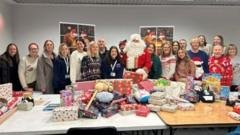
Charity Gift Campaign Faces Record Demand as Costs Bite
As winter approaches across Shropshire, the annual charity gift campaign run by local organization Little Stars is bracing for its most demanding seasonal drive since launching in 2020. Headline inflation rates may have cooled from their historic highs, but household budgets across the region remain stretched to breaking point. For thousands of working families, the end of the year brings a stark choice between basic utilities and festive traditions.
A charity gift campaign is an organized community initiative that collects and distributes new holiday presents, essential items, and toys to low-income families and vulnerable children. Regional organizations like Little Stars rely on public retail drop-offs to alleviate financial pressures on households experiencing seasonal hardship during winter months.<\/p>
- Heightened Demand: The Santa's Little Stars initiative expects its busiest season yet as regional household budgets remain squeezed.
- Proven Impact: Over 8,000 gifts have reached more than 2,100 vulnerable children since the project's inception in 2020.
- Targeted Support: Assistance extends from newborns and pregnant women up to young people aged 17 through direct professional referrals.
- Accessible Giving: Multiple donation points operate inside Shrewsbury's Darwin shopping centre until early December.
The charity’s flagship winter drive, Santa’s Little Stars, officially opens its drop-off windows from Saturday, 24 October through Friday, 4 December. Organizers are appealing to the public for new, unwrapped toys and essentials. The goal is straightforward yet increasingly difficult to achieve: ensure that no child in the county wakes up on Christmas morning to empty shelves.
Economic Pressures Fueling Charity Gift Campaign Demand
Macroeconomic shifts over the past three years have radically altered household solvency across the West Midlands. While national wage figures suggest modest nominal gains, energy tariffs, elevated grocery bills, and compounding housing costs continue to eat away at disposable income. This phenomenon—often termed sticky expenditure—hits lower-income brackets hardest. It forces families who were previously self-sufficient to seek emergency relief.
According to recent macro analysis from Reuters, real consumer purchasing power across regional UK centers remains below pre-pandemic trendlines. This dynamic creates a quiet crisis. Families pay their bills, but they have zero financial buffer left when seasonal expenses arise.
“We are witnessing an unprecedented structural shift where steady employment no longer guarantees protection against seasonal poverty,” notes one regional welfare analyst. “Charities are no longer just safety nets for the unemployed; they are essential top-ups for working households.”
The persistent cost of living family impact means grassroots charities face compounding operational challenges. Donations from individual donors naturally contract just as requests for assistance balloon. Little Stars reported that its 2025 outreach was its largest on record, and every indicator points toward another peak demand cycle this winter.
How the Santa’s Little Stars Infrastructure Operates
To keep logistical barriers as low as possible, Little Stars has partnered with commercial retail hubs in Shrewsbury. Members of the public can drop off donations during standard shopping hours in the Darwin shopping centre. Collection bins are situated near high-footfall locations, including:
- Outside The Collective
- Adjacent to The Entertainer
- Near Home Bargains
- Outside Clarks Shoes
Once collected, these items undergo a systematic sorting process. Volunteers wrap each gift and categorize them by age demographic—spanning from newborn infants and expectant mothers to young adults aged 17. Rather than distributing aid on a first-come, first-served basis, the campaign relies on a referral network of social workers, health visitors, and educational liaison officers. This ensures gifts are delivered directly to verified households in acute hardship.
Track Record of Community Reach (2020–Present)
Since its initial launch during the height of the pandemic in 2020, the initiative has built a substantial track record of direct intervention. The data below illustrates the scaling trajectory of the organization’s holiday gift distribution drive over recent years.
| Campaign Metric | Historical Total (2020–2024) | Projected Demands (2025 Cycle) |
|---|---|---|
| Total Presents Distributed | 8,000+ units | Record High Expected |
| Children Supported | 2,100+ individuals | Anticipated Growth >15% |
| Retail Collection Nodes | 4 Major Sites | Expanded Logistics Hubs |
| Demographics Covered | Ages 0–17 & Expectant Mothers | Ages 0–17 & Expectant Mothers |
Understanding the Regional Hardship Curve in Shropshire
While Shropshire is often viewed as a prosperous rural county, national micro-data hides deep pockets of economic deprivation. Examining broader child poverty statistics UK trends reveals that rural isolation often exacerbates financial stress. Public transport costs, higher heating bills for older rural housing, and lower average local wages leave families with minimal cash reserves.
For parents facing these conditions, December presents an agonizing set of decisions. When money runs short, non-essential spending is eliminated entirely. This is where targeted Shrewsbury charity donations provide an vital social buffer. By taking on the financial burden of holiday gifts, Little Stars allows parents to allocate limited funds toward heating, food, and rent.
Local businesses have increasingly stepped up to support these operational models. Corporate partners realize that regional economic resilience depends heavily on active community support initiatives. When local families fall through the cracks, the long-term impact on school attendance, health outcomes, and economic productivity is severe.
The Broader Charitable Sector Under Strain
Little Stars’ experience is part of a larger nationwide story. Across the UK, small to medium third-sector organizations are reconfiguring their operational footprints simply to stay functional. Rising commercial rents, higher energy costs for storage facilities, and declining grant funding have squeezed non-profits from every side.
Earlier this year, Little Stars had to relocate its physical premises to accommodate growing inventory demands—a move reflected in wider charity sector reporting. Similar emergency initiatives, such as regional school uniform banks and emergency food pantries, report identical pressures. The overall volume of help requested continues to outpace available funding streams.
The success of the Santa’s Little Stars appeal rests heavily on community generosity between late October and early December. With four core drop-off points active in the Darwin shopping centre, organizers remain optimistic that public support will match the mounting need, proving that local solidarity remains strong even in difficult economic times.
<button type="button" onclick="this.parentElement.innerHTML='✓ Thank you, we will refine our analysis!‘” style=”background:#ffffff; border:1px solid #cbd5e1; border-radius:6px; padding:4px 12px; font-size:12px; cursor:pointer; color:#334155;”>👎 No
