
Neocloud AI Risks: Inside the Sector Sparking Bubble Fears
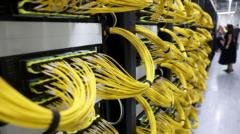
In the quiet, industrial outskirts of northern Virginia and across the sprawling expanses of West Texas, massive steel warehouses hum with a low, unrelenting drone. Inside these structures sit tens of thousands of liquid-cooled, high-performance graphics processors working around the clock. This is the nervous system of the artificial intelligence revolution. But outside the high-tech cleanrooms, a growing choir of financial analysts, venture capitalists, and debt investors are asking a disturbing question: Is this physical foundation built on a mountain of unsustainable leverage?
Neocloud AI risks stem from specialized data center providers taking on massive, high-yield debt backed by GPU hardware and long-term tech customer contracts. If Big Tech reduces AI capital expenditures or model demand cools, these heavily leveraged operators face severe insolvency, potential consolidation, and market-wide contagion.<\/p>
- Leverage Overhang: Neocloud leader CoreWeave has accumulated over $35 billion in debt by pledging GPU hardware and client contracts as collateral.
- Crypto Lineage: Key players like CoreWeave, IREN, and Applied Digital originated as crypto mining operations before executing a GPU mining pivot into high-density AI infrastructure.
- Analyst Alarm: Gartner projects 80% of independent neocloud operators will cease independent operations by 2030 due to shaky balance sheets and tightening liquidity.
- Grid & Capex Friction: Hyperscaler spending pullbacks and localized energy grid bottlenecks—evidenced by Microsoft cancelling its deal with Nscale—are compressing neocloud margins.
A once-obscure sector of the tech ecosystem—the specialized infrastructure providers known as neocloud firms—finds itself under intense Wall Street scrutiny. Operating beneath giant hyperscalers like Amazon Web Services and Google Cloud, specialized players lease gargantuan compute clusters to top-tier AI developers including OpenAI, Anthropic, and Meta. Yet, mounting balance sheet strain, sudden share price drawdowns, and systemic energy grid friction are bringing stark neocloud AI risks into full view, raising uncomfortable questions about whether the multi-billion-dollar AI gold rush is hovering over a speculative precipice.
The Shadow Engine of the Compute Boom
To understand how an obscure subsector became the central talking point of Silicon Valley, one must look at the unprecedented scale of the current technology race. Building frontier AI models demands thousands of specialized processors linked together with ultra-low-latency networking. Establishing these deployments inside traditional legacy data centers can take years. Neoclouds bypassed these bureaucratic delays by offering quick, plug-and-play access to pure silicon horsepower.
Firms like CoreWeave, Nebius, IREN, and Applied Digital have become essential vendors to tech elite. But their rapid expansion relies on an aggressively leveraged financial model. Unlike traditional enterprise software platforms that scale with high gross margins and low hardware overhead, neocloud operations are fundamentally capital-intensive industrial enterprises. To acquire thousands of cutting-edge processors up front, these operators turn to specialized credit facilities.
“Neocloud firms typically finance themselves by entering long-term lease agreements with major tech customers who urgently need immediate compute power,” explains Cory Johnson, chief market strategist at financial research firm The Quiet Period. “Firms then turn right around and borrow money using those guaranteed contracts—and the actual physical AI chips—as debt collateral. Debt is ubiquitous across these operations because the physical hardware must be paid for before a single watt of power is consumed.”
This arrangement creates an intricate financial feedback loop. Lenders evaluate the creditworthiness of the downstream enterprise customer rather than the balance sheet of the neocloud operator itself. Consider market leader CoreWeave. Though a fraction of the enterprise size of its largest clients, the company has managed to accumulate an astounding $35.1 billion (£26.3 billion) in total debt. Private credit syndicates lend against the implied solvency of corporate giants like Microsoft and Meta, trusting that the underlying compute lease will remain rock-solid throughout the hardware’s operational lifespan.
“Lenders are often looking past the operational ledger of the neocloud company itself and underwriting the credit quality of the tech titan sitting at the end of the contract. That dynamic is precisely how a mid-sized startup accumulates tens of billions in short-duration debt.” — Cory Johnson, The Quiet Period
Wall Street Spasms: The High-Yield Panic
That debt-driven arrangement functions smoothly so long as capital flows unimpeded and hardware demand outstrips supply. But over recent weeks, public market investors have signaled a sudden crisis of confidence. Shares of market leaders have dropped dramatically, exposing the underlying fragility of high-yield hardware models.
CoreWeave’s valuation has retreated sharply, shedding a quarter of its equity value over a 30-day stretch. The pain is widespread across public peers. Enterprise-scale operators Nebius, IREN, and Applied Digital have experienced matching pullbacks of 25% or more over the same timeframe. Concurrently, high-yield credit markets are pricing in heightened defaults, demanding elevated spreads to hold neocloud corporate debt instruments.
The policy apparatus has taken notice. Treasury Secretary Scott Bessent moved to calm market jitters during an appearance on CNBC, characterizing neocloud companies as “a small component of the overall ecosystem, external to systemic banking stability.” Yet behind closed doors, major tech consulting organizations paint a far more precarious picture of the subsector’s medium-term survival rate.
- Gartner Projection: Industry analysts estimate that by 2030, fully 80% of independent neocloud operations will cease independent operations through liquidation or distress sales.
- Forrester Warning: Senior research teams project at least three prominent neocloud operators will face emergency acquisitions in the immediate term as short-term liquidity dries up.
- Rate Sensitivity: Sustained elevated interest rates directly increase the cost of refinancing expiring debt tranches, compressing already tight unit economics.
- Hardware Depreciation: Accelerating chip release cycles risk rendering legacy GPU clusters economically obsolete before their financing debt is fully amortized.
CoreWeave Chief Executive Officer Mike Intrator has pushed back aggressively against the market narrative, insisting publicly that equity markets are behaving irrationally. Intrator maintains that underlying enterprise demand for the company’s dense compute infrastructure remains robust, pointing to extensive backlogs of corporate customers queued up for deployment. Nevertheless, public markets are pricing in structural tailwinds turning into persistent headwinds.
The Crypto Lineage: Recycled Infrastructure
Understanding the fast-moving neocloud sector requires examining its unusual origins. A substantial portion of today’s premier AI compute providers did not start out designing enterprise infrastructure for machine learning. Instead, they cut their teeth in the wild, volatile trenches of cryptocurrency mining.
During the early crypto booms, operations like CoreWeave, IREN (formerly Iris Energy), Core Scientific, and Applied Digital assembled vast industrial footprints optimized for high-density power distribution, heavy industrial cooling, and continuous electrical loads. CoreWeave itself was established in 2017 primarily to mine Ethereum utilizing dense arrays of consumer-grade graphics cards.
When OpenAI launched ChatGPT in late 2022, initiating a global AI land-grab, these crypto operators executed a rapid GPU mining pivot. They already possessed the three rarest assets in tech real estate: high-capacity power grid interconnections, industrial land permits, and specialized operational know-how in running thermal-heavy compute installations. Within months, crypto farms were cleared of low-margin block mining rigs and retrofitted with top-tier enterprise server racks.
Yet, one prominent industry outlier followed an even more erratic corporate trajectory. Nebius emerged from the dramatic restructuring of Yandex NV, historically dubbed “Russia’s Google.” Following corporate splits and a complete exit from its domestic Russian operations in early 2024, the rebranded entity re-emerged as a Western-focused neocloud contender, deploying billions into European and North American AI infrastructure.
The Capex Catch-22 and Power Grid Walls
Today, the fate of these repurposed infrastructure players is inextricably linked to the spending trajectories of major cloud platform operators and frontier research labs. This operational dynamic creates a high-stakes dependency on a handful of key decision-makers.
“There is an astronomical volume of capital being injected directly into physical compute assets right now,” explains Melissa Otto, head of Visible Alpha Research at S&P Global. “It is a full-scale corporate arms race. But when you look at the leverage built into the subsector, the margin for error is razor-thin.”
That vulnerability was illustrated vividly when tech titans Microsoft and Alphabet signaled forward-looking AI capital expenditure targets that fell marginally below the aggressive forecasts compiled by Wall Street desks. The slight variance sent immediate shockwaves through the supply chain, triggering sharp sell-offs across neocloud equities. If hyperscalers choose to pull back internal spending or rely more heavily on their own proprietary custom silicon, non-tier-one neocloud providers could find themselves holding empty server racks and heavy debt service obligations.
Grid Lock: The Infrastructure Wall
Compounding these balance sheet pressures is a physical limitation: global power availability. The enterprise transition to artificial intelligence is running straight into an aging electrical grid infrastructure. A clear warning sign emerged when Microsoft abruptly terminated a multi-year compute agreement with British neocloud provider Nscale. The root cause? Severe power interconnection delays in the United Kingdom that could freeze data center expansion until 2030.
Elsewhere, regional pushback against mega-watt data center construction is intensifying. Local municipal boards from Northern Virginia to Western Europe are raising alarms over soaring regional electricity rates, intensive water usage for evaporative cooling, and localized acoustic pollution. In Australia, neocloud developer Firmus recently shelved its planned initial public offering, citing volatile market conditions and grid access complexity.
The structural dynamics separating legacy cloud operators from vulnerable high-leverage neocloud providers highlights the growing tension in the industry:
| Metric / Operational Feature | Legacy Cloud Providers (AWS / Azure / GCP) | Specialized Neocloud Operators |
|---|---|---|
| Capital Structure | Funded via massive corporate cash flows & investment-grade debt | High-yield private credit & debt backed by chip collateral |
| Hardware Portfolio | Diversified enterprise CPUs, custom ASICs & mixed GPUs | Concentrated high-density NVIDIA GPU clusters |
| Power Procurement | Long-term power purchase agreements (PPAs) & direct grid builds | Leased power capacity & rapid crypto-site retrofits |
| Client Concentration | Millions of global corporate enterprises & SMBs | Concentrated handful of frontier AI labs & hyperscalers |
| Market Downturn Resilience | High; insulated by broad enterprise software revenues | Low; vulnerable to compute pricing compressions |
Contagion Risk: The ‘Guppy-Level’ Liquidation Event
As debt maturities approach and energy bottlenecks tighten, venture capitalists and tech executives are warning of an impending market rationalization. The central point of vulnerability centers on smaller, under-capitalized operators that rushed into the market during the peak of hardware scarcity in 2023.
Industry observer Elon Musk captured the sector’s mood in a blunt public assessment, warning that escalating financing costs and localized grid friction will force more than 200 smaller specialized neocloud firms to experience “guppy-level death and aggressive consolidation.” Musk added a bleak forecast: “Some will make it through the credit crunch, but not many.”
Venture investor Bradley Tusk, founder of Tusk Ventures, emphasizes that any broader re-pricing of generative AI assets will reverberate directly through these leveraged hardware intermediaries.
“If enterprise software adoption lags behind investment, and AI hardware expectations recalibrate downward, neocloud companies aren’t just going to take a minor haircut—they are going to absorb severe collateral damage. Their balance sheets simply don’t have the buffer to handle prolonged excess capacity.” — Bradley Tusk, Tusk Ventures
Much of the current market valuation hinges on the prospective public market listings of premier AI labs like Anthropic and OpenAI. Should these market debuts deliver stellar public valuations and signal expanding enterprise revenues, equity liquidity could flow back into specialized compute partners. Conversely, if public markets balk at operational cash burn rates, the compute lease revenues backing billions in neocloud private credit could evaporate quickly.
Filling the Gap or Building a Bubble?
Despite mounting systemic risks, fundamental arguments in favor of the neocloud model remain grounded in current supply realities. Specialized research boutique Yorkville Ives notes that global demand for liquid-cooled, low-latency compute continues to outpace available hyperscaler supply. Specialized neoclouds offer an agile alternative, providing speed-to-market advantages that mega-cap technology firms cannot match internally due to their legacy enterprise commitments.
Furthermore, neocloud operators argue that their pure-play focus on raw compute density allows them to operate with lower structural overhead than legacy cloud providers burdened by sprawling global sales teams and legacy software suites. For modern machine learning engineering teams, access to bare-metal compute without intermediate abstraction layers remains a compelling technical sell.
Yet, the margin for error has narrowed dramatically. With private debt markets pricing in elevated risk profiles, community pushback stalling power access, and Big Tech scrutinizing every dollar of capital expenditure, neocloud firms find themselves walking a dangerous line. Whether these specialized operators become the permanent backbone of next-generation infrastructure or a case study in excess financial leverage remains the defining debate of Silicon Valley’s current cycle.
<button type="button" onclick="this.parentElement.innerHTML='✓ Thank you, we will refine our analysis!‘” style=”background:#ffffff; border:1px solid #cbd5e1; border-radius:6px; padding:4px 12px; font-size:12px; cursor:pointer; color:#334155;”>👎 No
