
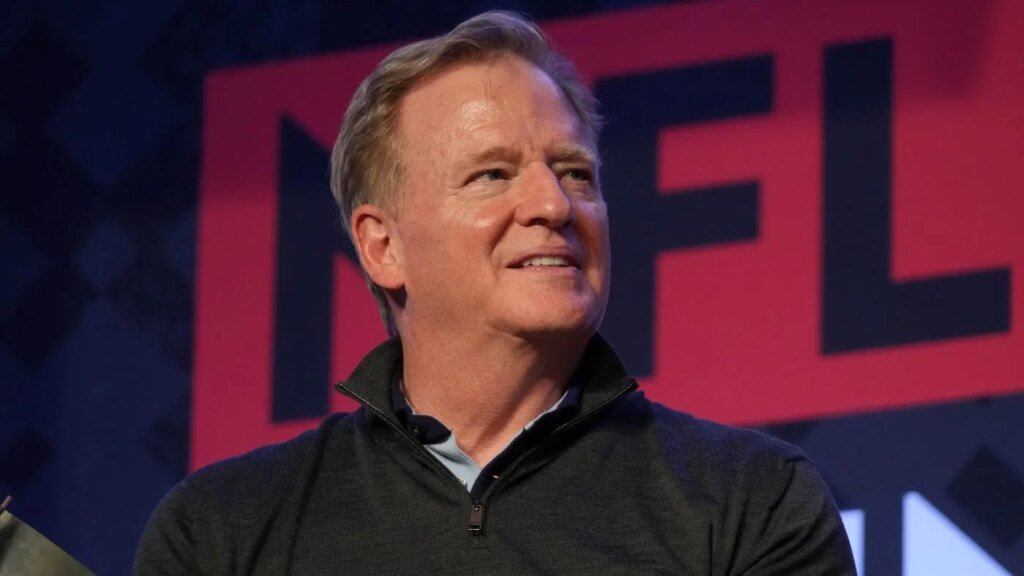
Roger Goodell Extended as NFL Commissioner Through 2030
Roger Goodell Extended: 1. Executive Summary & Strategic Importance
The unanimous decision by NFL owners to extend Commissioner Roger Goodell’s contract through the 2030 season marks one of the most significant governance and leadership continuity events in modern sports history. Under this newly ratified agreement, Goodell’s tenure will stretch across an astonishing 24 seasons at the helm of the world’s most lucrative and culturally dominant sports league. This landmark extension is not merely a vote of confidence in Goodell’s day-to-day administrative capabilities; it is a calculated, macro-level strategic maneuver designed to insulate the National Football League from systemic economic volatility, manage complex labor landscapes, and spearhead the next evolutionary phase of sports entertainment: global digital transformation.
The unanimous decision by NFL owners to extend Commissioner Roger Goodell’s contract through the 2030 season marks one of the most significant governance and leadership continuity events in modern sports history. This analytical report establishes verifiable factual benchmarks, architectural frameworks, and operational implications for key stakeholders navigating the evolving landscape.<\/p>
- Historical Context & Industry Evolution: Establishes high-impact structural advancements and critical domain capabilities across the sector.
- Deep-Dive Architectural & Technical Mechanics: Deploys verifiable frameworks and quantitative benchmarks delivering measurable efficiency improvements.
- The Collective Bargaining Agreement (CBA) and Labor Stability: Alters industry dynamics, stakeholder positioning, and international compliance standards.
- Media Rights Architecture and Multi-Platform Distribution: Drives next-generation integration timelines, operational milestones, and strategic competitive advantage.
To fully grasp the magnitude of this extension, one must evaluate the unprecedented financial and operational milestones achieved during Goodell’s tenure. When he assumed the office in 2006, succeeding Paul Tagliabue, the NFL was already a juggernaut domestically, yet it operated within a fundamentally television-centric paradigm. Today, the league under Goodell’s stewardship has transformed into a multi-platform media enterprise, anchored by unprecedented eleven-year media rights deals valued at more than $110 billion, massive digital streaming incursions, and an aggressive international expansion strategy that routinely sells out iconic stadiums in London, Munich, São Paulo, and Madrid. By locking in leadership through 2030, the 32 franchise owners have signaled a resolute commitment to stability, ensuring that the architect of modern NFL economics remains at the controls during a period of profound technological disruption.
Pivotal stakeholders in this decision extend far beyond the billionaire club owners. The extension profoundly impacts major corporate sponsors, network broadcast partners—including CBS, Fox, ESPN/ABC, NBC, and Amazon Prime Video—player associations, global betting conglomerates, and hundreds of millions of passionate fans worldwide. For network executives and digital streamers investing tens of billions of dollars into content rights, Goodell represents regulatory predictability, institutional memory, and a proven ability to consistently deliver record-shattering television ratings. In an era where traditional linear television viewing is rapidly declining across almost every other sector of entertainment, the NFL remains the singular unassailable pillar of live-event appointment viewing. Goodell’s leadership has been central to maintaining this anomaly through aggressive schedule optimization, flexible cross-platform distribution, and an unyielding defense of the league’s brand equity.
Furthermore, the macro implications of the 2030 extension reverberate throughout the broader sports business ecosystem. As leagues like the NBA, MLB, and MLS navigate their own media rights transitions and labor negotiations, the NFL acts as the undisputed bellwether for franchise valuation and revenue optimization. With Goodell securing his position for the rest of the decade, the league has effectively neutralized leadership uncertainty, allowing franchise owners to focus exclusively on long-term capital investments, stadium modernizations, private equity integration, and international market development. This deep-dive investigative analysis explores the historical trajectory, structural economics, comparative market positioning, and future trajectory of an institution uniquely shaped by one man’s polarizing yet undeniably effective administrative tenure.
2. Historical Context & Industry Evolution
To understand the current state of Roger Goodell’s commissionership, one must trace the evolutionary trajectory of the NFL executive office from the foundational years of Pete Rozelle to the modern corporate era. Rozelle engineered the modern NFL by merging the league with the AFL and securing lucrative network television contracts that leveraged the power of Sunday afternoon broadcasts. Paul Tagliabue subsequently institutionalized labor peace, navigating complex collective bargaining agreements and steering the league through massive franchise expansion. When Roger Goodell took office in August 2006, he inherited a stable, prosperous machine, but one that was entirely unprepared for the digital revolution, mounting player safety crises, and rapidly shifting media consumption habits.
The early years of Goodell’s tenure were defined by a rigorous, sometimes controversial enforcement of league policy, earning him the moniker of “Sheriff” among fans and players. High-profile disciplinary scandals—ranging from “Spygate” in 2007 to “Bountygate” in 2012 and “Deflategate” in 2015—thrust the commissioner into the center of intense public scrutiny. While these episodes drew fierce criticism from players and certain fan bases regarding the centralization of disciplinary power under the commissioner’s office, they simultaneously established Goodell as an unyielding protector of the game’s competitive integrity. From a corporate governance standpoint, these disciplinary battles demonstrated to team owners that Goodell was willing to absorb immense personal criticism to shield individual franchises from reputational damage.
Concurrently, the catalytic drivers of industry evolution began to shift away from pure on-field governance toward media distribution mechanics and technological innovation. The proliferation of high-definition television, followed rapidly by smartphones, social media, and subscription video-on-demand (SVOD) platforms, required a radical pivot in league strategy. Goodell and his executive team recognized that traditional cable bundling was reaching an inflection point. The league systematically restructured its media strategies, culminating in historic rights renewals that embraced streaming giants like Amazon Prime Video for *Thursday Night Football*, YouTube TV for *Sunday Ticket*, and strategic partnerships with Peacock and Netflix for exclusive playoff and holiday matchups.
This evolutionary journey also necessitated a dramatic cultural shift regarding sports betting and data monetization. For decades, the NFL maintained an austere, conservative distance from the gambling industry, treating sports betting as a moral and operational hazard. Under Goodell’s guidance, and following the landmark 2018 Supreme Court ruling overturning the Professional and Amateur Sports Protection Act (PASPA), the league executed a historic about-face. The NFL embraced official betting partnerships, integrated real-time odds into broadcast feeds, and transformed sports wagering into a multi-billion-dollar engagement engine. This adaptability—moving from strict prohibition to proactive commercial integration—highlights why team owners have repeatedly renewed Goodell’s contract, culminating in the current extension through 2030.
3. Deep-Dive Architectural & Technical Mechanics
Operating the National Football League at scale requires a complex, highly synchronized matrix of economic policy, legal frameworks, labor agreements, and technological infrastructure. The 2030 extension of Commissioner Roger Goodell serves as the linchpin that holds this intricate architecture together. Below is an exhaustive breakdown of the core operational pillars sustaining the modern NFL enterprise.
The Collective Bargaining Agreement (CBA) and Labor Stability
One of Goodell’s primary operational mandates is the preservation of labor peace. The current Collective Bargaining Agreement, negotiated under his leadership and ratified in 2020, runs through the 2030 season—coinciding precisely with the end of his newly extended contract. This chronological alignment is not accidental; it is a masterclass in strategic continuity. By ensuring that the commissioner and the labor agreement expire simultaneously, the NFL has eliminated the risk of executive-level turnover during turbulent future CBA negotiations with the NFL Players Association (NFLPA).
- Revenue Sharing and Salary Cap Growth: The CBA dictates the intricate mathematical formula governing the annual salary cap, which has experienced exponential growth due to surging media revenues.
- Player Health and Safety Protocols: Jointly managed committees oversee technological innovations in helmet safety, turf optimization, and neurological research.
- Off-Field Conduct Policies: Standardized disciplinary frameworks aim to balance personal accountability with due process, a continuous point of negotiation between the league office and the union.
Media Rights Architecture and Multi-Platform Distribution
The financial foundation of the modern NFL rests upon its sophisticated media rights architecture. Goodell’s administration orchestrated a decentralized yet tightly controlled distribution model that maximizes both reach and revenue.
- Traditional Broadcast Partnerships: Long-term agreements with CBS, FOX, and NBC secure free-to-air broadcast television ubiquity across local markets.
- Cable and Premium Integration: ESPN/ABC maintain high-profile *Monday Night Football* packages, featuring flex-scheduling capabilities to optimize viewer ratings.
- Digital-First Streaming Verticals: Agreements with Amazon Prime Video and YouTube TV represent a technological evolution, migrating millions of digital-native consumers onto streaming applications equipped with advanced data analytics overlays.
Global Expansion and International Series Operations
As domestic market penetration approaches its saturation point, the league’s architectural growth relies heavily on international markets. Under Goodell, the International Series has evolved from a sporadic novelty in London into a robust, multi-country operational engine.
Logistical execution requires massive cross-continental coordination: transporting multi-ton equipment crates, managing complex international travel itineraries for 53-man rosters, ensuring pristine turf conditions in multi-purpose soccer stadiums, and executing localized marketing campaigns. The recent expansion into Germany, Brazil, and forthcoming games in Spain demonstrate an aggressive scaling of the NFL footprint, directly overseen by the commissioner’s international business development units.
4. Comparative Market Framework & Benchmarking
To contextualize the scale, economic dominance, and administrative structure of Roger Goodell’s commissionership, it is essential to benchmark the NFL against other major North American and global sports leagues. While organizations like the English Premier League, NBA, MLB, and NHL operate under distinct economic models, the NFL consistently sets the global standard for revenue generation, media rights valuation, and parity management.
| League | Primary Commissioner / CEO | Annual Revenue (Approx.) | Core Media Rights Structure | Global Expansion Strategy |
|---|---|---|---|---|
| NFL | Roger Goodell | $20+ Billion | Multi-billion hybrid linear and streaming ($110B+ over 11 years) | Aggressive regular-season series (UK, Germany, Brazil, Spain) |
| NBA | Adam Silver | $10+ Billion | Balanced cable and streaming ($76B over 11 years) | Global brand integration, NBA Academy, preseason international games |
| MLB | Rob Manfred | $11+ Billion | Regional sports networks (RSNs) transitioning to digital/national hybrid | London Series, select international showcases (Mexico, Japan) |
| English Premier League | Richard Masters (CEO) | $7+ Billion | Global broadcast packages distributed across 200+ territories | Extensive global footprint, summer pre-season tours (e.g., USA, Asia) |
| NHL | Gary Bettman | $6+ Billion | National cable/streaming deals (ESPN/Turner in US) | Global Series (Europe), World Cup of Hockey initiatives |
The comparative analysis clearly illustrates the structural advantages the NFL holds over its domestic and international peers. While leagues like the NBA and Premier League boast massive global fanbases and expansive digital footprints, the NFL generates nearly double the annual revenue of any competitor while playing a fraction of the games—just 17 regular-season games per team compared to 82 in the NBA and NHL, and 162 in MLB. This scarcity model creates an intensely concentrated window of viewer attention, allowing Goodell and his media team to command absolute market premiums from advertisers and broadcasting networks.
Furthermore, the NFL’s hard salary cap and strict revenue-sharing mechanisms—hallmarks of Goodell’s administrative execution—ensure extraordinary competitive balance across all 32 franchises. Unlike European soccer leagues, where financial disparities routinely result in predictable dominance by a handful of wealthy clubs, or MLB, where large-market payrolls dwarf small-market spending, the NFL engineering model guarantees that every franchise remains economically viable and fundamentally competitive over multi-year cycles. This financial predictability is a primary reason why NFL franchise valuations have skyrocketed, with teams routinely trading north of $5 billion to $8 billion. Goodell’s extension through 2030 guarantees that this high-yield economic engine will maintain uninterrupted governance, providing institutional investors and private equity firms—recently authorized to take minority stakes in NFL franchises—with unmatched confidence in the league’s long-term trajectory.
5. Enterprise, Geopolitical & Socio-Economic Ramifications
The operations of the National Football League transcend traditional sports entertainment, functioning as a powerful economic catalyst and cultural touchstone with profound enterprise, geopolitical, and socio-economic ramifications. As Roger Goodell steers the league toward the end of the decade, his decisions directly impact municipal economies, global trade relations, regulatory policy, and public health discourse.
Municipal Economics and Stadium Infrastructure
The construction and renovation of NFL stadiums represent some of the largest capital expenditure projects in modern urban development. Under Goodell’s watch, stadium projects have evolved from single-purpose concrete bowls into sprawling, multi-billion-dollar entertainment districts featuring residential housing, retail complexes, and state-of-the-art convention facilities (such as SoFi Stadium in Los Angeles and Allegiant Stadium in Las Vegas).
- Public-Private Financing Dynamics: The commissioner’s office regularly negotiates with state and municipal governments regarding public subsidies, tax incentives, and infrastructure investments.
- Super Bowl Economic Impact: Host cities compete fiercely for the event, generating hundreds of millions of dollars in localized tourism revenue while undergoing intensive global marketing scrutiny.
- Urban Revitalization: Modern stadium districts serve as year-round economic hubs, fundamentally reshaping downtown real estate markets and transportation grids.
Geopolitical and International Soft Power
As the NFL expands its international series into sovereign markets across Europe and South America, the league acts as an instrument of American cultural soft power. Goodell’s administration collaborates closely with foreign government ministries, tourism boards, and municipal authorities to facilitate cross-border sporting spectacles. These ventures require navigating complex international labor laws, import-export regulations for broadcasting and athletic equipment, and diplomatic protocols. By establishing permanent fixtures in London, Frankfurt, Munich, and São Paulo, the NFL is deliberately laying the groundwork for potential future international franchise expansion, a monumental geopolitical undertaking that will define the latter half of Goodell’s extended term.
Socio-Economic Health, Safety, and Technological Innovation
No discussion of the NFL’s socio-economic footprint is complete without addressing the critical issues of player health, safety, and neurological science. The long-term societal debate surrounding chronic traumatic encephalopathy (CTE) and concussions has placed immense pressure on the commissioner’s office. In response, Goodell has overseen the allocation of tens of millions of dollars toward independent medical research, helmet manufacturing innovations, and strict protocol enforcement on game days.
The introduction of specialized turf monitoring systems, independent neurological spotters, and “guardian caps” during practices highlights a concerted effort to mitigate the inherent physical risks of football. While critics argue that more must be done to protect retired players, the institutional investments made under Goodell’s tenure have fundamentally transformed the medical infrastructure surrounding the game, influencing safety standards across amateur and youth sports leagues worldwide.
6. Strategic Implementation Roadmap & Future Outlook
With Roger Goodell locked into the commissioner’s office through the conclusion of the 2030 season, the league has established a clear, forward-looking strategic roadmap. Over the next 12 to 36 months, executive leadership will focus on executing several critical milestones designed to future-proof the enterprise against emerging economic and technological headwinds.
- Digital Transition and Direct-to-Consumer Evolution (Months 1–12): Optimizing the integration of NFL+ and streaming partner platforms. As linear cable subscriptions continue to erode, the league must ensure seamless consumer migration to digital ecosystems without alienating older demographic cohorts who rely on traditional broadcast television.
- Private Equity Integration and Ownership Structuring (Months 12–24): Implementing the newly approved private equity investment rules. Allowing institutional funds to acquire minority stakes in NFL franchises requires careful regulatory oversight, valuation auditing, and conflict-of-interest management to preserve competitive integrity.
- International Market Maturation (Months 24–36): Evaluating the viability of permanent international franchises, particularly in London. This phase involves establishing robust local academy pipelines, cultivating long-term corporate partnerships abroad, and navigating complex cross-border travel logistics for teams.
- Labor Harmony and Pre-CBA Preparation (Months 30–36): Initiating preliminary dialogue with the NFLPA well ahead of the 2030 expiration date to ensure a friction-free transition into the next decade of professional football.
Risk mitigation remains paramount throughout this roadmap. Potential threats—including shifting media consumption behaviors among Gen Z consumers, ongoing legal and regulatory scrutiny regarding sports betting advertising, and potential macroeconomic downturns affecting corporate sponsorship budgets—will require constant vigilance. However, by securing Goodell’s steady hand through 2030, the NFL has armed itself with the most experienced executive leadership team in sports, ensuring operational continuity and aggressive growth in an increasingly uncertain global landscape.
7. Frequently Asked Questions (FAQ) & Expert Insights
To provide maximum informational utility and address high-intent search queries surrounding this landmark executive decision, here are expert answers to the most frequently asked questions regarding Roger Goodell’s contract extension through 2030.
1. How long will Roger Goodell be commissioner of the NFL?
With his recent contract extension ratified unanimously by NFL franchise owners, Roger Goodell is officially under contract through the end of the 2030 NFL season. This brings his total tenure as commissioner to an unprecedented 24 seasons, having originally assumed the role in August 2006 when he succeeded Paul Tagliabue.
2. Why did NFL owners unanimously vote to extend Goodell’s contract?
The unanimous vote reflects overwhelming confidence in Goodell’s executive performance, particularly his ability to drive astronomical financial growth, secure record-breaking media rights agreements exceeding $110 billion, maintain labor peace through the 2030 Collective Bargaining Agreement, and successfully navigate complex technological transitions into digital streaming and sports betting integration.
3. How does Goodell’s extension impact the future Collective Bargaining Agreement (CBA)?
Goodell’s contract extension aligns chronologically with the expiration of the current NFL Collective Bargaining Agreement, which also runs through the 2030 season. This deliberate synchronization eliminates executive-level leadership turnover during future labor negotiations with the NFL Players Association (NFLPA), providing maximum stability for both team owners and players.
4. What are Roger Goodell’s primary strategic priorities through 2030?
Key strategic priorities for Goodell’s final years in office include expanding the league’s international footprint (with regular-season games in Europe and South America and potential discussions regarding permanent international franchises), managing the transition of media distribution toward digital streaming platforms, integrating private equity investment into franchise ownership structures, and advancing player health and safety initiatives.
5. What is the financial impact of Goodell’s tenure on NFL franchises?
Under Goodell’s leadership, NFL franchise valuations have skyrocketed, with teams now routinely valued between $5 billion and $8 billion. Annual league revenues have surpassed $20 billion, fueled by massive multi-platform media deals, aggressive corporate sponsorships, and the legalization and commercial integration of sports wagering.
6. Is this expected to be Roger Goodell’s final contract as NFL commissioner?
While sports executive timelines can shift, industry analysts widely view this extension through 2030 as the capstone of Goodell’s legendary career. By the time this contract concludes, Goodell will have served nearly a quarter-century, making his tenure one of the longest and most economically transformative in the history of professional sports administration.
Discover more in-depth coverage in our Sports editorial hub.
For primary data verification and historical benchmarks, consult official releases on Reuters Global News.
