
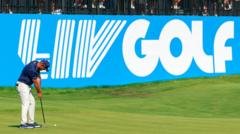
LIV Golf Bankruptcy: Inside the $45M Player Debt Crisis
The sudden filing for LIV Golf bankruptcy protection in a New Jersey federal court has sent shockwaves through the global sports landscape, signaling the abrupt end of professional golf’s most expensive and disruptive experiment. By seeking Chapter 11 protection with over $45 million in outstanding debts owed to its marquee players, the breakaway league has laid bare the financial volatility of its aggressive expansion model. This legal maneuver marks a critical turning point, transitioning the organization from a sovereign-backed disruptor into a distressed asset scrambling for private equity rescue.
The LIV Golf bankruptcy refers to the Chapter 11 filing by the breakaway golf league in New Jersey following the withdrawal of Saudi Arabia's Public Investment Fund (PIF). The filing reveals over $45 million in unpaid player debts for Q3 2026 and initiates a transition to a restructured, player-owned league backed by BC Partners.<\/p>
- Financial Insolvency: LIV Golf has filed for Chapter 11 bankruptcy protection, listing assets of $100m-$500m against liabilities of $500m-$1bn.
- Massive Player Debts: Over $45 million is currently owed to 14 prominent players for Q3 2026, with Jon Rahm ($7.5m) and Bryson DeChambeau ($5.7m) topping the creditor list.
- Funding Pivot: Saudi Arabia's Public Investment Fund (PIF) has officially withdrawn its multi-billion dollar long-term funding, replaced by a proposed investment from BC Partners.
- Contractual Freedom: The bankruptcy filing effectively terminates existing multi-year player contracts, allowing players the option to leave or negotiate new terms for LIV 2.0.
1. Executive Summary & Strategic Importance
On Tuesday, LIV Golf officially filed a Chapter 11 bankruptcy petition in the United States Bankruptcy Court for the District of New Jersey. The filing is designed to preserve the company’s business operations while it undergoes a comprehensive financial restructuring. This drastic measure was precipitated by the decision of Saudi Arabia’s Public Investment Fund (PIF) to withdraw its multi-billion dollar financial backing, leaving the league unable to meet its immediate cash flow requirements. To facilitate the restructuring, LIV has proposed a transition to a new investment partner, the international private equity firm Bloomberg-reported BC Partners, signaling a shift toward a market-driven corporate structure.
The strategic importance of this filing cannot be overstated. By entering Chapter 11, LIV Golf has effectively nullified the lucrative, multi-year contracts that previously bound its star players to the league. This development introduces unprecedented liquidity to the player market, granting superstars like Jon Rahm, Bryson DeChambeau, and Cameron Smith the legal freedom to walk away from the league. The restructuring process aims to launch “LIV 2.0” early next year—a majority player-owned league operating under a significantly scaled-back financial model. However, the immediate reality is a complex legal battle over millions in unpaid player compensation and a highly uncertain future for the sport’s competitive landscape.
2. Historical Background & Contextual Evolution
LIV Golf was launched in 2021 with the explicit goal of dismantling the PGA Tour’s historic monopoly on professional golf. Backed by the seemingly limitless capital of the Saudi Public Investment Fund, the league embarked on an unprecedented spending spree. Over the course of its first three seasons, PIF poured more than $5 billion into the venture. This capital was primarily deployed to secure the signatures of major champions through astronomical, guaranteed signing bonuses and to fund record-breaking tournament purses that dwarfed traditional tour payouts.
Despite the initial splash, the financial foundation of the league was highly artificial. LIV struggled to secure lucrative domestic television contracts, major corporate sponsorships, or traditional revenue streams necessary to offset its massive operational costs. The league operated at a steep loss, entirely reliant on continuous capital injections from Riyadh. The turning point arrived in April 2026, when PIF leadership determined that the substantial long-term investment required to sustain LIV was no longer aligned with its broader strategic objectives. This decision marked a significant pivot in the Saudi PIF sports investment strategy, as the sovereign wealth fund began redirecting capital toward domestic infrastructure projects and more liquid global assets, leaving LIV Golf to fend for itself in the open market.
3. In-Depth Technical & Policy Breakdown of the LIV Golf Bankruptcy
The Chapter 11 petition filed in New Jersey reveals a stark imbalance between LIV Golf’s assets and its liabilities. According to court documents, the league estimates its total assets to be between $100 million and $500 million, while its liabilities are projected to be between $500 million and $1 billion. To maintain basic operations during the court-supervised restructuring, PIF has agreed to provide a $49.6 million debtor-in-possession (DIP) loan. This financing is critical, as it prevents immediate liquidation and allows the league to negotiate with creditors while preparing its transition to new ownership.
The Creditor List and Unpaid Player Debts
The bankruptcy petition includes a detailed schedule of the 30 largest unsecured claims against the company. Crucially, 14 current and former LIV players are listed among these top creditors, representing a collective debt of just over $45 million. Industry sources have clarified that these figures do not represent the total remaining value of the players’ multi-year contracts, but rather unpaid compensation specifically owed for the third quarter of the 2026 season. The distribution of these outstanding debts among the league’s premier talent is highly concentrated:
- Jon Rahm: Tops the unsecured creditor list with a claim of $7.5 million.
- Bryson DeChambeau: Owed $5.7 million.
- Dustin Johnson: Owed $5.5 million.
- Cameron Smith: Owed $4.8 million.
- Tyrrell Hatton: Owed $3.4 million.
- Brooks Koepka: Owed $1.7 million (despite having departed to rejoin the PGA Tour in January).
Contractual Dissolution and Player Agency
From a legal standpoint, the Chapter 11 filing fundamentally alters the nature of professional golf contracts. Under U.S. bankruptcy law, a debtor-in-possession has the authority to reject executory contracts—agreements where material performance remains due on both sides. Because LIV Golf cannot fulfill its financial obligations, the previous “LIV 1.0” contracts are effectively terminated. This means players are no longer legally bound by their exclusivity clauses. While LIV’s management team, led by CEO Scott O’Neil, has expressed confidence in transitioning players to “LIV 2.0,” players are under no legal obligation to sign new agreements. This contractual void initiates a massive phase of golf industry restructuring, as players weigh the risks of a scaled-back LIV model against a potential return to traditional tours.
4. Comparative Industry Framework
The collapse of LIV Golf’s initial business model necessitates a direct comparison between the original league, the proposed restructured entity, and the established PGA Tour. The table below outlines the stark operational differences across these three frameworks:
| Operational Dimension | LIV Golf 1.0 (Defunct) | Proposed LIV Golf 2.0 | PGA Tour (Current) |
|---|---|---|---|
| Primary Funding Source | Saudi Public Investment Fund (Sovereign Wealth) | BC Partners (Private Equity) & Player Equity | Corporate Sponsors, Media Rights, & SSG Private Equity |
| Field Size & Format | 48 players, no-cut, 54-hole shotgun start | 75 players, cut-line introduced, expanded field | 120-156 players, 72-hole traditional format with cut |
| Player Compensation Model | Upfront guaranteed contracts + high purses | Lower purses, equity distribution, commercial rights | Performance-based purses, FedEx Cup bonus, PIP equity |
| Average Purse Size | $20 Million – $25 Million per event | Lower than PGA Tour, higher than DP World Tour | $9 Million – $20 Million (Signature Events) |
| Team Franchise Model | League-owned, centralized control | Player-owned franchises with national identities | Individual-focused, no formal team franchise system |
This comparative framework illustrates that the proposed BC Partners LIV Golf model represents a significant compromise. By introducing a cut line, expanding the field to 75 players, and reducing purse sizes below the PGA Tour’s premium events, LIV 2.0 is attempting to mimic traditional competitive structures while shifting the financial risk onto the players themselves through equity-based compensation. This is a drastic departure from the guaranteed, risk-free cash flow that initially attracted players to the league.
5. Socio-Economic, Enterprise & Global Ramifications
The financial distress of LIV Golf carries profound implications for the broader sports economy and the future of sovereign wealth participation in global athletics. For years, the massive capital deployment by PIF was viewed as an unstoppable force capable of inflating player valuations across all major sports. However, the sudden withdrawal of funding suggests that even sovereign wealth funds have limits regarding sustained financial losses without clear strategic returns. As reported by Reuters, global sovereign wealth funds are increasingly prioritizing domestic economic transformation and tangible financial yields over high-profile, high-loss international sports ventures.
Within the enterprise of professional golf, this bankruptcy will likely suppress player leverage. The hyper-inflation of player contracts experienced over the last three years was driven entirely by the bidding war between the PGA Tour and LIV. With LIV’s financial wings clipped and its transition to a lower-purse, equity-based model, the market is poised for a sharp correction. Furthermore, the legal proceedings in New Jersey will serve as a cautionary tale for private equity firms evaluating sports franchise investments, highlighting the dangers of relying on artificial demand and unsustainable cost structures.
6. Strategic Outlook & What Comes Next
The immediate future of LIV Golf hinges on the approval of its Chapter 11 restructuring plan by the bankruptcy court and its creditors. The proposed transition to LIV 2.0 requires securing the formal commitment of BC Partners and, more importantly, convincing a critical mass of elite players to accept equity in lieu of guaranteed cash. While some players, such as Bryson DeChambeau, have expressed optimism about the league’s “potential moving forward,” others remain highly cautious. Jon Rahm’s recent statements that “time will tell” and that he is merely “willing to fulfill” his existing obligations reflect the deep uncertainty prevailing among the league’s top talent.
Over the coming months, several key milestones will determine the viability of this restructuring:
- Court Approval of the DIP Financing: Ensuring the $49.6 million loan from PIF is approved to keep the lights on during the legal proceedings.
- Creditor Negotiations: Resolving the $45 million in outstanding Q3 debts owed to the players, potentially converting these claims into equity in the new league.
- BC Partners Due Diligence: Finalizing the terms of the private equity injection and establishing the valuation of the new player-owned franchises.
- PGA Tour/DP World Tour Response: Determining whether the traditional tours will offer a pathway back for defecting players, and under what disciplinary or financial conditions.
If LIV 2.0 fails to attract sufficient player participation or if BC Partners backs out during the due diligence phase, the league faces the very real prospect of Chapter 7 liquidation. Conversely, if successful, this restructuring could establish a highly innovative, player-owned franchise model that could eventually find a stable niche within the global golf ecosystem, albeit at a fraction of the scale once envisioned by its Saudi founders.
7. Frequently Asked Questions (FAQ)
What is the primary cause of the LIV Golf bankruptcy?
The primary cause of the LIV Golf bankruptcy is the withdrawal of financial backing by Saudi Arabia’s Public Investment Fund (PIF). Without this multi-billion dollar sovereign funding, LIV’s business model—characterized by massive guaranteed player contracts and high operational costs—became unsustainable, leading to over $500 million in liabilities and an inability to pay its players and creditors.
How much money does LIV Golf owe to its players?
LIV Golf currently owes just over $45 million to 14 of its current and former players. These outstanding debts represent unpaid compensation specifically for the third quarter of the 2026 season. The largest individual debts are owed to Jon Rahm ($7.5 million), Bryson DeChambeau ($5.7 million), and Dustin Johnson ($5.5 million).
What is the difference between LIV 1.0 and the proposed LIV 2.0?
LIV 1.0 was entirely funded by Saudi PIF, featuring 48-player fields, no cuts, and guaranteed payouts. The proposed LIV 2.0, backed by BC Partners, will operate on a sustainable business model with a 75-player field, the introduction of a cut line, lower tournament purses, and a majority player-owned structure where players receive equity and individual commercial rights instead of massive guaranteed cash contracts.
Are LIV Golf players now free agents?
Yes. Because LIV Golf has filed for Chapter 11 bankruptcy and cannot fulfill its financial obligations, the original multi-year contracts are legally compromised. Players are not obligated to sign on for LIV 2.0 and have the legal freedom to negotiate with other tours, though rejoining the PGA Tour or DP World Tour remains subject to those organizations’ specific entry requirements and penalties.
What is debtor-in-possession (DIP) financing in this context?
DIP financing is a special form of financing approved by the bankruptcy court that allows a company undergoing Chapter 11 restructuring to secure capital to maintain its operations. In this case, Saudi PIF is providing a $49.6 million DIP loan to LIV Golf, ensuring the league has enough liquidity to navigate the court process and transition to its new investment structure.
Latest Analytical Follow-up: For continuous developments on this subject, read our full investigation on Tung Chee-hwa Legacy: First Hong Kong Leader Dies at 89.
