
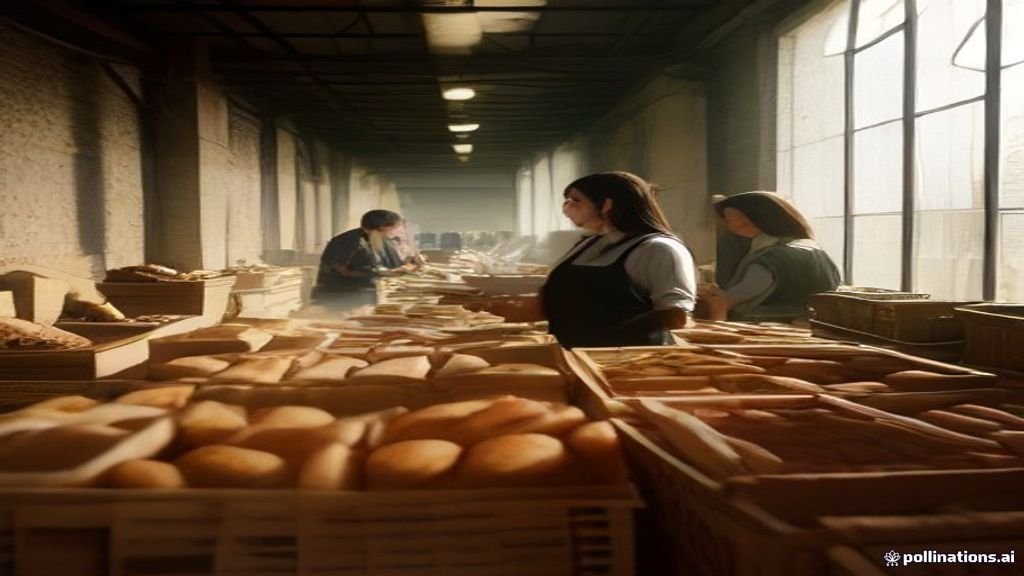
East London Food Redistribution Hub Fights Hunger and Waste
The opening of the Big Heart Food Hub in Barking represents a structural shift in how municipal authorities and charitable coalitions tackle localized economic distress. Operating as a state-of-the-art food redistribution hub, this East London facility is engineered to collect, store, and allocate up to 10 tonnes of commercial surplus food every week. By converting industrial oversupply into local emergency relief, the facility supports more than 20 front-line community organizations and delivers vital daily sustenance to an estimated 7,000 residents facing persistent financial hardship.
A food redistribution hub is a centralized logistical facility designed to intercept unmarketable yet edible surplus food from commercial supply chains before it reaches landfills. The hub aggregates, sorts, cold-stores, and dispatches this produce to community organizations, food banks, and frontline social services to alleviate localized nutritional poverty.<\/p>
- High-Volume Supply Processing: The new Barking facility channels up to 10 tonnes of surplus food per week directly to frontline community organizations.
- Targeted Municipal Impact: Operating in Barking and Dagenham, London's statistically poorest borough, the initiative serves an estimated 7,000 residents weekly.
- Cross-Sectoral Governance: The project relies on a collaborative framework uniting Barking and Dagenham Council, The Felix Project, City Harvest, Food for All, Kingsley Hall, and The Kindness Offensive.
- Beyond Emergency Relief: Future strategic expansion will integrate culinary education, job training, and skill development to address systemic poverty drivers.
/
1:28
1. Executive Summary & Strategic Importance
Urban centers across high-income nations face a dual challenge: systemic food waste paired with accelerating domestic hunger. The establishment of this specialized food redistribution hub in Barking provides an operational framework designed to bridge the gap between commercial logistics and civic welfare needs. Situated within the London Borough of Barking and Dagenham—statistically identified as the UK capital’s most socio-economically deprived local authority—the hub operates as a vital intermediary for municipal food infrastructure.
Rather than functioning merely as a traditional emergency pantry, the Big Heart Food Hub acts as a middle-tier logistical exchange. It aggregates large-scale industrial donations from major hypermarkets, agricultural distributors, and corporate suppliers, subsequently redistributing these goods to smaller, localized organizations including community centers, school breakfast clubs, and soup kitchens. This systematic intervention addresses acute supply bottlenecks, ensuring that wholesome, unmarketable produce is diverted from incineration or landfill decomposition and channeled directly to low-income households.
The initiative arrives at a critical economic juncture. With household energy bills, housing expenditures, and retail grocery prices remaining structurally elevated across the United Kingdom, lower-income households are facing severe budget compression. By stabilizing the local surplus food supply chain, the hub alleviates pressure on statutory social safety nets, demonstrating how multi-agency alignment can yield measurable civic relief without relying solely on expanded municipal outlays.
2. Historical Background & Contextual Evolution
The operational model of urban food recovery has evolved dramatically over the past three decades. Historically, emergency food provisioning relied on fragmented, localized food banks collecting ambient dry goods through community donation drives. However, structural shifts in hypermarket logistics, combined with the scale of modern retail overproduction, highlighted the inefficiencies of decentralization. Large volumes of perishable produce, dairy, and cold-chain items were routinely discarded due to minor packaging defects, short cosmetic shelf-lives, or minor forecasting errors within corporate distribution networks.
In Greater London, the emergency provisioning landscape reached a critical threshold following recent macroeconomic disruptions. According to longitudinal data published by the Trust for London, operational metrics indicate that urban food insecurity across the capital increased by 23% between the 2022/23 and 2024/25 tracking periods. This sharp upward trajectory exposed the limitations of traditional, non-refrigerated food drives, accelerating the need for centralized cold-chain facilities capable of high-throughput management.
The catalyst for the Barking facility was the realization that front-line charities, such as community centers and local religious organizations, lacked the physical footprint, transport fleets, and refrigeration technology needed to accept palletized donations from national supply chains. The establishment of the Big Heart Food Hub resolves this structural mismatch. By establishing a centralized warehouse equipped with cold-chain storage and rapid sorting systems, municipal partners have created an institutional bridge that turns private-sector inefficiency into public benefit.
3. In-Depth Technical & Policy Breakdown
The operational success of the Big Heart Food Hub relies on a structured public-private partnership combined with advanced distribution logistics. Understanding the operational architecture requires examining its functional sub-systems, governance models, and long-term socio-educational goals.
Logistical Mechanics of the Food Redistribution Hub
The facility operates as a centralized sorting and redistribution engine. Commercial donors—including major retail supermarket chains, agricultural wholesalers, and ambient food manufacturers—transport bulk surplus directly to the warehouse. Upon receipt, inventory undergoes rapid compliance inspection to ensure safety and temperature integrity before being categorized into dynamic inventory systems.
- Inbound Procurement: Logistics providers including The Felix Project and City Harvest deliver multi-ton consignments using refrigerated transport fleets.
- Cold-Chain Processing: High-capacity commercial walk-in freezers and chillers preserve short-dated proteins, fresh produce, and dairy items, stopping perishable degradation.
- Micro-Allocation: Logistics staff sort incoming bulk pallets into customized, balanced inventory kits tailored to the specific needs of recipient groups, such as the Darul Ummah Goresbrook community center.
- Outbound Fleet Operations: Dedicated dispatch schedules deliver targeted parcels to over 20 localized grassroots hubs, reducing transport overhead for front-line volunteers.
Governance and Strategic Stakeholder Alignment
Unlike standard charitable initiatives, the Big Heart Food Hub operates through a structured multi-stakeholder governance framework. Barking and Dagenham Council provides statutory backing, site infrastructure, and strategic planning integration. Operational execution is managed through a coalition of third-sector institutions, including The Kindness Offensive, Food for All, Kingsley Hall, The Felix Project, and City Harvest. This multi-agency oversight distributes operational risk, optimizes vehicle utilization, and prevents administrative duplication across East London.
Upskilling, Practical Education, and Economic Mobility
A core policy pillar of the facility is its planned transformation from a simple distribution hub into a comprehensive community development asset. Recognizing that emergency relief does not fix the underlying structural causes of poverty, hub leadership is implementing structured educational pathways. Future phases will incorporate dedicated training kitchens and vocational volunteering initiatives.
These programs address real-world challenges faced by recipients who may receive unfamiliar fresh produce, such as celeriac or whole squash. By delivering targeted culinary education alongside employment readiness training, the hub seeks to enhance domestic budgeting skills, improve household nutritional outcomes, and establish direct career pathways into the broader logistics, hospitality, and food-service industries.
4. Comparative Industry Framework
To evaluate the structural efficiency of centralized food hubs, it is helpful to compare emergency food delivery models across operational scale, logistical costs, and community impact.
| Dimension | Direct Supermarket Donations | Traditional Decentralized Food Banks | Centralized Food Redistribution Hubs |
|---|---|---|---|
| Operational Throughput | Low to Moderate (Localized collection) | Moderate (Dependent on public dry-good drives) | High (Up to 10 tonnes per week per facility) |
| Cold-Chain Infrastructure | Minimal / Non-existent | Limited (Basic domestic refrigeration) | Enterprise Grade (Commercial walk-in cold rooms) |
| Targeted Waste Mitigation | Ad-hoc / Reactive | Low (Focuses primarily on shelf-stable goods) | High (Systematic recovery of short-dated perishables) |
| Administrative Overhead per Tonne | High (Fragmented volunteer labor) | Moderate to High | Low (Optimized industrial scale logistics) |
| Socio-Educational Integration | None | Variable / Ad-hoc | Structured (Vocational training & life-skills integration) |
SEEUY INTELLIGENCE
Food Redistribution Hub – Analytical Overview
Operational Throughput
Low to Moderate (Localized collection)
Cold-Chain Infrastructure
Minimal / Non-existent
Targeted Waste Mitigation
Ad-hoc / Reactive
Administrative Overhead per Tonne
High (Fragmented volunteer labor)
Socio-Educational Integration
None
Analytical Takeaway: The comparative framework demonstrates that while traditional models remain valuable for immediate emergency response, centralized redistribution hubs achieve far superior economies of scale. By combining commercial-grade refrigeration with structured logistics, hubs minimize transport expenses per tonne, process high-volume perishable inventory, and significantly advance municipal food waste mitigation goals.
5. Socio-Economic, Enterprise & Global Ramifications
The launch of the Barking hub offers valuable insights into broader economic and environmental strategies. On a macro level, modern food systems generate substantial economic losses through agricultural and retail overproduction. When organic matter is diverted to landfills, its decomposition produces significant amounts of methane gas, accelerating global atmospheric warming. As documented by environmental research bodies such as the Food and Agriculture Organization (FAO), preventing food waste is one of the most actionable strategies for reducing urban carbon footprints.
From a public finance perspective, structural severe poverty places considerable downstream pressure on municipal healthcare systems, adult social care resources, and educational performance metrics. When families experience chronic nutritional insecurity, public health authorities report higher rates of preventable dietary illnesses, child developmental delays, and elevated mental health distress. By establishing reliable local access to nutrient-dense foods, the Big Heart Food Hub helps mitigate long-term civic health liabilities, reducing structural pressure on local National Health Service (NHS) trusts.
Furthermore, the facility acts as a operational stabilizing force within the broader cost of living crisis London framework. By offsetting weekly household grocery expenses for low-income families, the initiative indirectly frees up domestic disposable income. Beneficiaries can redirect limited financial resources toward essential utility payments, housing rents, and heating costs, decreasing domestic default rates and preventing residential evictions.
6. Strategic Outlook & What Comes Next
Looking ahead, the long-term sustainability of the Big Heart Food Hub depends on several key operational factors. First, maintaining consistent, high-volume bulk donations requires continuous integration with commercial retail supply chains. As supermarkets adopt AI-driven inventory management to reduce stock redundancies at the retail level, food redistribution facilities must increasingly source supply directly from secondary agricultural processors and farm-gate surpluses.
Second, operational cost stability remains an ongoing challenge. Commercial cold-chain storage facilities demand significant electricity consumption. Managing utility overhead amidst fluctuating energy market prices requires continuous capital commitment from municipal partners and philanthropic networks. Integrating localized solar photovoltaic arrays and energy-efficient cooling technology will be vital to securing long-term economic resilience.
Ultimately, the Big Heart Food Hub offers a scalable model for urban centers across the globe. By aligning commercial surplus management with structured socio-economic welfare efforts, the facility proves that municipal food waste can be transformed into a valuable community asset—alleviating hunger, fostering local employment skills, and building resilient urban neighborhoods.
7. Frequently Asked Questions (FAQ)
What is the primary operational capacity of the Big Heart Food Hub?
The facility is designed to process and redistribute up to 10 tonnes of high-quality surplus food weekly, supporting over 20 community groups and feeding approximately 7,000 residents across East London.
Which organizations are involved in running the Barking redistribution facility?
The initiative operates as a coalition featuring Barking and Dagenham Council, The Kindness Offensive, Food for All, The Felix Project, City Harvest, and Kingsley Hall.
How does food redistribution impact local municipal budgets and sustainability goals?
By diverting edible produce from municipal waste streams, the model reduces landfill disposal levies, lowers localized carbon emissions, and supplements municipal social welfare efforts during sustained economic downturns.
Why is Barking and Dagenham the focus for this major infrastructure investment?
Barking and Dagenham remains statistically the poorest borough in London, where rising inflation and escalating living costs have exacerbated domestic food insecurity by more than 23% over recent years.
What long-term services will the hub provide beyond food delivery?
The center plans to launch volunteer development schemes, employment training, and practical cooking programs to help residents optimize fresh produce utilization and build career skills.
<button type="button" onclick="this.parentElement.innerHTML='✓ Thank you, we will refine our analysis!‘” style=”background:#ffffff; border:1px solid #cbd5e1; border-radius:6px; padding:4px 12px; font-size:12px; cursor:pointer; color:#334155;”>👎 No
