
How China’s AI Ambitions Are Reshaping the Global Tech Race
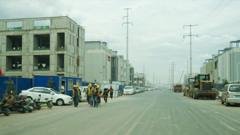
In the windswept grasslands of Inner Mongolia, the traditional potato capital of Ulanqab is undergoing a staggering transformation that perfectly illustrates China’s AI ambitions. Here, among the volcanic steppes, the quiet rhythm of agricultural life is being shattered by the deafening hum of heavy machinery. Huge, rectangular concrete blocks are rising from the soil. These are not factories or residential complexes; they are the physical engines of the next industrial revolution.
China's AI ambitions are driven by a massive state-backed expansion of generative AI infrastructure, a rapid pivot toward open-source AI models to bypass US chip restrictions, and a massive talent repatriation wave, positioning Beijing to automate 90% of its domestic industries by 2030 despite ongoing geopolitical friction.<\/p>
- Infrastructure Overdrive: China is rapidly constructing massive data center hubs in remote, resource-rich provinces like Inner Mongolia to power its next-generation AI models.
- The Open-Source Pivot: To bypass strict US hardware embargoes, Beijing is championing open-source architectures that allow rapid, decentralized innovation.
- Talent Repatriation: Growing geopolitical friction and restrictive US immigration policies are driving top-tier Chinese AI researchers back to domestic institutions.
Hundreds of workers in yellow helmets carry heavy equipment into these building sites as welding sparks fly off metal scaffolding. Above them, massive cranes move with clinical precision to construct rooftops, while laborers balance on ladders to plaster brickwork. This is infrastructure development on a scale and at a speed that few other nations can match. It is a concrete manifestation of Beijing’s determination to dominate the global technology landscape.
“This is China speed,” jokes one construction worker, pausing briefly. “An infrastructure maniac—that is how we build. There is a new phase every single year. This is only the second phase, and there will be many more afterwards.”
This relentless construction boom is not happening in a vacuum. It coincides with high-stakes diplomatic maneuvering, as Donald Trump and his Chinese counterpart Xi Jinping meet to discuss the guardrails of artificial intelligence. Yet, while diplomats debate safety protocols in carpeted Washington boardrooms, the real battle is being fought with concrete, steel, and silicon in the remote corners of the Chinese hinterland.
The Geopolitical Chessboard of US-China AI Competition
At its core, the intense US-China AI competition is a race for computational supremacy. The country that controls the most advanced data centers, the most efficient algorithms, and the largest pools of clean energy to power them will dictate the rules of the twenty-first-century global economy. For the Chinese Communist Party, these remote data centers are not merely commercial enterprises; they are critical assets for national security and economic survival. The state’s stated goal is breathtakingly ambitious: to embed artificial intelligence across 90% of the nation’s industries and social systems by 2030.
This rapid expansion has sent shockwaves through Washington. The United States has consistently sought to slow Beijing’s progress by implementing strict export controls on advanced semiconductors. Yet, these measures have only hardened China’s resolve to build its own self-sustaining ecosystem. The stakes could not be higher, as detailed in recent Reuters coverage of global AI policy, which highlights how both superpowers view AI dominance as an absolute geopolitical necessity.
“Whoever wins AI, wins,” President Trump declared recently, signaling that the US has no intention of slowing down its own development despite warnings from industry insiders about the existential risks of unregulated artificial intelligence. Dario Amodei, the CEO of prominent AI firm Anthropic, has repeatedly urged Washington to maintain its strict embargoes on advanced chips, warning that a Chinese lead in this sector would pose a grave and immediate danger to the democratic world.
Beijing, predictably, views these arguments as a thin veil for economic containment. The state-run Global Times has dismissed American warnings as a page from a “Cold War playbook” designed to preserve Western hegemony. But behind the rhetorical sparring, China is quietly executing a highly pragmatic strategy that bypasses American choke points entirely.
Building the Generative AI Infrastructure of Tomorrow
To understand how China plans to win this race, one must look at its approach to physical infrastructure. Training modern large language models requires an astronomical amount of power. By placing its new generative AI infrastructure in sparsely populated provinces like Inner Mongolia, Ningxia, Gansu, and Guizhou, Beijing is capitalizing on several geographic advantages.
These regions offer vast expanses of cheap land, naturally cool climates that lower the cost of cooling supercomputers, and, most importantly, an abundance of renewable energy. China has built the world’s largest wind and solar installations in these northern and western territories. By co-locating data centers next to clean energy sources, Beijing aims to run its AI infrastructure on green power by 2030, though a significant portion of the grid remains tied to coal for the time being.
The scale of this infrastructure buildout is best understood when compared directly to the American approach, which relies more heavily on private capital and localized grid connections:
| Strategic Metric | China’s Approach | United States’ Approach |
|---|---|---|
| Primary Model Architecture | Open-source, highly adaptable, decentralized | Closed-source, proprietary, centralized (e.g., OpenAI) |
| Infrastructure Footprint | State-coordinated mega-hubs in remote provinces | Private, utility-dependent data centers near urban hubs |
| Annual STEM Graduates | Approximately 5 million | Approximately 500,000 |
| Energy Integration | Direct co-location with massive state wind/solar grids | Market-driven power purchase agreements (PPAs) |
This coordinated state-directed model allows China to build at a pace that private Western enterprises, bound by local zoning laws and environmental lawsuits, simply cannot match. While American developers struggle to secure grid connections in Virginia or Oregon, Chinese state enterprises are laying down gigawatts of capacity across the Gobi Desert.
Bypassing AI Chip Restrictions Through Open-Source AI Models
Perhaps the most significant strategic pivot China has made in response to Western pressure is its embrace of open-source AI models. Denied access to Nvidia’s cutting-edge H100 and Blackwell chips due to strict US AI chip restrictions, Chinese tech giants and research institutes have had to innovate through software efficiency rather than raw hardware power.
President Xi Jinping has actively encouraged domestic firms to develop affordable, open-source architectures. Unlike the closed-door, proprietary approaches of American pioneers like OpenAI and Anthropic, Chinese developers are sharing their underlying code with the global community. This is not philanthropy; it is a calculated strategy. By open-sourcing their models, Chinese firms allow thousands of external developers to debug, optimize, and improve their software for free.
This collaborative approach has allowed Chinese AI companies to iterate with astonishing speed. It democratizes access to advanced machine learning tools across domestic industries, allowing small and medium enterprises to integrate AI without needing massive capital reserves or access to restricted Western hardware. It also positions China as the primary technology provider for the Global South, offering an affordable, customizable alternative to expensive, politically sensitive American platforms.
“By sharing the technology, we build an ecosystem that we control,” says a Shanghai-based software architect. “The Americans want to keep their models behind a paywall. We want to make ours the global standard by making them free and adaptable.”
The Human Capital Shift: A Reversal of the Brain Drain
For decades, the United States was the undisputed destination for the world’s brightest minds. But that dynamic is shifting. Geopolitical tensions, combined with tightening US immigration policies and a rising tide of suspicion toward Chinese researchers in Western academia, have soured the American dream for many.
China is capitalizing on this friction by aggressively recruiting top-tier talent back home. Researchers who once viewed Silicon Valley as the pinnacle of their careers now see their homeland as a land of superior opportunity, backed by unlimited state funding and massive computational resources.
Jack Zhang, a brilliant young researcher who studied at Yale and Cambridge, is emblematic of this reverse brain drain. Recruited by a high-level government talent program, he now works at the University of Science and Technology of China.
“I wanted to take some of the AI work I was doing in the lab and apply it directly to human health and medicine,” Zhang explains. “That requires massive resources, large teams, and sustained government support. That level of coordinated backing is increasingly difficult to access overseas, where funding is fragmented and politically fraught.”
The sheer volume of human capital at Beijing’s disposal is staggering. China produces roughly five million science, technology, engineering, and mathematics (STEM) graduates every year, compared to approximately 500,000 in the United States. As more of these graduates choose to remain within the domestic ecosystem, they are fueling a vibrant, highly collaborative research culture.
Dang Ronghao, a 27-year-old developer working for a leading tech firm in Shanghai, believes the domestic research environment has never been more dynamic. “I see research combining AI with nuclear fusion, astrophysics, materials science, and drug discovery,” he says. “We are entering an era of unprecedented cross-disciplinary innovation.”
Yet, this system is not without its critics. Some senior academics worry that China’s educational and corporate culture still rewards conformity over disruptive thinking. Professor Liu Jun, who studied at Harvard and Stanford before taking a post at Tsinghua University, notes that cultural barriers remain. “I constantly encourage my students to ask more questions, to challenge established authorities,” Liu says. “But that is a difficult mindset to cultivate in a system that historically values hierarchy.”
The Silent Friction of a High-Tech Transition
While Beijing’s state media paints a picture of seamless technological triumph, the reality on the ground in places like Ulanqab is far more complicated. The rapid construction of these digital monoliths has created deep, quiet fractures in rural communities.
Entire villages have been relocated to make way for data centers and the massive wind farms that power them. In a country where public dissent is heavily policed, local grievances are rarely aired openly, but the undercurrent of resentment is palpable. Many rural residents feel entirely excluded from the high-tech economy being built on their ancestral lands.
“This big data has absolutely nothing to do with ordinary people like us,” says one local farmer, speaking anonymously for fear of state reprisal. “What benefits has it actually brought to our village? They promised us jobs, but all the engineering and maintenance work is done by specialists brought in from the major cities. We are left with nothing but the noise and the dust.”
Others worry about the environmental toll. The arid plains of Inner Mongolia are already facing severe water scarcity, and the massive cooling systems required to keep thousands of servers from overheating threaten to deplete local aquifers. For older generations who still rely on sheep farming and potato cultivation, the future looks increasingly precarious.
“Big data is fine for the country, I suppose,” says an elderly shepherd, guiding his flock past a high-security fence surrounding a newly completed Huawei data center. He holds up a cheap, cracked mobile phone. “But it does nothing for me. I don’t even use the internet. I just hope they leave us enough pasture to feed our animals.”
This stark divide highlights the central challenge facing Beijing as it pushes forward with its technological revolution. The state is building a hyper-advanced, automated future at breakneck speed, but the human cost of that transition is being borne by a rural population that is rapidly being left behind. Whether China can successfully bridge this gap—or if the social friction will eventually slow its march toward technological hegemony—remains the defining question of its ambitious journey.
<button type="button" onclick="this.parentElement.innerHTML='✓ Thank you, we will refine our analysis!‘” style=”background:#ffffff; border:1px solid #cbd5e1; border-radius:6px; padding:4px 12px; font-size:12px; cursor:pointer; color:#334155;”>👎 No
