
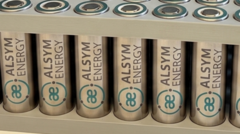
US sodium ion battery start-ups chase domestic energy independence
When soaring summer temperatures scorched homes across Europe this year, a quiet surge rippled through a San Diego corporate office. Workers at Unigrid, a nimble clean-tech firm specializing in sodium ion battery technology, noticed an unexpected spike in web traffic and purchase requests. Sweltering homeowners from Spain to Germany were desperately searching for ways to capture cheap off-peak grid energy to run their air conditioners during the suffocating afternoon heat. Suddenly, alternative energy storage was no longer just a niche academic topic. It was an urgent utility.
A sodium ion battery is an emerging energy storage technology that uses sodium ions instead of lithium, offering significantly lower production costs, enhanced thermal stability, and operating safety across wider temperature ranges, positioning it as a viable alternative for home and grid power systems.<\/p>
- Rising European Demand: Sweltering summer heatwaves across Europe have dramatically accelerated the global appetite for affordable residential battery storage solutions.
- China's Manufacturing Lead: While American start-ups pioneer innovative cell designs, most current production heavily relies on established Chinese supply chains.
- The Domestic Ambition: Companies like Peak Energy and Unigrid are racing to establish localized manufacturing hubs to secure a fully independent US supply chain by the late 2020s.
For years, the energy transition conversation has fixated almost exclusively on lithium. Yet, supply chain bottlenecks, mining environmental concerns, and fluctuating commodity prices have left global markets vulnerable. Enter sodium—abundant, cheap, and ubiquitous. Across the United States, a wave of ambitious start-ups is racing to commercialize sodium ion chemistry, hoping to reclaim a manufacturing sector that has largely migrated overseas.
The Rush to Cool Europe and Power America
Unigrid has already shipped its first hundred units of compact, nine-kilowatt-hour residential systems, with projections to clear a thousand shipments before the year closes. Darren Tan, the company’s co-founder and chief executive, watches these numbers with cautious optimism. The pitch to consumers is straightforward: lower cost, higher thermal resilience, and a safer chemical profile. Unlike their lithium-based cousins, these systems can function reliably in extreme climates, enduring bitter winter lows of minus forty degrees Celsius without suffering catastrophic capacity loss.
Yet, the path from prototype to mass production is littered with economic and logistical hurdles. China currently dominates the global manufacturing apparatus for these chemistries. For early-stage American competitors, bridging the gap means striking a pragmatic balance between utilizing established overseas supply chains and building out domestic infrastructure.
“We can switch back and forth and choose what battery we want to work with. In the future, we might source cells domestically, though these may come at a different cost profile.”
— Darren Tan, Co-founder and CEO, Unigrid
This pragmatic reliance on foreign manufacturing is a necessary evil for many American firms trying to break into the market quickly. But the ultimate end-goal for venture-backed innovators is a completely localized industrial footprint.
Navigating Safety Concerns and Cathode Controversies
Every technological leap invites rigorous scrutiny, and sodium ion chemistry is no exception. A vigorous debate persists among materials scientists regarding the ideal cathode composition. Unigrid’s design, for instance, incorporates chromium-3. Prominent researchers, such as Professor Dame Clare Grey of the University of Cambridge, have publicly cautioned that under specific high-voltage conditions, chromium-3 could theoretically oxidize into chromium-6—a well-known toxic, carcinogenic compound.
“If you’re going to go for sodium and you’re going to sell safety, then don’t start putting elements in that are going to raise red flags,” Grey notes.
Industry stakeholders naturally push back against these warnings. Independent tests commissioned by Unigrid have repeatedly failed to trigger the formation of chromium-6, even under extreme overcharging conditions. Other market players are avoiding the debate entirely by experimenting with alternate materials like hard carbon or sodium iron phosphate pyrophosphate (NFPP). Meanwhile, regulatory bodies in Europe have cleared Unigrid’s hardware, with US certifications currently winding through evaluation pipelines.
The Economics of Scale: Can US Start-ups Compete?
Cost remains the ultimate arbiter of success in the energy sector. While cheap lithium iron phosphate (LFP) batteries traded at roughly $81 per kilowatt-hour late last year, Unigrid’s sodium-based units sit closer to $100 per kWh. Analysts predict that as manufacturing matures, prices could plummet further, though achieving aggressive sub-$30 targets will likely require a decade of continuous engineering breakthroughs.
Weight and volume also present distinct design challenges. Because sodium ion setups lack the dense energy pack of lithium, they must be physically larger to deliver equivalent power. Consequently, you will not find these cells powering next-generation smartphones or lightweight electric vehicles anytime soon. Instead, experts point to home energy storage systems and massive grid energy storage solutions as the natural domains where sodium will inevitably rule.
Consider the market dynamics captured in recent industry benchmarks:
| Battery Technology | Average Cost per kWh | Primary Application | Supply Chain Vulnerability |
|---|---|---|---|
| LFP (Lithium Iron) | ~$81 | EVs & Small Storage | High (China Dominated) |
| Sodium Ion (Current) | ~$100 | Residential & Commercial | Moderate-High (Transitioning) |
| Sodium Ion (Projected) | <$50 (Long-term) | Grid-Scale Infrastructure | Low (Targeting US Sourcing) |
Targeting Untapped Niches and Data Centre Booms
Some entrepreneurs are finding success by carving out hyper-specific market segments rather than fighting industrial giants head-on. In Seattle, Emerald Battery Labs has set its sights on commercial vehicle auxiliary units. Co-founder David Bell emphasizes that their strategic entry point bypasses crowded passenger car segments entirely, focusing instead on heavy-duty commercial fleets.
“We took a look at the market and said no-one’s trying to attack this space,” Bell explains. Once their initial product finds a permanent foothold, the company plans to transition entirely to locally manufactured anodes.
Simultaneously, massive macro trends are accelerating domestic manufacturing momentum. The exponential growth of artificial intelligence and cloud computing has triggered an unprecedented surge in electricity demand from power-hungry data centres across the United States and the UK. To curb rising greenhouse gas emissions, tech giants are pressuring grid operators for reliable, clean power.
This intersection of data infrastructure and clean power represents a goldmine for alternative chemistries. Drew Buckley, CEO of ESS Tech, views this as a defining historical window. Sodium-based systems can efficiently distribute intermittent renewable energy directly to commercial data centres while requiring significantly less active cooling infrastructure than traditional lithium setups, slashing operational overhead.
The Road to 2028: Rebuilding the Domestic Playbook
The transition from laboratory curiosity to industrial reality is rarely smooth. Ivana Hasa, a researcher at the University of Warwick, points out that establishing high-volume mass production lines for a nascent chemistry remains an uphill battle. Furthermore, while marketing campaigns frequently frame sodium as a risk-free miracle, basic thermodynamics dictates that no chemical storage device carries a zero-percent fire risk.
Despite these caveats, the strategic imperative for a domestic supply chain is clearer than ever. Partnerships are already forming to bridge the gap. Peak Energy recently announced a high-profile collaboration with General Motors, with sights set on launching a dedicated Michigan-based production facility by the end of 2028. Cameron Wiles, president of Peak Energy, remains defiant against skeptics: “China does not have an insurmountable lead in sodium ion batteries.”
As venture capital continues to flow and engineering teams refine their cell architectures, the blueprint for American energy independence is slowly being rewritten. If these start-ups successfully scale their operations, they will not merely offer a viable lithium ion battery alternative; they will fundamentally decouple America’s clean energy transition from foreign geopolitical leverage, ensuring that the power keeping our homes and data centres cool is generated, stored, and secured right at home.
<button type="button" onclick="this.parentElement.innerHTML='✓ Thank you, we will refine our analysis!‘” style=”background:#ffffff; border:1px solid #cbd5e1; border-radius:6px; padding:4px 12px; font-size:12px; cursor:pointer; color:#334155;”>👎 No
