
Tesla Plans to Sell Cybercabs by End of Year
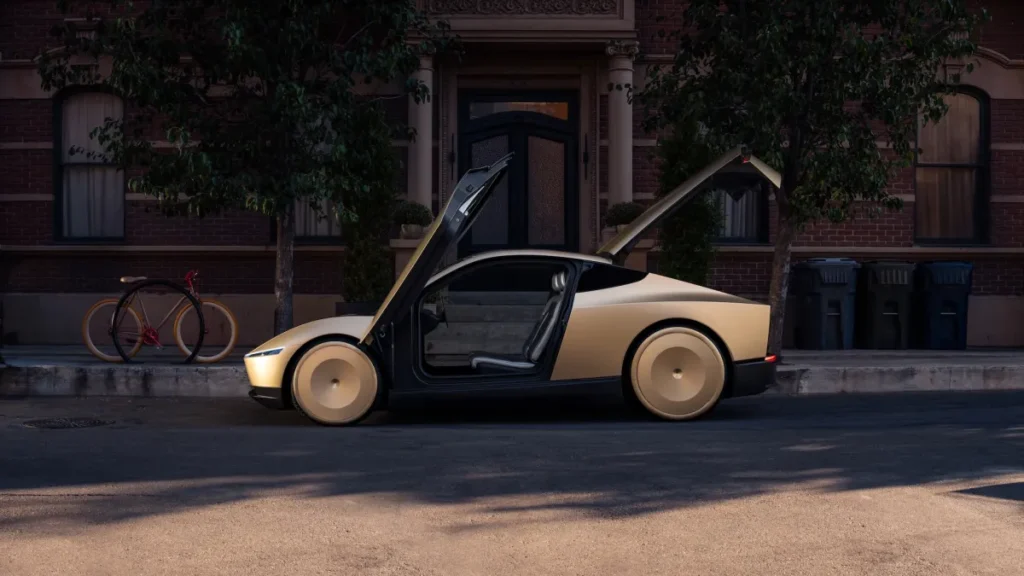
Tesla dropped a major bombshell during its recent earnings report: the electric automaker plans to sell Cybercabs by end of year to external commercial operators. It is a stunning timeline. The metallic gold two-seater has no steering wheel. It has no pedals. It completely lacks traditional mechanical controls. Yet, despite regulatory skepticism and unproven software, leadership insists the vehicle is moving rapidly from concept prototype to commercial deployment.
Tesla announced it intends to sell Cybercabs by end of year to third-party fleet buyers. The two-seater autonomous vehicle features no steering wheel or pedals, relying entirely on unproven full autonomy. However, ongoing federal safety investigations and software delays create major hurdles for commercially deploying these robotaxis.<\/p>
- Aggressive Commercialization: Tesla plans to sell Cybercabs by end of year, prioritizing fleet buyers alongside its internal robotaxi operations.
- Regulatory Obstacles: The NHTSA robotaxi investigation centers on the lack of manual controls like brake pedals and steering wheels under current federal standards.
- Software Timelines Shift: Unsupervised Full Self-Driving software has been pushed to Q2 next year, leaving commercial viability tied to future code releases.
- Business Model Evolution: Elon Musk emphasized that Cybercab operates primarily as transport as a service rather than a consumer-owned vehicle.
The announcement shifts Tesla’s long-stated robotaxi strategy. For years, executive statements focused on converting millions of existing customer-owned vehicles into autonomous revenue generators via over-the-air updates. Now, the dedicated Cybercab architecture takes center stage. But critical questions remain regarding federal safety approval, software reliability, and operational logistics.
Inside Tesla’s Bold Push to Sell Cybercabs by End of Year
During Tesla’s third-quarter earnings call, Lars Moravy, vice president of vehicle engineering, clarified how the rollout will unfold. Initial production runs are earmarked exclusively for Tesla’s internal fleet. Once operational baseline metrics are established, the company intends to begin delivering vehicles to commercial partners.
“We’ll start small,” Moravy noted on the call, emphasizing that early deliveries will focus on learning the nuances of commercial delivery, owner experience, and large-scale operational logistics.
Tesla previously hinted at selling dedicated autonomous vehicles to external operators during its lavish reveal event in Austin, even opening an online interest form for prospective fleet owners. Yet industry watchers doubted how quickly production could transition from theoretical design to real-world handoffs. According to reporting from Reuters, institutional investors remain cautious about hardware readiness when full autonomy software has yet to operate without human supervision across diverse climate conditions.
The Hardware Reality Behind the Metallic Gold Two-Seater
Unlike traditional passenger cars modified for autonomous testing, Cybercab is purpose-built. It drops familiar components entirely:
- No Steering Wheel: Eliminates mechanical rack-and-pinion control structures.
- No Pedals: Removes physical hydraulic connections for driver acceleration or braking.
- No Side Mirrors: Relies exclusively on optical cameras and digital processing.
- Inductive Charging: Designed for automated wireless charging pads without human intervention.
Stripping these components reduces manufacturing cost significantly. However, it also strips away the safety net. If software fails, a passenger cannot take manual control. That reality sits at the heart of incoming regulatory friction.
The Software Paradox: Promises, Delays, and Unsupervised FSD
Hardware is only half the equation. A robotaxi without an autonomous driver is merely an expensive driveway ornament. Today, Tesla owners access Full Self-Driving (Supervised). The system handles acceleration, braking, lane changes, and navigation, but mandates constant driver attention. Drivers must hold the wheel and keep eyes on the road.
“The vast majority of the Cybercab stuff will be essentially Tesla-owned and transported as a service.” — Elon Musk, Tesla CEO
Tesla CEO Elon Musk confirmed on the call that unsupervised Full Self-Driving—the system required to run Cybercab safely without a safety monitor—will not reach customers until at least the second quarter of next year. That guidance represents yet another timeline adjustment for software originally promised years ago.
Why Fleet Buyers Might Beat Retail Tesla Owners to Full Autonomy
This timeline creates an unusual paradox. If Tesla fulfills its pledge to sell Cybercabs by end of year, commercial fleet buyers could take physical possession of fully driverless hardware before retail Tesla owners receive unsupervised software capabilities on Model 3 or Model Y vehicles.
Why the discrepancy? Closed-loop geofenced commercial routes are easier to validate than unrestricted consumer driving across North America. Fleet operations can be confined to vetted urban zones, clear weather windows, and pre-mapped corridors, reducing early operational risk while software algorithms iterate.
Regulatory Roadblocks: The NHTSA Investigation Explained
Beyond software development, federal regulators pose an immediate challenge to Tesla’s commercial rollout. Shortly after Cybercab prototypes began driving on public streets in Texas, the National Highway Traffic Safety Administration launched an official NHTSA robotaxi investigation.
At issue are Federal Motor Vehicle Safety Standards (FMVSS). For decades, these rules mandated fundamental safety mechanisms: physical brake pedals, steering columns, driver-side mirrors, and specific instrument clusters. Under historic rules, automakers self-certify compliance. But self-certifying a car without steering controls creates significant regulatory ambiguity.
FMVSS Standards and the Missing Steering Wheel
While the U.S. Department of Transportation has explored updating rules to accommodate autonomous designs, existing exemptions are capped at tight numerical limits per manufacturer per year. NHTSA’s probe focuses directly on verifying the technical data and safety methodologies Tesla used during initial street trials.
If federal officials determine Cybercab violates existing FMVSS mandates without an explicit exemption, vehicle sales could face immediate legal injunctions or forced hardware redesigns. You can track regulatory filings and automotive safety standards via Bloomberg Intelligence analysis.
Transport as a Service: Rethinking the Business Model
For a decade, retail buyers viewed Tesla as an aspirational luxury automobile brand. Cybercab signals an aggressive shift toward transport as a service. Musk made clear that personal ownership of Cybercabs will be minimal compared to enterprise deployments.
Instead of individuals parking Cybercabs in residential garages, most units will belong to centralized fleets, operating continuously to generate per-mile ride-hailing revenue. Individual consumers looking to own a personal Tesla will remain directed toward Model 3, Model Y, or Cybertruck lines.
Comparing Autonomous Fleet Strategies
Tesla’s strategy contrasts sharply with competitors in the autonomous ride-hailing landscape. Here is how key market participants compare across technical and operational metrics:
| Company | Hardware Approach | Sensor Suite | Manual Controls Present? | Primary Business Model |
|---|---|---|---|---|
| Tesla Cybercab | Purpose-Built 2-Seater | Vision Only (Cameras) | No | Transport as a Service / Fleet Sales |
| Waymo | Modified Production Vehicle | LiDAR, Radar, Cameras | Yes | Commercial Fleet Operator |
| Zoox (Amazon) | Purpose-Built Carriage | LiDAR, Radar, Cameras | No | Captive Fleet Operator |
The Operational Friction of Scaling Robotaxi Fleets
Selling autonomous hardware to third-party operators introduces complex real-world requirements. Managing a robotaxi fleet demands far more than pushing software updates over cellular networks. Effective autonomous fleet management requires robust physical infrastructure:
- Automated Depot Operations: Facilities equipped with wireless charging infrastructure, vacuum systems, and automated interior sanitization systems.
- Localized Rapid Response: Field teams capable of physically retrieving stranded vehicles following unexpected road closures or sensor blinding.
- Commercial Liability Frameworks: Clear insurance protocols allocating financial responsibility between Tesla, fleet owners, and software providers during collisions.
Building this operational backbone takes time. Early fleet partners will serve as test cases, absorbing operational friction while Tesla refines its commercial support networks.
What’s Next for Tesla’s Cybercab Rollout?
Tesla’s aggressive push to sell Cybercabs by end of year demonstrates immense confidence in its vision-only platform. However, high-stakes regulatory reviews, pending software milestones, and manufacturing scaling realities mean the path forward remains fraught with technical hurdles. The coming months will reveal whether Tesla can deliver on its aggressive commercial promises or if regulatory and software constraints will force yet another strategic recalibration.
<button type="button" onclick="this.parentElement.innerHTML='✓ Thank you, we will refine our analysis!‘” style=”background:#ffffff; border:1px solid #cbd5e1; border-radius:6px; padding:4px 12px; font-size:12px; cursor:pointer; color:#334155;”>👎 No
