
AI Infrastructure Debt Fears Are Overblown, Says Blackstone
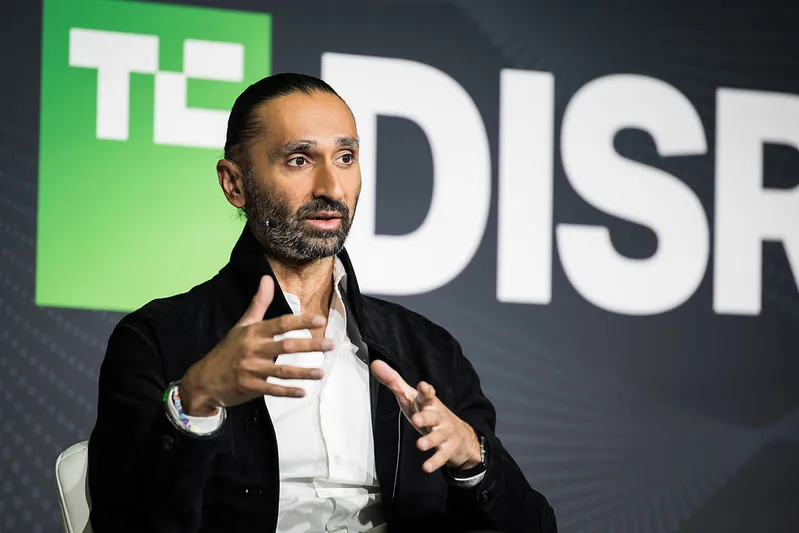
Silicon Valley thrives on speculative cycles, but the current generative artificial intelligence push requires capital on an unprecedented scale. Wall Street powerhouse Blackstone is positioning itself at the center of this transformation, putting its $1.3 trillion in assets under management to work even as chatter around AI infrastructure debt reaches a fever pitch. Speaking at TechCrunch Disrupt, Jas Khaira, senior veteran and head of the newly minted Blackstone N1 (BXN1) hub, tackled growing market anxiety head-on, arguing that doom-mongering predictions of a debt-fueled systemic crash miss the structural realities of the market.
AI infrastructure debt refers to capital borrowed by data centers and specialized neoclouds to procure high-performance GPUs and hardware. Industry leaders like Blackstone argue that default risks remain low because these loans are primarily backed by long-term compute contracts with investment-grade tech giants like Microsoft, Meta, and Google.<\/p>
- Debt Concerns Contextualized: Wall Street fears of an AI debt bubble ignore the creditworthiness of end-user hyperscalers like Microsoft and Meta.
- Pioneering Credit Models: Blackstone built market-defining structures using GPU collateral loans tied directly to guaranteed enterprise contracts.
- Macro Realignment: Widening credit spreads and rate volatility have cooled valuations, leading to canceled listings and recalibrated debt prices without signaling systemic failure.
- Full-Stack Play: Beyond credit, Blackstone's $1.3 trillion footprint spans venture investments in custom chips like Etched and joint ventures like Ode with Anthropic.
The shift from previous technology paradigms to generative AI represents a monumental capital realignment. Mobile apps and software-as-a-service (SaaS) startups scaled on modest seed rounds and capital-light cloud instances. Building artificial intelligence requires physical hardware, nuclear-adjacent power grids, and tens of thousands of specialized processors. Capital is king once again. For institutional giants like Blackstone, that capital requirement is not a threat—it is an unprecedented yield opportunity.
Anatomy of Neocloud Financing and GPU Collateral
To understand the current leverage in the market, one must examine the mechanics of neocloud financing. Neoclouds—specialized cloud service providers built specifically to rent out high-density GPU clusters—did not exist in their present form five years ago. Their explosive rise required a brand-new playbook for Wall Street lenders.
In 2023, shortly after the launch of ChatGPT triggered an unprecedented scramble for compute, specialized operator CoreWeave approached Blackstone for funding. At the time, CoreWeave was generating a modest $30 million in revenue with negligible profitability. Yet, Blackstone structured a massive $2.3 billion credit facility for the young firm. The trick? Leveraging GPU collateral loans grounded in non-cancelable customer commitments.
“One of the primary things that we’re looking to is the nature of the customer. And if the customer is an investment-grade customer—let’s say it’s Microsoft or let’s say it’s Meta—the risk gets priced relative to that customer,” Khaira explained during his stage appearance.
Lenders like Blackstone underwrote these loans not merely against the physical Nvidia chips—which depreciate rapidly as new architectures launch—but against the ironclad balance sheets of the hyper-scalers renting them. If a neocloud defaults, the underlying cash flow rests on multi-year, multi-billion-dollar compute leases backed by tech firms with hundreds of billions in liquid reserves. This credit framework allowed alternative asset managers to pump tens of billions in private credit into the ecosystem in under twenty-four months.
Navigating AI Infrastructure Debt Without Systemic Risk
As debt levels have expanded, skeptics have raised alarms. CoreWeave’s total debt burden alone has surged toward the $50 billion mark. Industry voices, including Altimeter Capital founder Brad Gerstner, publicly warned during recent financial media appearances that using hardware as collateral is becoming increasingly risky as debt loads mount and secondary GPU markets fluctuate. These concerns have sparked debates across global market channels like Bloomberg financial reporting.
However, Khaira firmly rejects comparisons between current compute lending and the systemic fragility seen in prior financial meltdowns. The fundamental difference lies in the balance sheets absorbing the risk.
- Investment-Grade Backing: The vast majority of underlying data center leases are held directly by mega-cap technology firms possessing pristine credit ratings and vast operational cash flow.
- Non-Bank Capital: Private debt accounts for a vast share of AI credit facilities, meaning potential losses are absorbed by sophisticated institutional investors rather than retail commercial banks.
- Secured Contracts: Unlike speculative real estate developments, tier-one AI data centers are typically pre-leased before ground is broken.
“This doesn’t feel like something where you’ve got 2008 banks that are shaky credits,” Khaira stressed. The structural stability of the current infrastructure push rests on the fact that the ultimate buyers of compute power happen to be the most profitable corporate entities in human history.
Cracks in the Armor: Collateral Value, Spreads, and Canceled IPOs
Dismissing systemic doom does not mean ignoring real-time market corrections. The cost of borrowing for AI projects has climbed noticeably in recent quarters. Macroeconomic volatility, persistent inflation figures, and recalibrated central bank rate expectations have pushed interest rates upward. Simultaneously, institutional lenders are demanding higher credit spreads over base rates to account for compute credit risks.
Even tech juggernauts with cash-rich balance sheets are paying a higher premium on new bond issuances. For neocloud startups, this rising cost of capital has triggered visible financial strain. CoreWeave saw its private market equity valuation pull back sharply in recent secondary transactions, while Australian GPU infrastructure provider Firmus was forced to shelve its highly anticipated $30 billion initial public offering on the ASX.
The Re-Pricing of Compute Debt
As Khaira acknowledged, capital markets are actively engaged in price discovery. The market is working out what a neocloud is worth when interest rates are higher and hardware generation cycles move every twelve to eighteen months. Cancellations like the Firmus listing simply prove that public markets are refusing to accept speculative valuations without clear paths to sustained free cash flow.
According to credit analysts tracked by Reuters macroeconomic analyses, widening spreads reflect healthy market discipline rather than financial contagion. Risk capital is pricing higher risk profiles appropriately, forcing weaker players to consolidate while solidifying the position of heavily capitalized firms.
Comparative Breakdown of Major Compute Deals
The scale and diversity of institutional capital pouring into AI hardware strategies highlights how private equity structures have evolved beyond conventional debt. The following table highlights prominent deals defining the sector’s current capital landscape:
| Entity / Deal | Structure Type | Capital Committed | Primary Asset / Collateral | Strategic Objective |
|---|---|---|---|---|
| CoreWeave (2023-2024) | Asset-Backed Credit Facility | $2.3B Initial ($50B Total Debt) | Nvidia GPUs & Microsoft / Meta Leases | Scale specialized GPU cloud rental network rapidly. |
| Firmus | Joint Credit Line (with Coatue) | $10 Billion | Data Center Infrastructure & Power Rights | Expand APAC compute capacity (IPO currently shelved). |
| Crux AI | Neocloud JV (with Google) | $5 Billion | Custom Google Tensor Processing Units (TPUs) | Commercialize Google custom silicon via third-party cloud. |
| Ode with Anthropic | Joint Venture (Hellman & Friedman) | $1.5 Billion | Engineering Talent & Enterprise Integration | Deploy forward-deployed engineers across 280 portfolio firms. |
Beyond Debt: Venture Bets, Custom Chips, and the Anthropic Pipeline
While lending makes headlines, the broader Blackstone AI strategy spans equity, venture capital, and operational execution. Earlier this year, the asset manager established Blackstone N1 in San Francisco, deliberately relocating key partners from Manhattan to the epicenter of generative AI development. BXN1 serves as the nerve center for coordinating the firm’s global AI exposure.
Blackstone’s direct strategy extends into custom silicon and alternative hardware architectures. The firm committed $5 billion to Crux AI, a specialized neocloud launched in partnership with Google designed to commercialize custom Tensor Processing Units (TPUs). By backing alternatives to standard GPU clusters, Blackstone is hedging against chip monopolies and lowering the cost per unit of compute.
Betting on Specialized Hardware Startups
The firm has also placed strategic venture equity bets on early-stage chip pioneers. Among its high-profile equity investments is Etched, a four-year-old startup building specialized microprocessors designed exclusively to run transformer-based AI models. If specialized Application-Specific Integrated Circuits (ASICs) outpace general-purpose GPUs in operational efficiency, firms with direct equity exposure stand to capture massive upside.
Bridging the Deployment Gap with Ode
Hardware without implementation yields no return. To address the deployment bottleneck facing traditional industries, Blackstone teamed up with Anthropic and Hellman & Friedman to form “Ode with Anthropic,” a $1.5 billion joint venture. Ode functions as an operational force multiplier, placing specialized, forward-deployed software engineers inside corporations to integrate frontier models directly into everyday operations.
The initial target deployment zone? Blackstone’s massive internal ecosystem of over 280 portfolio companies. By forcing rapid AI adoption across its owned real estate, healthcare, logistics, and financial services firms, Blackstone creates a proprietary feedback loop that improves operational performance while driving direct software consumption back to its portfolio partners.
The Sawtooth ROI: Enterprise Adoption Behind the Compute Surge
The central question confronting Wall Street is whether enterprise productivity gains will scale quickly enough to justify hundreds of billions in capital expenditure. Critics point to uneven software margins and slow enterprise enterprise software integration as proof that a massive bubble is forming.
Khaira offers a more nuanced, historical perspective on technology adoption cycles. Transformation does not follow a linear upwards curve. Instead, real-world technology integration moves in a distinct, jagged pattern.
Understanding the Sawtooth Pattern
In a sawtooth adoption curve, capital investment in core compute infrastructure surges forward in dramatic steps. This creates temporary periods where compute capacity appears underutilized or oversupplied relative to immediate enterprise software sales. Critics view these plateaus as evidence of a structural failure.
“There is definitely ROI, but it is uneven,” Khaira admitted during his address. “Technological adoption moves in a sawtooth-type pattern.”
During plateau phases, corporate IT departments, software developers, and operational leaders spend months re-architecting workflows, securing legacy data pipelines, and proving out security models. Once enterprise systems catch up to available compute capacity, demand spikes again, consuming the excess capacity and triggering the next infrastructure buildout cycle.
The Reality of Enterprise Payoffs
For large-scale corporations, return on investment is proving real, even if distributed unevenly across sectors:
- Customer Support & Workflows: Immediate, measurable labor efficiencies in customer-facing operations and automated document processing.
- Software Development: Significant code generation efficiencies that compress engineering project timelines by double-digit percentages.
- Deep Industrial Operations: Slower, complex integrations in supply chain logistics, predictive maintenance, and drug discovery that require months of custom validation before yielding clear bottom-line gains.
The current volatility in tech equity valuations and borrowing costs is not a death knell for AI infrastructure. It is the natural calibration of a market transitioning from initial speculative land grabs to disciplined corporate execution. Capital markets are requiring higher risk premiums, neoclouds are facing tighter credit terms, and software developers are working through the operational hard yards of real-world integration. For institutions with long-term capital horizons, the infrastructure foundation being laid today remains the most critical financial trade of the decade.
<button type="button" onclick="this.parentElement.innerHTML='✓ Thank you, we will refine our analysis!‘” style=”background:#ffffff; border:1px solid #cbd5e1; border-radius:6px; padding:4px 12px; font-size:12px; cursor:pointer; color:#334155;”>👎 No
