
Truth Under Lens: Scientific Photo Contest AI Scandal
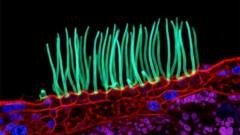
When Nikon announced the winner of its prestigious 15th annual Small World In Motion competition, the scientific community expected to celebrate a breathtaking glimpse into human biology. Instead, a high-profile scientific photo contest AI dispute broke out, casting a shadow over microscopic imagery. The winning submission—a mesmerizing, vividly colored video depicting microscopic, hair-like cilia beating inside the human airway—was stripped of its uncomplicated glory almost overnight. Researchers across the globe looked closer. What they saw was not just cellular mechanics, but signs of synthetic hallucination.
The controversy surrounding scientific photo contest AI integrity erupted when researchers flagged suspicious artifacts, sudden object pop-ins, and watermarks in Nikon's Small World In Motion winner. While post-processing and digital colorization are traditional practices in microscopy, using generative AI models to synthesize or hallucinate unseen biological structures violates contest rules.<\/p>
- Generative vs. Enhancement: Scientific imaging accepts digital contrast adjustments, but generative hallucination crosses ethical boundaries.
- Community Scrutiny: Peer review on social media led researchers to identify watermarks and structural impossibilities in the winning footage.
- Policy Re-evaluation: Major scientific competitions face immense pressure to modernize verification protocols against generative tools.
For fifteen years, the Nikon Small World In Motion contest served as a pristine bridge between rigorous optical science and visual art. Entry criteria were uncompromising: footage had to be captured through a microscope, preserving biological truth while exposing unseen worlds. But as artificial intelligence tools permeate digital processing pipelines, the line between enhancing real data and synthesizing fiction has blurred beyond recognition. Now, Nikon finds itself re-evaluating its top honor amidst an escalating firestorm over microscopy imaging standards and visual ethics.
Phantom Cilia: Anatomy of a Microscopy Scandal
The troubled entry arrived from Dr. Ning Xu, a researcher at Tsinghua University in China. Xu’s short film promised an intimate view of moving cilia from a child suffering a rare respiratory disorder. To the untrained eye, the clip was hypnotic. Cilia pulsed in vibrant, fluorescent hues against a dark background, moving with rhythmic cadence. Yet to specialized cellular biologists, the video raised immediate red flags.
Science relies on repeatability and physical constraints. Cilia move according to rigid mechanical laws dictated by microtubules and molecular motors. They do not magically dissolve into void space. They do not warp without anatomical cause. Shortly after Nikon broadcast the winner across its social media channels, domain experts began dissecting the footage frame by frame.
“Some of these structures simply pop in and out of existence. Cilia appear from nowhere and vanish without biological precedent. That isn’t how cellular physics operates under light microscopes.”
Edward Phelps, an associate professor at the University of Florida, publicly highlighted structural impossibilities in the submission. Microscopic structures appeared to render dynamically, behaving more like a diffusion model generating video frames than an optical lens capturing photons. Shortly thereafter, Ian Donovan, a doctoral candidate at UT Southwestern Medical Center, uncovered what appeared to be an even more damming anomaly: a faint, distinct watermark embedded inside the raw frame sequence, characteristic of proprietary synthetic generation engines.
The Fine Line Between Enhancement and Fabrication
To understand why this controversy strikes such a deep nerve, one must understand how scientific imaging operates. Microscopic samples are rarely bright or naturally colorful. Researchers routinely utilize fluorescent dyes, optical filters, and digital software to brighten faint signals or color-code distinct cellular compartments. This form of post-processing is completely standard, necessary, and permitted under contest rules.
However, an existential chasm exists between computational contrast enhancement and generative AI in science. Traditional digital enhancement alters pixel values based on direct light collection. Generative algorithms, by contrast, guess what pixels should look like based on billions of training images. When an algorithm guesses, it hallucinates. In consumer media, a hallucinatory detail adds artistic flair; in biological science, it constitutes falsified data.
Dr. Ning Xu responded to public critiques via LinkedIn, denying allegations that he manufactured the underlying biological event. Xu admitted to leveraging AI algorithms during image processing, arguing that machine learning served only “to distinguish and visualize features in the reconstructed grayscale images.” He maintained that neither the experimental subject nor the cilia motion were synthetically generated from scratch. Yet critics argue that when deep learning models reconstruct features, they inevitably introduce synthetic geometry that distorts physical truth.
Scientific Photo Contest AI Integrity Framework
The table below breaks down the technical spectrum of scientific imaging, contrasting ethical enhancements against problematic generative methods currently disrupting the research domain.
| Processing Method | Underlying Technology | Data Integrity Status | Scientific Contest Acceptance |
|---|---|---|---|
| Standard Fluorescence Staining | Chemical dyes & optical wavelength filters | 100% Authentic light data | Fully Permitted & Encouraged |
| Digital Deconvolution | Mathematical algorithms modeling light spread | High (Restores true optical focus) | Permitted with disclosure |
| Machine Learning Denoising | Trained neural networks targeting sensor noise | Moderate (Risk of minor smoothing artifacts) | Conditionally Allowed |
| Generative Diffusion/Synthesis | Predictive latent models (Text-to-Image/Video) | Zero (Creates non-existent visual data) | Strictly Forbidden |
Peer Review Moves to Social Media
Historically, accusations of scientific image manipulation unfolded slowly through university ethics committees or academic publishers like Nature. Today, rapid crowd-sourced analysis on platforms like LinkedIn, X, and PubPeer moves at lightspeed. Within 48 hours of Nikon’s announcement, two former contest judges publicly expressed deep skepticism regarding the authenticity of the winning footage.
This public breakdown highlights a growing vulnerability in scientific evaluation. Competition panels are routinely comprised of world-class scientists and photographic experts, yet few are equipped with real-time forensic tools designed to spot deepfake artifacts or neural rendering glitches. As generative models become hyper-sophisticated, human eyes alone can no longer reliably distinguish between authentic biological movement and AI-driven interpolation.
When Watermarks and Hallucinations Expose Synthetic Data
How did an entry containing potential synthetic markers bypass initial judging? The answer lies in the subtle nature of modern machine learning tools. Many software packages designed for biomedical image analysis now quietly incorporate deep-learning plug-ins. A researcher might believe they are simply hitting a “sharpen” or “denoise” button, unaware that the underlying software is using an adversarial network to invent missing details.
In Xu’s case, the presence of a visual artifact resembling an AI engine’s watermark suggests that generative software played a far more direct role than simple noise suppression. If an algorithm fills in blurry regions by pulling from a database of pre-existing cilia videos, the output ceases to be a record of the patient’s specific tissue. It becomes an algorithmic composite—an idealized hallucination.
Nikon responded to the burgeoning crisis by launching a formal investigation into the Chinese researcher’s raw data. The optics giant noted that Xu was “respectfully complying” with inquiries and had submitted supplementary technical logs to prove his methodology. Still, official statements remain cautious. Nikon initially asserted that no explicit rules had been violated, but promised an updated ruling as technical analysis concludes.
The Human Cost of Automated Hallucinations
Beyond the technical jargon and biological debates sits a human element. Competitions like the Nikon Small World in Motion contest carry profound weight. While the top cash prize sits at a modest $3,000, the career prestige derived from winning is priceless. It validates years of painstaking, isolated labor inside windowless microscopy labs.
Dr. Patrick Hickey, a microscopic photographer who secured fifth place in the 2024 contest, emphasized that the true reward lies in public connection and scientific validation. Photographers often spend hundreds of hours adjusting light paths, preparing delicate living tissue, and waiting for precise biological moments to unfold naturally.
“If you spend a lot of your time in a dark room looking down a microscope, it’s really nice to be able to show the public the incredible intersection between art and science. But if generative AI is allowed to cheat that process, it trivializes the genuine skill and effort of every honest researcher in the room.”
Hickey’s sentiment reflects a broad anxiety across the scientific community. If synthetic generation is permitted to compete alongside authentic optical capture, real experimental photography will quickly be outpaced. A neural network can render flawless, noiseless, perfectly exposed video in seconds. A human researcher working with live, dying cellular samples faces physical entropy, sensor noise, and natural imperfection. Equity demands absolute clarity in how rules are enforced.
Modernizing Verification in the Synthetic Era
The Nikon scandal represents a major turning point for image verification across research institutions, media publishers, and global art contests. Moving forward, relying on simple visual inspection is obsolete. Organizations must adapt by establishing rigorous digital provenance checks before announcing winners or publishing landmark papers.
Essential Protocols for Image Authenticity
- Mandatory Metadata Preservation: Submissions must retain unaltered EXIF, C2PA, or raw camera sensor logs detailing exact optical parameters and hardware configurations.
- Raw Capture Benchmarking: Finalists must provide unedited, uncompressed primary data files—including original multi-gigabyte stack sequences—for independent computational auditing.
- Forensic Neural Scans: Implementing automated detection tools that analyze pixel-level noise distribution, checking for synthetic spatial uniformity characteristic of generative diffusion.
- Algorithmic Disclosure Forms: Requiring authors to list every software binary, plugin, and machine-learning script used during post-processing.
The integration of machine learning into science is inevitable. Algorithms help us process massive datasets, map proteins, and detect faint astronomical signals. But when algorithms cross from analyzing data to inventing visual details, they threaten the foundation of scientific trust. Nikon’s ultimate verdict on Dr. Xu’s entry will set an undeniable precedent. As artificial intelligence advances, the scientific world must draw a firm line in the sand: pictures of reality must remain real.
<button type="button" onclick="this.parentElement.innerHTML='✓ Thank you, we will refine our analysis!‘” style=”background:#ffffff; border:1px solid #cbd5e1; border-radius:6px; padding:4px 12px; font-size:12px; cursor:pointer; color:#334155;”>👎 No
Latest Analytical Follow-up: For continuous developments on this subject, read our full investigation on How AI Harvest Prediction Tools Are Transforming Farming.
