
Can ‘Super Intelligence’ Rebranding Save the AI Industry?
The ink was barely dry, and apparently, neither was the spellcheck. When the world’s most powerful technology executives gathered at the White House to sign a new AI safety pact, the atmosphere was thick with performative gravity. Yet, the document they signed misspelled the name of the country hosting them. Beyond the typographical embarrassment lies a massive, calculated pivot in how the federal government intends to govern, or rather decline to govern, the rapidly evolving world of neural networks.
The new federal AI safety pact is a legally non-binding, voluntary agreement signed by major tech CEOs that rebrands artificial intelligence as 'super intelligence.' Rather than imposing strict regulatory limits, it serves as a symbolic, morally binding framework designed to encourage domestic innovation while bypassing formal legislative oversight.<\/p>
- The Rebranding Playbook: The transition from 'artificial intelligence' to 'super intelligence' is a deliberate rhetorical shift designed to frame the technology as a national asset rather than a societal risk.
- Legally Toothless: Described by the administration as 'morally binding,' the signed agreement lacks any formal enforcement mechanisms or legal penalties for non-compliance.
- Internal Administration Rifts: Despite public displays of unity, deep divisions persist between federal departments regarding the national security implications of specific AI developers.
For months, the narrative surrounding advanced computation was dominated by anxiety. Critics warned of displaced workforces, systemic bias, and existential risk. The political response was expected to be restrictive. Instead, a sudden shift has occurred. By executive decree, the term “artificial intelligence” is being phased out of the official federal lexicon, replaced by a more grandiose moniker: “super intelligence.” This linguistic pivot is not merely academic. It represents a coordinated effort to rewrite the rules of engagement between Silicon Valley and Washington.
Decoding the AI Safety Pact: Protection or Public Relations?
The centerpiece of this policy shift is the “Joint Commitment on Frontier Responsibilities.” Signed by a glittering roster of tech billionaires, the document outlines a shared vision for safe, patriotic technological development. However, analysts analyzing the text quickly noticed a glaring omission: any form of legal enforcement. The agreement is entirely voluntary. When pressed on how the government plans to hold signatories accountable, the administration offered a novel standard, describing the agreement as “morally binding.”
In the corporate world, moral obligations rarely survive a quarterly earnings call. Critics argue that the pact is a masterclass in regulatory capture, allowing tech giants to draft their own guidelines while avoiding formal legislative oversight. According to Bloomberg intelligence reports, the lack of concrete compliance metrics suggests the agreement functions primarily as a public relations shield for an industry facing growing antitrust and safety scrutiny.
“We are witnessing a transition from precautionary regulation to competitive acceleration. By framing the technology as an instrument of state power, the administration has effectively neutralized the push for restrictive safety laws.”
This shift is particularly evident when comparing the new American approach to international standards. While other jurisdictions are implementing rigid legal frameworks, the U.S. is betting on a collaborative, high-trust model designed to maximize development speed.
| Regulatory Framework | Legal Status | Primary Focus | Enforcement Mechanism |
|---|---|---|---|
| U.S. Joint Commitment | Non-binding / Voluntary | National competitiveness & voluntary safety | None (Public accountability) |
| EU AI Act | Legally Binding | Risk-based categorization & consumer protection | Fines up to 7% of global turnover |
| Biden 2023 Executive Order | Binding for Federal Agencies | Standards for safety, security, and privacy | Federal procurement rules |
The Rebranding of Machine Learning
Why the sudden obsession with the term “super intelligence”? The answer lies in the psychology of public perception. For years, the phrase “artificial intelligence” has been weighed down by negative associations. It conjures images of automated layoffs, deepfake elections, and algorithmic bias. It feels cold, corporate, and threatening to the average citizen.
“Super intelligence,” on the other hand, sounds like a national asset. It evokes the Space Race, the Manhattan Project, and the golden age of American industrial triumph. The message is subtle but powerful: artificial intelligence is a threat to your job; super intelligence is a shield for your country. By elevating the terminology, the administration hopes to build public support for massive federal investments and deregulation. This rhetorical strategy was formalized in a recent Reuters analysis of federal tech policy, which highlighted how linguistic framing is being used to bypass traditional legislative hurdles.
This rebranding effort culminated in the announcement of a new “Super Intelligence Force,” a specialized federal initiative tasked with integrating advanced computing into national defense and infrastructure. Much like the Space Force before it, this new entity is designed to project power and secure technological dominance, signaling to global rivals that the United States views advanced computation as a theater of conflict rather than a mere commercial market.
The Tech Executive Summit: Who Was in the Room?
The path to this agreement was anything but smooth. Just weeks prior to the summit, the administration’s stance on tech regulation was highly volatile. Prominent figures had dismissed safety advocates as political adversaries, arguing that any restriction on domestic development would hand an immediate advantage to foreign competitors. Yet, the allure of a unified front brought the industry’s fiercest rivals to the same table.
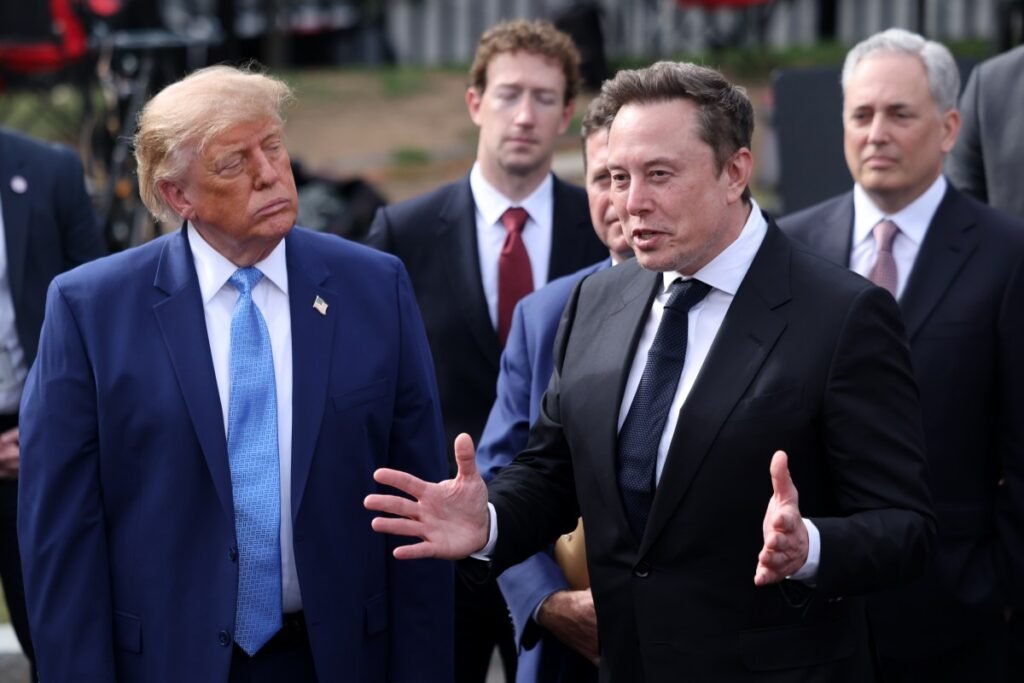
The guest list for the tech executive summit read like a who’s who of the digital economy. Mark Zuckerberg, Jeff Bezos, and Elon Musk were all present, sharing space with the founders of specialized research labs. The presence of these competing interests underscored the high stakes of the meeting. For these companies, participating in the drafting of a voluntary artificial intelligence executive order was a strategic necessity. It allowed them to shape the narrative before hostile regulatory bodies could impose external restrictions.
The Curious Case of Anthropic and National Security
Perhaps the most intriguing drama of the summit involved Anthropic and its CEO, Dario Amodei. In the weeks leading up to the event, the safety-focused startup found itself in a precarious position. The company had been vocal about the need for rigorous testing and guardrails, a stance that did not sit well with hawks within the administration.
The tension centered on the ongoing debate surrounding Anthropic national security applications. While some factions within the administration, particularly within the Treasury Department, viewed Anthropic’s safety-first methodology as a model for responsible deployment, others were highly skeptical. The Department of Defense and various national security commentators had publicly criticized the company, labeling its safety constraints as overly restrictive and potentially detrimental to military utility.
The ice reportedly broke during a late-night dinner between Amodei and administration officials, leading to his inclusion in the final signing ceremony. However, industry insiders suggest that this public reconciliation has not fully resolved the underlying ideological divide. The tension between rapid deployment for national defense and cautious testing for public safety remains one of the most significant fault lines in the industry.
The Geopolitical Imperative: Outpacing Global Rivals
Underlying the entire rebranding effort is a profound anxiety regarding international competition, particularly from China. The administration’s sudden pivot from skepticism of tech monopolies to active partnership is driven by the belief that the nation that leads in advanced computation will dictate the global order for the next century.
From this perspective, traditional frontier AI regulation is viewed as a luxury the nation cannot afford. If domestic developers are bogged down by compliance audits and safety certifications, they may fall behind state-subsidized competitors operating without such constraints. The non-binding nature of the new pact is a direct reflection of this geopolitical reality. It is designed to provide just enough public reassurance to quiet safety advocates while leaving developers free to innovate at maximum speed.
This strategy is not without risk. By relying on voluntary commitments, the government is essentially trusting private corporations to self-regulate on matters of national importance. If a major security breach or systemic failure occurs, the lack of formal regulatory oversight could lead to severe political and economic fallout.
A New Era of Corporate Self-Regulation
The signing of the agreement marks the beginning of a new chapter in the relationship between the tech sector and the state. By successfully rebranding the technology and securing a non-binding regulatory framework, Silicon Valley has achieved a major strategic victory. They have avoided the heavy-handed regulation that has stifled their European counterparts, while securing federal backing under the banner of national security.
Yet, the true test of this agreement lies ahead. As these systems become more integrated into critical infrastructure, finance, and defense, the distinction between public safety and national competitiveness will continue to blur. Whether a “morally binding” pact is enough to guide this transition safely remains to be seen. For now, the industry has bought itself time, freedom, and a powerful new vocabulary.
<button type="button" onclick="this.parentElement.innerHTML='✓ Thank you, we will refine our analysis!‘” style=”background:#ffffff; border:1px solid #cbd5e1; border-radius:6px; padding:4px 12px; font-size:12px; cursor:pointer; color:#334155;”>👎 No
Latest Analytical Follow-up: For continuous developments on this subject, read our full investigation on Inside the Pentagon Anthropic AI Ban: The Silent Split.
