
Sudan hospital attacks exposed by deep investigative report
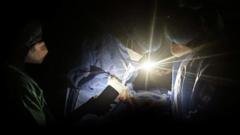
When the bombs fell on el-Fasher’s Saudi Hospital, the city’s remaining medical professionals did not panic. They adapted. On the day of one particularly fierce bombardment, medics performed a critical Caesarean section entirely by the meager illumination of mobile phone screens. It was a harrowing glimpse into the reality of Sudan hospital attacks that have devastated the region’s infrastructure over years of brutal conflict.
Sudan hospital attacks refer to the systematic destruction and shelling of medical facilities in el-Fasher and across Darfur by the Rapid Support Forces (RSF), leading to dozens of deaths, hundreds of injuries, and the near-total collapse of the local healthcare infrastructure during the ongoing civil war.<\/p>
- Systematic Destruction: Investigators recorded at least 43 separate attacks on healthcare sites in el-Fasher between May 2024 and October 2025.
- Devastating Toll on Medics: Between April 2023 and October 2025, data shows 120 medical workers injured, 55 killed, and 10 forcibly disappeared.
- International Condemnation: UN human rights chief Volker Türk noted these actions violate international humanitarian law and may constitute war crimes.
An extensive investigative report has uncovered compelling evidence that Sudanese paramilitary fighters systematically crippled el-Fasher’s healthcare network throughout a protracted siege and subsequent takeover. According to findings reviewed by international bodies, these aren’t merely collateral casualties of urban warfare. They point to a calculated strategy to dismantle the foundations of civilian life.
Unraveling the Siege of el-Fasher
For months, the ancient city of el-Fasher stood as a contested bastion in Sudan’s devastating civil war, which erupted in April 2023 between the Rapid Support Forces (RSF) and the national military. As the frontlines tightened, the city’s medical facilities became bullseyes. Investigators on the ground cataloged at least 43 separate strikes on hospitals and medical clinics between May 2024 and October 2025.
Many of these sites were hit repeatedly. When major institutions like the Teaching Hospital and the South Hospital were forced to close or shift locations, the alternate makeshift clinics and specialized pediatric wards were similarly shelled. The pattern was relentless. Medical professionals describe an environment where survival required moving operations underground into improvised steel container bunkers.
“The RSF started hitting these areas so citizens have no longer any way to stay there. It was intense. It was deliberate. It was planned.” — Dr. Muhamed Suliman, surgeon based in el-Fasher during the siege.
The human cost has been staggering. Data compiled from the conflict zones reveals that from April 2023 through October 2025, 120 medical workers were injured, 55 lost their lives, and another 10 were forcibly abducted or disappeared. International monitors, including UN human rights chief Volker Türk, have characterized these acts as serious violations of international humanitarian law, suggesting they may amount to war crimes.
The Collapse and Co-option of Medical Spaces
As facilities fell one by one, the burden shifted to the Saudi Maternity Hospital on the western edge of the city. By late 2025, it stood as the final operational medical stronghold. Doctors reinforced the walls with sandbags and improvised surgical suites, yet the aerial and artillery bombardment continued unabated. Drones tracked patient transfers, hitting transport vehicles and makeshift wards alike.
Industry watchdogs like global news agencies and humanitarian monitors have repeatedly documented the crumbling health framework across the nation. The World Health Organization (WHO) has noted that the assault on el-Fasher represents one of the most severe examples of conflict-driven healthcare destruction in modern history.
Data Breakdown: The Medical Toll in el-Fasher
The systematic dismantling of the local health architecture is reflected in the following timeline of targeted assets and personnel impacts:
| Metric Category | Recorded Figure | Context / Period |
|---|---|---|
| Targeted Healthcare Sites | 43 separate attacks | May 2024 to October 2025 |
| Killed Medical Staff | 55 professionals | April 2023 to October 2025 |
| Injured Health Workers | 120 individuals | April 2023 to October 2025 |
| Forcibly Disappeared | 10 workers | Captured during raids and sieges |
Denials and Rebuttals from the Ground
In response to the mounting evidence, the RSF and its civilian-backed administration have vehemently denied responsibility. Dr. Alaa Eldin Nugud, an RSF-backed health minister, argued that medical facilities such as the South Hospital had lost their protected status under international law by allegedly serving as military bases. Representatives pointed to weapon remnants and defensive infrastructure as proof of combat integration.
However, local physicians have strongly rejected these claims, maintaining that hospitals were entered exclusively to salvage equipment, treat civilian casualties, and preserve whatever remnants of life-saving care remained in a collapsing metropolis. Independent verification has consistently struggled to substantiate the paramilitary’s claims of military utility.
Looking Forward: A Fractured Future
Today, parts of el-Fasher’s medical infrastructure are slowly being reopened under new administrative oversight, with officials attempting to sanitize a bloody chapter through televised restorations. Yet for the survivors, the psychological and physical scars run far deeper than any coat of fresh paint can conceal.
As the conflict’s front lines migrate to other regions of the country, the structural wreckage left behind in Darfur serves as a chilling testament to the modern realities of warfare—where the healing arts are not spared, but weaponized.
<button type="button" onclick="this.parentElement.innerHTML='✓ Thank you, we will refine our analysis!‘” style=”background:#ffffff; border:1px solid #cbd5e1; border-radius:6px; padding:4px 12px; font-size:12px; cursor:pointer; color:#334155;”>👎 No
