
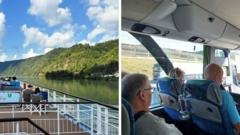
The Coach Tour Trap: Demanding European River Cruise Refunds
It was supposed to be the ultimate slow-travel luxury. A week of drifting past medieval castles, terraced vineyards, and historic European capitals, glass of local Riesling in hand, watching the continent glide by from the comfort of a French balcony. Instead, hundreds of holidaymakers who paid thousands of pounds for premium European river cruises this autumn found themselves trapped in a different kind of reality: staring at the back of a coach driver’s head for hours on end, traversing highways instead of waterways.
Passengers seeking European river cruise refunds for disrupted itineraries face significant hurdles. Under standard package travel regulations, operators can deny full refunds if they provide alternative transport, such as coaches, claiming these are 'minor' itinerary changes. However, if the core nature of the holiday is fundamentally altered, travelers may have grounds for compensation.<\/p>
- The Fine Print Loophole: Cruise operators frequently use standard booking conditions to substitute scenic sailing with long, exhausting coach journeys when river levels drop.
- Regulatory Gray Areas: Package travel regulations protect consumers, but defining what constitutes a 'significant alteration' remains a major legal battleground between travelers and operators.
- Climate Disruption: Record-breaking summer heatwaves are making low water levels on major European rivers like the Danube an annual operational crisis rather than an exceptional event.
A growing wave of passenger anger has put the spotlight on European river cruise refunds, exposing a stark divide between consumer expectations and the rigid legal frameworks of package holiday contracts. As climate change makes historic waterways increasingly unpredictable, travelers are discovering that when rivers run dry, their consumer rights often evaporate with them.
The Floating Hotel That Never Sailed
For Richard Pearson, a retiree from Lincolnshire, a long-awaited week-long holiday on the Danube aboard the Tui Isla turned into an exhausting logistical marathon. Having paid £3,300 for the trip, which departed on September 21, Pearson and his partner expected a seamless sailing experience from Budapest.
The reality hit immediately upon arrival. Passengers were informed that the Tui Isla was stuck in Vienna due to low water levels on the Danube and could not reach Budapest. Instead of boarding their luxury vessel, they were checked into what Pearson described as an “average” hotel. The following day did not bring a scenic cruise, but rather a grueling four-hour coach journey just to reach the ship.
“We spent 14 to 15 hours of that holiday on a coach trip, plus time wasted waiting for coaches. The main thing for us was it wasn’t relaxing. It wasn’t a river cruise; it was a little bit of sailing, a floating hotel with coach transfers.”
The disruptions did not end there. To make up for lost time, the vessel sailed primarily at night, depriving passengers of the daytime scenic cruising they had paid to experience. Day trips to iconic destinations were replaced by long bus rides from stationary ports, with passengers shuttled back and forth on journeys lasting up to two hours each way. Had Tui offered a refund prior to departure, Pearson is unequivocal: they would have stayed at home. He is now locked in a dispute with Tui, demanding a substantial partial refund.
The Birthday Milestone That Went Off Course
Pearson’s experience is far from isolated. Sue Crosby booked a cruise on the same vessel, the Tui Isla, to celebrate her 70th birthday. Her journey, which began on September 14, was similarly derailed by the low water levels Danube operators have been battling all season.
Unlike Pearson, Crosby received a revised itinerary a few days before departure, warning of extensive coach travel. Recognizing that a bus tour was not how she wanted to spend her milestone birthday, she immediately requested a refund. Tui refused, stating that the holiday would go ahead under standard booking conditions. Reluctantly, Crosby and her husband boarded the flight.
“We feel as though we’ve been had,” Crosby told reporters, pointing out that they experienced only two half-days of actual sailing. “It’s not the river levels themselves that frustrate me. It’s how they handled it, and the fact they’re still advertising the holidays now. We didn’t want to go on a tour on coaches every day.”
For some, the physical toll of coach travel made the revised trips impossible. David Mallon, who was due to travel in a group of six on September 21, decided to cancel entirely after reviewing the altered itinerary. One member of his party had specific health conditions requiring them to avoid prolonged sitting.
Faced with a choice between an unsuitable coach marathon and losing their money, Mallon’s group chose to walk away, booking a last-minute alternative holiday to Kos, Greece, out of their own pockets. Mallon is now preparing to take Tui to the small claims court to recover their lost thousands. “What they were planning to give us was not a cruise but a glorified coach trip,” he said.
The Climate Crisis Threatening Europe’s Waterways
The root of the issue lies in a changing climate. Summer heatwaves and prolonged droughts across Europe have left major river arteries, including the Danube and the Rhine, running historically low. According to reports from Reuters, these low water levels have disrupted commercial shipping and tourism corridors repeatedly over the last five years.
When water levels drop below critical thresholds, heavy river cruise ships risk scraping the riverbed or getting stuck entirely. Operators are forced to make split-second nautical decisions. However, while the weather is beyond the control of companies like Tui, critics argue that the industry’s response to these predictable seasonal patterns is deeply flawed.
Rather than canceling trips and triggering massive financial losses through automatic refunds, operators frequently choose to run “hybrid” itineraries. These rely heavily on coaches to bypass unnavigable stretches of the river, effectively turning a premium cruise into a bus tour while keeping the passenger’s money.
The Legal Battleground: Package Travel Regulations
Why can cruise lines legally refuse refunds when a trip is so fundamentally altered? The answer lies in the complex wording of package travel regulations cruise contracts.
Under consumer protection laws in the UK and Europe, passengers are entitled to a full refund if the organizer makes a “significant alteration” to the essential terms of the package before departure. The legal grey area, however, is what constitutes a “significant” change.
Cruise operators argue that because they still transport passengers to the scheduled destinations (such as Budapest, Vienna, and Bratislava) and provide the contracted accommodation and food on board, the core contract has been fulfilled. In their view, substituting a river sailing with a coach transfer is a “minor” operational adjustment covered under their standard booking conditions.
How Operators Compare on Low Water Policies
To understand how different companies handle these disruptions, it is helpful to look at the varying policies across the river cruise sector:
| Cruise Line | Policy on Low Water Disruption | Refund Eligibility |
|---|---|---|
| Tui River Cruises | Utilizes coach transfers, hotel stays, and altered sailing schedules to complete the itinerary. | Generally denied if destinations are still visited; handled under standard booking terms. |
| Viking River Cruises | Often uses “ship swaps” where passengers change to an identical vessel on the other side of the low-water stretch. | Offers future cruise vouchers or partial refunds depending on the severity of the disruption. |
| Scenic & Emerald | Provides proactive itinerary deviations, ship swaps, or alternative land tours. | Offers robust river-mist insurance policies that trigger refunds or credits if sailing is restricted. |
As shown in the table, while some premium operators offer structured compensation or “ship swaps” to maintain the cruise experience, others rely strictly on the fine print of their terms and conditions to limit financial liability, leaving passengers with little recourse but to accept the bus transfers.
The Industry Response: “Standard Booking Conditions”
When challenged over the growing volume of Tui Isla complaints, the operator pointed to the extreme weather conditions as the primary driver of the itinerary changes, defending their decision to proceed with the trips.
In an official statement, a Tui River Cruises spokesperson said:
“Extreme heat across Europe this summer caused low water levels on the Danube, affecting river cruise operators across the region. We review every sailing individually with our nautical partners. Customers on the Tui Isla departures on 14 and 21 September were sent revised itineraries before travelling. Where the ship couldn’t sail sections of the river, we arranged coach transfers, hotel stays and adjusted travel arrangements to minimise transfer times so customers could still visit destinations… We’re sorry some did not get the river cruise experience they had anticipated.”
This apology has done little to satisfy passengers who feel they paid for a premium maritime experience but received a budget coach tour. Consumer advocates argue that relying on “standard booking conditions” to force passengers into grueling road trips is damaging the long-term reputation of the river cruise industry.
How to Fight for Your Rights
If you find yourself facing major river cruise itinerary changes, you do not have to accept the first refusal from an operator. Here are the steps industry experts recommend to build a strong case for compensation:
- Document Everything: Keep a detailed log of your daily itinerary. Note down the exact hours spent on coaches, waiting for transfers, and the time spent stationary in ports versus actual daytime sailing. Take photos and videos.
- Object in Writing Immediately: If you are notified of major changes before departure, state clearly in writing that you do not accept the revised itinerary as it constitutes a significant alteration of the holiday you purchased. Demand a refund under package travel regulations.
- Gather Witness Contacts: If you are on a disrupted cruise, talk to fellow passengers. Swapping contact details and filing collective complaints can add significant weight to your case.
- Escalate to Trade Bodies: If the operator rejects your claim, escalate the matter to trade associations like ABTA or use independent Alternative Dispute Resolution (ADR) schemes.
- Consider the Small Claims Court: If all else fails, the small claims court remains a viable path. Judges will look at whether the holiday provided was substantially different from what was advertised and sold.
As climate volatility continues to reshape the travel industry, the battle over what constitutes a fair holiday experience is only going to intensify. For now, travelers booking European river cruises must read the fine print carefully—or risk trading their sun loungers for coach seats.
<button type="button" onclick="this.parentElement.innerHTML='✓ Thank you, we will refine our analysis!‘” style=”background:#ffffff; border:1px solid #cbd5e1; border-radius:6px; padding:4px 12px; font-size:12px; cursor:pointer; color:#334155;”>👎 No
