
Japan Beer Cartel Investigation: Inside the JFTC Price-Fixing Raid
Tokyo’s neon-lit izakayas are famous for their lively chatter, but a quiet anxiety now hangs over their sticky wooden tables. The catalyst is the sudden launch of the Japan beer cartel investigation, a regulatory earthquake that has shaken the foundations of the country’s beverage industry. In a coordinated sweep that caught the corporate world off guard, antitrust regulators descended upon the headquarters of the nation’s four brewing giants.
The Japan beer cartel investigation is a major antitrust probe by the Japan Fair Trade Commission (JFTC) targeting the nation's four largest brewers—Asahi, Kirin, Sapporo, and Suntory. The investigation focuses on suspected collusion and coordinated price increases implemented in late 2022 and early 2023, violating Japan's Antimonopoly Act.<\/p>
- Unprecedented Raids: The JFTC executed coordinated dawn raids on the headquarters of Japan's four dominant beer manufacturers: Asahi, Kirin, Sapporo, and Suntory.
- Collusion Allegations: Investigators suspect the companies coordinated price hikes in October 2022 and April 2023, using rising raw material costs as a cover.
- Market Consequences: Publicly traded brewers experienced immediate stock declines, while the probe threatens to fundamentally alter pricing dynamics in the Japanese beverage market.
- Broader Crackdown: This investigation follows similar antitrust actions in other Japanese consumer sectors, signaling a more aggressive regulatory stance against corporate price-matching.
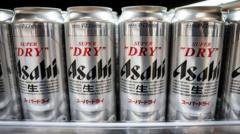
Asahi, Sapporo, Kirin, and Suntory Spirits—the undisputed titans of the Japanese beverage landscape—all confirmed that their offices were searched by the Japan Fair Trade Commission (JFTC). The allegations are grave: suspected collusion to artificially inflate the prices of their products. For a nation grappling with its most significant inflationary pressure in decades, the news has struck a highly sensitive public nerve.
The Dawn Raid That Shook Tokyo’s Corporate Elite
It was a coordinated strike. On a Wednesday morning, teams of JFTC investigators walked into the corporate offices of Japan’s most celebrated breweries. This was not a routine audit. It was an aggressive, evidence-gathering operation aimed at uncovering proof of a coordinated pricing cartel. The regulator is looking for evidence of communication, shared pricing strategies, and backroom agreements that may have bypassed free-market competition.
JFTC Secretary General Iwanari Hiroo was cautious yet firm when addressing the media. “I do not deny that an investigation is being conducted today, but I’d like to refrain from commenting on the details as a preliminary review is underway,” he stated. Despite the bureaucratic reticence, the scale of the operation speaks volumes. The JFTC rarely moves with this level of force unless it possesses credible, actionable intelligence.
“When the JFTC conducts simultaneous on-site inspections of an entire oligopoly, it suggests they have already established a baseline of suspicious communication or highly anomalous parallel pricing behavior.”
— Kenji Ito, Tokyo-based antitrust attorney
The reaction from the breweries was swift and uniform. All four companies issued public statements confirming the searches and pledging their absolute cooperation with the authorities. Kirin Holdings specifically noted that its subsidiary, Kirin Brewery Company, was searched on suspicion of Antimonopoly Act violations Japan. Suntory, meanwhile, apologized to its customers and business partners for the “concern or inconvenience” caused by the raid.
The Anatomy of the Alleged Cartel
To understand the gravity of the Japan beer cartel investigation, one must look back to the pricing decisions of 2022 and 2023. For decades, Japan was locked in a deflationary mindset. Raising prices was considered corporate suicide. However, the post-pandemic era brought a wave of global supply chain disruptions, soaring energy costs, and expensive raw materials like barley and aluminum.
In October 2022, and again in April 2023, the Big Four announced sweeping price increases across their product portfolios. At the time, the companies justified the hikes by pointing to external macroeconomic pressures. It seemed like a logical explanation. Every industry was raising prices. But the striking similarity in the timing, structure, and percentage of these price hikes raised red flags at the JFTC.
In a truly competitive market, companies usually attempt to undercut their rivals when costs rise, or at least delay price increases to capture market share. When an entire oligopoly raises prices in near-perfect lockstep, regulators suspect that the invisible hand of the market has been replaced by a hidden handshake.
Comparing the Big Four: Market Presence and Regulatory Exposure
The four companies under investigation control over 99% of the domestic Japanese beer market. Their products are ubiquitous, filling the shelves of every convenience store from Hokkaido to Okinawa. The table below outlines the market profile and immediate impact of the JFTC price fixing probe on these industry giants:
| Company | Publicly Listed | Immediate Stock Impact | Official Corporate Response Summary |
|---|---|---|---|
| Asahi Group Holdings | Yes (Tokyo Stock Exchange) | Significant drop post-announcement | Confirmed investigation; pledged full cooperation with the JFTC. |
| Kirin Holdings | Yes (Tokyo Stock Exchange) | Immediate share price decline | Acknowledged suspicion of Antimonopoly Act violations; assessing financial impact. |
| Sapporo Holdings | Yes (Tokyo Stock Exchange) | Sharp downward movement | Confirmed premises search; cooperating fully with regulatory requests. |
| Suntory Spirits | No (Privately Held) | N/A (No public shares) | Confirmed on-site inspection; apologized to stakeholders for the concern. |
The Legal Framework: Antimonopoly Act Violations in Japan
Japan’s Antimonopoly Act is designed to promote fair and free competition, protect consumers, and encourage the wholesome development of the national economy. Under this law, cartels and unreasonable restraints of trade are strictly prohibited. The JFTC has the authority to impose massive administrative surcharges on companies found guilty of price-fixing.
These surcharges are not mere slaps on the wrist. They are calculated as a percentage of the sales revenue generated from the affected products during the period of the cartel. For companies with billions of dollars in annual beer sales, a guilty verdict in the JFTC price fixing probe could result in catastrophic financial penalties that wipe out years of profit.
Furthermore, the legal jeopardy extends beyond corporate balance sheets. Individuals found to have initiated or participated in cartel activities can face criminal charges, including prison sentences. While criminal prosecutions of executives are relatively rare in Japan, the JFTC has shown an increasing willingness to refer egregious cases to the Public Prosecutors Office.
Market Fallout and the Asahi Kirin Sapporo Stock Drop
The financial markets reacted with predictable alarm. As news of the dawn raids filtered through trading desks in Tokyo, investors scrambled to dump shares of the listed brewers. The resulting Asahi Kirin Sapporo stock drop wiped out hundreds of millions of dollars in market value in a matter of hours. Investors hate uncertainty, and an antitrust investigation of this scale introduces a massive variable into future earnings projections.
Suntory, as a privately held conglomerate, was spared the immediate pain of a stock sell-off. However, the reputational damage could prove equally costly. In Japan, corporate reputation is paramount. Brand loyalty is deeply tied to trust, and allegations of exploiting consumers during a cost-of-living crisis could alienate a highly sensitive customer base.
Analysts specializing in Japanese beverage market trends suggest that the investigation could freeze any planned price increases for the foreseeable future. Brewers will be forced to absorb rising costs internally rather than risk further regulatory scrutiny, squeezing profit margins at a time when global raw material costs remain highly volatile.
A Pattern of Collusion? The Broader Regulatory Crackdown
This is not an isolated incident. The raid on the beer giants is part of a broader, highly aggressive campaign by the JFTC to root out anti-competitive behavior in consumer-facing industries. Just months prior, the regulator launched a similar investigation into alleged cartel activity among Japan’s major ice cream manufacturers, including household names like Meiji and Ezaki Glico.
For years, critics have argued that Japan’s corporate culture, characterized by close-knit industry associations and a preference for harmony over aggressive competition, naturally fosters informal price-matching. In the past, this was often dismissed as “industry alignment.” Today, under intense pressure to protect consumers from inflation, the JFTC is calling it what it is: collusion.
- The Ice Cream Probe: Investigating coordinated price hikes on popular frozen treats.
- The Utility Cartels: Recent massive fines levied against major electricity providers for carving up regional markets.
- The Beer Investigation: The most high-profile consumer goods probe in a generation, targeting products consumed by millions daily.
This shifting regulatory landscape suggests that the JFTC is abandoning its historically passive approach in favor of a Western-style antitrust enforcement model. The message to corporate Japan is clear: the era of quiet, industry-wide agreements on pricing is over.
What This Means for the Japanese Consumer
For the average Japanese citizen, beer is more than just a beverage; it is a cultural institution. The post-work drink is a cornerstone of social cohesion and corporate networking. Consequently, any artificial inflation of beer prices directly impacts the discretionary income of millions of households.
Japan is currently navigating a delicate economic transition. After decades of stagnant wages and falling prices, the country is finally seeing wage growth, but it is struggling to keep pace with the rising cost of daily necessities. If the JFTC proves that the country’s most powerful brewers conspired to artificially inflate prices, the public backlash will be severe.
Consumer advocacy groups are already calling for maximum transparency. There is a growing demand for the brewers to not only cooperate with the JFTC but to proactively lower prices if the investigation reveals that the previous hikes were unjustified. Whether the brewers will comply remains to be seen, but the pressure on them has never been higher.
The Road Ahead for the Big Four
The Japan beer cartel investigation is in its infancy, and a final resolution could take months, if not years. The JFTC will now meticulously analyze the digital forensic data, emails, and physical documents seized during the raids. They will look for the “smoking gun”—direct evidence of communication between executives regarding pricing schedules.
In the meantime, the Big Four must navigate a public relations minefield. They must convince a skeptical public that their pricing decisions were made independently and in response to genuine economic pressures, all while cooperating with a regulator that has them firmly in its crosshairs. The stakes could not be higher. For Asahi, Kirin, Sapporo, and Suntory, the battle to protect their reputations—and their bottom lines—has only just begun.
<button type="button" onclick="this.parentElement.innerHTML='✓ Thank you, we will refine our analysis!‘” style=”background:#ffffff; border:1px solid #cbd5e1; border-radius:6px; padding:4px 12px; font-size:12px; cursor:pointer; color:#334155;”>👎 No
