
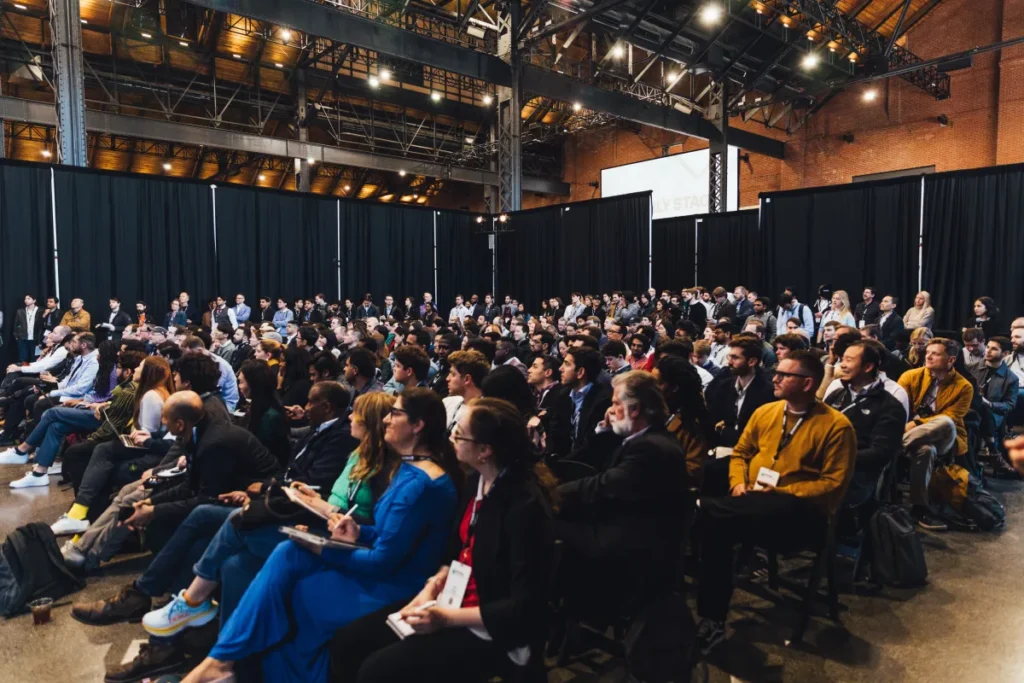
TechCrunch Founder Summit: High-Impact Networking for Startups
The traditional tech conference model is quietly breaking under its own weight. For years, founders have spent thousands of dollars to stand in cavernous, poorly lit convention halls, clutching lukewarm coffee, hoping to randomly bump into a venture capitalist who isn’t already swarmed by five hopeful entrepreneurs. It is noisy, inefficient, and frankly exhausting. In an economic climate where burn rates are scrutinized and capital deployment has slowed across early-stage rounds, passive networking is a luxury no founder can afford.
The TechCrunch Founder Summit is an exclusive single-day conference designed to connect early-stage entrepreneurs, venture capitalists, and industry experts. Held at Boston's SoWa Power Station, the summit provides structured networking, topic-driven roundtables, and actionable panels focused on scaling startups, securing venture capital, and achieving product-market fit.<\/p>
- Targeted Connections: Structured peer-to-peer sessions replace passive networking, allowing founders to address hyper-specific operational hurdles.
- Actionable Expert Access: Keynotes and teardowns with seasoned investors yield immediate, real-world strategic shifts.
- Regional Ecosystem Scaling: The summit showcases Boston's unique leverage point for technology, biotech, and hardware innovators.
- Long-Tail ROI: Offsite side events and curated Braindates extend the summit's impact far beyond the main stage.
Intentionality has become the new currency in tech. Enter the TechCrunch Founder Summit, taking place November 4 at Boston’s historic SoWa Power Station. Presented in partnership with Fidelity Private Shares, the event is built around a singular premise: networking should not be a game of chance. With just days remaining before doors open, founders across the northeast and beyond are finalizing their agendas for an intensive, output-driven day designed to reshape how young companies find advice, board members, capital, and co-founders.
Beyond the Standard Pitch: Why Intentional Tech Startup Networking Matters
Random encounters rarely lead to closed investment rounds. When founders look back at pivotal moments in their fundraising journey, the break-throughs almost always stem from targeted conversations rooted in specific operational challenges. Modern venture capital networking demands context before contact.
Early-stage entrepreneurs face an agonizing array of choices: when to pivot, how to optimize customer acquisition costs, and how to structure equity split among early hires. Hearing general advice from a stage helps, but applying that advice to a unique capital structure or target demographic requires dialogue. The structure of the TechCrunch Founder Summit strips away the performative fluff of typical trade shows, replacing casual small talk with structured, highly relevant peer exchanges.
“The most expensive mistake an early-stage founder can make is taking general advice for a highly specific problem. Structured dialogue cuts through the noise,” notes one venture partner evaluating early-stage software plays this quarter.
By organizing interaction around specific operational topics rather than generic job titles, the event creates a high-density environment where participants share genuine pain points. It isn’t about collecting hundreds of LinkedIn connections; it’s about walking away with two or three contacts who can genuinely help you solve a bottleneck the next morning.
The Braindate Model: Turning Casual Chatter into Strategic Assets
At the center of this intentional push is the Founder Summit Networking Lounge, powered by Braindate. Rather than leaving introductions to chance encounters near the coffee bar, attendees use the platform to publish specific questions, pitch topics, or host small group roundtables centered on niche operational problems.
Consider the difference in execution:
- Traditional Networking: Stepping into a room of 2,000 people, pitching your company in 30 seconds to someone who turns out to be a software vendor selling CRM software.
- Intentional Braindate: Pre-booking a 30-minute block with a founder who recently navigated seed-stage enterprise sales cycles, brought together by a shared question on sales pipeline velocity.
This micro-targeted approach ensures that every conversation begins with established common ground. Whether you are seeking early-stage founder advice on managing engineering burn rates or looking to bounce valuation expectations off an experienced operator, the interactions are anchored by immediate utility.
Furthermore, Braindate acts as a bridge between keynote presentations and practical execution. When attendees step off a stage session detailing debt financing structures, they do not simply file out into the street. They head directly to the lounge to meet peers wrestling with the exact same debt terms, comparing notes in real time.
From Product-Market Fit to Boston’s Local Ecosystem: Speakers Who Deliver
The speaker lineup at the summit reflects a hyper-focused approach to operational strategy. Key sessions bypass theoretical discussions to focus on practical application across distinct venture stages.
Kent Bennett, Partner at Bessemer Venture Partners, takes on the elusive concept of product-market fit. In a market where capital is disciplined and customer acquisition costs remain stubbornly high, understanding the metrics that signal real traction is non-negotiable. Bennett’s session offers attendees a chance to measure their unit economics against market benchmarks before taking those metrics into pitch teardowns later in the afternoon.
Concurrently, Chase Garbarino addresses the dynamics of building within the growing Boston tech ecosystem. Boston has long maintained a reputation as an institutional power center for life sciences, deep tech, and enterprise software. But building a company here presents unique advantages and regional challenges compared to Silicon Valley or New York. Garbarino’s insights provide a roadmap for leveraging local university research pipelines, tapping regional angel networks, and navigating localized talent retention.
Live pitch feedback sessions offer another layer of pragmatic value. Watching investors dissect real pitches in real time provides audience members with an unfiltered view into what VCs evaluate when evaluating risk, market sizing, and team execution. It takes the mystery out of the pitch deck, allowing founders to refine their presentations on the fly.
Comparative Breakdown: Traditional Tech Conferences vs. Targeted Summits
Understanding where to allocate time and conference budgets is a strategic decision for lean teams. The chart below contrasts traditional broad-spectrum conferences with curated operational summits like the TechCrunch Founder Summit.
| Evaluation Metric | Traditional Mega-Conferences | Curated Founder Summits |
|---|---|---|
| Primary Interaction Style | Passive auditorium listening & open hall wandering | Curated 1-on-1s, small group roundtables & interactive panels |
| Investor Access | Low (Investors often hidden in private VIP lounges) | High (Investors participate in open teardowns & scheduled Braindates) |
| Actionable ROI | Broad industry awareness and promotional swag | Direct solutions to immediate operational & funding bottlenecks |
| Participant Profile | Mixed (Vendors, job seekers, enterprise executives) | High-density (Founders, active angels, operational partners) |
| Follow-up Conversion Rate | Typically under 5% due to lack of shared context | Significantly higher due to pre-aligned interests |
The Ripple Effect: Side Events and Long-Term Ecosystem Value
The core programming inside Boston’s SoWa Power Station forms the nucleus of the day, but the surrounding momentum extends well beyond the official venue doors. Official side events hosted by venture funds, accelerator programs, and legal partners span the entire week across the city.
These off-site events serve as informal continuation chambers. A conversation started in an afternoon roundtable on SaaS pricing strategies frequently transitions into an evening dinner discussion hosted by regional operators. According to coverage on funding trends from Reuters, regional ecosystem density is often the deciding factor in how quickly early-stage companies secure seed and Series A bridge rounds.
For founders navigating the ongoing shifts in non-equity support, working with partners like Fidelity Private Shares offers practical infrastructure support. Early-stage mechanics—such as cap table management, equity compensation clearing, and investor reporting—frequently derail promising conversations if not handled cleanly from day one. Having access to service providers who understand early mechanics inside the Expo Hall bridges the gap between high-level pitch strategy and corporate administration.
Actionable Playbook for Attendees: Maximizing Your Four Days
With only four days remaining before the event kicks off, passive preparation won’t yield results. Maximize your event participation with these concrete steps:
1. Audit Your Immediate Bottlenecks
Before opening the event app, list your top three business hurdles. Are you struggling with developer hiring? Is your seed round stalling? Do you lack clarity on enterprise pilot pricing? Define these challenges clearly so you can book targeted Braindates around explicit needs.
2. Pre-Book Braindates Early
The most sought-after mentors, investors, and experienced founders fill their schedules quickly. Browse the Braindate marketplace immediately, post your own topic boards, and reserve 1-on-1 slots before landing at SoWa Power Station.
3. Refine Your Teardown Pitch
If you plan to ask questions during live pitch reviews or roundtable sessions, trim your company description down to 15 seconds. Focus on: the specific problem, your traction to date, and the precise metric you are currently trying to optimize.
4. Map Out the Side-Event Grid
Do not leave your evenings to chance. Research official side events across Boston throughout the week and secure RSVPs early. Often, the informal setting of a morning run or evening gathering solidifies partnerships initiated during daytime sessions.
Final Count: Securing Your Spot
Building a successful enterprise rarely happens in isolation. While deep work and product development are essential, breakthrough growth often comes from outside perspectives—a single candid conversation with an investor, a tactical pivot suggested by a peer who faced the same barrier, or an introduction to a strategic launch partner.
With four days left before the summit opens at Boston’s SoWa Power Station, the window to access early-bird pricing and secure pass discounts is closing. The TechCrunch Founder Summit offers a focused alternative to generic industry trade shows, giving early-stage leaders the practical tools, verified networks, and high-value strategies needed to scale effectively.
<button type="button" onclick="this.parentElement.innerHTML='✓ Thank you, we will refine our analysis!‘” style=”background:#ffffff; border:1px solid #cbd5e1; border-radius:6px; padding:4px 12px; font-size:12px; cursor:pointer; color:#334155;”>👎 No
Latest Analytical Follow-up: For continuous developments on this subject, read our full investigation on OpenAI PR Shift: Data Centers to AI Compute Campuses.
