
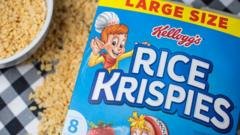
Kellogg’s Rice Krispies Recipe Change Signals Climate Shift
For nearly a century, the distinct auditory pop of puffed grain in cold milk defined British breakfast tables. That sensory trademark is entering a volatile new era. The recent Kellogg’s Rice Krispies recipe change across the United Kingdom marks a quiet yet profound turning point for global food manufacturing, proving that persistent climate volatility has finally breached the breakfast bowl.
The Kellogg's Rice Krispies recipe change replaces whole rice grains with a processed blend of corn flour and rice flour across the UK market. Driven by climate-induced crop failures in key Asian supply hubs, this alteration helps stabilize supply chains while introducing a new wheat gluten allergen alert on consumer packaging.<\/p>
- Ingredient Swap: Whole rice grains have been officially replaced with a combination of corn flour and rice flour across UK production lines for Rice Krispies and Coco Pops.
- Climate Driver: Severe weather patterns, amplified by the persistent El Niño phenomenon, crippled rice yields across Southeast Asia, squeezing commercial supply chains.
- Allergen Alert: The new flour blend introduces cross-contamination risks, requiring a mandatory 'contains wheat gluten' warning on updated cereal boxes.
- Geographic Split: North American consumers remain unaffected, as separate corporate ownership structures and localized sourcing shield US and Canadian inventory.
Faced with widespread crop failures across key agricultural hubs in Asia, parent firm Kellanova has officially abandoned the use of whole rice grains in its UK production lines for both Rice Krispies and Coco Pops. In their place, factory workers now mix extruded blends of corn flour and refined rice flour. The quiet substitution preserves shelf presence, but it fundamentally alters the heritage of one of the world’s most recognizable processed foods.
The Anatomy of a Reformulation
Corporate reformulations usually happen in secret. They are rolled out quietly to cut costs or tweak margins. Here, the situation was forced by environmental realities. According to official statements from company representatives, the updated recipes underwent rigorous internal evaluation to protect basic taste profiles and ensure compliance with UK health guidelines governing fat, salt, and sugar content.
The physical transformation, however, is impossible to fully disguise. Whole rice grains puff up naturally when subjected to high-pressure steam and heat. Extruded flour mixtures behave differently. They are pulverized, hydrated, pushed through industrial dies, and shaped artificially to mimic the classic grain form. The result is a slightly denser bite and a altered reaction when submerged in liquid.
Worse for sensitive consumers, the structural shift introduces unexpected health considerations. The new manufacturing protocol introduces cross-contamination risks, forcing Kellanova to print a mandatory allergen warning on every new UK box: contains wheat gluten. For decades, standard Rice Krispies served as a reliable fallback option for gluten-sensitive households. That utility has vanished overnight.
“When a global food powerhouse drops its primary raw agricultural input in favor of engineered flour blends, it isn’t an artistic choice—it is a emergency defensive maneuver against systemic agricultural shock.”
Despite the physical changes, the company insists that baseline nutritional values—including added fortification like iron, Vitamin D, and essential B vitamins—remain intact. No artificial colors, sweeteners, or synthetic flavorings were added to cushion the transition. Yet, for culinary purists and families dealing with dietary restrictions, the compromise is stark.
How Climate Volatility Broke the Grain Pipeline
To understand why a global conglomerate was forced to strip rice out of Rice Krispies, one must look at the drying paddies of Southeast Asia. The region yields more than 25 percent of the world’s total rice output. Over the past two years, this critical farming belt has endured an onslaught of environmental pressures driven by a historic El Niño cycle.
Extended heatwaves, erratic monsoon timings, and record-setting drought conditions crippled harvests across India, Thailand, and Vietnam. In response to domestic shortages, several major producing nations restricted export volumes to safeguard local stockpiles. Global market prices for raw grain spiked to fifteen-year highs, creating a severe agricultural supply chain disruption that caught international buyers off guard.
As reported by Reuters commodity tracking networks, regional yield compressions forced industrial food processors to outbid each other for shrinking volumes of food-grade grain. The math for multinational packaging operations broke down rapidly. Securing millions of metric tons of uniform, intact rice grains became economically unsustainable.
The World Meteorological Organization has repeatedly warned that deep climate cycles will continue disrupting equatorial agriculture well past 2026. For food executives looking at long-term procurement projections, waiting out the weather ceased to be a viable commercial strategy. Re-engineering the product became the only way to safeguard profit margins.
Corporate Splits and the Transatlantic Sourcing Divide
Interestingly, this ingredient shift stops at the Atlantic border. Consumers buying boxes in New York, Toronto, or Chicago will notice no changes to their cereal. Their Krispies remain crafted from real, whole-grain rice, sourced locally within North America.
This divide highlights the recent structural breakup of the original Kellogg Empire. In late 2023, the global giant split into two independent corporate entities:
- Kellanova: Manages global snacks, international cereals, and regional markets outside North America. It oversees the UK business and was recently acquired in a massive multi-billion dollar deal by confectionery giant Mars.
- WK Kellogg Co: Focuses strictly on North American cereal operations (US, Canada, and the Caribbean). This entity was later absorbed by Italian chocolate manufacturer Ferrero.
Because WK Kellogg Co relies primarily on domestic agricultural contracts across the Mississippi Delta and California’s Sacramento Valley, it escaped the immediate brunt of the Asian supply shock. The UK branch, operating under Kellanova’s supply web, had no such buffer. Exposed directly to volatile maritime freight routes and Asian spot-market pricing, the UK business adapted quickly to survive high food inflation in the UK.
Side-by-Side: Sourcing and Formula Divergence
The operational split between European and North American markets offers a striking case study in modern corporate risk management. The strategic differences between the two entities illustrate how supply chain geography dictates consumer reality.
| Market Parameter | United Kingdom (Kellanova / Mars) | North America (WK Kellogg Co / Ferrero) |
|---|---|---|
| Primary Base Ingredient | Extruded Corn Flour & Rice Flour Blend | Whole Grain Rice |
| Allergen Mandates | Contains Wheat Gluten Warning Required | Standard Allergen Protocols (Gluten-Free Claims Preserved) |
| Primary Crop Source | Varied International / Blended Grains | Domestic US Rice Basins (Arkansas, California) |
| Supply Chain Risk Profile | High Exposure to Asian El Niño Crop Failure | Moderate Local Climate Exposure; High Regional Contract Shielding |
| Industrial Processing Method | Flour Dough Extrusion & Re-shaping | Traditional Direct Steam Cooking & Puffing |
The Quiet Rise of Ingredient Substitution Culture
The alteration of breakfast cereal ingredients is not an isolated event; it represents a broader trend across the global consumer packaged goods (CPG) sector. As heat stress, flooding, and topsoil degradation impact key crops—from cocoa in West Africa to olive oil in the Mediterranean—manufacturers are turning to synthetic reformulations and flour-based fillers.
Industrial food scientists call this process “recipe agility.” Critics call it structural quality degradation. By shifting from specific raw commodities to generic, highly interchangeable flour bases, conglomerates build structural hedges against climate events. If corn prices skyrocket, the extrusion dies can be adjusted for wheat or tapioca with minimal factory downtime.
Financial analysts at Bloomberg financial analytics group highlight that such ingredient flexibility is becoming a core valuation metric for consumer staples companies. Firms that rely on single, unalterable raw inputs face significant earnings volatility during severe weather events. Those capable of swapping ingredients behind the scenes offer more predictable quarterly returns.
However, this flexibility comes at a cost to consumer trust. While executives praise these shifts as triumphs of food science and logisitical planning, shoppers often perceive them as quiet reductions in product quality. The degradation of simple, single-ingredient staples into multi-grain, extruded flour compounds accelerates the trend toward ultra-processed foods across Western pantries.
Long-Term Economic and Consumer Fallout
Can iconic consumer brands alter their fundamental architecture without burning through customer loyalty? The business history of food reformulations is filled with cautionary tales. When legacy brands modify texture or flavor profiles, consumers notice—even if focus groups suggest otherwise.
For the UK market, the ultimate test will be whether the product still crackles in the bowl. The unique acoustic pop of classic Rice Krispies relies on water vapor escaping thin structural walls of whole toasted rice. Extruded corn-and-rice dough bubbles differently, altering both the sound and how quickly the cereal turns soft in milk.
Key Operational Factors Driving Corporate Reformulation
- Volatile Commodity Pricing: Spot market prices for raw whole grains fluctuate wildly during regional climate disasters, making fixed-price retail contracts unprofitable.
- Flexibility in Sourcing: Flour formulations allow procurement teams to source generic grain stocks globally, avoiding reliance on specific growing regions.
- Divergent Regulatory Landscapes: Differing regional rules on labeling and trade tariffs make it easier to alter recipes in certain international markets before touching core domestic lines.
If climate volatility persists through the end of the decade, as meteorologists predict, this initial strategy will likely become standard industry practice. Expect to see traditional whole-grain products across multiple aisles quietly converted into processed flour blends. The era of cheap, stable, single-source agricultural commodities is rapidly ending.
For Kellanova, saving the iconic cereal required sacrificing the very grain that made it famous. As weather patterns continue to disrupt historic agricultural zones, food executives around the globe will be forced to make similar compromises. The snap, crackle, and pop of global supply chains may be changing, but corporate leaders hope shoppers will simply keep buying the box.
<button type="button" onclick="this.parentElement.innerHTML='✓ Thank you, we will refine our analysis!‘” style=”background:#ffffff; border:1px solid #cbd5e1; border-radius:6px; padding:4px 12px; font-size:12px; cursor:pointer; color:#334155;”>👎 No
Latest Analytical Follow-up: For continuous developments on this subject, read our full investigation on UK Interest Rates Set to Rise to 4% as Inflation Surges.
Latest Analytical Follow-up: For continuous developments on this subject, read our full investigation on David Jones Collapse: Aussie Retail Giant Enters Administration.
