
UK Brexit Reset on EU Food Rules: Voice Without a Vote
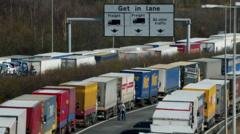
A single lorry departing an English warehouse bound for France currently carries more than just perishables. Packed alongside crates of fresh produce are up to 300 pages of administrative documentation: export health certificates, phytosanitary declarations, customs declarations, and official veterinary attestations. A single typo, an unverified Latin botanical taxonomy, or even an incorrect ink color on a rubber stamp can force an entire payload to sit idle at Dover for 24 hours—or be rejected entirely. This administrative gridlock has quietly choked cross-Channel commerce for years. Now, London is preparing to sign off on a pragmatic, if controversial, diplomatic compromise.
The upcoming Brexit reset on EU food rules allows the UK to participate in consultative shaping of European sanitary and phytosanitary (SPS) standards without holding formal voting rights. This alignment aims to eliminate costly border paperwork, dismantle 'Not for EU' labelling, and reduce consumer prices, while accepting EU regulatory authority.<\/p>
- Consultative Voice: The UK secures early-stage input into EU food policy decisions but surrenders formal voting power, accepting a structural role as an influential rule-taker.
- Massive Red Tape Reduction: Eliminating sanitary certificates and physical border checks is projected to inject £5 billion into the food sector and add 0.4% to broader UK GDP.
- Reversibility & Exit Clauses: The EU insists on strict exit mechanisms to protect itself against potential regulatory divergence under future Conservative or Reform UK administrations.
- Agricultural Tradeoffs: British farmers face complex choices between frictionless access to European supply chains and domestic flexibility on precision-bred crops and pesticides.
Under a newly negotiated framework, the British government is pursuing a comprehensive Brexit reset on EU food rules. The initiative promises to tear down border checks, eliminate onerous labelling laws, and inject billions back into the domestic economy. Yet, the arrangement highlights a stark geopolitical reality: the United Kingdom will be given a formal voice in shaping European sanitary and phytosanitary (SPS) regulations, but zero voting rights over the final laws governing its own supply chains. It is the definitive trade-off of post-Brexit economics—sacrificing absolute statutory sovereignty in exchange for economic liquidity.
Navigating the Brexit Reset on EU Food Rules: Sovereignty vs Market Access
The core philosophy of the reset is deceptively straightforward: align British food safety and veterinary standards with Brussels to bypass physical border checks entirely. Speaking from a Marks & Spencer food hall in central London, Minister for EU Relations Hamish Falconer acknowledged that the arrangement transforms the UK into an influential standard-seeker rather than a sovereign voting member. “We will have a voice in the room,” Falconer explained, stressing that British experts will directly participate in technical consultative processes before EU rules are finalized.
However, critics from opposition parties have seized upon this asymmetric dynamic. Opponents argue that binding British farmers and food manufacturers to regulations written in Brussels renders the nation a passive “rule-taker.” They argue this strips domestic enterprise of competitive autonomy. Former Conservative cabinet members and Reform UK representatives have fiercely condemned the reset, alleging it surrenders legislative independence without securing a veto over damaging regulations.
Supporters counter that absolute regulatory divergence was always an illusion for an island nation deeply reliant on its closest continental neighbor. “The truth is, almost every business in this country that wants to export food or drink will be aligning with EU rules because it’s our biggest market,” Falconer noted. Rather than maintaining a theoretical right to diverge that few exporters can afford to use, the government chooses to formalize commercial reality.
“Paperwork is a silent tax on the British dinner table. If choosing alignment over bureaucratic friction reduces shelf prices and restores export routes for iconic British goods, then insistence on dogmatic sovereignty becomes an expensive luxury.” — Senior Trade Policy Analyst
The High Cost of Administrative Friction
To understand why ministers are eager to accept Brussels’ conditions, one must examine the operational paralysis gripping UK food exporters since 2021. Small and medium enterprises (SMEs) have borne the heaviest burden. Regional delicacies like authentic Lincolnshire sausages have faced near-insurmountable export bans due to strict EU rules on un-chilled or processed meat imports from third nations. Kentish fruit growers shipping Cox apples have routinely seen prime harvests lose shelf-life while waiting for customs clearance.
The sheer scale of paper-based oversight created severe bottlenecks across major retail networks. Supply chain data indicates that major supermarket logistics fleets were spending thousands of labor hours per week managing compliance instead of distribution. According to industry assessments published by Reuters, cross-border agri-food trade volumes between Great Britain and the European Union collapsed by over a third in the years following the UK’s formal departure from the single market.
Under the proposed reset, these administrative burdens will be dismantled. The agreement aims to erase the requirement for physical health certificates, stand down costly border control posts (BCPs), and abandon controversial “Not for EU” stickers previously required on goods destined for Northern Ireland. Combined, these operational rollbacks are projected to yield massive financial savings.
Quantifying the Reset: Current Friction vs. Proposed Realities
The structural shifts proposed under the upcoming Friday summit will dramatically alter operational requirements for British exporters and importers alike. Below is a comparative overview detailing how the new framework changes the commercial landscape.
| Operational Vector | Status Quo (Post-Brexit Friction) | Proposed Reset Framework |
|---|---|---|
| Documentation Requirements | Up to 300+ pages per consignment (veterinary, health, SPS forms). | Streamlined digital declarations; physical SPS certificates abolished. |
| Border Physical Checks | Mandatory physical inspections and processing delays at ports. | Near-zero physical checks for compliant commercial logistics. |
| Northern Ireland Goods Transit | Dual-system segregation with mandatory “Not for EU” packaging labels. | Complete removal of internal UK internal market border labels. |
| Policy Development Influence | External third-country status; zero official input. | Formal consultative seat in EU technical committees (“Voice without a vote”). |
| Economic Projection | Depressed export volumes (down ~33% since 2019). | +£5bn direct food sector boost; +0.4% lift to total UK GDP. |
The Economic Equation: Weighing the £5 Billion Incentive
Macroeconomic realities have heavily driven London’s diplomatic pivot. The government calculates that streamlining UK EU food trade red tape through an aligned SPS agreement UK EU will directly add £5 billion to the agri-food economy. When combined with associated sub-deals—including emissions trading scheme (ETS) linking and mutual youth mobility arrangements—the entire summit package is estimated to boost overall UK Gross Domestic Product by 0.4%.
For context, in an environment characterized by sluggish national growth, high public debt, and persistent inflation, a 0.4% GDP expansion represents a significant windfall. Supermarket executives have quietly lobbied for this alignment for months. Lowering compliance overhead reduces wholesale import costs, allowing retailers to pass margin savings down to consumers struggling with cost-of-living pressures.
The EU Exit Clause: A Guardrail Against Political Whiplash
However, Brussels is not granting these concessions unconditionally. European negotiators, scarred by years of erratic political shifts in Westminster, have insisted on embedding a robust, structural “exit clause” into the treaty. EU officials remain anxious about the potential for a future Conservative or Reform UK administration to unpick the reset, leaving European authorities holding the bill for dismantled border facilities.
If a future UK government decides to break away from post-Brexit regulatory alignment, the exit clause automatically activates. It allows the European Union to immediately re-impose full third-country SPS checks without delay. Furthermore, it protects the EU from financial exposure related to rebuilding border inspection infrastructure at ports like Calais and Rotterdam. Falconer candidly acknowledged Brussels’ caution, calling the EU’s demand for protective machinery “reasonable” given the persistent political rhetoric in London.
Agriculture at the Crossroads: Gene Editing and Pesticide Conundrums
While food retailers welcome the friction-free horizon, the UK agricultural sector remains cautious. Tom Bradshaw, President of the National Farmers’ Union (NFU), has described the upcoming agreement as a moment of “opportunity and risk.” Farmers have seen their European market share systematically eroded since 2019, making border relief urgent. Yet, the terms of alignment spark deep technical concerns.
The primary sticking point centers on scientific innovation—specifically, precision breeding and gene editing. UK research institutions have positioned themselves at the global forefront of agricultural technology. British scientists are currently field-testing gene-edited tomatoes engineered to hold high concentrations of Vitamin D, as well as disease-resistant crop strains designed to drastically reduce reliance on chemical sprays.
“We cannot afford to trade away British scientific innovation for short-term logistics relief. If alignment forces us to turn our backs on precision breeding, we risk stranding our agritech sector in the past.”
Historically, the European Union maintained rigid, highly precautionary regulations governing genetically modified organisms (GMOs) and gene-edited crops. Although Brussels has recently moved to relax its stance on new genomic techniques (NGTs), structural discrepancies remain. If the UK binds itself strictly to European standards, domestic farmers fear they may be forced to abandon cutting-edge precision breeding tools, placing them at a competitive disadvantage against producers in North and South America.
Pesticide usage presents a similar ideological battlefield. UK producers are eager to understand what transitional carve-outs minister Falconer has managed to secure. If alignment requires immediate re-adoption of every banned European active substance list, certain UK crop yields could drop overnight. As Bradshaw observed, a “pragmatic” approach must prevail—one that recognizes the unique structural traits of British farming while securing continental commercial routes.
Dispelling Myths: The Great Smoky Bacon Crisp Controversy
The political debate around the Brexit reset has also fueled cultural anxiety, often driven by public misunderstanding. Chief among these was a viral rumor alleging that closer alignment with EU food safety regulations would lead to a total ban on smoky bacon crisps across the British Isles—a national snack staple.
The panic stemmed from genuine European health directives targeting specific artificial smoke flavorings linked to potential genomic toxicity. Political commentators quickly framed the prospective ban as evidence of overbearing continental nanny-statism invading British pantries under the guise of harmonisation.
Falconer took direct aim at the rumor mill during his media briefing. “I want to take this opportunity to absolutely stamp down on misinformation about smoky bacon crisps,” he stated flatly, seeking to defuse the culture war narrative. He pointed out that premier snack manufacturers—including household brands like Walkers and Frazzles—had already proactively reformulated their ingredient profiles to conform with EU toxicological thresholds months ago.
This voluntary corporate adaptation highlights a key reality of modern international commerce: multinational consumer goods companies rarely manufacture separate product formulations for small regional markets if a unified, higher-standard recipe grants access to a trading block of 450 million consumers. Corporate bottom lines had already settled the smoky bacon debate long before politicians stepped up to the podium.
The Broader Geopolitical Calculus
This pragmatic shift on SPS regulations is not occurring in isolation. It forms the vanguard of a broader recalibration of UK foreign and economic policy. As reported by Bloomberg, global trade disruptions and shifting geopolitical alliances have forced London to reassess its economic insulation. Re-establishing seamless trade links with Europe provides immediate stabilization against international market volatility.
By resolving the food trade impasse, Prime Minister Andy Burnham’s government hopes to generate diplomatic capital that can be deployed across other critical sectors: financial services integration, cross-border energy trading, security data-sharing, and defense industrial cooperation. The food reset serves as an acid test. If London can demonstrate maturity as a reliable, aligned partner without throwing domestic policy into chaos, larger bilateral agreements will follow.
Yet, domestic political risks remain potent. The Conservative opposition and Reform UK have signaled that any agreement surrendering statutory authority without voting privileges will form a core pillar of their electoral messaging. They calculate that public anxiety over sovereign independence can be reignited if the UK experiences localized economic friction due to an un-voted EU directive.
A Calculated Gamble on Economic Realism
As negotiators put the final touches on the Friday summit draft, the United Kingdom stands at a pivotal economic crossroad. The narrative of absolute regulatory divergence—the promise that post-Brexit Britain would chart an entirely independent legislative course free from European influence—has confronted the unforgiving arithmetic of global supply chains.
The proposed Brexit reset on EU food rules represents a deliberate choose-your-tradeoff policy. It trades theoretical legislative supremacy for tangible economic speed. British officials will sit in European committee rooms, offering expert analysis, arguing for domestic interests, and attempting to shape the regulatory climate at its inception. But when the final votes are cast, London will wait outside the room, bound by the decisions made within.
For supermarket executives watching logistics costs drop, for hauliers watching border queues evaporate, and for shoppers looking for cheaper food on the shelves, that trade-off may seem entirely worthwhile. For those who view sovereign autonomy as absolute and non-negotiable, it remains a bitter pill. Whether this reset becomes a blueprint for lasting economic recovery or a catalyst for political backlash depends on what happens when the first un-voted EU directive lands on a British minister’s desk.
<button type="button" onclick="this.parentElement.innerHTML='✓ Thank you, we will refine our analysis!‘” style=”background:#ffffff; border:1px solid #cbd5e1; border-radius:6px; padding:4px 12px; font-size:12px; cursor:pointer; color:#334155;”>👎 No
