
Spain Train Crash: Fatal Tragedy Claims 69 Lives Near Urda
A catastrophic morning on the tracks of central Spain has left a nation in mourning. At least 69 people are confirmed dead and more than 100 injured—many critically—following a violent Spain train crash near the town of Urda on Wednesday morning. The tragedy unfolded when a high-speed passenger train operated by state rail provider Renfe collided headlong with a stationary train belonging to private operator Iryo on the exact same line.
The deadly Spain train crash occurred near Urda on Wednesday morning when a high-speed Renfe passenger train collided with a stationary Iryo train sharing the same track. The impact killed at least 69 people, injured over 100 others, caused widespread derailments, and triggered an immediate national forensic and safety investigation.<\/p>
- Catastrophic Impact: At least 69 people died and more than 100 sustained injuries after a high-speed Renfe express crashed into a stationary Iryo train near Urda.
- Prominent Victims Identified: The deceased include former Employment Minister Fátima Báñez, 24-year-old long-jump athlete Julieta Gallego, and Civil Guard officer José Manuel Chacón.
- Urda Rail Disaster Context: This marks Spain's worst rail tragedy since the Santiago de Compostela derailment in 2013 and the second major rail incident in the country this year.
- Investigation Underway: Authorities are examining signaling failures and automatic train protection protocols to determine why two trains occupied the same line.
The force of the impact tore through multiple carriages, throwing wreckage across the right-of-way and buckling heavy steel frames like aluminum cans. Emergency crews worked relentlessly through twisted metal and debris, battling against time to extricate survivors trapped beneath fallen overhead lines. As night fell over La Mancha, rescue operations shifted into a grim recovery effort, with fears lingering that the casualty figures could rise as heavy lifting equipment shifts derailed sections.
Prominent Figures Lost in the Urda Rail Disaster
As news of the catastrophe spread, the human dimensions of the disaster began to emerge. Among those lost were figures from Spanish public life, elite sports, law enforcement, and civil service—a striking snapshot of everyday passengers caught in a split-second tragedy.
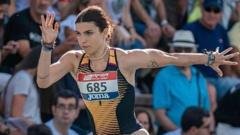
Julieta Gallego: A Rising Star Extinguished
At just 24 years old, long jumper Julieta Gallego was a well-known presence across Spain’s athletic tracks. A key athlete for the Madrid-based AD Sprint club, Gallego consistently represented her team in national club championships, boasting a personal best jump of 5.9 meters (19ft 3in).
Her club confirmed her death in a poignant message on social media, writing simply: “The entire club is heartbroken.”
“Today, the sport mourns the passing of Julieta, a life ahead of her that has been unjustly extinguished. It is a blow that strikes at the very heart of the athletics family.”
— Raúl Chapado, President of the Royal Spanish Athletics Federation (RFEF)
Friends and rivals alike remembered Gallego not only for her athletic tenacity on the runway, but for her quiet leadership among younger teammates in Madrid.
Fátima Báñez: Trailblazer in Spanish Politics
The tragedy also claimed Fátima Báñez, 59, a pivotal figure in modern Spanish governance. Báñez made history as the first woman to serve as Spain’s Minister of Employment and Social Security, holding the post under Prime Minister Mariano Rajoy from 2011 to 2018. During her tenure, she navigated the fallout of the eurozone debt crisis and spearheaded the landmark 2012 labor reforms.
At the time of her death, Báñez served as president of the Spanish Confederation of Business Organizations (CEOE). The business advocacy group issued an official statement honoring her legacy, noting that her warmth, generosity, and public commitment left an indelible mark across the Spanish private sector.
Political leaders across the spectrum expressed shock. Madrid regional president Isabel Díaz Ayuso lauded Báñez as a titan of public policy, emphasizing that Spain had lost an irreplaceable public servant.
Honoring Public Servants and Legal Experts
The casualty list reflects a cross-section of professionals whose lives ended abruptly in the crash:
- José Manuel Chacón (31): A dedicated officer of the Civil Guard whose death was formally confirmed by the law enforcement agency with deep condolences to his surviving family.
- Antonio Montero Domínguez: A respected finance and tax lawyer and former tax authority inspector (2012–2016), remembered by legal publication El Derecho as a meticulous professional who devoted his life to tax compliance and public ethics.
Inside the Scene: Disaster near Urda
The physical destruction at the crash site presented immediate logistical nightmares for first responders. Witnesses described a sudden, terrifying deafening roar followed by severe deceleration that sent luggage, glass, and seats flying through passenger compartments.
Uncertainty gripped families as nearby regional hospitals in Toledo, Ciudad Real, and Madrid received dozens of trauma patients. Dozens of frantic relatives traveled from terminal to terminal searching for news. To manage the overwhelming intake, authorities directed forensic operations to Toledo’s primary forensic institute, where medical examiners are collecting DNA samples from grieving relatives to establish positive identifications.
“The speed of the impact transformed high-speed engineering into an unrecognizable tangle of steel. Our immediate focus remains supporting families through the agonising identification process.”
— Local Emergency Response Coordinator
Data Breakdown: Anatomy of the Collision
Understanding the scale of the Renfe Iryo collision requires analyzing key parameters of the event against historical precedents in Western European rail transport.
| Metric / Parameter | Details & Operational Context |
|---|---|
| Location | Near Urda, Toledo Province, Castile-La Mancha, Spain |
| Trains Involved | Renfe High-Speed Express vs. Stationary Iryo Passenger Train |
| Confirmed Fatalities | 69 (As of latest forensic updates) |
| Reported Injuries | 100+ (Multiple severe trauma cases) |
| Forensic Center | Main Forensic Institute, Toledo (DNA matching site) |
| Historical Benchmark | Worst Spanish rail event since 2013 Santiago de Compostela crash |
Technical Scrutiny: Signaling and Deregulation Under Fire
How could two modern trains end up on the exact same line? That is the critical question now facing investigators from the Commission for the Investigation of Railway Accidents (CIAF). Spanish high-speed rail infrastructure, managed by Adif, is widely regarded as among the most technologically advanced in Europe, equipped with European Rail Traffic Management System (ERTMS) level signaling designed explicitly to prevent dual occupancy on active tracks.
Industry analysts point out that recent years brought significant structural changes to Spanish railways. The market opening allowed private competitors like Iryo to operate along routes traditionally reserved exclusively for state operator Renfe. While competition lowered ticket prices and expanded passenger volumes, technical integration across distinct operating companies demands absolute precision in dispatch protocols, interlocking systems, and track-side sensors.
Journalistic reporting from global outlets such as Reuters and coverage monitored by Bloomberg highlight that railway unions had previously raised questions regarding maintenance schedules and signaling software updates along central corridor intersections.
Key Investigation Questions
- Signal Failure vs. Human Error: Did an automated signal falsely indicate a clear block to the oncoming Renfe train, or was there an unauthorized override?
- Stationary Train Protocols: Why was the Iryo train stopped on a main line without an established buffer zone or automatic warning broadcast to approaching traffic?
- ERTMS Functionality: Did automatic train stopping mechanisms fail to engage when the distance between the two vehicles closed below critical thresholds?
Sponsors
A Nation Demands Answers
This event represents the second major rail incident in Spain this year, throwing rail governance into acute political focus. Grief is rapidly giving way to public fury across a politically divided nation. Citizens and parliamentarians alike are calling for transparent inquiries into track maintenance standards, signaling reliability, and operational coordination between competing carriers.
As Toledo’s forensics team continues its somber work and hospital staff treat the injured, Spain stands united in grief for the 69 lives lost in the Urda rail disaster—from promising young athletes like Julieta Gallego to seasoned public figures like Fátima Báñez. The technical findings in the days ahead will not restore those lives, but they are essential to ensuring that Spain’s rail network regains the trust of the millions who rely on it every day.
<button type="button" onclick="this.parentElement.innerHTML='✓ Thank you, we will refine our analysis!‘” style=”background:#ffffff; border:1px solid #cbd5e1; border-radius:6px; padding:4px 12px; font-size:12px; cursor:pointer; color:#334155;”>👎 No
