
Trump Midterm Dividend Promise: The $1.3T Economic Gambit
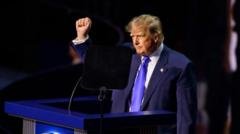
In an unprecedented escalation of electoral economics, the newly unveiled Trump midterm dividend promise has sent shockwaves through the American political landscape, offering a direct $5,000 payout to every adult citizen if Republicans secure both chambers of Congress. This massive $1.3 trillion proposal arrives at a critical juncture, as the United States grapples with severe inflationary pressures, domestic economic anxiety, and an active geopolitical conflict in the Middle East. The announcement, delivered at the Republican party’s first-ever mid-term convention in Dallas, Texas, represents a bold attempt to reframe the upcoming elections as a direct referendum on household purchasing power.
The Trump midterm dividend promise is a proposed $5,000 direct payout to every adult American citizen, contingent on a Republican sweep of both chambers of Congress in the upcoming midterm elections. Costing an estimated $1.3 trillion, the proposal aims to offset rising energy costs driven by geopolitical conflicts.
- Unprecedented Fiscal Scale: The proposed $5,000 payout would cost approximately $1.3 trillion, representing one of the largest single-disbursement fiscal proposals in United States history.
- Geopolitical Linkage: The proposal is explicitly framed as a counterweight to inflation and high energy prices caused by the ongoing conflict with Iran and the closure of the Strait of Hormuz.
- Legal and Constitutional Hurdles: While critics raise concerns over federal vote-buying statutes, legal experts suggest the promise is protected under the First Amendment as a generalized campaign platform.
- Inflationary Risks: Economists warn that injecting $1.3 trillion of direct liquidity into an already inflationary economy could trigger severe monetary tightening and worsen long-term price instability.
1. Executive Summary & Strategic Importance
The strategic timing of the Trump midterm dividend promise cannot be overstated. By tying a tangible, high-value financial reward directly to the outcome of the midterm elections, the proposal seeks to bypass traditional policy debates and appeal directly to the immediate financial interests of voters. At a cost of $1.3 trillion, the plan targets approximately 270 million adult Americans, promising a substantial cash injection to offset the rising cost of living.
However, the proposal is not merely an isolated domestic policy initiative; it is deeply intertwined with a volatile global landscape. The ongoing conflict with Iran, which began in February, has severely disrupted global energy markets. The subsequent closure of the Strait of Hormuz—a vital maritime artery through which roughly 20% of the world’s petroleum flows—has triggered a sharp spike in oil and gas prices. By positioning the $5,000 dividend as a necessary cushion against these geopolitical headwinds, the administration is attempting to convert foreign policy challenges into a domestic political mandate.
For key stakeholders, including financial institutions, corporate enterprises, and everyday consumers, the stakes are remarkably high. If implemented, a stimulus of this magnitude would dramatically alter the trajectory of the U.S. economy, influencing everything from consumer spending patterns to the Federal Reserve’s monetary policy. Consequently, understanding the operational, legal, and macroeconomic dimensions of this proposal is essential for navigating the complex economic landscape ahead.
2. Historical Background & Contextual Evolution
The concept of leveraging direct financial incentives for electoral gain has a long and storied history in both global and American politics. While critics have quickly labeled the current proposal as an unprecedented attempt to influence voters, political scientists point to several historical precedents where direct economic benefits were tied to legislative or electoral outcomes.
In the modern era, the most direct precursor occurred during the 2021 Georgia Senate runoff elections. In that contest, Democratic candidates campaigned heavily on the promise that electing a Democratic majority would result in the immediate passage of $2,000 pandemic relief checks. The strategy proved highly effective, demonstrating that explicit, quantifiable financial promises could serve as powerful mobilizers for voter turnout. On a state level, the Alaska Permanent Fund Dividend has operated for decades as a mechanism for distributing state resource revenues directly to citizens, establishing a cultural precedent for the concept of a public “dividend.”
This is also not the first time Donald Trump has proposed direct financial distributions. During his first term, he advocated for direct stimulus payments during the COVID-19 pandemic and later proposed $2,000 checks funded by tariff revenues. The evolution from crisis-driven relief to a proactive electoral platform represents a fundamental shift in how fiscal policy is utilized in American campaigns. By framing the $5,000 payout as a “dividend” rather than welfare or relief, the proposal attempts to tap into a sense of national ownership, suggesting that citizens are entitled to a share of the nation’s wealth, particularly during times of geopolitical crisis.
3. In-Depth Technical & Policy Breakdown
To fully evaluate the feasibility of the Trump midterm dividend promise, it is necessary to dissect the technical, legal, and operational mechanisms required to execute a $1.3 trillion fiscal deployment.
The Legislative and Fiscal Mechanics
Under the United States Constitution, the power of the purse resides strictly with Congress. For the “Trump Dividend” to become a reality, several legislative milestones must be met:
- Congressional Authorization: Even if Republicans win both the House of Representatives and the Senate, a formal appropriation bill must be drafted, debated, and passed by both chambers.
- Funding Sources: The proposal currently lacks a defined funding mechanism. To raise $1.3 trillion, the government would either need to dramatically increase the national debt, implement sweeping spending cuts across other federal programs, or introduce new revenue-generating measures, such as tariffs or taxes.
- Distribution Infrastructure: The distribution of funds would likely rely on the Internal Revenue Service (IRS) infrastructure, utilizing direct deposits and physical checks, similar to the methodology employed for the CARES Act stimulus payments.
Legal Boundaries and Federal Vote Buying Laws
The announcement has reignited intense debate surrounding federal vote buying laws, specifically 18 U.S. Code § 597, which makes it a crime to make or offer to make an expenditure to any person to vote or withhold their vote. Critics argue that promising a specific cash payout contingent on a party’s victory borders on illegal electoral inducement.
However, legal scholars and election law experts suggest that the proposal is legally protected. Under established jurisprudence, generalized campaign promises—such as pledges to lower taxes, increase social security benefits, or implement specific spending programs—are considered protected political speech under the First Amendment. Because the dividend is framed as a broad policy initiative applicable to all adult citizens regardless of their individual voting choices, it does not meet the legal definition of a quid pro quo transaction required for a vote-buying prosecution.
Domestic Spending Mandates and Enforcement Challenges
A unique aspect of the proposal is the explicit requirement that the $5,000 dividend must be spent within the United States. “We don’t want you going to Canada to spend the money,” the president stated. “You got to spend the money in the United States of America.”
From an operational standpoint, enforcing a domestic spending mandate on cash distributions is extraordinarily difficult. Unlike targeted benefit programs (such as SNAP or housing vouchers) which use restricted electronic benefit transfer (EBT) cards, direct cash deposits into personal bank accounts are fungible. Once the funds are mixed with existing household savings, tracking whether a specific dollar is spent domestically or internationally becomes virtually impossible without invasive financial surveillance. This operational hurdle suggests that the domestic spending mandate may remain a rhetorical emphasis rather than an enforceable policy mechanism.
4. Comparative Industry Framework
To contextualize the scale and structure of this proposal, the following table compares the “Trump Dividend” against other major direct financial proposals and programs in recent U.S. history.
| Proposal / Program Name | Target Audience | Estimated Total Cost | Primary Funding Source | Legislative Mechanism |
|---|---|---|---|---|
| Trump $5,000 Dividend (Proposed) | All adult U.S. citizens (~270M) | $1.3 Trillion | Unspecified (Likely Debt/Tariffs) | Congressional Appropriation Bill |
| Georgia Runoff Promise (2021) | Eligible U.S. taxpayers | ~$450 Billion (as part of ARP) | Federal Debt Issuance | American Rescue Plan Act |
| CARES Act Stimulus (2020) | Qualifying individuals & families | ~$300 Billion (First Round) | Emergency Federal Debt | Bipartisan Emergency Legislation |
| Alaska Permanent Fund Dividend | Eligible Alaska residents (~640k) | ~$1 – $2 Billion annually | State Oil Investment Earnings | State Constitutional Mandate |
SEEUY INTELLIGENCE
Trump Midterm Dividend Promise – Analytical Overview
Trump $5,000 Dividend (Proposed)
All adult U.S. citizens (~270M)
Georgia Runoff Promise (2021)
Eligible U.S. taxpayers
CARES Act Stimulus (2020)
Qualifying individuals & families
Alaska Permanent Fund Dividend
Eligible Alaska residents (~640k)
The comparative data highlights the unprecedented scale of the proposed dividend. At $1.3 trillion, the program is nearly three times larger than the individual direct payments distributed under the American Rescue Plan. This massive scale introduces unique macroeconomic challenges, particularly regarding inflation and national debt sustainability, which must be carefully weighed against the immediate financial relief it would provide to households.
5. Socio-Economic, Enterprise & Global Ramifications
The implementation of a $1.3 trillion direct payout would have profound consequences stretching far beyond the immediate political cycle, impacting global energy markets, corporate strategy, and macroeconomic stability.
The Strait of Hormuz Oil Crisis and Inflationary Pressures
The economic backdrop of this proposal is heavily defined by the Strait of Hormuz oil crisis. With the strait largely closed due to the ongoing conflict with Iran, global energy supply chains are under severe strain. The resulting spike in oil prices has acted as a regressive tax on American consumers, driving up the cost of transportation, manufacturing, and consumer goods.
While the $5,000 dividend is intended to alleviate this pain, economists warn of a potential feedback loop. Injecting $1.3 trillion of liquidity into an economy already suffering from supply-side energy shocks could trigger severe demand-pull inflation. If consumers immediately spend their dividends on goods and services that are already expensive due to supply chain disruptions, prices may rise even further, effectively neutralizing the purchasing power gains of the payout.
Economic Impact of Direct Stimulus on Monetary Policy
The economic impact of direct stimulus on this scale would inevitably force a aggressive response from the Federal Reserve. To combat the inflationary pressures generated by a $1.3 trillion cash injection, the central bank would likely be forced to raise interest rates significantly higher and maintain them for a longer period. This tightening of monetary policy would increase borrowing costs for businesses and consumers alike, potentially slowing down the housing market, reducing corporate capital expenditure, and increasing the risk of a broader economic recession.
For enterprises, the ramifications are mixed. Retail, consumer staples, and domestic hospitality sectors would likely experience a short-term surge in revenues as households spend their dividends. However, capital-intensive industries, manufacturing, and technology sectors could face headwinds from higher interest rates and increased cost of capital, highlighting the complex trade-offs inherent in large-scale fiscal interventions.
6. Strategic Outlook & What Comes Next
As the midterm elections approach, the debate over the Trump midterm dividend promise will undoubtedly intensify. The ultimate viability of the proposal depends on several critical milestones and geopolitical developments over the coming months.
First, the outcome of the midterm elections remains the primary gatekeeper. A divided Congress or a Democratic majority in either chamber would effectively render the proposal dead on arrival, shifting the political focus back to traditional legislative negotiations. Conversely, a Republican sweep would immediately put pressure on the party to draft and deliver on the promised legislation, testing the unity of fiscal conservatives within the party who may harbor concerns over the $1.3 trillion price tag.
Second, the trajectory of the conflict with Iran and the status of the Strait of Hormuz will play a decisive role. If diplomatic efforts succeed in reopening the strait and stabilizing oil prices before November, the political urgency for an emergency dividend may diminish. However, if the conflict drags on and energy prices continue to climb, the administration will likely double down on the proposal as a cornerstone of its economic survival strategy. Investors, corporate leaders, and citizens must closely monitor these geopolitical and legislative developments to navigate the volatile economic landscape ahead.
7. Frequently Asked Questions (FAQ)
Is the Trump midterm dividend promise legal under federal law?
While federal vote buying laws (such as 18 U.S. Code § 597) prohibit exchanging money or expenditures for individual votes, legal experts argue that broad campaign promises—such as tax cuts or universal dividends—are protected under the First Amendment. Because the proposed payout is a generalized policy platform contingent on legislative victory rather than an individual quid pro quo transaction, it does not violate federal anti-corruption statutes.
How much would the $5,000 payout cost the US government?
With approximately 270 million adult citizens currently residing in the United States, a universal $5,000 payout would cost the federal treasury an estimated $1.3 trillion. This sum represents more than double the cost of the individual direct stimulus payments distributed during the height of the COVID-19 pandemic.
How does the Strait of Hormuz oil crisis affect this proposal?
The Strait of Hormuz oil crisis, triggered by the conflict with Iran, has blocked a critical maritime transit point for a fifth of the world’s oil and liquefied natural gas. This supply disruption has driven global energy prices upward, creating severe domestic inflation in the US. The $5,000 dividend is being pitched as an emergency financial cushion to help American households cope with these elevated energy costs.
Has any political party used electoral cash payouts before?
Yes, electoral cash payouts and direct financial promises have a long history in American politics. Most recently, during the 2021 Georgia Senate runoff elections, Democratic candidates campaigned heavily on the promise of delivering $2,000 pandemic relief checks if their party secured control of the Senate. Similarly, state-level initiatives like the Alaska Permanent Fund Dividend have long tied public revenues directly to citizen payouts.
What is the expected economic impact of direct stimulus on this scale?
The economic impact of direct stimulus on a $1.3 trillion scale during an active inflationary cycle is highly controversial. While it would temporarily boost household purchasing power, macroeconomists warn it would likely exacerbate demand-pull inflation, force the Federal Reserve to raise interest rates further, and dramatically expand the national debt, potentially leading to long-term stagflation.
