
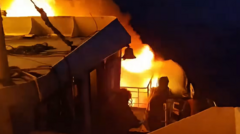
Philippines Ferry Fire Disaster: 5 Dead, 86 Missing Near Coron
The tragic maritime incident near the province of Palawan has once again cast a dark shadow over the safety of domestic sea travel in Southeast Asia. The recent Philippines ferry fire disaster involving the MV June Aster has sent shockwaves through the global maritime community, exposing critical vulnerabilities in regional transport infrastructure. As rescue teams battle treacherous waters, the incident has left families devastated and raised urgent questions about regulatory oversight, emergency preparedness, and the structural integrity of the nation’s inter-island fleet.
The Philippines ferry fire disaster occurred on Wednesday when the MV June Aster caught fire en route from Manila to Coron, Palawan. The incident has left at least five people dead and 86 others missing, highlighting persistent challenges in maritime safety regulations, vessel maintenance, and emergency response across the archipelago.<\/p>
- Tragic Toll: At least five fatalities have been confirmed, with 86 passengers and crew still missing following the MV June Aster fire.
- Environmental Challenges: Strong oceanic currents and adverse weather conditions have drifted the vessel over 7.68 nautical miles, severely hindering search and rescue efforts.
- Regulatory Gaps: The disaster underscores systemic failures in maritime safety regulations, vessel maintenance, and passenger manifest accuracy in the Philippines.
- Economic Impact: The incident threatens Coron tourist safety and the broader Palawan tourism economy, which relies heavily on safe inter-island maritime transit.
1. Executive Summary & Strategic Importance
On the evening of Wednesday, at approximately 18:00 local time (10:00 GMT), the passenger vessel MV June Aster caught fire while navigating the waters of the Calamian Islands. The vessel, which departed from the capital city of Manila, was carrying 117 passengers and 17 crew members. It was approximately one hour away from its final destination at the world-renowned tourist hotspot of Coron in Palawan when the blaze erupted. As of Thursday morning, the Philippine Coast Guard (PCG) confirmed at least five fatalities, while 86 individuals remain missing in what is rapidly becoming one of the most severe maritime crises in the region in recent years.
The strategic importance of this disaster extends far beyond the immediate loss of life. Coron is a critical hub for international and domestic tourism, famous for its pristine beaches, limestone cliffs, and World War II shipwrecks. A disaster of this scale directly threatens the reputation of Palawan as a safe destination, potentially impacting millions of dollars in tourism revenue. Furthermore, the incident highlights the geopolitical and logistical challenges faced by the Philippines, an archipelagic nation where marine transport is the primary economic artery. The failure to secure these transit corridors not only risks human lives but also undermines domestic commerce, supply chain resilience, and public trust in state regulatory bodies.
2. Historical Background & Contextual Evolution
To understand the gravity of the MV June Aster tragedy, one must examine the historical landscape of maritime transport in the Philippines. Comprising more than 7,100 islands, the country relies on a vast network of roll-on/roll-off (RoRo) vessels, wooden-hulled motorboats, and passenger ferries to move goods and people. For millions of Filipinos, these ferries are not a leisure choice but an economic necessity, offering a far cheaper alternative to commercial aviation.
However, this reliance has come at a devastating cost. The country holds the tragic distinction of being the site of the world’s worst peacetime maritime disaster: the 1987 collision between the ferry Doña Paz and the oil tanker Vector, which claimed over 4,300 lives. Decades later, systemic issues continue to plague the sector. In 2023, the MV Lady Mary Joy 3 caught fire off Basilan island, resulting in 31 deaths. Each of these incidents points to a familiar cycle of public outrage, official investigations, promises of reform, and eventual regression into regulatory complacency.
Historically, inter-island ferry accidents in the region have been attributed to a combination of severe weather, poor vessel maintenance, and the uneven enforcement of safety laws. The Philippines is battered by an average of 20 typhoons annually, creating highly unpredictable and hazardous sea conditions. When extreme weather is combined with aging vessels—many of which are imported second-hand from other nations—and lax oversight by port authorities, the conditions for catastrophe are constantly present.
3. In-Depth Technical & Policy Breakdown
The disaster aboard the MV June Aster offers a grim case study in the compounding factors that lead to maritime catastrophes. Analyzing the technical timeline and the subsequent emergency response reveals critical failure points that must be addressed by policymakers and maritime experts alike.
The Mechanics of the MV June Aster Incident
The fire reportedly broke out in the early evening, a period when passengers were preparing for arrival. Within minutes, the blaze engulfed the vessel, forcing terrified passengers to jump into the dark, open sea. Video footage released by the PCG depicted a ship completely consumed by flames, illuminating the night sky as rescue boats attempted to pull survivors from the water. The rapid spread of the fire suggests a failure in onboard fire suppression systems, lack of structural fire barriers, or the presence of highly flammable cargo that had not been properly declared or secured.
Philippine Coast Guard Search Operations and Challenges
The Philippine Coast Guard search operations faced immediate and severe environmental obstacles. At the time of the incident, strong oceanic currents and deteriorating weather conditions hampered the deployment of rescue assets. According to a PCG spokesperson, the MV June Aster drifted significantly from its initial distress location—approximately four nautical miles off Barangay Turda—to a point 7.68 nautical miles away. This drift of nearly four nautical miles expanded the search grid exponentially, complicating efforts to locate survivors who were carried away by the powerful currents.
Furthermore, local first responders, while heroic, lacked the specialized equipment necessary for large-scale night rescues in open water. A first responder who assisted in transporting casualties to the hospital in Coron described the scene as “really heartbreaking,” noting that the local infrastructure was quickly overwhelmed by the scale of the casualties.
Systemic Gaps Exposed by the Philippines Ferry Fire Disaster
The ongoing investigation into the MV June Aster will undoubtedly focus on the enforcement of maritime safety regulations by the Maritime Industry Authority (MARINA). Key areas of scrutiny include:
- Passenger Manifest Integrity: Discrepancies between official manifests and the actual number of people on board have historically complicated rescue and recovery counts in Philippine maritime accidents. Ensuring that every passenger is accurately logged remains a persistent challenge.
- Onboard Safety Drills and Crew Training: Survivors have frequently reported a lack of clear direction from crew members during maritime emergencies, raising questions about the frequency and rigor of safety drills.
- Vessel Age and Maintenance Standards: Many domestic ferries operate long past their optimal service life, with substandard electrical wiring and engine components that present constant fire hazards.
4. Comparative Industry Framework
To contextualize the severity of the MV June Aster disaster, the following table compares recent major maritime incidents in the Philippines, highlighting key metrics and the primary regulatory failures identified in each case.
| Vessel Name | Year | Primary Cause | Casualties / Missing | Regulatory Failure Identified |
|---|---|---|---|---|
| MV June Aster | 2024 | Under Investigation (Fire) | 5 Dead / 86 Missing | Drifting due to currents, potential fire suppression failure |
| MV Lady Mary Joy 3 | 2023 | Engine Room Fire | 31 Dead | Inadequate fire-fighting equipment, manifest discrepancies |
| Mercraft 3 | 2017 | Rough Seas / Capsizing | 5 Dead | Overloading, sailing in adverse weather conditions |
| MV Princess of the Stars | 2008 | Typhoon / Capsizing | Over 800 Dead | Sailing into a known typhoon path, poor corporate decision-making |
The comparative data illustrates a deeply concerning trend: fire and adverse weather remain the leading catalysts for mass-casualty events in Philippine waters. While weather is unpredictable, the inability to contain onboard fires and the persistent issue of inaccurate manifests point directly to human and regulatory failure rather than unavoidable natural disasters.
5. Socio-Economic, Enterprise & Global Ramifications
The human cost of the MV June Aster disaster is immeasurable. Families like that of Anelyn Magbanua, whose husband Marlon remains missing, are left in agonizing limbo. Marlon had been visiting their children in Manila and was returning home when the ferry caught fire. Similarly, the family of Mae Lorraine Galera-Navoa, her husband Elyzer, and their three-year-old daughter Hiraya Joy—who were returning from a funeral—are among the unaccounted for. These personal tragedies highlight the profound social impact on local communities that rely on these vessels for daily life.
From an enterprise and economic perspective, the disaster has immediate implications for the tourism sector in Palawan. Coron is a world-class destination, and maintaining Coron tourist safety is paramount for the local economy. Incidents of this nature can lead to travel advisories from foreign governments, deterring international visitors and harming local businesses, hotels, and tour operators. According to global tourism analyses published by Bloomberg, safety perceptions are a primary driver of destination choice, and a single high-profile disaster can depress local tourism economies for years.
Furthermore, the insurance and maritime shipping industries will likely face increased pressure. Insurance premiums for domestic passenger vessels in the Philippines are expected to rise, a cost that will inevitably be passed down to consumers in the form of higher ticket prices. This economic burden will disproportionately affect low-income travelers who have no other means of transit between the islands.
6. Strategic Outlook & What Comes Next
The road ahead for the Philippine maritime sector requires a fundamental shift from reactive crisis management to proactive risk mitigation. If the country is to break the cycle of recurring maritime disasters, several critical reforms must be implemented immediately.
First, MARINA must enforce a strict modernization program for the domestic fleet. This includes phasing out wooden-hulled vessels and older steel-hulled ferries that do not meet modern international safety standards. While shipowners often resist these measures due to the high capital cost of fleet renewal, the government must provide financial incentives, subsidies, or low-interest loans to facilitate this transition.
Second, the integration of modern technology is essential. Real-time GPS tracking of all passenger vessels, automated passenger manifest systems linked directly to port authorities, and advanced thermal imaging equipment for the PCG would dramatically improve search and rescue outcomes. Had the MV June Aster been equipped with state-of-the-art tracking and communication systems, the challenges posed by its drift might have been mitigated much sooner.
Finally, there must be accountability. Investigations into maritime disasters in the Philippines rarely result in significant legal consequences for shipowners or regulatory officials who cleared unseaworthy vessels for departure. Establishing an independent maritime accident investigation board, free from political influence, is crucial to ensuring that those responsible for safety failures are held legally and financially accountable.
7. Frequently Asked Questions (FAQ)
This section addresses the most common queries regarding the MV June Aster incident, maritime safety, and the ongoing rescue efforts in Palawan.
What is the current status of the search and rescue operations?
As of the latest updates, the Philippine Coast Guard, in coordination with local government units and volunteer fishermen, continues to conduct search and rescue operations. Efforts are focused on the waters surrounding Coron and the Calamian Group of Islands, though strong currents and unpredictable weather continue to pose significant challenges to rescue divers and surface vessels.
How can families of passengers obtain information about their loved ones?
The Philippine Coast Guard has established a command center in Barangay Turda and at the Port of Coron. Families are advised to contact the PCG’s official hotlines or visit their verified social media pages, where updated lists of rescued individuals and casualties are being published as soon as identities are confirmed.
Will this incident lead to changes in travel guidelines for tourists visiting Palawan?
While local tourist boats (bancas) operating within Coron and El Nido are subject to separate municipal safety checks, the national government is expected to temporarily suspend or heavily inspect larger passenger vessels operating on the Manila-Palawan route. Tourists are advised to monitor travel advisories and choose reputable, fully certified transport providers.
What legal actions can be taken against the operators of the MV June Aster?
Under Philippine maritime law, the operators of the vessel can face administrative, civil, and criminal liabilities if investigations reveal negligence in vessel maintenance, crew training, or adherence to safety protocols. The Maritime Industry Authority (MARINA) has the power to suspend the operator’s Certificate of Public Convenience (CPC) pending the outcome of the official inquiry.
Latest Analytical Follow-up: For continuous developments on this subject, read our full investigation on US Iran Conflict: Trump Links War End to Midterm Elections.
Latest Analytical Follow-up: For continuous developments on this subject, read our full investigation on Qingdao Cargo Ship Fire: Casualties and Maritime Safety.
Latest Analytical Follow-up: For continuous developments on this subject, read our full investigation on Qingdao Cargo Ship Fire Triggers Heavy Casualties in China.
