
Saudi Intercepts Houthi Drone Near Mecca as Conflict Escalates
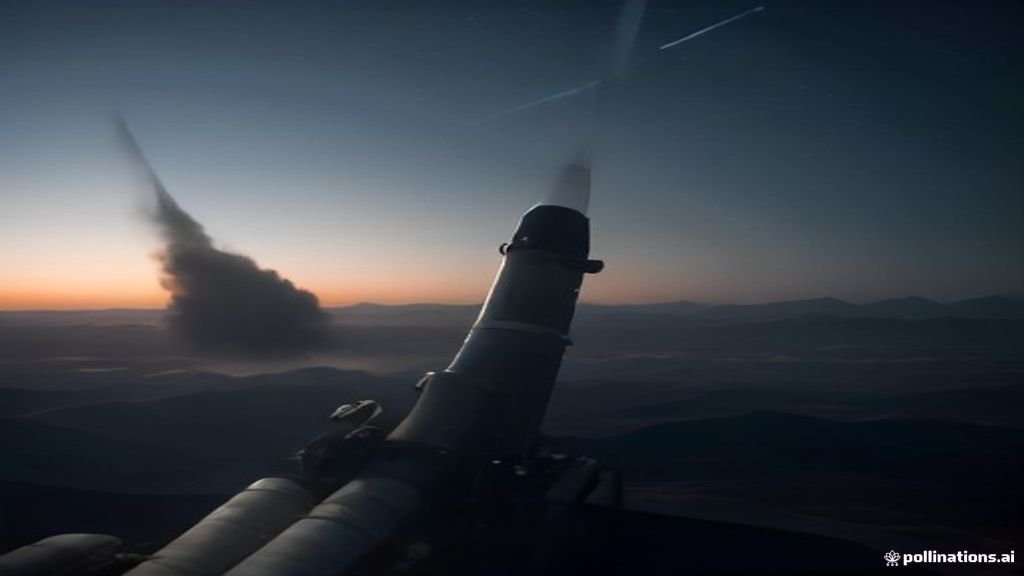
Saudi Arabia’s air defense systems successfully neutralized a hostile Houthi drone Mecca route trajectory on Tuesday evening, downing the unmanned aerial vehicle just south of the Islamic holy city. The high-altitude interception marks a dangerous flashpoint in an expanding regional war that threatens global energy corridors, maritime navigation, and fragile diplomatic balances across the Arabian Peninsula.
Saudi coalition forces intercepted and destroyed an armed Houthi drone south of Mecca on Tuesday evening. While Riyadh condemned the act as a targeting of Islam's holiest site, Houthi military spokesmen denied aiming at religious sanctuaries, asserting their attacks exclusively target Saudi oil infrastructure and military bases.<\/p>
- Air Defense Interception: Saudi forces destroyed an incoming Houthi drone south of Mecca, sparking sharp diplomatic condemnation from regional bodies.
- Contested Targeting Claims: The Houthis explicitly denied targeting religious holy sites, framing their drone and missile strikes as direct retaliation for over 450 Saudi air raids.
- Maritime Choke Points Vulnerable: Recent Houthi control over Mokha and Perim Island threatens international trade through the vital Bab al-Mandab Strait.
- Energy Infrastructure Under Strain: The temporary shutdown of Saudi Arabia's East-West Pipeline highlights the precarious nature of alternative crude export bypasses.
/
1:34
Sirens and brief security alerts echoed across western provinces, including the commercial hub of Jeddah and the precincts surrounding Mecca. Coalition military spokesman Maj. Gen. Turki al-Maliki delivered a blistering statement shortly after debris was cleared, characterizing the attack near Islam’s focal sanctuary as a disgraceful provocation. The incident sparked immediate outrage across the Muslim world, with the 57-nation Organisation of Islamic Cooperation (OIC) labeling maneuvers near Mecca and Medina as an unacceptable transgression.
Houthi Drone Mecca Interception: Claims and Denials
The political response from Yemen’s western stronghold was swift and unyielding. Operating from Sanaa, the Iran-backed Houthi movement categorically rejected Riyadh’s narrative, framing the allegations as fabricated propaganda designed to weaponize religious sentiment against their movement.
“There is no threat whatsoever from Yemen to the holy sites,” declared Houthi military spokesman Yahya Sarea during a televised address. “Our operations target their oil facilities and military bases, and are far removed from the holy places.”
Sarea countered that the insurgent group had unleashed a barrage of long-range drones and ballistic missiles toward Saudi strategic assets in direct retaliation for a relentless air campaign. According to Houthi command, coalition forces carried out more than 450 air strikes across Yemeni territory over the preceding seven days alone. In a separate claim, Houthi forces announced they had brought down a Saudi fighter jet over Marib province, an assertion the coalition has yet to publicly verify.
“We will not hesitate to take the necessary and deterrent measures against these hostile behaviors to safeguard civil infrastructure and sovereign territory.” — Maj. Gen. Turki al-Maliki, Saudi Coalition Spokesman
This war of words underscores a rapid breakdown in regional deterrence. What began as localized border skirmishes has devolved into a multi-theater conflict characterized by long-range drone strikes, asymmetric naval warfare, and severe economic warfare targeting critical cross-border logistics.
Maritime Bottlenecks: Red Sea Shipping Disruption
Beyond the immediate airspace of western Saudi Arabia, the escalation presents an alarming threat to maritime commerce along the Bab al-Mandab Strait. Over recent weeks, Houthi forces executed a lightning offensive along Yemen’s Red Sea littoral, capturing strategic ground from Saudi-backed pro-government units.
The fall of the key port city of Mokha and the military outpost on Perim Island effectively gives Houthi gunners an unhindered vantage over the southern entrance to the Red Sea. This narrow maritime corridor handles roughly 12 percent of total global sea-borne trade, connecting Asian manufacturing hubs directly to Mediterranean and European ports via the Suez Canal.
While Houthi leadership insists international commercial traffic operating peacefully will remain unmolested, they declared a strict maritime blockade against Saudi-flagged vessels and tankers serving the kingdom’s Western ports. This posture exacerbates an already strained energy transportation matrix. Riyadh has increasingly relied on Red Sea terminals for crude exports ever since parallel military tensions in the Persian Gulf severely constricted operations through the Strait of Hormuz.
Logistics analysts at Reuters report that major global shipping conglomerates are re-evaluating risk premiums for Red Sea transits. War risk insurance surcharges for commercial vessels navigating near the Yemeni coast have surged, forcing some operators to consider the lengthy, costly voyage around Africa’s Cape of Good Hope.
Pipeline Vulnerabilities and Energy Security
The drone interception south of Mecca coincides with profound structural vulnerabilities within Saudi Arabia’s internal energy transport network. The kingdom’s landmark East-West Pipeline—a 746-mile conduit designed specifically to bypass Persian Gulf maritime risks by moving crude from Eastern Province fields to the Red Sea port of Yanbu—remains sidelined.
The critical pipeline was knocked offline following a coordinated attack that Saudi officials attributed to Iran-aligned armed groups operating out of Iraq. High-resolution satellite imagery analyzed by intelligence experts reveals substantial physical damage to key pumping stations along the pipeline route.
Market observers offer conflicting estimates regarding the timeline for operational recovery. Independent structural engineers caution that repairing pressurized pumps and specialized valve systems could take upwards of a month. Conversely, speaking at a briefing in Washington, US Energy Secretary Chris Wright offered a significantly more optimistic assessment, projecting that crude oil supplies would resume flowing through the line within a matter of days.
Energy market analysts monitored by Bloomberg emphasize that prolonged operational downtime for the pipeline eliminates Riyadh’s principal crude bypass mechanism, leaving global energy prices acutely sensitive to further drone or missile strikes against Red Sea terminals.
Comparative Breakdown: Escalation Dynamics and Regional Impact
The multi-faceted conflict spans military, economic, and humanitarian dimensions. The following matrix outlines the strategic operational parameters currently defining the theater of operations:
| Conflict Dimension | Current Strategic Status | Operational & Economic Impact | Key Regional Players |
|---|---|---|---|
| Air Defense & Targets | Interceptions near major urban centers (Jeddah, Mecca) | Disruption to civil aviation; heightened risk to infrastructure | Saudi Air Defense, Houthi Missile Forces |
| Maritime Corridors | Houthi capture of Mokha & Perim Island | Severe risk to Red Sea shipping disruption; rising insurance rates | UN Security Council, Global Shipping Lines, Houthis |
| Energy Pipelines | East-West Pipeline damaged; Yanbu exports constrained | Suppression of Saudi crude bypass capability; oil price volatility | Saudi Aramco, Regional Militias, US Dept of Energy |
| Humanitarian Situation | Ceasefire collapsed; active frontlines in Marib and Red Sea coast | Over 90,000 newly displaced; severe food & medical shortages | UN OCHA, IOM, WHO, Local Civil Society |
SEEUY INTELLIGENCE
Houthi Drone Mecca – Analytical Overview
Air Defense & Targets
Interceptions near major urban centers (Jeddah, Mecca)
Maritime Corridors
Houthi capture of Mokha & Perim Island
Energy Pipelines
East-West Pipeline damaged; Yanbu exports constrained
Humanitarian Situation
Ceasefire collapsed; active frontlines in Marib and Red Sea coast
Diplomatic Friction: Riyadh, Washington, and the United Nations
Behind closed doors, the crisis has intensified diplomatic friction between key international partners. Saudi Crown Prince Mohammed bin Salman has taken a direct role in appealing to Washington for decisive action. According to sources familiar with high-level intelligence exchanges, the Crown Prince personally urged US President Donald Trump to initiate direct military strikes against Houthi command centers, radar nodes, and coastal missile batteries.
However, the Trump administration has thus far displayed a reluctance to embroil American forces in another open-ended Middle Eastern ground or air war. Washington has opted instead to offer enhanced real-time intelligence sharing, logistical support, and targeted air-defense positioning to assist coalition forces.
A senior US administration official framed the strategy diplomatically: “We are in continuous dialogue with Saudi Arabia and the Republic of Yemen government regarding regional stability and maintaining maritime security across critical waterways.”
Concurrently, the United Nations Security Council convened an emergency session in New York to address the escalating threat to global trade. Envoys representing both the recognized Yemeni government and Saudi Arabia urged the Council to impose rigorous enforcement mechanisms against the Houthis, accusing the group of holding international commerce hostage at the Bab al-Mandab bottleneck.
“Freedom of navigation in the Red Sea is non-negotiable. Unilateral actions that jeopardize vital shipping routes risk plunging global supply chains into unprecedented chaos.” — UN Security Council Resolution Draft Excerpt
While Council members unanimously affirmed the necessity of safeguarding international waters, deep geopolitical divisions among permanent members continue to hinder consensus on direct military intervention or expanded sanctions regimes.
The Mounting Human Cost in Yemen
As armies posture and strategic pipelines lie idle, the civilian toll inside Yemen continues its tragic upward trajectory. A fragile, four-year informal truce effectively dissolved in July when Houthi forces proclaimed a comprehensive maritime embargo against Saudi Arabia, citing ongoing blockades of northern ports and a coalition strike on Sanaa International Airport.
The renewed surge in violent clashes has shattered civil stability across the country’s western and central provinces. Data compiled by the International Organization for Migration (IOM) indicates that more than 90,000 citizens have been newly displaced since the summer offensive gathered momentum.
“Families are being forced to flee for the second or third time in this conflict, with almost nothing left,” warned Amy Pope, Director General of the IOM. “The humanitarian network is operating at its absolute limit, facing acute funding deficits just as displacement figures spike.”
Casualty figures provided by the World Health Organization (WHO) paint an equally grim picture. Health monitoring agencies confirmed at least 500 documented fatalities from direct armed action since the beginning of August, with nearly 300 lives lost in a single week of intense fighting along the Red Sea littoral and surrounding Marib.
This latest surge in violence superimposes itself onto a decade of structural ruin. Ever since the Houthi movement seized Sanaa in late 2014—precipitating the Saudi-led military coalition intervention in early 2015—the conflict has claimed over 150,000 lives from direct combat. The United Nations estimates that a staggering 22 million people—roughly two-thirds of Yemen’s total population—require immediate humanitarian assistance or protection services to survive.
Geopolitical Fallout and Strategic Outlook
The drone interception near Mecca represents more than an isolated air defense success; it signifies a dangerous new baseline for Middle Eastern instability. The combination of targeted strikes on domestic infrastructure, maritime choke-point control, and political deadlock leaves small margin for error.
For Saudi Arabia, securing the home front while protecting vital economic assets remains an absolute priority. The kingdom’s massive economic transformation agenda relies heavily on maintaining regional stability and investor confidence. Unmanned aerial incursions probing western defense perimeters—even when successfully repelled—threaten to undermine that critical narrative.
For the broader international community, the conflict has fundamentally moved past the localized borders of Yemen. The convergence of energy security threats, international maritime interdiction, and complex proxy warfare means that events unfolding along the Red Sea coast will continue to send geopolitical shockwaves far beyond the Middle East.
<button type="button" onclick="this.parentElement.innerHTML='✓ Thank you, we will refine our analysis!‘” style=”background:#ffffff; border:1px solid #cbd5e1; border-radius:6px; padding:4px 12px; font-size:12px; cursor:pointer; color:#334155;”>👎 No
Latest Analytical Follow-up: For continuous developments on this subject, read our full investigation on Australia Migration Crackdown Targets Students and Backpackers.
Latest Analytical Follow-up: For continuous developments on this subject, read our full investigation on Inside Russia’s elections: Managed democracy and Putin’s Duma.
