
Inside the $330M NYT Letterboxd Acquisition Deal
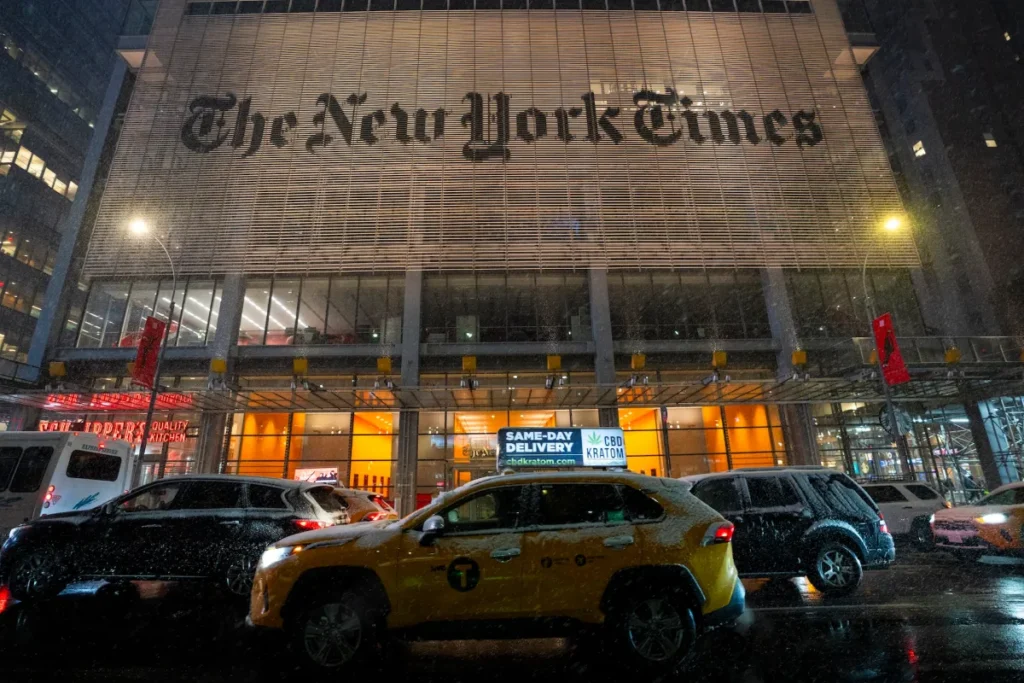
When news broke that The New York Times Company had entered exclusive negotiations to buy Letterboxd for $330 million, the media ecosystem experienced a collective double-take. The reporting originated from the Times’ own business desk—a customary display of editorial independence paired with the awkward reality of corporate spokespeople declining to comment to their own reporters. Yet behind the meta-journalistic irony lies a cold, calculated move. The potential NYT Letterboxd acquisition represents one of the boldest digital land grabs in modern publishing history.
The reported NYT Letterboxd acquisition involves The New York Times Company entering exclusive negotiations to purchase film-focused social platform Letterboxd for $330 million. The potential takeover aims to capture Letterboxd's 28 million users—over half under age 35—further expanding the newspaper publisher's high-margin digital bundle into specialized culture verticals.<\/p>
- Massive Multiplier: A $330 million purchase price against $15 million in projected earnings represents a sky-high 22x revenue valuation.
- Gen Z Dominance: Over 50% of Letterboxd's 28 million registered members are under 35, giving the Times a vital pipeline to younger subscribers.
- Hollywood Outbidded: Independent powerhouse A24 and legacy giant Sony both eyed the platform, but A24 was ultimately priced out of contention.
- The Bundle Expansion: Following Wirecutter, Wordle, and The Athletic, Letterboxd represents the next phase of the Times' multi-product subscription engine.
Letterboxd, often dubbed the Goodreads for movies, has quietly built one of the most obsessive internet communities of the past decade. What began as a side project for two New Zealand web designers has exploded into a cultural powerhouse. The metrics are staggering. In January 2021, the social film platform claimed roughly 3 million registered users. By April of this year, that number skyrocketed to 28 million. More critically for media executives staring down aging demographics, over half of those users are under the age of 35.
The Audacity of a 22x Revenue Multiple
In the austere climate of contemporary tech finance, price tags usually reflect strict cash flow fundamentals. This transaction breaks that mold entirely. With Letterboxd projected to generate around $15 million in revenue this year, the proposed $330 million valuation translates to an eye-watering 22x revenue multiple. Wall Street analysts typically flinch at numbers like that for a mid-tier consumer software company.
Why pay such a steep premium? Because raw financial tables only tell part of the story. The rest is written in human attention, network effects, and strategic scarcity.
| Acquisition Target | Year Acquired | Estimated Purchase Price | Core Strategic Value |
|---|---|---|---|
| Wirecutter | 2016 | $30 Million | Affiliate Commerce & Product Reviews |
| Serial Productions | 2020 | $25 Million | Audio Storytelling & Narrative Podcasts |
| Wordle | 2022 | $2-5 Million (Low 7-Figures) | Daily Gamified User Retention |
| The Athletic | 2022 | $550 Million | Sports Journalism & Regional Audience |
| Letterboxd (Reported) | 2024 | $330 Million | Gen Z Social Network & Film Culture |
To understand the price, one must understand the buyers who were left standing on the sidelines. According to industry sources, boutique indie studio A24 and legacy titan Sony Pictures both kicked the tires on Letterboxd during initial sales talks. A24, despite its massive cultural capital among young cinephiles, found itself priced out as bidding intensified. Sony, burdened by corporate inertia, could not move fast enough. The Times outmaneuvered both by bringing a balance sheet hungry for young, habituated users.
“Legacy publishers aren’t buying media properties for their current balance sheets,” notes a veteran digital media M&A advisor who requested anonymity. “They are buying high-frequency habits. Letterboxd isn’t a film review database; it’s a daily digital ritual for an elusive demographic that doesn’t read traditional print or watch linear cable.”
The Blueprint: From Gray Lady to Lifestyle Ecosystem
The Times is no longer just a newspaper publisher. Over the past decade, management has systematically transformed the organization into a multi-product lifestyle engine. The strategy relies on bringing users into a broad ecosystem through specialized doors: news, cooking, product recommendations, puzzles, and sports.
Consider the trajectory of recent media tech M&A trends. When the Times bought Wordle in 2022 for an undisclosed seven-figure sum, skeptics called it a gimmick. Today, millions of daily puzzle players form the base of the Times’ lucrative All-Access bundle. The 2022 acquisition of The Athletic for $550 million expanded their sports footprint. Letterboxd fits seamlessly into this blueprint. It offers an instantaneous monopoly over online film banter, diary logging, and watchlist curation.
Why Gen Z Chooses Letterboxd
Unlike legacy social networks plagued by algorithmic fatigue, Letterboxd thrives on simple, user-generated expression. Its features foster deep community engagement:
- The Four-Favorites Grid: A digital badge of honor displayed on every user profile that sparks endless online debate.
- Diary Logging: Precise date tracking, star ratings, and micro-reviews that turn movie-going into a personalized cataloging hobby.
- Custom Lists: Curated collections ranging from exhaustive director filmographies to hyper-specific mood playlists.
- Pro and Patron Tiers: Subscription features offering personal analytics, custom poster artwork, and streaming platform filters.
For a generation wary of traditional advertising, Letterboxd provides authentic connection. The platform feels like a late-night dormitory debate rather than a corporate ad server. Preserving that distinct atmosphere will be the biggest challenge facing the Times’ corporate stewards.
Valuation Mechanics and Market Realities
How does a business making $15 million justify a $330 million valuation? The math works only if you factor in cross-selling efficiency and customer acquisition cost reduction. Acquiring young subscribers through traditional digital advertising channels has become prohibitively expensive. By acquiring Letterboxd, the Times buys direct, unmediated access to 28 million passionate culture consumers.
A rigorous examination of the financial mechanics reveals three core value drivers:
- Subscriber Conversion Pipeline: Converting just 2% of Letterboxd’s 28 million users into Times All-Access digital subscribers creates tens of millions of dollars in recurring annual revenue.
- First-Party Data Goldmine: As third-party browser tracking cookies vanish across the web, Letterboxd’s deep, zero-party preference data regarding entertainment tastes becomes immensely valuable to premium advertisers.
- Synergy with Culture Reporting: Integrating Letterboxd’s real-time sentiment data into Times film criticism, festival coverage, and awards season analysis creates an unparalleled journalistic engine.
Financial coverage from outlets like Reuters digital media analysis reinforces that subscription bundles are the only proven defense against tech platform monopolies. By owning niche passions—whether crosswords, English Premier League coverage, or film diaries—the Times makes its digital subscription indispensable.
The Culture Clash: Can the Vibe Survive?
Inevitably, the prospect of a corporate takeover provokes anxiety among platform loyalists. Letterboxd’s success relies heavily on its irreverent, unvarnished personality. The top-voted reviews for major blockbusters are frequently one-line jokes, memes, or razor-sharp cultural roasts. There is an unmistakable indie ethos running through the site’s codebase.
When large publishing conglomerates buy nimble internet darlings, friction often follows. Monetization pressures can lead to cluttered user interfaces, invasive paywalls, or corporate censorship. Reddit’s rocky path to an IPO and Goodreads’ long-standing design stagnation under Amazon serve as cautionary tales for the Letterboxd community.
Navigating Potential Pitfalls
To keep the platform’s passionate user base from revolting, the Times will need to tread carefully:
- Maintain Free Tier Integrity: Core logging and reviewing must remain entirely free without aggressive paywalls blocking basic utility.
- Resist Editorial Homogenization: The Times must avoid forcing its official criticism style onto Letterboxd’s chaotic, user-driven rating algorithms.
- Invest in Infrastructure: The platform has suffered from periodic server outages during peak movie release windows; infrastructure backing from a major enterprise will be critical.
If handled correctly, the acquisition could fund long-requested community features, such as deeper TV integration, enhanced social discoverability, and improved video capabilities for original industry coverage.
A Turning Point for Digital Media
The reported deal marks a decisive chapter in the evolution of modern publishing. It signals that the era of relying solely on display advertising for general news is dead. The future belongs to integrated digital ecosystems built around specialized hobbies, high-intent social networks, and recurring subscription bundles.
By securing exclusive negotiating rights for Letterboxd, The New York Times Company isn’t just buying an app. It is purchasing the digital living room of the next generation of movie lovers. If the transaction crosses the finish line at the reported $330 million figure, it will stand as proof that in the modern attention economy, curated passion commands the ultimate premium.
<button type="button" onclick="this.parentElement.innerHTML='✓ Thank you, we will refine our analysis!‘” style=”background:#ffffff; border:1px solid #cbd5e1; border-radius:6px; padding:4px 12px; font-size:12px; cursor:pointer; color:#334155;”>👎 No
