
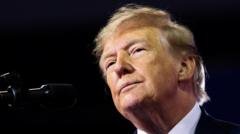
Suspension of Russia Sanctions: Trump’s Peace Gambit
In a stunning geopolitical pivot, Washington has ordered a temporary suspension of Russia sanctions, freezing fresh economic measures just forty-eight hours before their scheduled implementation. The decision, framed by President Donald Trump as an essential move to preserve diplomatic leverage, has sent shockwaves through European capitals and triggered an immediate, volatile response from Kyiv. By withholding bipartisan penalties passed by Congress in September, the White House is betting that economic breathing room will force Moscow to stay engaged in direct talks to end the Eastern European conflict. Critics, however, warn that the tactic undermines Western consensus, granting preemptive relief to the Kremlin without securing clear, verifiable commitments on the battlefield.
The suspension of Russia sanctions refers to a 60-day executive freeze enacted by President Donald Trump on pending congressional penalties against Moscow. The measure aims to maintain diplomatic leverage and prevent Russia from abandoning peace negotiations, despite sharp resistance from Kyiv and European partners who view the move as a dangerous concession.<\/p>
- Executive Hold: President Trump enacted a 60-day freeze on broad congressional sanctions against Moscow, arguing it prevents Russia from walking away from the negotiation table.
- Diplomatic Rift: Relations between Washington and Kyiv have hit a historic low, underscored by public spats over a US-Russian diesel trade agreement and frontline tech disruptions.
- Energy Realignments: Facing domestic price spikes driven by Middle Eastern volatility, the US has signaled flexibility on Russian refined fuel, complicating existing EU enforcement.
- Frontline Complications: Allegations regarding Starlink bandwidth restrictions and intelligence-sharing slowdowns have raised security concerns across European capitals.
The announcement broke via Truth Social late Friday, abruptly halting punitive measures that targeted Russian financial channels and industrial exporters. President Trump defended the pause by insisting that aggressively penalizing Moscow right now would shatter fragile diplomatic openings. “I am in the process of negotiating Peace in the war between Russia and Ukraine,” Trump declared, explicitly stating he refused to “do anything that will drive, foolishly, Russia away from the bargaining table.” The move represents a profound strategic departure from the maximum-pressure campaign executed by previous administrations, shifting the weight of diplomatic friction directly onto the relationship between Washington and Kyiv.
A High-Stakes Gambit at the Bargaining Table
The White House’s tactical shift rests on an unconventional assumption: that withholding statutory penalties acts as an incentive for dialogue rather than an admission of weakness. Secretary of State Marco Rubio attempted to frame the policy as a controlled operational pause, clarifying that the administration was enacting a 60-day review period. According to Rubio, this window will allow US analysts to rigorously assess how heavy economic restrictions might ripple backward into the American economy, particularly across volatile fuel sectors. Yet, despite diplomatic efforts to portray the move as a routine economic review, the geopolitical implications were instantly felt across key foreign ministries.
In Moscow, the reaction was immediate and celebratory. Russian special envoy Kirill Dmitriev publicly welcomed the executive pause, deeming it “an important and truly historic moment.” Dmitriev contended that the sanctions—originally drafted by the US Congress to cripple Russian military supply chains—would have inflicted severe structural damage on western financial systems and global market stability. By freezing the penalties, Moscow believes it has successfully decoupled economic coercion from bilateral peace talks. Insiders note that the Kremlin views this temporary reprieve as proof that its long-term strategy of economic endurance and market leverage is yielding tangible political dividends in Washington.
“We are witnessing an unprecedented recalibration of American diplomatic leverage. By using executive discretion to halt statutory sanctions, Washington is attempting to reset terms with Moscow, but in doing so, it has profoundly altered the operational trust between the United States and its traditional Eastern European partners.” — Senior European Foreign Policy Analyst
The Escalating Zelensky Trump Rift
As Moscow welcomed the move, friction between Washington and Kyiv reached a dramatic breaking point. The mounting Zelensky Trump rift spilled into public view over the weekend following an explosive interview on NBC News, where Ukrainian President Volodymyr Zelensky openly challenged the White House’s strategic vision. Zelensky warned that prioritizing economic appeasement over accountability constituted a “historic mistake” that would ultimately embolden autocratic aggressors. He firmly rejected the notion that Kyiv was obstructing diplomacy, pointing out that Ukraine has repeatedly sought a durable, just resolution while enduring daily air strikes and frontline assaults.
President Trump responded with sharp personal rhetoric, using his media platform to vent frustration at Ukrainian leadership. Trump asserted that Zelensky “doesn’t want to end this war, and probably never did,” adding bluntly that the Ukrainian chief executive “could have made a better deal two years ago than he can now.” The sharp trade of insults highlights a fundamental breakdown in alignment. While Washington treats the conflict as a costly regional war requiring immediate liquidity relief for Western energy markets, Kyiv views any premature political concession as an existential threat to its national sovereignty.
The diplomatic rift was visibly displayed during a recent European Union summit in Brussels. Attending alongside European heads of state, Zelensky delivered a pointed rebuke aimed directly at Washington’s recent maneuvers. After noting that Trump had called him “more difficult to deal with” than Russian President Vladimir Putin, Zelensky remarked to gathered reporters that it felt refreshing to sit among “real leaders.” According to observers present in Brussels, the comment reflected deep frustration across EU member states, many of which now fear that unilateral action by Washington could dismantle years of coordinated multilateral sanctions enforcement.
Diesel, Discounts, and the Realities of Kremlin Sanction Relief
Underpinning this intense diplomatic dispute is a complex economic reality driven by global energy shockwaves. The catalyst for the recent breakdown in relations was not merely rhetorical; it was rooted in a contentious agreement by the US to import Russian diesel fuel. Facing skyrocketing domestic energy prices driven by expanding military instability in the Middle East—specifically escalating conflict involving Iran—the administration sought immediate measures to stabilize consumer fuel prices at home. The resulting Trump Russia trade deal for refined diesel highlighted how global economic pressures can upend established foreign policy doctrine.
Ukrainian officials reacted with outrage to the fuel deal, characterizing it as a direct financial lifeline to Moscow’s war economy. Zelensky explicitly stated that importing Russian energy was tantamount to the United States directly funding the military machinery invading his country. However, market analysts from global research institutes note that Russia’s broader energy export architecture has remained resilient despite years of Western pressure, largely by pivoting trade routes toward Asia.
Data compiled by energy tracking organizations reveals the extent of Russia’s economic adaptations since 2022:
- China’s Market Share: Consistently absorbs approximately 50% of all Russian crude oil exports via dark-fleet tankers and direct pipeline networks.
- India’s Energy Influx: Accounts for nearly 37% of Russian seaborne crude, refining the heavily discounted oil for regional redistribution.
- Global Re-Routing: Sanction-bypassing trade networks have allowed Moscow to maintain continuous revenue streams despite strict G7 price caps.
- Refined Distillates: High Western demand for diesel has repeatedly exposed structural vulnerabilities in European and American fuel supply chains.
For additional perspective on how global energy trade impacts geopolitical decisions, detailed energy flows can be reviewed through Reuters business analysis and structural policy reports from Bloomberg markets coverage.
Tech Battles on the Frontlines: Starlink Throttling and Intelligence Cuts
Beyond macroeconomic sanctions and diplomatic arguments, the practical fallout of the split has extended directly onto the battlefield. Ukrainian military commanders recently reported severe disruptions to Starlink, the satellite communications network managed by SpaceX. Frontline units rely on Starlink for tactical coordination, drone targeting, and real-time defense against incoming missile strikes. Systemic bandwidth slowdowns and localized service blackouts significantly hindered Kyiv’s defensive capabilities along key eastern vectors, sparking intense speculation that technical access was being intentionally leveraged as political leverage.
When questioned about the sudden degradation of service, US officials initially cited localized technical congestion and high operational load. However, Ukrainian cyber units conducted independent diagnostic tests on the system within European Union territory, verifying that Starlink hardware operated at full operational bandwidth outside the immediate Ukrainian combat zone. The stark disparity in network speeds fueled accusations from Kyiv that Washington was applying subtle operational pressure to force compliance at the negotiating table.
Simultaneously, reports surfaced suggesting that intelligence sharing between US defense agencies and Ukrainian military command had been quietly curtailed. While President Trump emphatically denied deliberately throttling satellite networks or blocking defense intelligence, the mere perception of an operational drawdown sent shockwaves through Eastern NATO nations. Defense analysts emphasize that modern high-intensity warfare relies heavily on integrated technical platforms; any unexpected disruption to satellite data or targeted intelligence immediately shifts tactical advantages to the opposing force.
Comparative Overview of US-Russia Policy Realignments
To fully understand the shift in policy, it is useful to analyze how key bilateral factors have changed following the decision to freeze upcoming penalties. The table below outlines critical shifts across economic, diplomatic, and military domains:
| Policy Dimension | Previous Framework (Pre-Suspension) | Current Status (Post-Suspension) | Immediate Strategic Impact |
|---|---|---|---|
| Congressional Sanctions | Mandatory penalties targeting Russian energy and banking sectors. | Frozen under a 60-day executive evaluation window. | Provides temporary financial relief and market stability for Moscow. |
| US-Ukraine Diplomatic Tone | Public alignment and sustained financial/military backing. | Public friction, sharp personal rhetoric, and strategic disagreements. | Creates uncertainty among European NATO allies regarding long-term unity. |
| Global Energy Strategy | Strict enforcement of G7 price caps and fossil fuel bans. | Targeted imports of Russian diesel to ease US domestic price spikes. | Complicates global enforcement of energy restrictions on Russian exports. |
| Frontline Tech Access | Unrestricted operational access to Starlink and military data. | Reported speed limits, regional throttling, and intelligence friction. | Reduces operational efficiency for Ukrainian defense units along active fronts. |
Rewriting the Rules of US Ukraine Peace Negotiations
The decision to halt new economic penalties represents far more than a minor administrative delay; it signals a fundamental overhaul of how Washington approaches US Ukraine peace negotiations. By shifting away from rigid, long-term sanctions enforcement, the current strategy seeks to leverage real-time economic adjustments to force both combatants toward compromise. However, this approach risks alienating key European partners who argue that granting partial Kremlin sanction relief before securing concrete security guarantees compromises long-term deterrence across the entire European continent.
European Union leaders meeting in Brussels expressed mounting alarm that unilateral US moves could permanently unravel the collective security architecture established after 2022. While EU member states continue to fund civil infrastructure and military assistance in Kyiv, their long-term effectiveness remains closely tied to US financial and technological leadership. If Washington continues to pursue unilateral trade workarounds and sanction freezes, Western Europe may be forced to construct an independent defense strategy to prevent further destabilization on its eastern borders.
Ultimately, the White House is walking a dangerous tightrope. If the 60-day freeze successfully keeps Moscow engaged and produces a viable roadmap for ending hostilities, the administration’s unconventional tactics will be touted as a diplomatic masterstroke. But if Moscow uses the operational pause to stabilize its domestic economy, solidify its military positions, and deepen trade links with non-aligned nations, the policy risk could leave Washington isolated, its allies alienated, and the conflict unresolved. For now, as air raid sirens continue to sound across Ukrainian cities, the world watches to see whether economic concessions will produce real peace—or simply set the stage for a far more dangerous geopolitical reality.
<button type="button" onclick="this.parentElement.innerHTML='✓ Thank you, we will refine our analysis!‘” style=”background:#ffffff; border:1px solid #cbd5e1; border-radius:6px; padding:4px 12px; font-size:12px; cursor:pointer; color:#334155;”>👎 No
Latest Analytical Follow-up: For continuous developments on this subject, read our full investigation on Inside the Tranq Drug Crisis: Faith on the Frontlines.
