
The Tragic Reality Facing Canada’s Rescued Belugas
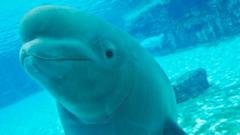
Tofino approached each of his handlers in turn as they knelt in the chilly, shallow water, gently stroking his slick, white sides. Minutes later, a heavy industrial crane hoisted the 1,500-kilogram cetacean into a specialized lorry bound for the runway. His ultimate destination was SeaWorld San Antonio, marking the final departure of 30 rescued belugas and four dolphins cleared out of Marineland, the infamous, now-shuttered sea park near Niagara Falls. Drone footage captured by photojournalist Carlos Osorio showed Tofino lingering near his caretakers before lifting into the air—a haunting finale to captive whale displays on Canadian soil.
Following the shutdown of Ontario's Marineland, thirty rescued belugas were airlifted to international aquariums to escape potential euthanasia. However, the historic relocation effort quickly unraveled as multiple whales died from pre-existing chronic conditions, foreign object ingestion, and relocation stress, sparking intense debates over sanctuary viability and captive breeding laws.<\/p>
- Mass Relocation Tragedy: Five belugas and one dolphin have died shortly after being transferred from Marineland to facilities in Chicago and Spain.
- Pre-existing Neglect Exposed: Necropsies revealed chronic inflammatory gut diseases and foreign objects—including rocks, paint chips, and feathers—ingested prior to transport.
- Sanctuary vs. Aquarium Dilemma: While anti-captivity advocates push for seaside sanctuaries, open-ocean pens remain financially constrained and operational hurdles persist.
- Regulatory Loophole: Whales moved from Canada, where breeding is illegal under the 2019 cetacean captivity ban, were sent to US facilities that actively encourage captive breeding.
Canada outlawed cetacean captivity and breeding seven years ago. Tofino was the absolute last captive whale in the nation. “This is the last one to happen, and it’s never going to happen again,” Osorio reflected. Yet what was celebrated as the largest marine mammal airlift in history has rapidly morphed into a grim ecological horror story. Rather than securing a peaceful retirement, several transferred whales were already carrying fatal, hidden afflictions beneath their rubbery skin.
The Euthanasia Threat and the Airlift of Last Resort
For decades, Marineland was a dominant fixture of Canadian pop culture, immortalized by its ubiquitous “Everyone Loves Marineland” commercial jingle. But behind the bright advertisements lay an aging, deteriorating facility plagued by regulatory scrutiny, public outrage, and mounting financial ruin. Between 2019 and September 2025 alone, roughly 20 whales died inside the park’s concrete enclosures, according to detailed investigative tallies by the Canadian Press. Following the death of its long-time owner, the park shuttered permanently in 2024.
With operations winding down, Marineland’s management faced a logistical logjam. An initial deal to export the whales to an aquarium in China was blocked by the Canadian government over severe animal welfare concerns. Stymied by legal restrictions, park operators issued a stark ultimatum: find international homes for the marine mammals immediately, or they would be euthanised. The threat triggered an unprecedented, multi-million-dollar emergency airlift involving facilities in Chicago, Atlanta, San Diego, San Antonio, and Valencia, Spain.
“If an animal was not healthy enough to withstand the stress of transport, it should not have been transported.” — Melissa Matlow, World Animal Protection Canada
The operational stress of transferring 1,500kg mammals across international borders via specialized air-transports cannot be overstated. Water parameters, ambient cabin pressures, and sedation levels must be calibrated with total precision. Yet, despite meticulous transport protocols, the physical condition of the animals prior to loading proved to be a ticking time bomb.
Autopsies Reveal Horrors Ingested in Captivity
The tragic fallout was swift. Within months of arrival at their destination facilities, five belugas and one dolphin were dead. Chicago’s renowned Shedd Aquarium absorbed the heaviest losses. Four of the eight rescued belugas transferred to Shedd—Peekachu (age 23), Rain (20), Osiris (26), and Caspian (27)—perished in rapid succession. The wave of illness even claimed Beethoven, a 34-year-old long-time resident beluga at Shedd, who succumbed shortly after the batch of Marineland whales arrived.
Pathology reports and necropsies performed by veterinary pathologists uncovered alarming pre-existing pathology:
- Chronic Inflammatory Disease: Both Peekachu and Rain suffered from long-standing, deep-seated gastrointestinal inflammation that predated their transport.
- Foreign Body Ingestion: Autopsies discovered shocking stomach debris, including large stones, flaking paint chips, and bird feathers—items the animals had consumed while housed in Marineland’s degrading concrete tanks.
- Liver Degeneration: Osiris succumbed to severe, chronic hepatic disease, indicating organ failure that had likely been compounding for years without effective clinical intervention.
Across the Atlantic at Oceanogràfic València in Spain—Europe’s largest aquarium—a beluga named Jelly Bean and a dolphin named Echo also died. Echo had arrived from Canada with severe, uncorrected vision impairment and systemic illness. In her final hours, the dolphin suffered catastrophic respiratory failure and acute dysphagia, leaving veterinary staff powerless to save her.
Evaluating the Transports: A Comparative Breakdown
To understand the sheer magnitude and tragic human-managed logistics behind the relocation effort, consider the distribution and medical outcomes across recipient institutions:
| Facility Name | Location | Transferred Cetaceans | Documented Casualties | Primary Medical Findings |
|---|---|---|---|---|
| Shedd Aquarium | Chicago, USA | 8 Belugas | 4 Belugas (+1 Resident) | Foreign object ingestion (rocks, paint), chronic gut inflammation, liver disease |
| Oceanogràfic València | Spain | 1 Beluga, 1 Dolphin | 1 Beluga, 1 Dolphin | Acute respiratory failure, advanced ocular impairment, chronic organ stress |
| Georgia Aquarium | Atlanta, USA | 2 Belugas (Balor, Zephyr) | 0 Reported | Stable; active socializing and high responsiveness to enrichment protocols |
| SeaWorld San Antonio | Texas, USA | Tofino + Additional Belugas | 0 Reported | Under monitoring; stable feed intake and acclimation |
Veterinary staff at Shedd Aquarium publicly acknowledged in October that they knew the former Marineland residents carried “substantial, longstanding medical needs.” While pre-transport diagnostics were conducted, specialists insist that stress, altered water chemistries, and hidden internal pathologies made it impossible to predict how each individual animal would cope with the journey. According to reported statistics from Reuters news coverage on international marine welfare shifts, stress remains the single greatest amplifier of underlying chronic infections in captive cetaceans.
Sanctuary Dreams vs. Concrete Realities
The tragedy has reopened fierce debates among marine biologists, neuroscientists, and policy advocates regarding the long-term ethics of cetacean rescue. Marine mammals born or long-raised in artificial concrete tanks cannot simply be dumped into the open ocean. Lacking hunting instincts, social pod structures, and natural immunity to ocean pathogens, they are entirely dependent on human care for survival.
World Animal Protection Canada advocated for two alternative paths: either conversion of the closed Marineland site into a specialized, hospice-style rehabilitation center, or an immediate transfer to sea sanctuaries. The most prominent initiative is the Whale Sanctuary Project, an ambitious effort to construct an enclosed 100-hectare ocean bay in Nova Scotia.
“As they can’t be released, the next best thing we could do is provide sanctuary for them, where they can at least live in the ocean, and they can have back their autonomy. I look at it as an exit ramp.” — Dr. Lori Marino, Neuroscientist & Founder of the Whale Sanctuary Project
Yet, open-water sanctuaries present immense logistical and financial bottlenecks. The Nova Scotia project was initiated a decade ago, but active ground construction only began recently. It faces a major funding deficit, requiring an additional C$6 million ($4.2 million USD) before it can securely hold its projected capacity of 12 to 15 whales. Furthermore, sea sanctuaries remain largely unproven for long-term cetacean geriatrics. A high-profile sanctuary effort in Iceland intended for retired performing belugas hit massive setbacks, forcing organizers to delay ocean transfers due to harsh weather and water volatility.
Michael Weiss, research director at the Center for Whale Research in Washington state, notes that while ocean net pens offer a vastly superior quality of life compared to concrete tanks, they remain largely experimental. “They are kind of more theoretical and aspirational at this point,” Weiss explains, pointing out that net enclosures have historically been limited to short-term rehabilitation or military dolphin housing rather than permanent, lifelong sanctuaries for chronically ill animals.
The Exploitation Loophole: Breeding and Regulatory Double Standards
Beyond the immediate health crises, the transfer has highlighted an ideological rift between Canadian animal welfare laws and American commercial aquarium operations. When Canada passed its 2019 ban on cetacean captivity, it explicitly criminalized breeding. However, the American aquariums absorbing these animals operate under fundamentally different mandates.
At Georgia Aquarium in Atlanta, staff welcomed two young male belugas from Marineland—Balor, 10, and Zephyr, 7. They were immediately introduced to four resident females. Jason Jones, senior curator of animal well-being at Georgia Aquarium, openly defended natural breeding as an essential component of proper husbandry.
“Breeding is a natural part of an animal’s life,” Jones states. “Breeding is part of good animal welfare, and so we want to make sure that they get the opportunity to do so.”
For anti-captivity campaigners, this highlights a deeply frustrating legal loophole. Animals protected from exploitation under Canadian law are essentially exported back into active breeding pipelines abroad, ensuring that future generations of belugas will remain born in concrete enclosures indefinitely.
A Bittersweet Turning Point for Marine Mammals
Phil Demers, a high-profile whistleblower and former head trainer at Marineland, views the park’s total closure with conflicting emotions. While relieved that the era of keeping large marine mammals in decaying Canadian amusement parks has drawn to a close, he harbors no illusions about the immediate fate of the relocated animals.
The end of Marineland does not mean freedom for these creatures—it merely signifies a change of coordinates. For the surviving belugas swimming through unfamiliar tanks in Chicago, San Antonio, and Atlanta, the shadow of their years in Niagara Falls lingers long in their digestive tracts and bloodwork.
Demers argues that true public education about marine life must pivot entirely away from physical displays. When asked how future generations should connect with ocean wildlife, Demers offers a characteristically blunt assessment: join a legitimate offshore whale-watching tour or turn on a nature broadcast. “I’d rather see a whale fart in the wild than do a triple backflip in a tank,” he notes.
As global public sentiment rapidly sours on public marine performances, countries like France and Mexico are following Canada’s lead by tightening restrictions on captivity. But for the remaining survivor whales of Marineland, the legal victories arrived far too late. Their ongoing struggle underscores a somber reality: closing down a sea park is relatively easy, but curing the long-term, systemic damage inflicted on its animals is an entirely different battle.
<button type="button" onclick="this.parentElement.innerHTML='✓ Thank you, we will refine our analysis!‘” style=”background:#ffffff; border:1px solid #cbd5e1; border-radius:6px; padding:4px 12px; font-size:12px; cursor:pointer; color:#334155;”>👎 No
Latest Analytical Follow-up: For continuous developments on this subject, read our full investigation on European Diplomats Attacked in West Bank Settler Raid.
Latest Analytical Follow-up: For continuous developments on this subject, read our full investigation on Kim Jong Un Luxury Yacht Spotted Near Wonsan Retreat.
Latest Analytical Follow-up: For continuous developments on this subject, read our full investigation on Canada military base fire kills four in Alberta training disaster.
