
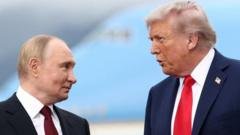
Trump Waives Russia Sanctions Amid Deepening Ukraine Row
When Trump waives Russia sanctions, the shockwaves reverberate instantly from Capitol Hill to the battered energy grid of Kyiv. In a political maneuver that caught Washington off guard, the White House slammed the brakes on a sweeping bipartisan legislative package just forty-eight hours before it was legally mandated to take effect. What followed was an immediate escalation of diplomatic hostilities, casting a long, uncertain shadow over the future of transatlantic unity and the trajectory of the ongoing conflict in Eastern Europe.
US President Donald Trump issued an executive order blocking numerous congressional sanctions on Russia just two days before implementation, citing national interest. The 60-day pause aims to analyze global economic impacts, though it has triggered intense domestic backlash and severely strained relations with Ukrainian President Volodymyr Zelensky.<\/p>
- Sanctions Suspended: President Trump enacted a 60-day pause on sweeping congressional sanctions targeting Russian financial institutions, officials, and the shadow fleet.
- Economic Rationale: Secretary of State Marco Rubio defended the move, stating the administration needs time to analyze potential impacts on global and domestic energy markets.
- Bipartisan Outrage: Prominent lawmakers from both parties, including key Republican allies like Ted Cruz, criticized the suspension as a capitulation to Moscow.
- Frayed Diplomacy: The decision deepens an ongoing rift with Ukrainian President Volodymyr Zelensky, who accused Washington of disregarding critical security pressures.
The executive order, signed late on a Friday evening, effectively mothballed critical punitive measures that had breezed through the US Congress months prior. These weren’t mere symbolic slaps on the wrist. The legislation was engineered to strike at the heart of the Russian war machine, empowering the executive branch to levy punishing tariffs of up to 100% on major importers of Russian oil and gas, most notably economic powerhouses like China and India. Furthermore, the blocked laws targeted top Kremlin officials, systemic Russian financial institutions, and the elusive “shadow fleet” of tankers routinely utilized to bypass international trade embargoes.
The White House Defense and the 60-Day Calculation
Defending the sudden pivot, US Secretary of State Marco Rubio stepped forward to articulate the administration’s stated rationale. The suspension, Rubio insisted, amounts strictly to a 60-day pause. The core objective? To meticulously analyze what imposing dual economic weapons—comprehensive sanctions coupled with sweeping tariffs—will ultimately mean for the volatile global economy and the domestic wallets of American consumers.
“Helping Putin in Ukraine is reckless. He would not stop with Ukraine and our NATO allies would be next.” — Senator John Cornyn
Industry insiders note that the White House is walking a perilous tightrope. Skyrocketing energy prices, heavily exacerbated by parallel geopolitical crises in the Middle East, have forced the administration into desperate maneuvers. Plans to import Russian diesel—a controversial transactional play intended to cool domestic fuel costs—had already frayed nerves in Kyiv. The subsequent suspension of the sanctions package felt, to many foreign policy analysts, like a definitive tactical shift away from maximum pressure on Moscow.
As global news outlets reported on the unfolding diplomatic crisis, markets reacted with cautious recalibration, while Russian officials wasted no time celebrating the reprieve.
A Chorus of Bipartisan Condemnation
If the White House anticipated a quiet reception, they severely miscalculated the mood of the legislature. Lawmakers who spent months crafting and championing the bipartisan sanctions package reacted with fury. The pushback transcended traditional party lines, uniting progressive Democrats and staunch conservative Republicans in rare, vociferous agreement.
Virginia Democratic Congressman Don Beyer didn’t mince words, publicly accusing the administration of capitulating to the Kremlin. On social media, Beyer wrote that the action “betrays our Ukrainian partners and defies clear congressional intent.”
Perhaps more damaging to the executive branch were the defections within its own ranks. Texas Senator Ted Cruz, typically a reliable Trump ally, openly labeled the waiver a mistake on national television. Echoing those concerns, North Carolina Senator Thom Tillis called the maneuver “beyond irresponsible,” pointing out that the underlying legislation enjoyed an overwhelming, veto-proof majority when it initially passed.
| Political Figure | Affiliation | Stance on Sanctions Waiver |
|---|---|---|
| Marco Rubio | Republican (SecState) | Defended pause as necessary 60-day economic impact review. |
| Ted Cruz | Republican (Senator) | Publicly disagreed, calling the waiver a policy mistake. |
| Don Beyer | Democrat (Representative) | Accused the administration of surrendering to Moscow. |
| Thom Tillis | Republican (Senator) | Labeled the decision “beyond irresponsible” and pro-dictator. |
Zelensky, Starlink, and the Breakdown in Kyiv
Nowhere is the fallout more visceral than in Ukraine. President Volodymyr Zelensky, speaking before an international summit, voiced profound disappointment, noting that the international community is witnessing an overt disregard for tools designed to bring a definitive end to the bloodshed. The timing could hardly be worse. Fresh waves of overnight aerial assaults have targeted roughly fifteen critical Ukrainian energy facilities, plunging entire regions into sudden darkness just as the unforgiving winter months approach.
Tensions have been further inflamed by technological friction on the battlefield. Recent reports indicate that Starlink satellite systems—vital for coordinating defensive drone operations—suddenly experienced restrictive speed throttling. While US officials attribute the anomaly to routine technical maintenance, Ukrainian tests conducted independently on European Union soil revealed no such performance drops, deepening suspicions in Kyiv that external pressure is quietly being applied to constrain their defensive capabilities.
Moscow, conversely, views the current diplomatic turbulence as a historic opening. Russian envoy Kirill Dmitriev openly praised the suspension on digital platforms, arguing that continued economic cooperation serves mutual interests and prevents catastrophic damage to global markets. Yet, for millions of Ukrainians enduring the relentless hum of incoming munitions and the darkening horizon, the message from Washington sounds less like prudent economic calculus and more like an abandonment of an essential ally.
<button type="button" onclick="this.parentElement.innerHTML='✓ Thank you, we will refine our analysis!‘” style=”background:#ffffff; border:1px solid #cbd5e1; border-radius:6px; padding:4px 12px; font-size:12px; cursor:pointer; color:#334155;”>👎 No
Latest Analytical Follow-up: For continuous developments on this subject, read our full investigation on Unmasking the Anti-Putin Sabotage Inside Russia.
Latest Analytical Follow-up: For continuous developments on this subject, read our full investigation on Suspension of Russia Sanctions: Trump’s Peace Gambit.
