
Rosebank Oil Field Approval: Inside the North Sea Storm
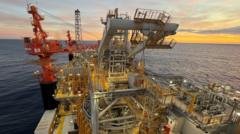
Eighty miles northwest of Shetland, the Atlantic Ocean rarely settles. High above the gray, churning water, a lone helicopter cuts through the drizzle, carrying crew members and visitors to a vessel anchored in one of the most hostile maritime environments on Earth. Here sits the Petrojarl Rosebank FPSO—a floating production, storage, and offloading vessel positioned at the exact geographical and political epicenter of Britain’s energy debate. A pending government decision on the Rosebank oil field approval has transformed this remote industrial outpost into a national battleground over climate responsibility, economic sovereignty, and the true cost of the transition away from fossil fuels.
The Rosebank oil field approval process represents a pivotal legal and economic clash over the future of North Sea fossil fuels. Situated 80 miles northwest of Shetland, the field holds an estimated 300 million to 500 million barrels of oil equivalent, positioning it as the UK's largest untapped offshore energy reserve.<\/p>
- Massive Reserve Potential: Rosebank holds an estimated 300 million to 500 million barrels of oil equivalent, potentially extending North Sea production for 25 years.
- Legal and Regulatory Hurdles: A landmark ruling by Edinburgh's Court of Session invalidated previous environmental consents, citing the omitted climate impact of burning extracted hydrocarbons.
- Economic Dilemma: Operators argue Rosebank strengthens UK energy resilience and Treasury revenues, while climate campaigners claim most crude will be exported to European refiners.
- Human Factor: Over 120 crew members on the Petrojarl Rosebank FPSO face severe North Atlantic weather while awaiting government decisions that directly dictate their long-term livelihoods.
We landed on the helideck on a chilly Wednesday morning, barely hours after energy regulators granted consent for production at the smaller Jackdaw gas field further east. Yet, political and public attention immediately gravitated toward Rosebank. It is vastly larger, considerably more lucrative for its developers, and infinitely more contentious. With Storm Boelo gathering strength on the horizon, the physical atmosphere on board mirrored the geopolitical climate brewing across the United Kingdom.
Life on the Edge: The Petrojarl Rosebank FPSO
Offshore reality feels radically different from political press releases in Westminster. On the deck of the Petrojarl Rosebank, routine dictates survival. “It’s good fun, it’s interesting, every day can change,” says Nicola Boyd, who manages the helideck. Boyd has spent nearly a decade working offshore, including a full year on Rosebank. Her pattern is grueling yet familiar to North Sea veterans: two weeks on board living in intense close quarters, followed by three weeks of shore leave.
Unlike fixed platforms, such as the Jackdaw facility east of Aberdeen, the Petrojarl Rosebank is a giant vessel chartered from Aberdeen-based Altera. It stays in position by rotating around a central turret anchored to the seabed, turning its bow constantly into the approaching weather to withstand heavy ocean swells. Even on an ordinary day, the ship rolls continuously. In winter, conditions worsen dramatically.
“Last week we had a 30-meter heave coming through. So we’ll probably suffer more of that as the winter goes on. The environment west of Shetland is about as harsh as you get anywhere in the world.”
Despite the isolation, life aboard the vessel operates with rhythmic precision. The crew of 122 engineers, technicians, caterers, and deckhands rely on top-tier facilities to maintain morale. Single-occupancy cabins, fully equipped gyms, saunas, and rec rooms provide relief after 12-hour shifts. The catering is legendary among offshore workers. Meals range from braised ox cheek and fresh mackerel to midnight breakfasts featuring tenderloin steak and chocolate brownies for the incoming night shift. Yet, under the comfort lies palpable tension. Every worker understands that their long-term employment hangs entirely on a signature in London.
Legal Roadblocks and the Scope 3 Emissions Precedent
The path toward the Rosebank oil field approval has been littered with fierce legal friction. Consent was originally granted under the previous Conservative administration in late 2023. However, environmental organizations Greenpeace and Uplift mounting legal challenges brought the project to a sudden halt at the Court of Session in Edinburgh.
Lord Ericht ruled that the approval granted for Rosebank—alongside the Jackdaw gas field—was unlawful. The core reason was legal failure to consider Scope 3 environmental impacts: the carbon emissions produced when the extracted crude and gas are burned in consumer vehicles, power plants, and home furnaces. While developers were allowed to continue preliminary construction and site preparation, commercial oil and gas extraction was frozen pending comprehensive, updated environmental evaluations.
Comparing Major UK Offshore Energy Projects
| Project Name | Primary Operators | Estimated Reserves | Key Economic & Environmental Impact |
|---|---|---|---|
| Rosebank Field | Adura (Shell/Equinor JV), Ithaca Energy | 300M – 500M barrels oil equivalent | Largest untapped UK field; potential 25-year operational lifespan; severe legal pushback on Scope 3 carbon output. |
| Jackdaw Field | Shell UK | 120M – 150M barrels oil equivalent | Primarily natural gas; fast-tracked to support UK domestic grid security; subject to parallel environmental litigation. |
| Moray West (Offshore Wind) | Ocean Winds | N/A (Renewable Power) | Generates 882 MW of clean electricity; powers roughly 1.3 million homes; highlights shift in North Sea labor market. |
Campaigners argue that sanctioning a project of Rosebank’s magnitude fundamentally undermines the UK’s legally binding climate commitments. “The future of the UK energy sector is renewable energy,” states Tessa Khan, executive director of Uplift. “Rosebank would be a disastrous decision and a terrible deal for ordinary taxpayers. Giving the green light to a massive new oil field actively destroys investor confidence in the green transition while generating record profits for foreign-backed energy giants.”
The Economics of Extraction: Tax Revenues vs. Green Export Realities
The financial debate surrounding North Sea fossil fuels centers on a disagreement over long-term value. Adura, an 80/20 joint venture between Norwegian state giant Equinor and Shell, holds the major stake in Rosebank. Adura Chief Executive Neil McCulloch remains firmly optimistic about the field’s potential, emphasizing that Rosebank is not solely an oil extraction play, but a critical gas infrastructure hub.
The field’s natural gas reserves are scheduled to be piped directly to Shetland and onward to the St Fergus terminal in Aberdeenshire. At peak production, McCulloch claims this gas alone could heat over 500,000 British homes. Furthermore, establishing the subsea infrastructure for Rosebank creates operational pathways to unlock four adjacent satellite gas discoveries: Tornado, Tornado East, Tobermory, and Suilven.
- Domestic Energy Contribution: Direct gas pipeline link to Scottish mainland processing hubs.
- Tax Revenues: Expected to contribute hundreds of millions in North Sea tax levies over its operating lifecycle.
- Supply Chain Anchor: Direct support for Aberdeen engineering firms and specialized maritime logistics.
- Export Debate: Most crude oil will be offloaded onto shuttle tankers via high-volume bow loading hoses and sold on open international markets, likely ending up in continental European refineries.
Opponents focus on this export mechanism. Because the UK’s domestic refining capacity is tailored primarily to lighter crude blends, much of Rosebank’s heavier crude will be shipped abroad. Climate advocates argue this disproves claims of direct UK energy security, leaving British consumers vulnerable to international price spikes while bearing the ecological risk.
The Human Factor Amidst a Changing Climate Policy
Inside the Petrojarl Rosebank’s glowing control room, macro-level debates over fuel economics give way to practical concerns. Production supervisor Douglas Hogge manages the teams tasked with subsea safety. For him and his colleagues, approving the field represents professional stability for decades.
“For myself and a lot of the guys here, production approval would see us right through to retirement,” Hogge explains, watching monitor screens tracking subsea valves hundreds of meters below the swell. “We need to see this approved. The expertise on this ship is world-class.”
The human elements of offshore life are marked by personal sacrifices. Workers spend weeks away from home, missing birthdays, anniversaries, and family milestones. Steward Liam Davidson admits his biggest longing during his 14-day shift is simple: returning home to his French bulldog, Bailey. For helideck lead Nicola Boyd, it is her own bed and a hot takeaway pizza. Yet, as our helicopter exit window narrowed, a Met Office amber weather warning began sweeping across Scotland. Flights were grounded, holding crew and visitors captive as North Atlantic winds battered the hull.
Navigating the Strategic Crossroads of the North Sea
The broader context for the UK energy sector is undeniably one of structural decline. UK continental shelf oil production peaked twenty-five years ago. While industry advocates argue that domestic extraction produces far lower transport emissions than importing liquefied natural gas (LNG) from abroad, labor statistics show fossil fuel jobs disappearing faster than green energy positions are created.
The pending decision on the Rosebank oil field approval puts Energy Secretary Miatta Fahnbulleh and the UK government in a tough spot. Denying approval risks legal challenges from field developers, damages regional employment in North East Scotland, and could reduce short-term Treasury tax receipts. Conversely, granting approval risks alienating climate-conscious voters, breaching international decarbonization pledges, and inviting further court actions.
As the Petrojarl Rosebank pitches in the darkening North Atlantic, its bright yellow gantry lights shine through the mist like a beacon. The vessel stands as a testament to engineering capability, operating where nature is at its most punishing. Whether it becomes a functioning cornerstone of British energy production or an abandoned symbol of an ending fossil fuel era now depends entirely on decisions made hundreds of miles away in Westminster courtrooms and cabinet offices.
<button type="button" onclick="this.parentElement.innerHTML='✓ Thank you, we will refine our analysis!‘” style=”background:#ffffff; border:1px solid #cbd5e1; border-radius:6px; padding:4px 12px; font-size:12px; cursor:pointer; color:#334155;”>👎 No
Latest Analytical Follow-up: For continuous developments on this subject, read our full investigation on Families Needing Christmas Help Rise Amid Economic Strain.
Latest Analytical Follow-up: For continuous developments on this subject, read our full investigation on Charity Gift Campaign Faces Record Demand as Costs Bite.
