
Epstein Associate Model Agency Links Exposed by Survivors
When 18-year-old Roza landed in New York from Uzbekistan in 2009, she believed she was stepping onto the fast track of international fashion. Instead, within four weeks of her arrival, her management dispatched her to a beachfront estate in Palm Beach, Florida. The client was not a fashion house. It was Jeffrey Epstein—then serving a jail sentence for soliciting a minor for prostitution, yet permitted under a controversial work-release arrangement to spend twelve hours a day at his private residence. The role of an Epstein associate model agency in facilitating these visits is now facing unprecedented scrutiny as survivors break their silence.
Investigative findings and newly released Department of Justice documents reveal how an Epstein associate model agency network, including former executives at MC2 Model Management and Next Management, funneled young aspiring models directly into Jeffrey Epstein's Florida and New York residences following his 2008 sex offense conviction.<\/p>
- Systemic Vulnerability: Model agencies acted as direct pipelines, channeling young, non-citizen models to Jeffrey Epstein even after his 2008 conviction for child sex offences.
- Corporate Continuity: Following public exposure and dissolution, executives like Jeff Fuller transitioned dozens of signed models into new ventures like The Source Models.
- Financial Links: Newly unsealed Department of Justice files confirm a $1 million payment from Epstein to MC2 Model Management, contradicting prior executive denials.
- Legislative Push: New York State Senator Zellnor Myrie has proposed a landmark bill to strip corporate immunity from agencies and scouts who enabled trafficking operations.
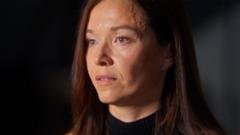
“My agency’s job was to protect me, and they failed,” Roza stated in a groundbreaking interview with BBC Eye. “In fact, they put me in danger. And for that, they should be held accountable.” Her account, backed by flight receipts and newly unsealed U.S. Department of Justice (DOJ) documents, exposes the hidden scaffolding that sustained Epstein’s predatory network long after his legal troubles became global news.
Inside the Epstein Associate Model Agency Pipeline
The agency that represented Roza in 2009 was the U.S. branch of MC2 Model Management. At the helm was Jeff Fuller. According to records reviewed by investigators, Fuller arranged Roza’s travel details, including return flights from Palm Beach following pseudo-photoshoots that took place inside Epstein’s mansion. Roza recalls that the shoots lacked industry basics: there were no professional stylists, no hair artists, and the images were never published. The woman holding the camera was Epstein’s then-girlfriend, Nadia Marcinko.
These staged sessions were merely the hook. Shortly thereafter, Epstein hired Roza as a personal assistant—a structural pattern highlighted by legal representatives as a primary recruitment tactic. What followed was a multi-year nightmare of systematic sexual violence.
“Epstein said to many people he wanted three different girls a day. Think about those numbers… The model scouts were really critical because they were the ones who were identifying the type of woman that Epstein liked.”
— Sigrid McCawley, Lead Counsel for over 100 Epstein survivors
While Fuller previously denied knowledge of Roza’s presence at the estate, DOJ files reveal an intimate commercial rapport between the agent and the financier. In a March 2012 email exchange uncovered by federal prosecutors, Fuller wrote to Epstein regarding another young woman: “Had it not been for you, we would have fired her months ago. And I would be careful as she blabs about things.”
Corporate Rebranding and Escaping Liability
The mechanics of the modeling industry have long relied on opaque corporate structures that allow executives to dodge liability when scandals erupt. In August 2019, one month after federal agents arrested Epstein at Teterboro Airport, MC2’s U.S. arm dissolved. Yet, the business hardly vanished.
Fuller immediately launched a new enterprise: The Source Models. According to investigative findings, at least 50 models previously signed to MC2 were quietly transferred onto the roster of Fuller’s new entity, which continues to operate in the fashion capital today. Requests for comment sent to The Source Models went unanswered.
The Paper Trail: Financial Ties and Unsealed DOJ Files
For years, agency executives maintained that Epstein was merely a peripheral acquaintance with zero stake in their fashion businesses. However, institutional audit records released by the Department of Justice paint a radically different picture of financial dependency.
- Direct Capital Injections: DOJ financial ledgers show Epstein wired $1 million (£742,000) to MC2 in 2005 alone—a time when leadership publicly disavowed any financial relationship with him.
- Post-Conviction Access: Records confirm that at least 10 models signed to MC2 maintained active communication or personal meetings with Epstein after his 2008 conviction for sex offenses against a child.
- Targeted Recruitment: Former model agent Ramsey Elkholy tried to connect 34 women to Epstein, including an 18-year-old high school student, using custom assistant positions as entry points.
Elkholy responded to media inquiries by rejecting claims that he facilitated abuse, asserting he was “misguidedly” believing Epstein’s version of his 2008 non-prosecution agreement and attempting only to help models secure professional avenues. Yet, court documentation shows Elkholy instructed Epstein’s inner circle to isolate target models socially before introducing them to the financier in Manhattan.
Institutional Breakdown Across the Fashion Landscape
The reach of Epstein’s agency connections extended far beyond a single firm. Survivor testimony points to a broad culture of quiet collusion across top-tier management groups. Another survivor, speaking under the pseudonym Simona, disclosed that Epstein raped her more than 200 times after she was brought to New York from Eastern Europe at age 20.
Simona was already signed with a prominent New York agency when Epstein promised to introduce her to high-level fashion figures, including Faith Kates, the former head and current director of Next Management. According to Simona, Kates met her at Epstein’s request, suggested cosmetic surgery, and sent a surgeon’s details directly to Epstein. Shortly after, Epstein pressured Simona to quit modeling entirely to become his full-time assistant, locking her into two years of captivity and abuse.
Legal counsel representing Faith Kates categorically denied the allegations, describing Kates as another party “grossly misled by Epstein” who never suggested cosmetic procedures to signed talent. Next Management declined requests for formal comment.
| Entity / Key Figure | Historical Link to Epstein | Documentation / Evidence | Current Operational Status |
|---|---|---|---|
| Jeff Fuller (MC2 Management) | Booked talent travel to Epstein premises post-2008 conviction. | DOJ emails; Flight expense statements; 2012 warning correspondence. | President at The Source Models (50+ models transferred). |
| MC2 Model Management | Received direct funding; served as primary recruiting ground. | $1M wire transfer record (2005); DOJ communications files. | U.S. Branch dissolved in August 2019. |
| Ramsey Elkholy (Former Agent) | Attempted to link 34 young women to Epstein network. | DOJ agency communications; Victim testimony records. | Independent consultant; denies knowledge of abuse. |
| Faith Kates (Next Management) | Met models at Epstein’s explicit request; medical referrals. | DOJ visitor logs; Survivor statements. | Stepped down as CEO (Dec 2023); remains corporate Director. |
Challenging the Immunity of Enablers: Legislative Action
Until recently, legal action against third-party enablers was bottlenecked by systemic loopholes. A prior statement from federal prosecutors indicating that no evidence warranted further charges against “uncharged third parties” sparked public outrage. Now, lawmakers are moving to strip corporate shields from those who operated the supply chains of abuse.
New York State Senator Zellnor Myrie has introduced a pivotal sex trafficking bill NY designed to close civil immunity gaps. The proposed legislation explicitly targets agencies, scouts, and executives who turned a blind eye while profiting from predatory arrangements.
“If you were sending models to Epstein and you knew what Epstein was doing, or you should have known what he was doing, you will be held accountable,” Senator Myrie emphasized during a Capitol briefing. The bill seeks to establish a legal standard of constructive knowledge—meaning executive ignorance is no longer an acceptable defense when clear red flags exist.
Advocacy Groups Demand Systemic Reform
Industry watchdogs argue that the modeling industry’s lack of oversight makes it uniquely susceptible to labor exploitation and trafficking. Sara Ziff, founder of the Model Alliance, has long criticized the structural impunity of model management agencies.
“Often, model agencies are the problem,” Ziff stated. “They are the link between the model and these predatory men. Modeling agencies in New York are currently classified as employment agencies, yet they operate with virtually no regulatory oversight, leaving young, vulnerable workers without basic labor protections.”
The Long Road to Accountability
For survivors like Roza and Simona, the fight extends beyond individual closure—it is about dismantling the financial incentives that allowed an Epstein associate model agency network to operate unchecked. The myth that victims voluntarily accepted these arrangements in exchange for career advancement is actively crumbling under the weight of primary evidence.
“People think that we gained something, that we agreed on this abuse in order to gain something, whether it’s monetary or influential, but it’s not true,” Simona reflected. “We’re left with deep trauma.”
Roza’s decision to reveal her identity and share her flight records marks a critical turning point in the post-Epstein investigations. By exposing how corporate rebrands and silent transfers permitted suspected enablers to maintain their industry status, survivors are forcing a long-overdue reckoning within fashion boardrooms.
“There are many, many survivors out there who never speak, because it’s scary,” Roza said. “So to all my sister survivors… you know me now. You know my name. I say, reach out.”
<button type="button" onclick="this.parentElement.innerHTML='✓ Thank you, we will refine our analysis!‘” style=”background:#ffffff; border:1px solid #cbd5e1; border-radius:6px; padding:4px 12px; font-size:12px; cursor:pointer; color:#334155;”>👎 No
