
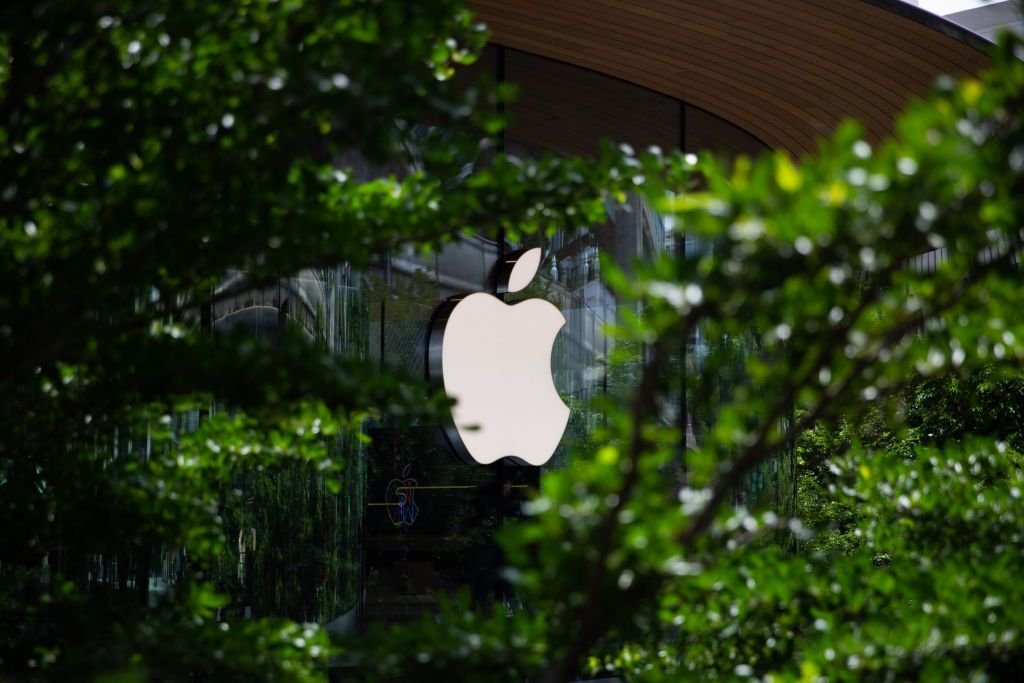
Why the Architect of Apple Retail Rejects the Agentic Commerce Future
Silicon Valley is currently pouring billions of dollars into a hands-free, automated retail utopia. Yet, the visionary architect who built Apple’s iconic brick-and-mortar empire remains deeply skeptical about the agentic commerce future being sold by tech giants. Ron Johnson, the retail pioneer who worked alongside Steve Jobs to launch Apple’s physical stores in 2000, argues that the technology industry is fundamentally misjudging human nature and the visceral psychology of how people spend their money.
The agentic commerce future refers to an ecosystem where autonomous AI agents handle product discovery, comparison, and purchasing on behalf of consumers. While tech giants are investing billions in this technology, retail pioneer Ron Johnson argues it will fail for high-value, personal purchases because AI cannot replicate the tactile validation, trust, and human connection found in physical retail environments.<\/p>
- The Tactile Barrier: Consumers refuse to delegate high-value, highly personal purchases (like a $2,000 laptop) to AI agents without physical interaction.
- The Human Premium: Apple's retail success was built on non-commissioned, empathetic human interactions, a variable that algorithms cannot replicate.
- AI as an On-Ramp: Instead of replacing physical stores, AI will serve as an advanced pre-purchase research tool, driving highly informed traffic to brick-and-mortar locations.
- The Danger of Over-Innovation: Johnson's past experiences at J.C. Penney and Enjoy Technology highlight the perils of forcing technological change faster than consumer behavior can adapt.
As tech conglomerates race to build autonomous AI agents designed to shop on our behalf, Johnson stands as a grounded counterweight. At 66, he has spent decades watching technologists predict the imminent demise of physical stores. Each time, those predictions have crumbled against the enduring human desire for physical touch, sensory validation, and real-world connection.
“AI is a new technology that will improve the online shopping experience. But I don’t know that it’s going to change which way we shop.”
— Ron Johnson
Why the Agentic Commerce Future Will Stumble on Human Psychology
The current Silicon Valley gold rush is focused heavily on “agentic commerce”—a paradigm where software agents handle everything from product discovery to final checkout. Google is aggressively laying the groundwork for this shift with its Universal Commerce Protocol, a standardized framework designed to let AI agents seamlessly navigate the web, compare products, and execute transactions. Simultaneously, OpenAI is positioning ChatGPT as a comprehensive shopping destination, transforming its conversational interface into a transactional engine where users can research and purchase products without ever visiting a traditional e-commerce website.
But this vision of frictionless, automated purchasing ignores a critical barrier: trust. When asked whether he could envision a consumer delegating the purchase of a $1,000 or $2,000 laptop entirely to an AI agent, Johnson’s response was unequivocal: “Honestly, nobody’s going to do that.”
Buying a high-value item is not merely a logical optimization problem that can be solved by an algorithm. It is an emotional, sensory experience. A laptop is an extension of one’s daily life, creative output, and professional identity. Buyers want to feel the chassis, test the keyboard travel, assess the display’s color accuracy, and physically weigh their options. While Bloomberg reports massive venture capital inflows into AI-driven consumer startups, the practical reality of consumer behavior suggests a hard ceiling for automated purchasing.
The Limits of AI-Driven Product Discovery
AI is undeniably exceptional at processing vast amounts of structured data. It can scan thousands of user reviews, compare technical specifications across dozens of websites, and find the absolute lowest price in milliseconds. This capability will undoubtedly revolutionize AI-driven product discovery. However, discovery is only the first step in a complex psychological journey.
When a purchase carries significant financial or personal risk, the consumer’s primary objective shifts from efficiency to risk mitigation. An AI agent can recommend the theoretically perfect product based on data points, but it cannot provide the emotional reassurance that comes from physical interaction. For high-ticket items, the digital interface remains a preliminary research tool, not the final destination.
The Apple Retail Store Strategy: A Masterclass in Human Connection
To understand Johnson’s skepticism, one must examine the foundational principles of the Apple retail store strategy. When Apple entered the retail space in 2000, online shopping was beginning its first major wave of expansion. Critics and industry analysts widely predicted that Apple’s expensive, glass-heavy physical storefronts would be a colossal failure. They argued that consumers would prefer the convenience and lower costs of buying computers online.
They were wrong. Johnson and Jobs realized that the computer was becoming the digital hub of the modern home, making it too important and too complex to be bought from a sterile webpage. They designed Apple stores not as mere distribution centers, but as experiential community hubs. The focus was on three core pillars:
- Tactile Exploration: Every product was unboxed, powered on, connected to the internet, and placed at a height that invited touch.
- Empathetic Support: The creation of the Genius Bar turned technical troubleshooting into a face-to-face, reassuring human interaction.
- Non-Commissioned Relationships: Apple Store employees were paid flat salaries rather than sales commissions, removing the transactional pressure common in traditional retail.
This human-centric approach transformed Apple Retail into the most profitable retail space per square foot in history. Competitors rushed to copy the clean aesthetics, open layouts, and minimalist wood tables, but they consistently missed the underlying philosophy. “The secret sauce for Apple has always been its people, the people in the store, and how they treat the customer,” Johnson notes. An algorithm can optimize a transaction, but it cannot build a relationship.
The table below highlights the stark contrast between the capabilities of autonomous AI shopping agents and the unique value proposition of physical, human-centric retail:
| Feature / Dimension | Autonomous AI Shopping Agents | Physical Experiential Retail |
|---|---|---|
| Product Discovery Speed | Instantaneous; analyzes millions of data points in real-time. | Slower; limited to physical inventory and layout. |
| Tactile & Sensory Validation | None; relies entirely on digital representations and reviews. | Complete; allows physical touch, testing, and scaling. |
| Trust & Risk Mitigation | Low to Moderate; based on algorithmic probability. | High; reinforced by face-to-face human interaction. |
| Transactional Friction | Zero; automated checkout and background payment. | Moderate; requires physical presence and checkout queues. |
| Post-Purchase Reassurance | Automated chatbots and ticket-based support systems. | Immediate, empathetic troubleshooting (e.g., Genius Bar). |
The Perils of Over-Innovation: Lessons from J.C. Penney and Enjoy
Johnson’s insights are not merely theoretical; they are forged in the fires of both historic retail triumphs and high-profile corporate setbacks. After his legendary run at Apple, Johnson took the helm of J.C. Penney in 2011 with an ambitious, highly publicized plan to completely reinvent the struggling department store chain. He attempted to eliminate coupons, transition to everyday low pricing, and transform the stores into collections of branded boutiques.
The results were disastrous. Sales plummeted, and Johnson was ousted in less than two years. Reflecting on that period, Johnson acknowledges that he made the classic mistake of trying to force too much change, too quickly, without bringing the existing customer base along. “I applied a startup mentality to what needed to be a turnaround transformation,” he admits. The experience taught him a permanent lesson about the limits of disruptive innovation: you cannot force consumers to adopt behaviors they are not psychologically ready for.
Later, Johnson founded Enjoy Technology, an e-commerce startup designed to bridge the gap between online convenience and physical service by delivering high-end tech products directly to consumers’ homes and setting them up on the spot. Despite raising significant capital, Enjoy filed for bankruptcy in 2022, eventually selling its assets to Asurion. This venture further solidified Johnson’s understanding of the immense operational complexities and high costs associated with trying to bypass traditional retail infrastructure.
These experiences explain why Johnson is highly sensitive to the current hype surrounding conversational AI shopping. Silicon Valley engineers often operate with a pure startup mentality, assuming that because a technology is elegant and efficient, consumers will naturally abandon their deeply ingrained shopping habits. But as Johnson learned firsthand, human behavior is remarkably stubborn.
Physical Retail vs. E-Commerce: The Hybrid Reality
Despite his skepticism regarding autonomous purchasing, Johnson is quick to clarify that he is not a tech skeptic. “I’m a real believer in AI. I’m an AI optimist,” he asserts. He does not view the debate as a zero-sum war of physical retail vs e-commerce. Instead, he foresees a highly integrated, hybrid ecosystem where AI acts as an informational runway rather than a replacement for the physical store.
In this hybrid model, AI agents will dramatically streamline the pre-purchase phase. Instead of spending hours scrolling through search engine results, reading contradictory blog posts, and watching endless video reviews, consumers will use conversational AI to synthesize information, narrow down choices, and clarify their specific needs.
However, once the digital research is complete, the consumer will not click “buy” via their AI agent. Instead, they will walk into a physical store, armed with precise knowledge, to experience the product in person before finalizing the transaction. “They’ll just become more informed shoppers when they come to the store,” Johnson explains. In essence, AI will not destroy physical retail; it will make physical retail more efficient by sending highly qualified, high-intent buyers through the door.
The Steve Jobs Philosophy on Intuition and Technology
In his new book, Shop Different: How Retail Revealed Apple’s Genius, Johnson revisits the intense collaborative process of building Apple’s retail footprint alongside Steve Jobs. He believes that Jobs, a legendary perfectionist who obsessed over the user experience, would have enthusiastically embraced artificial intelligence as a tool to enhance human capability. However, Jobs would have fiercely rejected the idea of outsourcing human judgment and taste to an algorithm.
“There’s no substitute for human intuition,” Johnson says, recalling Jobs’ deeply held belief in the power of bringing creative, passionate people together to debate problems and discover unexpected solutions. Intuition is not a calculation; it is a synthesis of lived experience, emotional resonance, and creative leaps. While an AI can analyze historical purchasing data to predict what a consumer might want next, it cannot replicate the spark of delight that occurs when a customer discovers something they didn’t even know existed, guided by an empathetic human associate in a beautifully designed physical space.
According to industry reports from Reuters, physical retail store openings have actually outpaced closures in several major markets post-pandemic, reinforcing Johnson’s thesis that the physical storefront remains the ultimate anchor of brand loyalty and high-margin sales.
The Path Forward: Human-Centric AI Integration
As retail brands navigate the noise of the generative AI boom, the smartest operators will heed Johnson’s warnings. The brands that succeed in the coming decade will not be those that attempt to fully automate the customer journey, but those that use AI to empower their human workforces.
Imagine a retail environment where an AI assistant provides a store associate with real-time insights into a customer’s preferences, past purchases, and online research history the moment they walk through the door. This allows the associate to deliver a highly personalized, deeply empathetic service experience that no machine could ever replicate on its own. This is the true potential of AI in retail: technology serving as an enabler of human connection, rather than a replacement for it.
The Silicon Valley dream of a fully automated, agentic commerce future is a fascinating engineering challenge, but it is a psychological mismatch for the way humans actually live, touch, and buy. As Ron Johnson’s career demonstrates, the most successful retail innovations are those that align with, rather than fight against, the fundamental truths of human nature.
<button type="button" onclick="this.parentElement.innerHTML='✓ Thank you, we will refine our analysis!‘” style=”background:#ffffff; border:1px solid #cbd5e1; border-radius:6px; padding:4px 12px; font-size:12px; cursor:pointer; color:#334155;”>👎 No
