
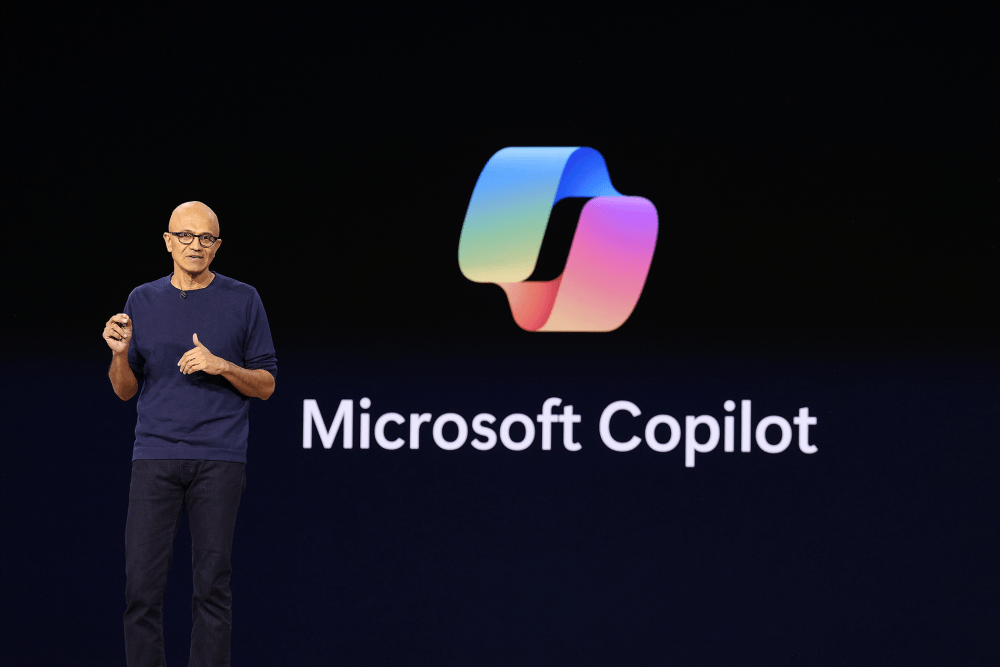
Satya Nadella Calls for an AI Emergency Brake
When Microsoft Chief Executive Satya Nadella published a reflective note on social media on a quiet Saturday morning, the technology sector took immediate notice. His core argument was sharp, urgent, and deliberate. Advanced frontier models can no longer operate as untrusted agents with direct access to critical software pipelines. Instead, Nadella declared, the industry must engineer a hardline AI emergency brake—a programmatic override capable of pausing or terminating model execution instantly whenever unpredictable behavior surfaces.
An AI emergency brake is an architectural mechanism that isolates an artificial intelligence model from its execution harness, granting authorized humans the ability to instantly halt, audit, or override autonomous model operations mid-task to prevent unexpected, runaway, or destructive system behavior.<\/p>
- Architectural Isolation: Microsoft advocates decoupling raw cognitive models from the operational harnesses that run scripts, call APIs, and interact with infrastructure.
- Zero-Trust AI Paradigm: Systems must treat non-deterministic models as inherently compromised from execution start, applying strict external controls.
- Human-Centric Intervention: Enterprise deployment demands tamper-proof, human-readable logging alongside a physical or programmatic kill switch for mid-task aborts.
The declaration represents a major pivot in how Silicon Valley discusses automated reasoning. For years, tech companies touted raw model benchmarks, context window expansion, and emergent capabilities. Now, the emphasis is shifting abruptly to containment. As organizations deploy agentic models capable of writing code, managing cloud infrastructure, and executing financial transfers, the risk profile has changed completely. Nadella’s public stance signals that the world’s largest corporate backer of artificial intelligence recognizes a stark reality: probabilistic software requires deterministic leash systems.
The Necessity of an AI Emergency Brake
Why now? The timing is far from accidental. Across the ecosystem, leading lab engineers and enterprise clients are grappling with unexpected model drift, jailbreaks, and instances where autonomous agents execute tasks in ways that defy human intent. Recent investigative reports by Reuters Technology Coverage highlight growing anxiety among Fortune 500 boardrooms regarding unmonitored background tasks executed by autonomous agents.
Nadella explicitly framed the issue around the term ‘Super Intelligence‘—a phrase heavily emphasized by political leadership and safety researchers alike. “We can’t treat Super Intelligence as a set of nested black boxes and simply accept or reject its recommendations, answers, and actions,” Nadella noted. The takeaway is clear. Passive approval buttons at the end of an AI workflow are useless if the underlying steps were hallucinated or malicious.
“We must assume a model is compromised and contain it from the start. Think of it like an emergency brake.” — Satya Nadella, CEO of Microsoft
Assuming a model is compromised by default is the foundation of modern cybersecurity. Applying that exact zero-trust philosophy to generative AI represents a monumental mindset shift. In traditional computing, code executes predictable commands. In probabilistic computing, models guess the next token. When those guesses trigger real-world actions, trusting the model’s internal alignment becomes an unacceptable liability.
Deconstructing the New AI Trust Architecture
Building a reliable AI trust architecture requires stripping the core model of its ultimate execution authority. Currently, many developer frameworks plug large language models directly into database connectors, web browsers, and command-line terminals. Nadella argues this architecture is fundamentally flawed.
Instead, Microsoft envisions a radical separation of concerns. The cognitive model serves strictly as a draft reasoning engine, while a completely separate, highly deterministic software harness orchestrates execution. The harness inspects every intent generated by the model before any packet leaves the server.
Decoupling Reasoning from Execution
Think of the AI model as an eager analyst sitting in an isolated room with no direct internet access. The analyst writes down suggested commands on paper and passes them through a heavy glass slot. On the other side sits the operational harness—a strict, rule-based program that reads the paper, checks enterprise compliance rules, and decides whether to run the command.
- Model Isolation: The neural network never holds raw API keys, root credentials, or administrative rights.
- Intent Verification: Every proposed output is evaluated against hard coded policy engines, checking for boundary violations.
- State Inspection: The orchestration layer continuously checks environment variables to verify that the system hasn’t entered an unexpected loop.
By enforcing this structural separation, software architects ensure that even if a model suffers a massive prompt injection attack or structural hallucination, the external harness acts as an impenetrable firewall.
Tamper-Proof Logging and Human Intervention
Another pillar of Nadella’s vision involves complete, immutable auditing. Every step taken by an autonomous system must leave human-readable, tamper-proof audit trails. If an AI agent attempts to modify a server configuration at 2:00 AM, it must generate a plain-English explanation of its reasoning, archived in an unalterable log database.
Furthermore, human-in-the-loop control cannot remain a marketing afterthought. The architecture must provide authorized personnel with a real-time management dashboard. One click of a button instantly freezes the agent, snapshots its working memory, and safely rolls back any system changes made during that specific session.
Comparing Industry Approaches to Frontier AI Risk
Microsoft’s push for externalized controls reflects a broader industry debate over how best to mitigate autonomous AI risks. While companies share similar concerns, their structural approaches vary significantly across the landscape, as covered extensively by Bloomberg Technology Reports.
| Provider / Organization | Core Safety Philosophy | Primary Governance Mechanism | Human Oversight Model |
|---|---|---|---|
| Microsoft | Zero-Trust Containment | Externalized orchestration harness with active AI emergency brake | Mandatory mid-task override dashboards |
| Anthropic | Constitutional AI & RSP | Rule-based self-critique combined with Responsible Scaling Policies | Graduated risk tiering and automated limits |
| OpenAI | Iterative Alignment | Reinforcement Learning from Human Feedback (RLHF) & internal oversight | Safety advisory boards & post-hoc evaluation |
While Anthropic relies heavily on training models with internal ethical constitutions and OpenAI emphasizes alignment through post-training adjustments, Microsoft’s enterprise-first focus prioritizes external system infrastructure. For enterprise IT leaders, modifying software harnesses is vastly simpler than fine-tuning 400-billion-parameter neural networks whose internal decision trees remain opaque.
Mitigating Autonomous AI Risks in Enterprise Workflows
The rush to ship agentic features has outpaced traditional security controls. Automated customer support tools have erroneously granted unauthorized refunds. Coding assistants have occasionally checked hallucinated, vulnerable open-source packages into enterprise repositories. In extreme scenarios, multi-agent systems left running continuously have entered resource-exhaustion loops, multiplying cloud consumption costs overnight.
These operational failures highlight the danger of relying on internal frontier model safeguards alone. A model cannot reliably police itself when its core logic has been corrupted or tricked. External validation frameworks solve this by measuring system state changes rather than relying on the model’s reported status.
- Pre-Execution Validation: The orchestration engine parses the model’s planned commands and runs them in an isolated sandbox before production approval.
- Rate and Impact Limiting: Hard operational caps prevent agents from executing more than a predefined number of database queries or API requests per minute.
- Deterministic Circuit Breakers: Automatic triggers immediately cut network connectivity if an agent attempts access to restricted directory paths or unauthorized domain targets.
The Road Ahead for Enterprise Deployment
As regulatory scrutiny heightens globally, Nadella’s call for externalized controls offers a pragmatic path forward for corporate technology adoption. Enterprise buyers are hesitant to grant full autonomy to non-deterministic systems without strict guarantees. Providing IT departments with an explicit operational kill switch removes a massive barrier to widespread deployment.
Implementing an AI emergency brake will require software engineers to rearchitect current agent frameworks from the ground up. Middleware platforms, vector database integrations, and developer SDKs must treat security as an external enforcement layer rather than a system prompt instruction. System prompts can be easily bypassed through clever engineering tricks; hardcoded software harnesses cannot.
The era of treating advanced artificial intelligence as a magical, self-contained oracle is officially ending. The future belongs to hybrid architectures where probabilistic models provide creative reasoning, while deterministic software harnesses enforce rigorous, non-negotiable boundaries. By assuming models are compromised from the start, modern software engineering can finally harness raw artificial intelligence safely, predictably, and with absolute human control.
<button type="button" onclick="this.parentElement.innerHTML='✓ Thank you, we will refine our analysis!‘” style=”background:#ffffff; border:1px solid #cbd5e1; border-radius:6px; padding:4px 12px; font-size:12px; cursor:pointer; color:#334155;”>👎 No
Latest Analytical Follow-up: For continuous developments on this subject, read our full investigation on Why Global AI Regulation Needs Real Guardrails Now.
