
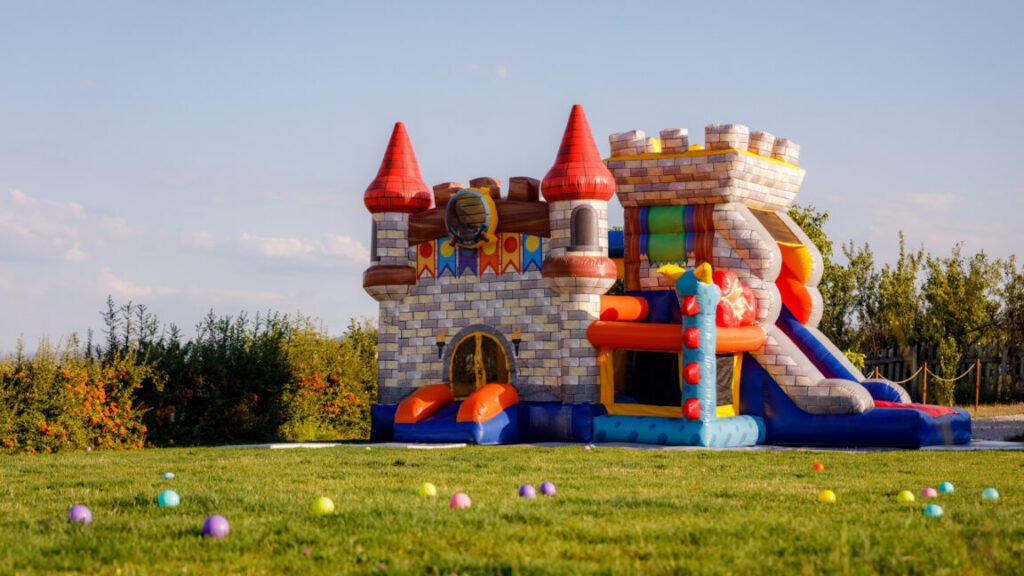
Bouncy Castle MRSA Outbreak: Ireland’s Novel Pathogen Crisis
In the autumn of 2025, a historic bouncy castle MRSA outbreak in Ireland infected 48 children, marking a chilling precedent in pediatric public health and recreational safety. What was intended to be a routine neighborhood gathering—complete with a barbecue, sweets, and three large inflatable bouncy castles—rapidly devolved into a localized epidemiological emergency. Within days of the event, dozens of children developed aggressive, painful skin and soft-tissue infections, prompting a multi-agency investigation that ultimately exposed a novel transmission vector for drug-resistant pathogens. This incident represents the first documented global link between commercial inflatable play structures and the rapid spread of community-associated methicillin-resistant Staphylococcus aureus (MRSA).
The historic bouncy castle MRSA outbreak in Ireland infected 48 children with a hypervirulent, multidrug-resistant strain of Staphylococcus aureus (t016-ST22-MRSA-IV). Sparked by warm, humid conditions and rough play, this incident represents the first documented global transmission of community-associated MRSA linked directly to inflatable recreational structures.
- Unprecedented Transmission Vector: This incident represents the first documented global instance of a community-associated MRSA outbreak linked directly to the use of commercial bouncy castles.
- Hypervirulent Strain Identified: Genomic sequencing confirmed the pathogen was the t016-ST22-MRSA-IV strain, which produces the destructive Panton-Valentine leukocidin (PVL) cytotoxin.
- Environmental Catalysts: High humidity, rain, prolonged exposure (up to six hours), and micro-abrasions from rough play created the perfect environment for rapid bacterial colonization.
- Urgent Regulatory Need: Public health officials are calling for standardized, mandatory sanitation and decontamination protocols for commercial inflatable rental companies worldwide.
1. Executive Summary & Strategic Importance
The outbreak occurred during a community event in Ireland attended by approximately 120 individuals, roughly half of whom were children and adolescents. Within 24 to 96 hours following the event, pediatric attendees began presenting with severe dermatological symptoms, including rapidly progressing pustules, painful blisters, and deep tissue abscesses. In total, 48 children were diagnosed with acute infections. Of these, 33 required intervention from primary care physicians, 15 sought emergency department care, and four were hospitalized due to the severity of their symptoms or systemic complications. Fortunately, all affected children eventually recovered following targeted clinical interventions.
This outbreak is of profound strategic importance to public health authorities, pediatricians, and the commercial leisure industry. Historically, MRSA has been categorized primarily as a healthcare-associated pathogen, thriving in clinical environments such as hospitals and long-term care facilities. However, this event highlights the growing threat of community-associated MRSA transmission in non-clinical, highly social settings. By identifying commercial inflatables as a high-risk vector, this case challenges existing assumptions regarding recreational hygiene, exposure risks, and the regulatory oversight of the party rental industry.
The rapid mobilization of local health officials, triggered nine days after the event by the hospitalization of a 12-year-old boy, allowed epidemiologists to trace the infection back to the bouncy castles. Genomic sequencing of clinical isolates revealed a highly virulent, multidrug-resistant strain of MRSA, emphasizing the critical need for robust public health surveillance and modernized sanitation standards for shared recreational equipment.
2. Historical Background & Contextual Evolution
To understand the significance of this outbreak, it is essential to examine the evolutionary trajectory of methicillin-resistant Staphylococcus aureus. First identified in the 1960s, MRSA arose due to the widespread clinical use of semi-synthetic penicillin derivatives. For decades, MRSA remained largely confined to healthcare settings (HA-MRSA), affecting elderly, immunocompromised, or surgically vulnerable patients. However, the late 1990s witnessed the emergence of community-associated MRSA (CA-MRSA) strains, which possess distinct genetic profiles, higher virulence factors, and the ability to infect young, healthy populations with no prior healthcare exposure.
CA-MRSA strains are notoriously associated with environments characterized by the “5 Cs”: Crowding, frequent skin-to-skin Contact, Compromised skin (cuts or abrasions), Contaminated items and surfaces, and Cleanliness gaps. Typical vectors have historically included contact sports facilities, military barracks, correctional institutions, and daycare centers. However, the commercial inflatable rental market had never been formally implicated in a major outbreak of this nature.
Bouncy castles present a unique, highly concentrated convergence of all five “Cs.” The interior of an inflatable structure is a closed, high-friction environment constructed from synthetic PVC or vinyl. When multiple children play inside for extended periods, the combination of physical exertion, warm microclimates, and rough-and-tumble play leads to sweating, skin-to-skin contact, and minor epidermal abrasions. If the vinyl surfaces are not rigorously sanitized between events, they become highly effective fomites, harboring and preserving viable bacterial colonies that can easily penetrate compromised skin barriers.
3. In-Depth Technical & Policy Breakdown
The epidemiological investigation, subsequently detailed in the peer-reviewed journal Eurosurveillance, utilized advanced genomic sequencing to identify the precise microbiological culprit. The analysis confirmed that the outbreak was driven by a rare and highly aggressive strain designated as t016-ST22-MRSA-IV. This specific strain is particularly dangerous because it carries the genes responsible for producing Panton-Valentine leukocidin (PVL), a potent cytotoxin that targets and destroys human white blood cells, specifically polymorphonuclear leukocytes.
The Pathophysiology of PVL-Producing MRSA
The presence of the PVL toxin fundamentally altered the clinical presentation and speed of the infections. When PVL-producing bacteria colonize a host, the toxin destroys local immune cells, triggering an intense, destructive inflammatory response. This leads to rapid tissue necrosis and the formation of painful, deep-seated abscesses. Consequently, patients exhibit severe Panton-Valentine leukocidin symptoms, which include rapidly expanding necrotic skin lesions, severe localized pain, and systemic inflammatory responses. In the Irish cohort, the incubation period was dramatically compressed; while standard MRSA strains typically incubate over 4 to 10 days, many of the infected children developed visible pustules and lesions within hours of leaving the bouncy castles.
The Bouncy Castle MRSA Outbreak Investigation
Epidemiologists from the Irish health service conducted extensive interviews with the families of the attendees. The data revealed that out of the 48 infected children, 47 had spent significant time inside the three bouncy castles, with some playing continuously for five to six hours. The single infected child who did not enter the inflatables had documented close, direct contact with an infected sibling immediately after the event, confirming a single secondary transmission event. The geographic distribution of the lesions further supported the bouncy castle hypothesis: the vast majority of pustules and abscesses were concentrated on the children’s lower extremities, particularly their thighs and knees, which frequently made high-friction contact with the vinyl slides and bounce floors.
The environmental conditions on the day of the event acted as a powerful catalyst. Parents reported that the weather was unseasonably warm, humid, and punctuated by light rain. The children were physically active, sweating, and damp from the rain, which significantly increased skin friction against the PVC surfaces. This friction caused micro-abrasions—tiny, often invisible tears in the stratum corneum—providing an immediate entry point for the t016-ST22-MRSA-IV bacteria.
The genomic profile of the strain also revealed a highly concerning resistance pattern. The bacteria demonstrated resistance to four major classes of antibiotics:
- Flucloxacillin (the standard first-line beta-lactam for skin infections)
- Ciprofloxacin (a fluoroquinolone)
- Gentamicin (an aminoglycoside)
- Trimethoprim (commonly used for urinary and skin infections)
Fortunately, the strain remained susceptible to alternative therapeutic agents, including clindamycin, tetracycline, fusidic acid, co-trimoxazole, and linezolid, which allowed clinicians to successfully resolve all 48 cases without mortality.
Public Health Intervention and Decolonization
To halt the spread of the pathogen within the wider community, public health officials implemented a rigorous, dual-track intervention strategy. First, infected individuals were prescribed targeted, non-resistant oral and topical antibiotics. Second, because MRSA can colonize the skin and nasal passages of asymptomatic individuals, officials mandated a comprehensive decolonization protocol for all infected children and their immediate household members. This protocol required:
- Daily body washes with a 4% chlorhexidine gluconate solution or an equivalent antimicrobial wash for five consecutive days.
- The application of a 2% mupirocin nasal ointment to the inner nares three times daily for five days.
This aggressive approach successfully prevented further secondary transmission, and the outbreak was officially declared over 40 days after the initial event, representing two full incubation cycles without a new case.
4. Comparative Industry Framework
To contextualize the unique risks associated with commercial inflatables, it is helpful to compare them against other common recreational and community environments where children gather. The table below outlines the varying risk profiles, regulatory frameworks, and sanitation challenges across these sectors.
| Recreational Environment | Primary Pathogen Risks | Transmission Mechanisms | Regulatory Oversight Level | Standard Sanitation Protocols |
|---|---|---|---|---|
| Inflatable Playgrounds (Bouncy Castles) | MRSA, Norovirus, Ringworm, Impetigo | High-friction skin contact, sweat, contaminated PVC surfaces (fomites) | Minimal to None (Self-regulated) | Variable; often limited to dry wiping or basic cosmetic cleaning |
| Public Swimming Pools | Cryptosporidium, Pseudomonas, E. coli | Waterborne ingestion, inhalation of aerosols | High (State/National health codes) | Continuous chemical filtration, chlorine/bromine monitoring, automated dosing |
| Contact Sports Facilities (Gyms) | MRSA, Ringworm, Herpes gladiatorum | Direct skin-to-skin contact, shared mats, equipment | Moderate (Institutional policies) | Daily disinfection of mats with EPA-approved virucides/bactericides |
| Commercial Trampoline Parks | Staphylococcus aureus, Influenza, Norovirus | Fomite transmission via trampolines, foam pits, safety netting | Moderate (Local business licensing) | Scheduled surface spraying, mandatory grip socks, periodic foam pit cleaning |
SEEUY INTELLIGENCE
Bouncy Castle MRSA Outbreak – Analytical Overview
Inflatable Playgrounds (Bouncy Castles)
MRSA, Norovirus, Ringworm, Impetigo
Public Swimming Pools
Cryptosporidium, Pseudomonas, E. coli
Contact Sports Facilities (Gyms)
MRSA, Ringworm, Herpes gladiatorum
Commercial Trampoline Parks
Staphylococcus aureus, Influenza, Norovirus
The comparative analysis reveals that commercial inflatable play structures occupy a dangerous regulatory blind spot. Unlike public swimming pools, which are subject to strict chemical monitoring and public health inspections, or contact sports facilities, which often enforce daily mat-cleaning regimens, bouncy castle rental companies operate with minimal oversight. In many jurisdictions, there are no legally binding, enforceable inflatable playground sanitation protocols. This lack of standardization, combined with the high-friction, high-humidity environment of a bouncy castle, creates an ideal ecological niche for the rapid dissemination of multidrug-resistant bacterial infections.
5. Socio-Economic, Enterprise & Global Ramifications
The socio-economic impact of this outbreak extends far beyond the immediate medical costs incurred by the affected families and the Irish healthcare system. For the commercial party rental and inflatable manufacturing industries, this event serves as a stark warning. Historically, liability insurance for inflatable rental companies has focused almost exclusively on mechanical safety, structural anchoring, and fall prevention. In the wake of this outbreak, insurers are likely to reevaluate their risk models, potentially introducing mandatory sanitation logs, certified cleaning protocols, and higher liability premiums for operators who cannot prove rigorous hygiene standards.
From a public health policy perspective, this outbreak underscores the critical need for international health organizations, such as the World Health Organization, to expand their guidelines on community-associated infection control. As antimicrobial resistance (AMR) continues to rise globally, the economic burden of treating resistant infections escalates exponentially. Hospitalizations due to MRSA require expensive isolation protocols, specialized genomic testing, and second- or third-line antibiotics that carry higher risks of side effects and greater financial costs.
Furthermore, this incident highlights the psychological impact on communities. The realization that a routine, celebratory childhood activity could result in a severe, potentially life-threatening infection can lead to increased parental anxiety, reduced participation in community events, and economic losses for local businesses that rely on family-oriented entertainment. It emphasizes that public health security is deeply intertwined with the safety of everyday, localized recreational activities.
6. Strategic Outlook & What Comes Next
Moving forward, the commercial inflatable industry must undergo a fundamental paradigm shift. Relying on self-regulation and cosmetic cleaning is no longer viable in an era of emerging, hypervirulent pathogens. To prevent future outbreaks, several key technological, regulatory, and operational milestones must be achieved:
- Development of Antimicrobial Materials: Inflatable manufacturers should invest in the research and development of advanced PVC and vinyl materials embedded with permanent, non-toxic antimicrobial agents. These materials can actively inhibit bacterial colonization and survival on the structure’s surfaces.
- Standardization of Sanitation Protocols: Industry associations must collaborate with public health agencies to establish clear, enforceable sanitation guidelines. These protocols should mandate the use of EPA-registered, broad-spectrum disinfectants capable of killing MRSA, with explicit instructions on contact times and application methods (such as electrostatic spraying) between every single rental.
- Operator Certification Programs: Local municipalities should consider implementing licensing requirements for commercial inflatable operators. To obtain a license, operators would need to complete certified training on pathogen transmission, proper chemical handling, and equipment decontamination.
- Public Awareness and Transparency: Consumers should be empowered to ask rental companies for proof of recent sanitation. Just as restaurants display hygiene ratings, commercial play operators should provide visible verification of their cleaning logs and the specific disinfectants used.
Ultimately, the lessons learned from the Irish bouncy castle outbreak must be used to fortify public health defenses. By recognizing the intersection of environmental conditions, human behavior, and pathogen evolution, society can implement proactive measures that preserve the joy of childhood play while safeguarding public health against the invisible threat of drug-resistant superbugs.
7. Frequently Asked Questions (FAQ)
How long can MRSA survive on the vinyl surfaces of a bouncy castle?
Staphylococcus aureus, including MRSA, is an exceptionally resilient bacterium. It can survive on dry, non-porous surfaces like PVC and vinyl for days, weeks, or even months under favorable conditions. High humidity and organic soil (such as sweat, skin flakes, and dirt) significantly extend its survival window, making thorough chemical disinfection essential.
Can parents inspect a bouncy castle to ensure it is safe from bacteria?
Unfortunately, bacterial contamination is invisible to the naked eye. A bouncy castle that appears clean and free of dirt can still harbor millions of viable MRSA cells. Parents should instead ask the rental operator directly about their sanitation protocols, specifically inquiring what chemical disinfectants are used and whether the unit was sanitized immediately prior to setup.
Why did health officials decide not to swab the bouncy castles during the investigation?
By the time health officials were notified of the outbreak (nine days after the event), several factors made environmental swabbing impractical. First, a negative swab result would not prove the castles were not the source, as the bacteria may have died off or been diluted over time. Second, a positive swab would not definitively prove the castles were the primary source rather than a secondary contamination site. Given the overwhelming epidemiological evidence, officials prioritized immediate decontamination over costly and potentially inconclusive environmental sampling.
Are domestic, home-use bouncy castles at the same risk for MRSA outbreaks?
While any shared surface can theoretically transmit pathogens, domestic bouncy castles generally carry a lower risk than commercial rentals. This is because they are typically used by a much smaller, closed group of family members rather than hundreds of rotating children from different communities. However, the risk increases if the domestic unit is stored wet, leading to mold and bacterial proliferation, or if it is shared with individuals who have active skin infections.
What should I do if my child develops a skin infection after playing in an inflatable?
If your child develops painful red bumps, pustules, or blisters after using an inflatable play structure, you should seek medical attention promptly. Do not attempt to squeeze, pop, or drain the lesions yourself, as this can force the bacteria deeper into the tissue or spread the infection to other parts of the body. Inform the healthcare provider that the child recently used a shared recreational facility, which can help guide appropriate antibiotic selection.
