
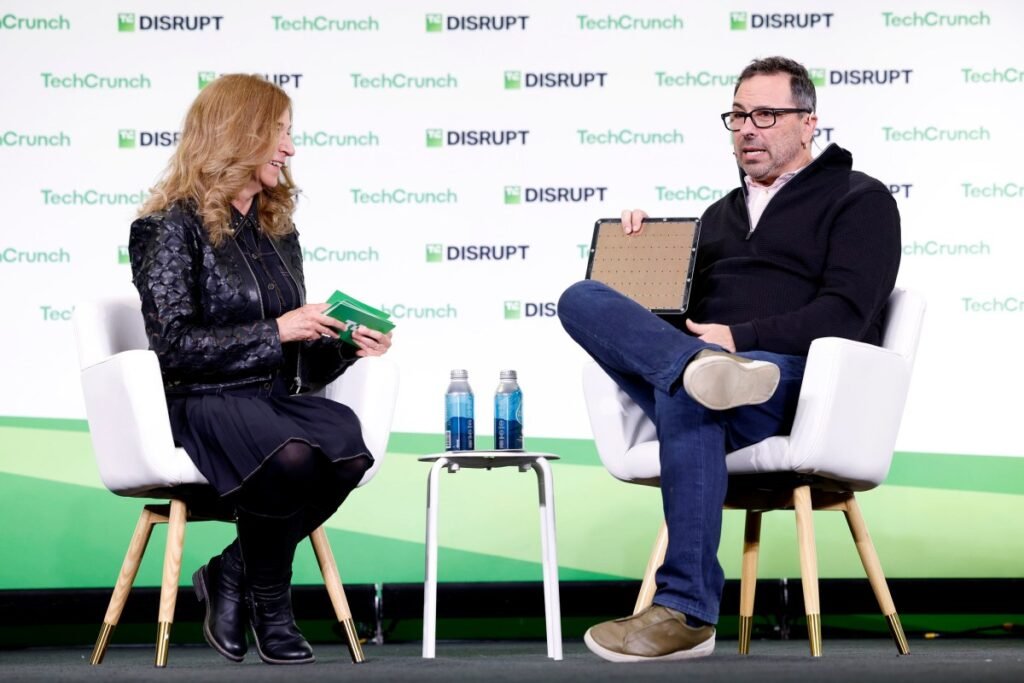
The Rise of the Local Home AI Assistant
The evolution of consumer technology is rapidly accelerating toward a paradigm shift where the Home AI Assistant becomes as ubiquitous as the smartphone. Speaking candidly on stage at TechCrunch Disrupt, Cerebras Systems CEO and co-founder Andrew Feldman shared a compelling vision of our immediate technological future. When pressed on the timeline required for artificial intelligence to transition from screen-based software into dedicated household appliances, his answer was direct. It is not nearly as far away as the skeptics think.
A home AI assistant is an upcoming category of consumer hardware and software designed to run locally within a household, managing daily tasks, executing authorized purchases, and operating under a strict security perimeter while coordinating between edge devices and the cloud.<\/p>
- Local Processing Power: Future home AI assistants will leverage hybrid architectures, balancing on-device computing with secure cloud connectivity to safeguard privacy.
- Autonomous Capabilities: Beyond simple scheduling, these consumer agents will hold secure access credentials to autonomously handle transactions and manage complex workflows.
- Strategic Significance: Establishes high-impact structural advancements and critical domain capabilities across the sector.
For years, consumer technology has relied on remote data centers to parse voice commands, schedule appointments, and generate trivial text responses. Yet, the rapid maturation of foundational models and specialized silicon is rewriting that playbook entirely. We are witnessing the emergence of sophisticated consumer AI agents—such as Meta’s Muse and high-valuation startups like Instinct—capturing the public imagination and demonstrating real-world utility.
The Architecture of the Next Consumer Appliance
Hardware infrastructure is quietly undergoing a profound transformation. Feldman argues that the future of personal intelligence will not live exclusively in distant server farms. Instead, it will occupy physical space inside our living rooms, operating as localized personal AI appliances built for speed, privacy, and contextual awareness.
Consider how mobile phones operate today. They utilize a clever hybrid approach, executing low-latency tasks directly on local silicon while offloading heavier computations to the cloud when necessary. Home AI will follow this exact blueprint, but with vastly higher stakes regarding domestic privacy and security.
“Just like your cell phone, they’ll do some work on device and some work going back to the cloud. But I think they will get to know you very well, and you will have a security perimeter around them.” — Andrew Feldman, CEO of Cerebras Systems
This localized security perimeter is precisely what separates tomorrow’s autonomous agents from yesterday’s passive smart speakers. Consumers are rightfully protective of their domestic spaces. Entrusting an algorithm with private calendar entries, financial details, and family routines requires an unprecedented level of data governance.
Autonomous Commerce and Daily Execution
We are moving past the era of mere conversational novelties. Industry analysts tracking global technology trends note that agentic workflows are shifting from experimental frameworks to practical deployments. Feldman himself relies on a customized fleet of digital agents to sweep his calendar, cross-reference attendee backgrounds, and prep him for executive calls.
When these capabilities migrate from corporate boardrooms into residential hardware, the implications for retail and everyday logistics will be massive. Your personal assistant will not simply remind you to buy groceries; it will possess secure access credentials to complete the transaction autonomously.
- Contextual Awareness: Systems will learn individual habits, preferences, and daily rhythms without manual programming.
- Financial Authorization: Trusted agents will manage micro-transactions, subscription renewals, and routine household purchases.
- Privacy Guardrails: Local processing ensures sensitive family data remains inside the home network rather than feeding external training sets indiscriminately.
Comparing Consumer AI Infrastructure Models
To understand how we get from current smart home gadgets to fully autonomous domestic agents, it helps to break down the architectural evolution currently underway across the tech sector.
| Metric | Legacy Smart Speakers | Current Cloud AI Apps | Next-Gen Home AI Assistant |
|---|---|---|---|
| Processing Location | Cloud-Dependent | Hybrid Cloud | Edge-First with Cloud Backup |
| Autonomy Level | Command-Response | Task Assistance | Autonomous Agentic Workflows |
| Security Perimeter | Standard Cloud Encryption | Enterprise Compliance | Localized Hardware Vault |
Building the foundational layers for this massive shift requires monumental compute power. As chipmakers race to optimize silicon for extreme efficiency, the bottleneck is shifting away from raw processing capacity toward architectural ingenuity. Feldman notes that his primary focus remains firmly rooted in building the underlying platforms. By supplying the robust hardware infrastructure for AI, infrastructure companies enable independent software founders to let their consumer applications take flight.
The Road Ahead for Domestic Intelligence
Excitement surrounding consumer hardware innovation often outpaces reality, yet the convergence of advanced agentic software and edge computing makes domestic AI feel increasingly inevitable. The real magic will not lie in automating tasks we already know how to do manually. Instead, it will emerge from entirely new categories of utility that were previously impossible before the advent of ambient, localized intelligence.
As these technologies mature, the debate will inevitably pivot from technical capability to societal trust. Designing systems that feel genuinely helpful rather than intrusive remains the ultimate challenge for product designers and engineers alike. If industry leaders play their cards right, our homes will soon house not just connected devices, but genuinely competent digital companions.
<button type="button" onclick="this.parentElement.innerHTML='✓ Thank you, we will refine our analysis!‘” style=”background:#ffffff; border:1px solid #cbd5e1; border-radius:6px; padding:4px 12px; font-size:12px; cursor:pointer; color:#334155;”>👎 No
Latest Analytical Follow-up: For continuous developments on this subject, read our full investigation on OpenAI insider arrest exposes corporate espionage fears.
