
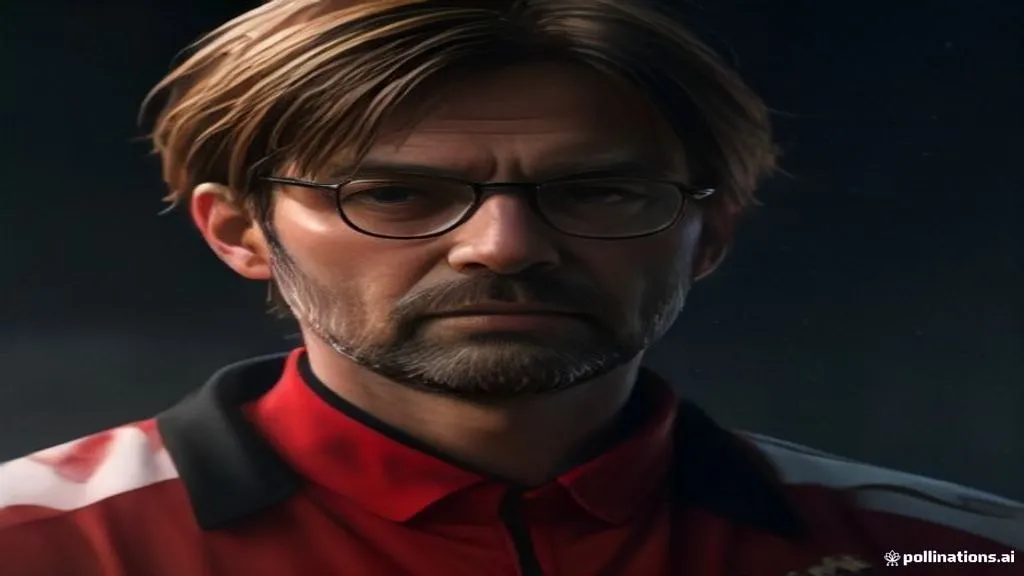
Jurgen Klopp Germany Coach Debut and Political Stance
Football and politics rarely occupy entirely separate universes. Sometimes, they collide with explosive force. When Jurgen Klopp stepped up to the microphone for his unveiling as the new Jurgen Klopp Germany coach, nobody expected a standard, vanilla tactical preamble. They certainly did not expect a blistering cultural manifesto.
Jurgen Klopp has officially taken charge as the new Germany coach following Julian Nagelsmann's departure. In his inaugural press conference, Klopp addressed recent far-right electoral gains in Saxony-Anhalt by urging citizens to reclaim national symbols through inclusive, positive patriotism rather than exclusionary nationalism.<\/p>
- Klopp's Political Stance: The former Liverpool manager stated that national pride should not be entrusted to the wrong people, reacting to the AfD's strong electoral performance.
- Squad Overhaul: Klopp announced a massive 44-man squad featuring 16 uncapped players for upcoming UEFA Nations League fixtures.
- Transition Period: The managerial change follows Germany's disappointing second-round exit at the World Cup under Julian Nagelsmann.
Yet, true to form, the former Liverpool mastermind looked past the whiteboards and training bibs. He peered directly into the soul of a fractured nation. Fresh off a staggering electoral breakthrough by the far-right Alternative for Germany (AfD) party in the eastern state of Saxony-Anhalt—where they secured 43.8% of the vote—Klopp made it abundantly clear that his job extends far beyond the technical area.
Reclaiming the Tricolour from the Margins
For decades, public displays of the German flag carried heavy, complex baggage. World War Two left deep cultural scars regarding open nationalism. However, in recent years, populist movements have increasingly weaponised national symbols. Klopp wants to change that narrative entirely.
According to reports from Reuters, the charismatic manager expressed deep unease over the recent German elections far right momentum. Sitting before a packed press corps, he delivered a stark cultural challenge.
“We had an election where some people may have thought it was OK, while others were saying, ‘my God, what is happening here?’ From my perspective as a sportsman, I can say that I would very much like to reclaim the flag for myself, for all of us.”
Klopp explicitly rejected the toxic corners of national identity, preferring what he terms “positive patriotism.” He articulated a vision where loving one’s homeland does not require closing doors to the outside world. “I can be proud to be German while also being open-minded and diverse, and kind and friendly,” he insisted.
A Massive Squad for a Brutal Schedule
Shifting from sociopolitical commentary to the realities of the pitch, Klopp immediately put his stamp on Die Mannschaft. The transition follows the dismissal of Julian Nagelsmann, whose tenure imploded following a disappointing second-round exit at the summer World Cup against Paraguay. Long-serving stalwarts Manuel Neuer and Antonio Rudiger have since retired from international football, forcing an aggressive generational reset.
Klopp wastefully cut through convention by naming an enormous 44-man squad. This group is specifically designed to navigate four gruelling Nations League fixtures packed into a punishing two-week window. Crucially, 16 of those selected are entirely uncapped, signalling a clean break from the past.
The Splitting of the Camp
Logistics under the new regime will be tightly managed. A primary group of 24 players prepares for fixtures against the Netherlands in Amsterdam on September 24 and a home clash against Greece in Augsburg three days later. Following those matches, most of that initial wave will return to their clubs, replaced by a secondary rotation.
The second cohort features a blend of established stars and fresh faces, preparing to face Serbia in Munich on October 1 and Greece in Thessaloniki on October 4. This sprawling selection highlights the immense depth Klopp intends to harness.
Squad Breakdown: Key Selections
| Player Category | Notable Names | Club Affiliation | Match Group |
|---|---|---|---|
| Premier League Trio | Kai Havertz, Kevin Schade, Anton Stach | Arsenal, Brentford, Leeds | Group One (Netherlands / Greece) |
| Rising Stars | Jamal Musiala, Florian Wirtz, Malick Thiaw | Bayern Munich, Liverpool, Newcastle | Mixed / Group Two |
| New Faces | Vitaly Janelt | Brentford | Group Two (Serbia / Greece) |
SEEUY INTELLIGENCE
Jurgen Klopp Germany Coach – Analytical Overview
Premier League Trio
Kai Havertz, Kevin Schade, Anton Stach
Rising Stars
Jamal Musiala, Florian Wirtz, Malick Thiaw
New Faces
Vitaly Janelt
Noticeable inclusions underscore the forward-thinking nature of this squad. Jamal Musiala retains his place despite health scares during pre-season with Bayern Munich, where he twice collapsed. Meanwhile, Brentford midfielder Vitaly Janelt earns a historic maiden call-up into the secondary rotation.
Football as a Social Anchor
Despite his towering cultural platform, Klopp remains grounded in the practical struggles of everyday citizens. During his press conference, he noted that while football carries immense symbolic power, socio-economic fundamentals matter far more.
“It is more important that the country has enough doctors and caregivers,” Klopp acknowledged candidly. Yet, he immediately doubled down on the unique unifying capacity of sport. Football, in his view, can actively foster a sense of community. It acts as a rare social glue, allowing citizens to tangibly feel the collective power of shared experience.
Industry insiders note that Klopp’s appointment as Germany coach represents far more than a tactical hire. It is a profound cultural realignment. The German Football Association (DFB) has handed the keys of the nation’s most sacred sporting institution to a man who refuses to remain silent on issues defining the country’s moral compass.
As the squad convenes ahead of a daunting Amsterdam fixture, the spotlight burns brighter than ever. Klopp is not simply tasked with winning matches or chasing silverware. He is attempting nothing less than the cultural rescue of a national symbol, proving once again that his influence stretches far beyond the white chalk lines of a football pitch.
<button type="button" onclick="this.parentElement.innerHTML='✓ Thank you, we will refine our analysis!‘” style=”background:#ffffff; border:1px solid #cbd5e1; border-radius:6px; padding:4px 12px; font-size:12px; cursor:pointer; color:#334155;”>👎 No
